Reichenburg Castle: A Hilltop Fortress and Museum in Slovenia


Site at a Glance
- Rating
- 4.7
- Popularity
- Medium
- Country
- Slovenia
- Primary era
- Medieval
- External website
- Open
- Eras represented
- Medieval
- Civilizations
- Holy Roman Empire
- Site type
- Military
- Remains
- Castle
On this page7 sections
History
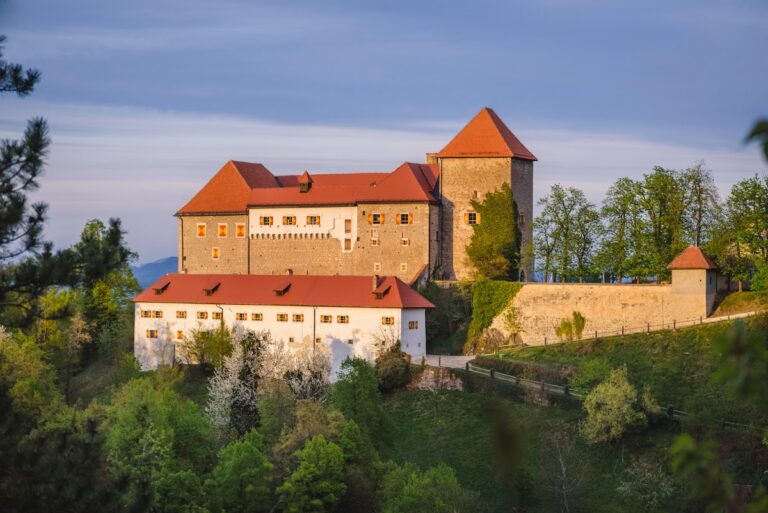
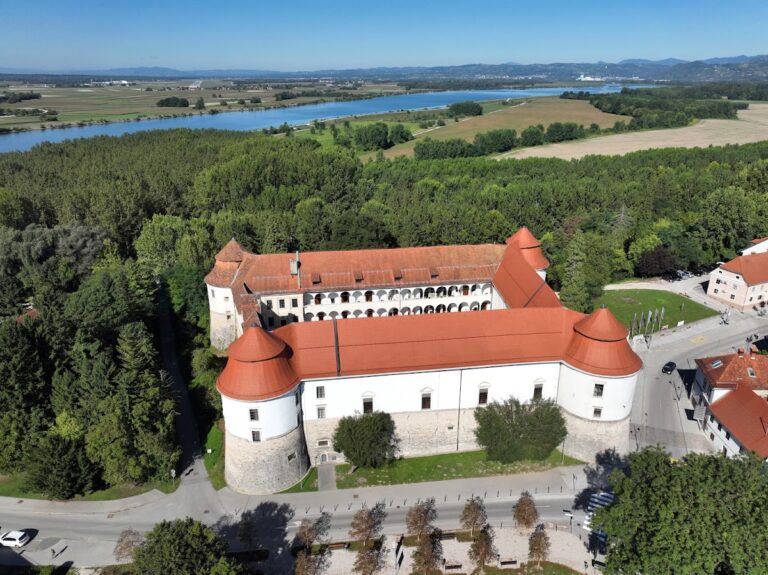
Reichenburg Castle, also known as Grad Rajhenburg, is a hilltop fortress and castle complex above Brestanica in Slovenia, built in the Romanesque period between 1131 and 1147 by Konrad of Salzburg. Its oldest section belongs to this medieval construction phase. The castle and its estate remained under the administration of ministerials, medieval officials serving the Archdiocese of Salzburg, for centuries. Reichenburg Castle is now a Slovenian cultural monument of national importance.
The Salzburg archiepiscopal estate
The castle took its name from the Reichenburg officials who administered the surrounding property. Members of the influential Reichenburg family were knighted in the fifteenth century. After the family line ended, its successors introduced contemporary additions to the medieval building, gradually shaping the complex’s present appearance.
Monastery and wartime camp
In 1881, Trappist monks, members of a Roman Catholic monastic order known for disciplined communal life, purchased Reichenburg Castle and converted it into a monastery. The monastery operated until 1941. In April of that year, German authorities transformed the castle and its ancillary buildings into a deportation camp for Slovenes.
Postwar institutions and museum use
The castle was nationalized in 1947. A women’s penal and correctional institution was established there in June 1948, followed later by additional correctional institutions. An exhibition about Slovenian deportees opened in the castle in 1968. Since then, the complex has served mainly as a museum and event venue.
Remains
Reichenburg Castle occupies a rocky promontory about 60 metres above the confluence of the Brestanica stream and the Sava River in the Lower Sava Valley of southeastern Slovenia. The surviving complex combines the fortress-like character of its medieval core with later additions and associated buildings that developed around it.
Medieval castle core
The oldest architectural fabric is the Romanesque section, a medieval European building style marked by massive masonry, rounded arches, and solid forms. It forms the early core of the hilltop castle. Later successors added contemporary elements, producing the architectural appearance of the present building complex.
Ancillary buildings
Additional buildings belong to the wider castle complex alongside the main fortress. Together with the castle, these structures were converted into a deportation camp in 1941. Their inclusion in the complex reflects the changing institutional uses of Reichenburg Castle before its later role as a museum and event venue.