Burg Hohenfriedingen: A Medieval Hilltop Fortress in Germany


Site at a Glance
- Rating
- 4.4
- Popularity
- Low
- Country
- Germany
- Primary era
- Medieval
- External website
- Open
- Eras represented
- Medieval
- Civilizations
- Holy Roman Empire
- Site type
- Military
- Remains
- Castle
On this page7 sections
History
Medieval origins and divided ownership
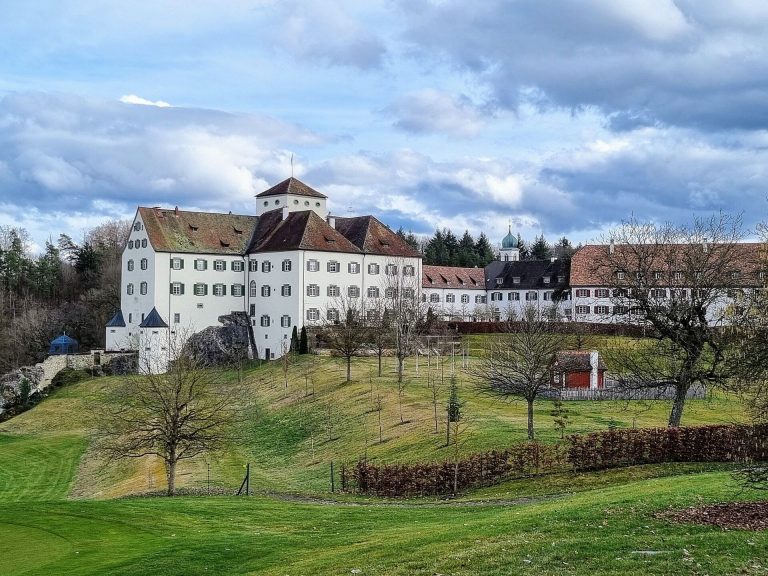
Burg Hohenfriedingen, also known as Burg Friedingen or Schloss Friedingen, is a medieval castle in Germany near Friedingen, now a district of Singen in Baden-Württemberg. An uncertain early reference around 914 associates the site with Conrad I, the German king who ruled from 911 to 918. The Lords of Friedingen probably built the castle between 1170 and 1180.
During the fourteenth century, ownership of the castle was divided. The Schwarz family of Constance acquired one share, which it sold in 1448 to Frischhans of Bodman of Möggingen. Frischhans belonged to the noble Bodman family, which held estates in the region. In 1476, the remaining share also passed to the Lords of Bodman.
Destruction and reconstruction
The Swiss War, the 1499 conflict between the Swiss Confederacy and Habsburg-aligned forces and their allies, destroyed the castle. It was later rebuilt. In 1539, the Lords of Bodman sold Burg Hohenfriedingen to the city of Radolfzell, which thereby acquired the castle formerly held by its feudal lords.
The castle suffered a second major destruction in 1647, when troops from Hohentwiel, a fortress in the Hegau region, attacked it during the Thirty Years’ War. That conflict, fought from 1618 to 1648, involved religious, dynastic, and political struggles across Europe. Reconstruction began in 1651, and the arrangement produced by that rebuilding has survived as the Friedinger Schlössle.
Twentieth-century damage and present use
At the end of the Second World War, the castle probably served as accommodation for a special Waffen-SS unit, a formation of the armed branch of Nazi Germany’s SS military organization. French troops destroyed its interior furnishings in 1945. The castle remains preserved and habitable. It is now used as an excursion restaurant, with a summer beer garden in the courtyard and a banquet hall that hosts events including knightly feasts.
Remains
Fortress enclosure
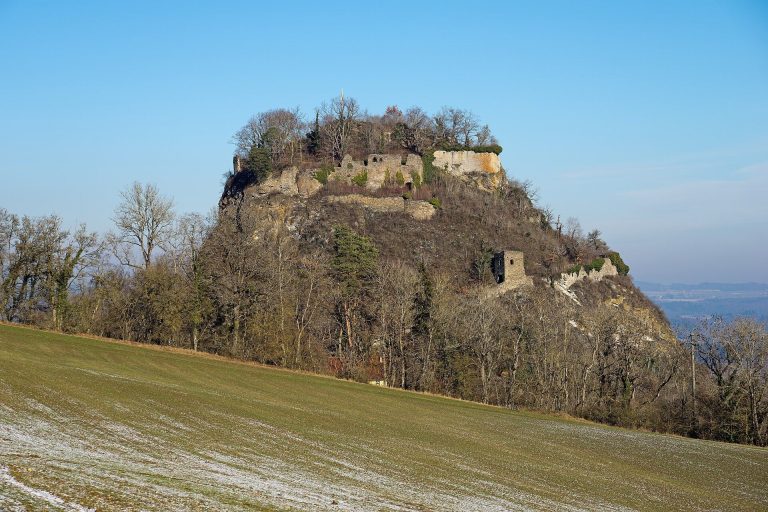
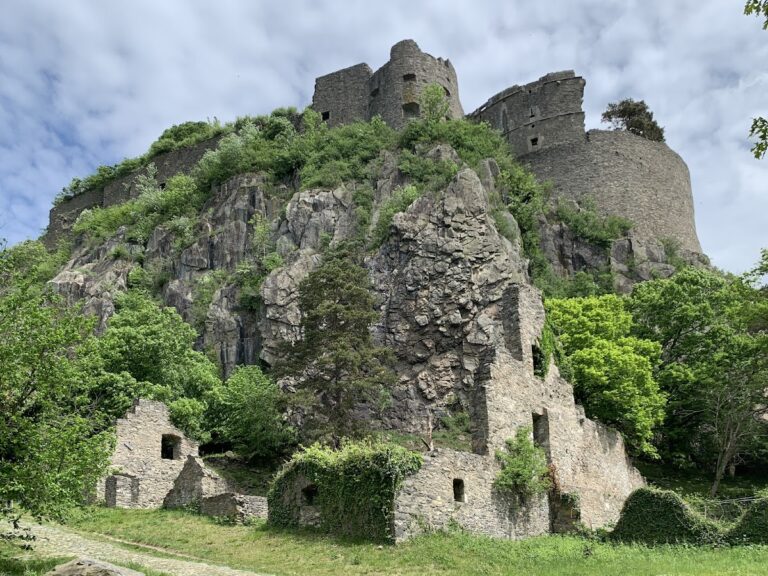
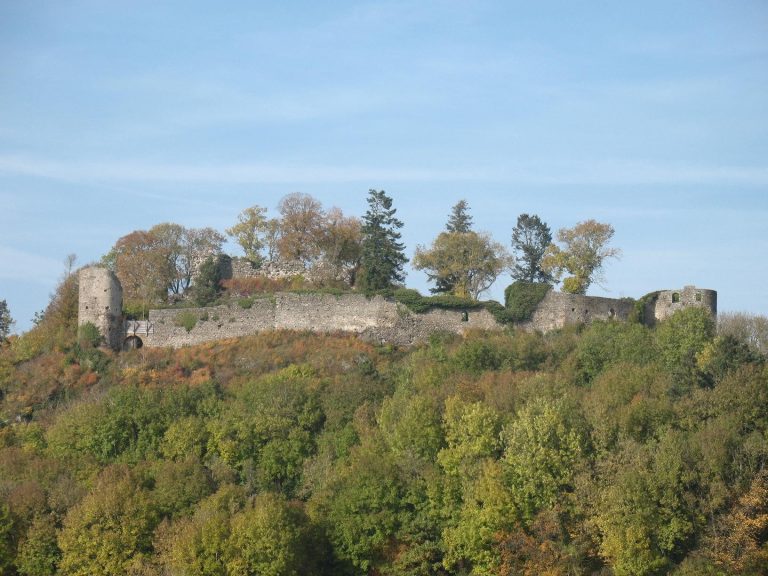
Burg Hohenfriedingen is an elongated hilltop fortress on the Friedingen Schlossberg, a summit east of Friedingen. It stands 547.2 metres above sea level, about 800 metres in a straight line from the village centre and approximately 150 metres above Lake Constance. Its position overlooks the Untersee, the western section of Lake Constance, and the volcanic peaks of the Hegau, a volcanic landscape and historical region in southwestern Germany. In clear conditions, the view extends to the Alps, and exceptionally clear visibility may reach the Mont Blanc massif.
A polygonal, slightly elongated ring wall encloses the castle. A ring wall is a defensive wall surrounding a castle or fortified settlement. The economic buildings are constructed directly against its inner face. The sole entrance lies on the eastern side and is flanked by two substantial gateway walls. The former outer bailey, an external enclosed area associated with a castle, no longer survives; its area is now used as a garden. The surviving castle retains substantial preserved sections and remains habitable.
Associated farmyard and vineyards
About 200 metres below the castle is the still-operated Schlosshof, its associated farmyard. The castle hill also contained a burned-out wine-press building from the former vineyards. A wine press is a structure used to press grapes and process wine.