Tannenburg: A Medieval Spur Castle in Germany


Site at a Glance
- Rating
- 4.8
- Popularity
- Low
- Country
- Germany
- Primary era
- Medieval
- External website
- Open
- Eras represented
- Medieval, Early Modern, Modern
- Civilizations
- German, Holy Roman Empire
- Site type
- Military
- Remains
- Castle
On this page6 sections
History
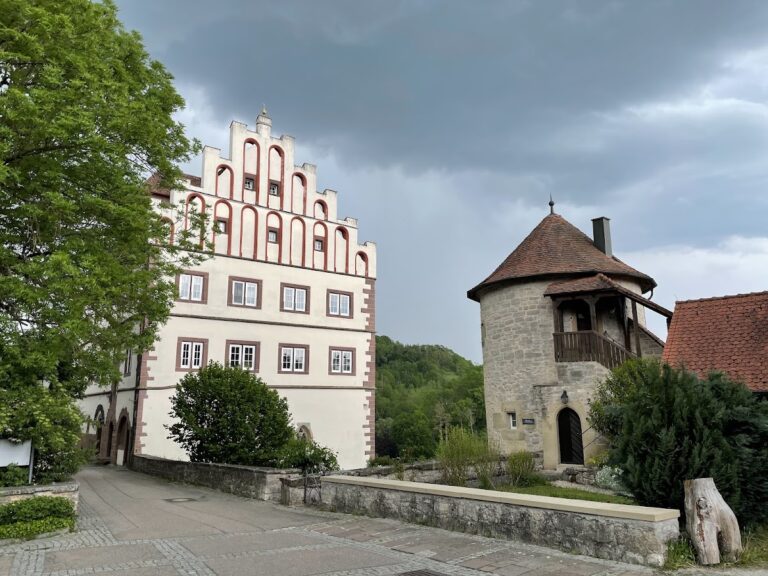
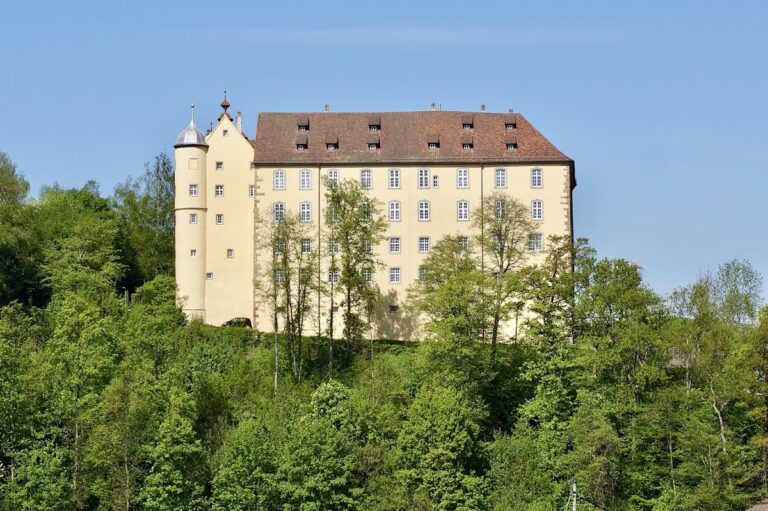
Tannenburg, also called Schloss Tannenburg, is a medieval castle in Germany above the Bühler valley near Bühlertann. Ellwangen Abbey, a medieval ecclesiastical institution that also exercised territorial authority, probably built it during the eleventh or twelfth century. The late Staufer period, the later phase of rule by a medieval imperial dynasty, shaped the castle’s early development. Its position made it an Ellwangen border fortress, and the site was recorded in 1223 in association with the von Tannenburg family.
Foundation and medieval rebuilding
Tannenburg was enlarged between 1230 and 1240. It was destroyed at the end of the fourteenth century and rebuilt in 1398. These changes formed part of the castle’s medieval development as a fortified residence and territorial stronghold connected with Ellwangen Abbey.
Later alterations and ownership
Further expansions took place during the sixteenth century and again in 1822. The castle chapel retained its own chaplaincy until 1803. After 1891, ownership passed from the Prince-Provostry of Ellwangen, a religious territory governed by a provost with princely political status, to the Bühlertann church administration. Ernst Zipperer senior acquired Tannenburg in 1931, and the castle has remained with the Zipperer family since then.
Tannenburg is now used as a school residential centre, school farm, and organic farm, as well as for recreational activities. Its listed social-estate affiliations are noble, clerical, and bourgeois. The chapel continues to be used occasionally for services, including weddings. Tannenburg is regarded as one of the best-preserved shield-wall castles in Württemberg.
Remains
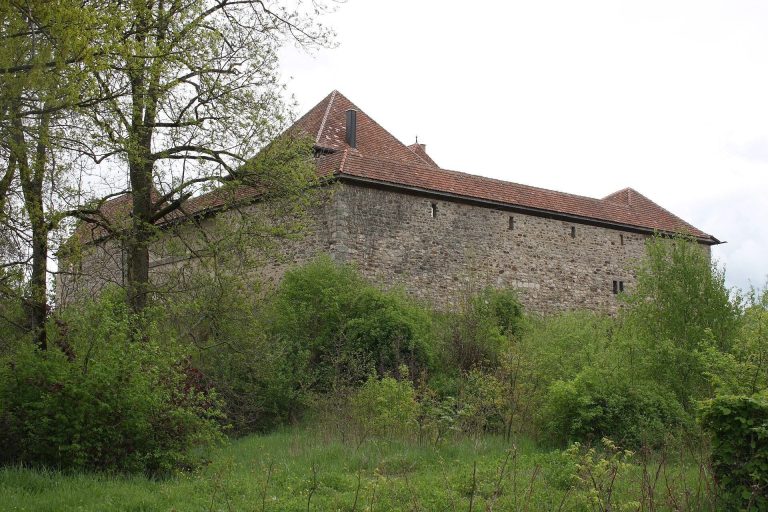
Tannenburg is a hilltop spur fortress at 485.7 metres above sea level on the western spur of Tannenberg in the Ellwangen Hills. It rises about 110 metres above the broad Bühler valley, while the Bühler River flows northward roughly one kilometre to the west. The spur narrows toward the castle and is less than 100 metres wide about 300 metres before the four-metre-thick shield wall. Three successive neck ditches, the massive defensive wall on the exposed approach, and a gatehouse occupy the attack side of the complex.
Fortifications and residential buildings
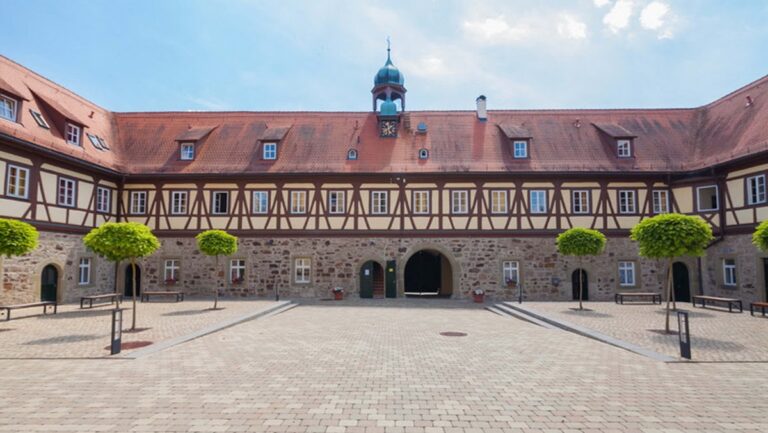
The preserved castle has a large courtyard and a palas, the principal residential and representative building of a medieval castle. The palas follows a trapezoidal ground plan and includes a knights’ hall. Its upper half-timbered structures project above the southern side. The masonry is built with bossed ashlar, carefully cut stone blocks whose outer faces project or remain roughly finished. Together with the walkable shield wall and the successive ditches, these features define the surviving fortress layout.
Chapel and courtyard
Near the southwest corner of the cattle yard, which forms the outer bailey, stands the Chapel of St Mary Magdalene. Mary Magdalene is a widely venerated Christian saint. The chapel measures about 15 by 10 metres, and its foundations date from the thirteenth century, although its exact construction date is unknown. Its architecture combines Gothic and Renaissance elements, and its bell bears the year 1649.
A summer lime tree grows in the castle courtyard and is legally protected as a natural monument.