Weißenstein Castle: A Medieval Hill Castle in Bavaria


Site at a Glance
- Rating
- 4.4
- Popularity
- Low
- Country
- Germany
- Primary era
- Medieval
- Eras represented
- Medieval, Early Modern, Modern
- Civilizations
- Holy Roman Empire
- Site type
- Military
- Remains
- Castle
On this page8 sections
History
Weißenstein Castle is a ruined hill castle in Germany, located at Weißenstein within the town of Regen in Bavaria, and built around 1100 by the Counts of Bogen. After that medieval noble dynasty became extinct in 1242, the castle passed to the Bavarian dukes.
The Degenberg Lordship
In 1308, the Bavarian dukes Otto and Stephen of Lower Bavaria granted the castle as a fief to the knight Eberwein of Degenberg. The Degenberg family acquired it as property in 1339 or 1340 and held it for more than two centuries.
The Degenbergs became involved in the Böckler War, a fifteenth-century uprising by the family and its allies against Duke Albert IV of Bavaria. Ducal troops under George of Lerchenfeld reached Weißenstein on 9 December 1468. Shortly before Christmas, they captured and burned the castle. The Degenbergs rebuilt it and continued to live there until their family became extinct in 1602 after the death of Hans Sigmund of Degenberg.
Electoral Administration and Destruction
After 1602, Weißenstein passed to Elector Maximilian I, who made it the seat of an electoral Pfleger, an appointed official who governed a district or estate for a higher ruler. Swedish forces ravaged the castle in 1633 during the Thirty Years’ War, the European conflict of 1618 to 1648 that combined religious and dynastic struggles across the Holy Roman Empire. The south side collapsed in 1740, and Franz von der Trenck with his Pandurs, irregular troops associated with the Habsburg military forces, destroyed the castle in 1742.
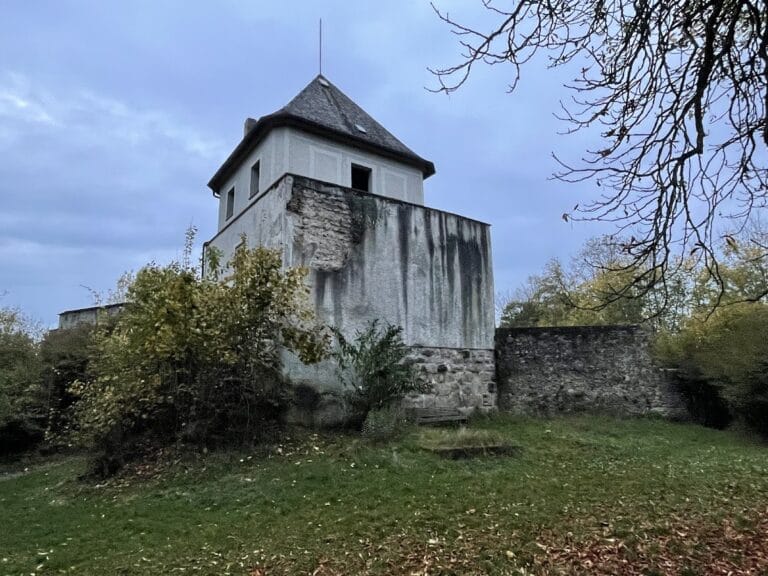
Weißenstein subsequently fell into ruin, while its official residence and farm buildings were restored. A tower-like building added in 1762 served as a grain store for tithes, compulsory payments often made in agricultural produce by subjects to a lord or institution.
Literary and Civic Preservation
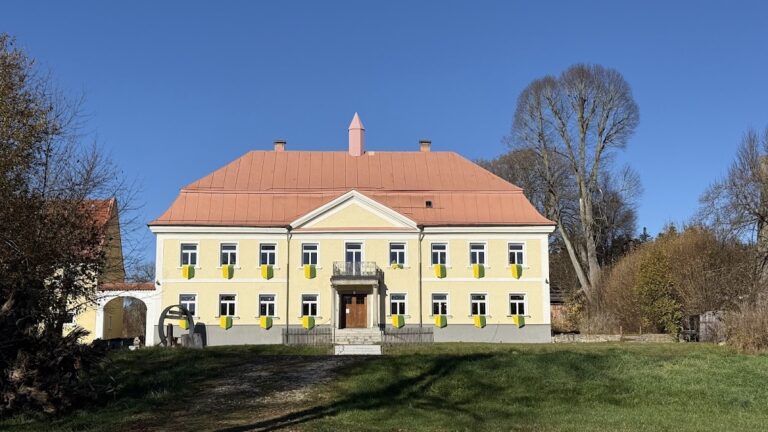
In 1918, the writer Siegfried von Vegesack bought the house and made it his home. The expense of maintaining the property led him to call it Das Fressende Haus, or “The House that Eats,” which also became the title of his 1932 novel. Since 1985, the building has housed a museum and literary archive dedicated to von Vegesack. Its exhibitions also contain sacred art, equipment associated with flax and linen production, and a large collection of snuffboxes.
The ruins were renovated between 1991 and 1995, and the town of Regen has owned the site since 1996. The surrounding landscape also received protection when the governments of Lower Bavaria and the Upper Palatinate established the Pfahl Nature Reserve on 18 April 1940. The reserve covers 6 hectares, includes the rocky area with the ruins, and prohibits quartz quarrying on the Pfahl.
The White Woman Legend
A local legend tells of a knight’s wife who wanted her seven newborn children drowned. The knight secretly saved them and arranged for them to be raised at Rinchnach Monastery. When the children returned as adults, their mother unknowingly declared that anyone who had ordered the killing of their own children should be walled in alive. The tale says that she then suffered this punishment and later appeared among the ruins as a “white woman.”
Remains
The Castle Ruin
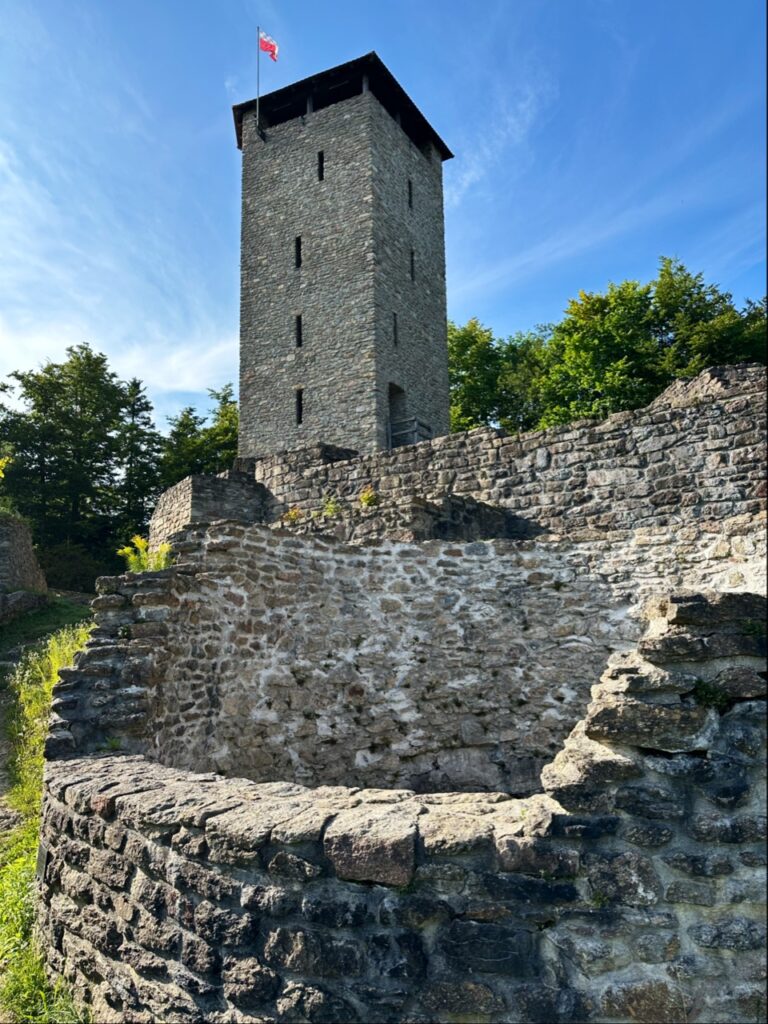
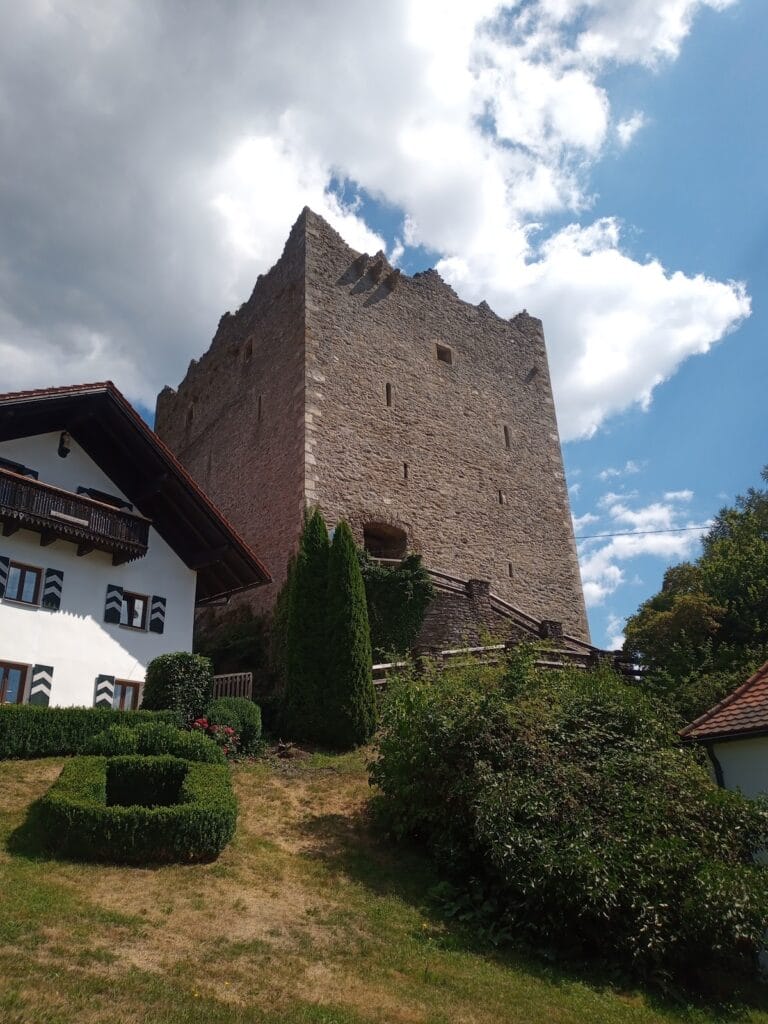
The castle occupies a 758-metre-high quartz ridge known as the Pfahl or Burgberg. Its elongated form follows a rock terrace, while the domestic and economic buildings stand separately from the main ruin. Surviving masonry includes sections of the former castle complex and, above all, a square tower house. The separate official residence and farm buildings were restored, whereas the elongated castle remains preserve the later history of the site in fragmentary form.
Chapel and Castle Hill
A chapel built below the ruins in 1836 contains a Baroque altar and numerous votive tablets. The castle hill is more densely wooded than the surrounding Pfahl because centuries of fertilisation with waste enriched its soil. Sycamore, elder, birch, and ash grow among the rocky terrain.
Nearby sites