Transport and Travel in Ancient Rome: Roads, Ships, and the Cursus Publicus
 Roman roads carried troops and officials between towns and provincial posts. Ships and river craft carried heavy cargo more economically where water routes were available. Augustus established an authorised transport service that obtained animals and supplies from stations along the route. Private travellers arranged their own passage, accommodation and assistance.
Journeys could change between land and water transport. A farm sent produce by cart or pack animal to a landing place, where boats took it onwards. State travellers drew on communities and contractors required to provide animals, fodder and lodging.
On this page9 sections
Roads as the framework of Roman movement
Road building expanded as the Republic extended its control in Italy and later beyond it. Major routes connected towns, military districts, ports and river crossings, while smaller roads served farms and settlements. Legal texts distinguish public, local and private ways.
 Roads carried soldiers, officials, commercial travellers, ordinary pedestrians, pack animals and vehicles. Milestones could mark distance and commemorate construction or repair, often naming an emperor or official.
Builders surveyed routes and prepared foundations, embankments and drainage. Surfaces ranged from fitted stone paving to gravel. Camber, ditches and culverts carried water away, while repairs restored worn or damaged stretches.
A direct route could save time, but valleys, gradients and river crossings imposed limits. Roads might climb, cut through rock, follow contours or use a causeway. Bridges ranged from timber structures to masonry arches, with different combinations of materials. At Alcántara Bridge, a Trajanic crossing of the Tagus, substantial stone arches and high piers show the investment needed to carry a route across a difficult river setting. Later damage and rebuilding are part of the monument visible today.
Building and maintaining the roads
Responsibility for construction and repair was shared among central authorities, military commanders, magistrates, communities and landowners. Under the empire, curatores viarum supervised important Italian roads, while provincial and local arrangements differed. Contractors could undertake work, and inscriptions commemorated those paying for it. Alcántara’s record of contributing municipalities illustrates how a major crossing could combine an imperial dedication with local financing.
Rome itself had officials responsible for streets inside the walls and for roads immediately outside them. Local authorities supervised village roads, and landowners might be required to repair sections passing through their property. Augustus reorganised the administration of public works and gave the emperor a more direct role in supervising the roads connecting Rome with Italy and the provinces. Later emperors were commemorated on milestones and inscriptions for repairing roads and bridges.
Road use was not necessarily free. Tolls could be collected at bridges and city gates, while customs duties and other charges increased the cost of moving goods. The expense of maintenance was also unevenly distributed. A town on a major route might gain from travellers, markets, workshops, and demand for food and fodder, but it could also be required to provide animals, transport, labour, and supplies for state travellers.
Travel by land: people, animals, and vehicles
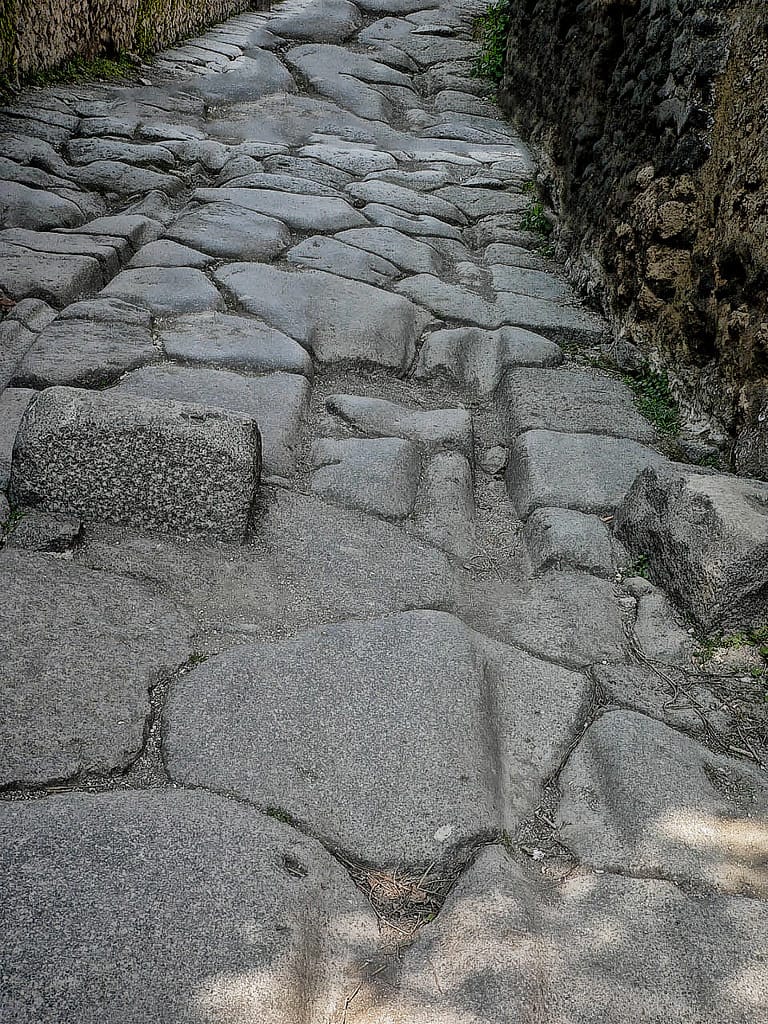 Ordinary overland movement relied on walking, riding, pack animals or drawn vehicles. Distance covered in a day depended on the route, season, baggage, animals, stops and purpose of the journey. A person changing horses under official authority had different resources from a family moving its belongings or a loaded wagon negotiating a steep pass.
A light two-wheeled cisium served passengers, while a four-wheeled raeda carried people and baggage. Covered vehicles and freight carts met further needs. The terms biga, triga and quadriga referred to teams of two, three and four horses.
Animal-drawn freight required fodder, handlers and maintenance. Pack animals could use routes unsuitable for carts; navigable water could carry large loads with lower effort. Producers therefore often moved goods a relatively short distance to a river landing, port or local market before choosing another mode. The decision depended on terrain, weight, urgency and value, while loading and transferring cargo added labour and delay.
The Tabula Heracleensis preserves daytime wagon restrictions for Rome and its continuously built-up suburbs, with exceptions for public work and ritual movements. The Twelve Tables also specified widths for a private right of way. These provisions addressed distinct legal settings.
Way stations, inns, and the experience of travel
A mutatio supplied fresh animals for authorised travellers. Larger stopping places called mansiones provided lodging, food and stabling. Contractors, communities or private operators could supply their operation, and some served ordinary travellers as well. Private inns sold accommodation and meals and cared for animals. Travellers also stayed with relatives or contacts linked through hospitality. Food, lodging and animal care added to the cost of each stage.
Stopping places supported trades serving people and vehicles. Grooms fed animals, smiths repaired fittings and wheelwrights worked on carts. Suppliers provided food and fodder. Large military columns or repeated official demands placed extra pressure on nearby farms and communities.
Rivers and the sea carried the heaviest loads
Rivers provided a cheaper means of moving heavy goods than roads where navigation was possible. The Tiber supported Rome’s early commerce, and navigable rivers connected inland production with ports and cities. River transport faced its own difficulties: shallow water, seasonal changes in river level, currents, and the problem of returning vessels upstream. Flat-bottomed craft could be used on shallow rivers, while boats might be towed by animals or people. In some cases, goods travelled downstream on temporary rafts that were later dismantled for timber or fuel.
Sea transport carried grain, wine, olive oil, stone and other bulky cargoes over long distances. Ports joined ships with warehouses, labour and onward routes, rather than acting as isolated endpoints. For their construction and work, see Roman ports and harbours; the separate article on seaborne trade explains ships, routes and seasonal decisions. Water travel also carried people, but passenger journeys involved different arrangements from a state grain shipment.
Winter storms commonly reduced sailing and increased risk. Travellers waited for favourable winds or chose stages along sheltered coasts. Urgent journeys could continue in poor conditions, with crews relying on local knowledge and available anchorages.
Piracy, storms, wrecks and failures in delivery remained hazards. Maritime loans could make repayment conditional on the agreed safe arrival of a voyage or cargo, placing specified risks on the lender in exchange for a return.
The state transport service
Augustus organised the official transport service, known early as vehiculatio and later as cursus publicus. Authorised travellers carried messages and performed government business using the resources provided. Private letters normally travelled with personal contacts, agents or people already making the journey.
The service provided infrastructure rather than a single corps of postal workers. A courier or official travelled with an authorised document and obtained animals, vehicles, food, fodder, accommodation, or repairs at stations along the route. Local communities, contractors, and inhabitants supplied much of this support. The arrangement allowed the state to move information quickly, but it also transferred a substantial part of the cost to the regions through which the routes passed.
Official permits limited who could draw on transport resources and for what purpose. Correspondence between Pliny and Trajan shows both regulation and discretionary exceptions: Pliny used an official permit to hasten his wife’s journey after a family death and reported it to the emperor, who approved.
Municipalities and local suppliers carried substantial obligations under the early empire. Nerva’s relief of Italian transport burdens was commemorated, while later arrangements developed further supervision.
Fast couriers and heavy transport
By the fourth century, administrative changes associated with Diocletian and Constantine distinguished between a fast service, the cursus velox, and a slower heavy service, the cursus clabularis. The fast section supplied riding horses, pack animals, and lighter vehicles for urgent messages, officials, inspections, and valuable cargoes. The heavy section used carts and draft animals, especially oxen, for baggage, equipment, and authorised government goods.
Changing animals allowed an official courier to continue without resting the same mount. Progress depended on route conditions and the availability of fresh animals. Stanford’s ORBIS reconstructs travel times from assumptions about route and transport mode.
The fourth-century agentes in rebus worked under the magister officiorum. They carried messages, inspected routes and permits and reported on administration. Station operators and local suppliers maintained the animals, vehicles and provisions they used.
Transport, trade, and social inequality
Transport linked rural production, towns, military districts and distant markets. Cargo might change mode several times between its origin and consumer. The article on Roman river transport follows inland movement, while Indo-Roman trade considers longer routes beyond the Mediterranean. Merchants and agents organised carriage for owners of goods. The late Republican lex Claudia restricted senators’ possession of large ships, while their estates still supplied products to markets. Smaller businesses served local customers and military installations.
State transport required animals, fodder, labour and food from communities along its routes. These obligations supported official mobility while adding to local expenditure. Commercial travellers purchased services or relied on contacts to obtain similar assistance.
Change after the height of the Empire
The service remained important in late antiquity as officials and courts moved between regional centres. Legislation addressed its costs and abuses. Procopius accused Justinian of reducing most routes except the line towards the Persian frontier; the scale of the reduction is uncertain because his account is hostile.
Cassiodorus’s correspondence records administrative transport in Ostrogothic Italy. Roads and crossings remained in use under successor governments, which arranged supplies and supervision through their own officials and local communities.