Castello di Venetico: A Fifteenth-Century Military and Residential Castle in Italy
Site at a Glance
- Rating
- 3.4
- Popularity
- Very Low
- Country
- Italy
- Primary era
- Medieval
- Eras represented
- Medieval
- Civilizations
- Crown of Aragon, Kingdom of Sicily
- Site type
- Military
- Remains
- Castle
On this page9 sections
History
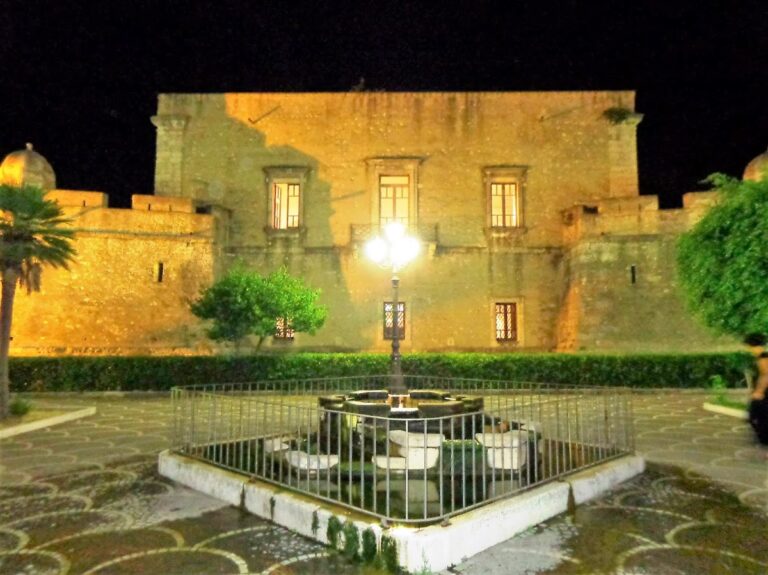
Castello di Venetico is a fifteenth-century military and residential castle in Italy, built at Venetico in Sicily during the second half of the fifteenth century by the Spadafora family. It stands at the summit of the hill occupied by Venetico Superiore and is associated with the medieval lords and princes of Venetico and Maletto, the Marquises of San Martino.
The feudal territory of Venetico
The castle belonged to the former feudal territory of Venetico San Martino Spadafora. A fief was a territory held through a feudal relationship in return for service or allegiance. Recorded holders of the fief include Simone da Venetico, Rainiero, Simio, Alduino in 1259, Alduino de Alduino in 1335, and Filippo Alduino in 1408.
The Spadafora family later remained closely connected with the castle and its titles. Through Alessandra Spadafora, Princess of Venetico, Spadafora, San Martino, and Maletto, and Pietro Ascenso, Duke of Santa Rosalia, the family line includes descendants bearing the Monroy and Samonà surnames. Members of this noble family held the rank of Knights Grand Cross of the Order of Malta, a Catholic religious order that historically combined religious, military, and charitable functions.
Private residence and twentieth-century damage
In the early nineteenth century, the castle became exclusively a private residence under the Spadafora family and their Ascenso and Samonà descendants. It remained in good condition until the beginning of the twentieth century, when the 1908 Messina earthquake severely damaged it. Bombing during the Second World War caused further substantial damage.
Carmelo Samonà and his sister Caterina restored the castle in 1920. Alberto and Antonio Samonà led another restoration campaign between 1958 and 1960, after which the building continued to serve as the Samonà family’s summer residence until 1969. Since 2000, the Municipality of Venetico has contested the property in an attempt to claim ownership. The castle is privately owned by Baron Alberto Cammarata Samonà and is recognized as Italian national heritage.
Military and religious associations
The castle’s connection with the Order of Malta is also associated with Federico Spadafora, who was a Knight of the Sovereign Order of Malta from 4 March 1572, and Federico Spadafora Moncada, who received the knighthood on 25 April 1798. These affiliations relate to a cross of the order that was formerly visible in the castle chapel.
Remains
Fortifications and entrance
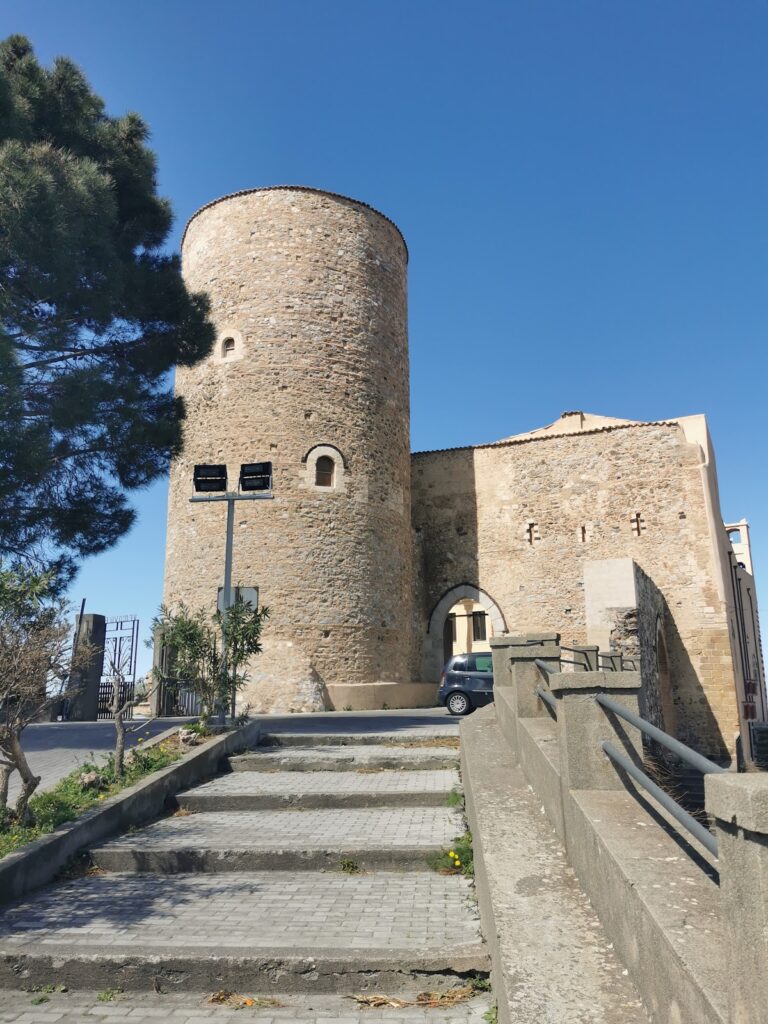
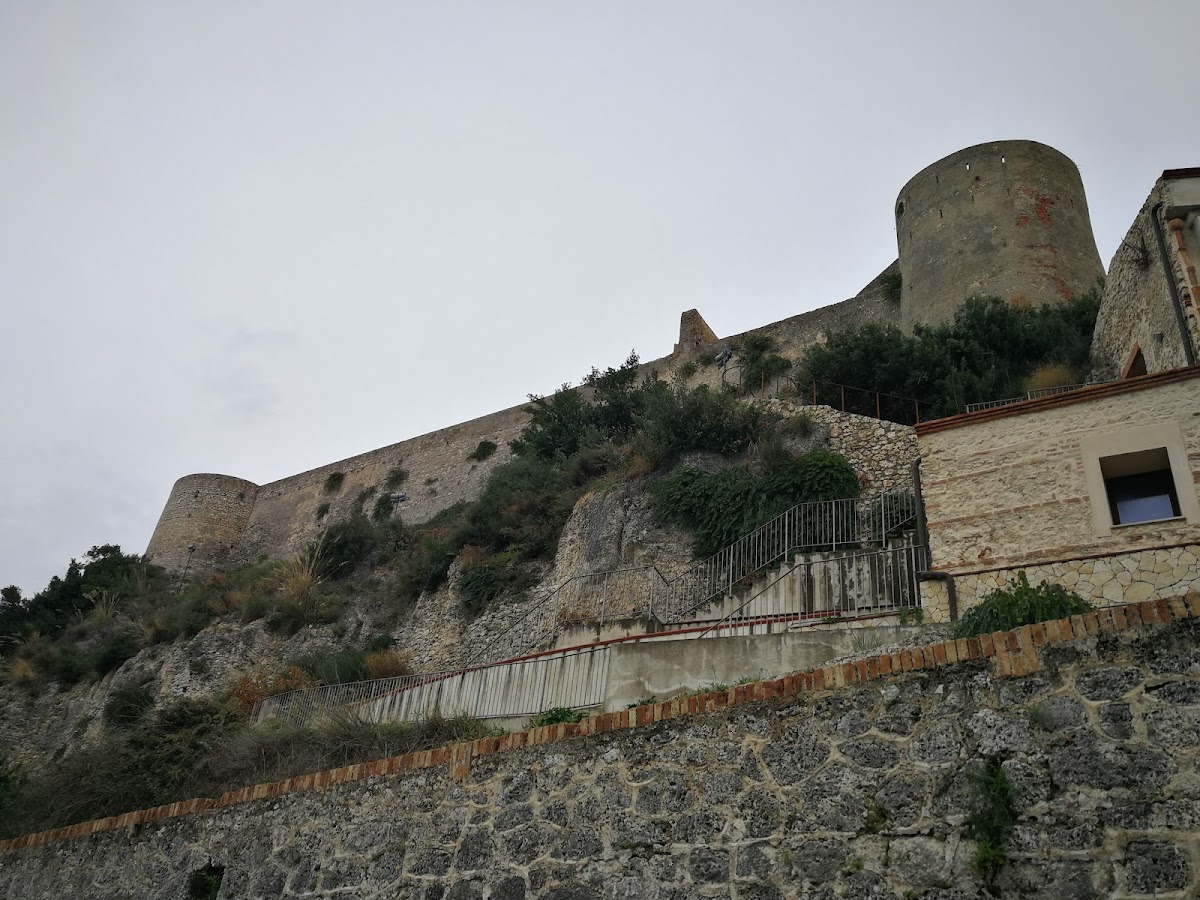
Castello di Venetico has a quadrilateral plan with cylindrical towers at its corners. Its enclosing curtain wall, the principal defensive wall surrounding a fortified site, survives together with the two western towers, which are described as being in good condition. Parts of the wall-walks, passages along or behind a defensive wall, also remain. Access is provided from the south by a staircase that formerly ended at a drawbridge, a movable bridge used to control entry through a fortified entrance.
Residential quarters
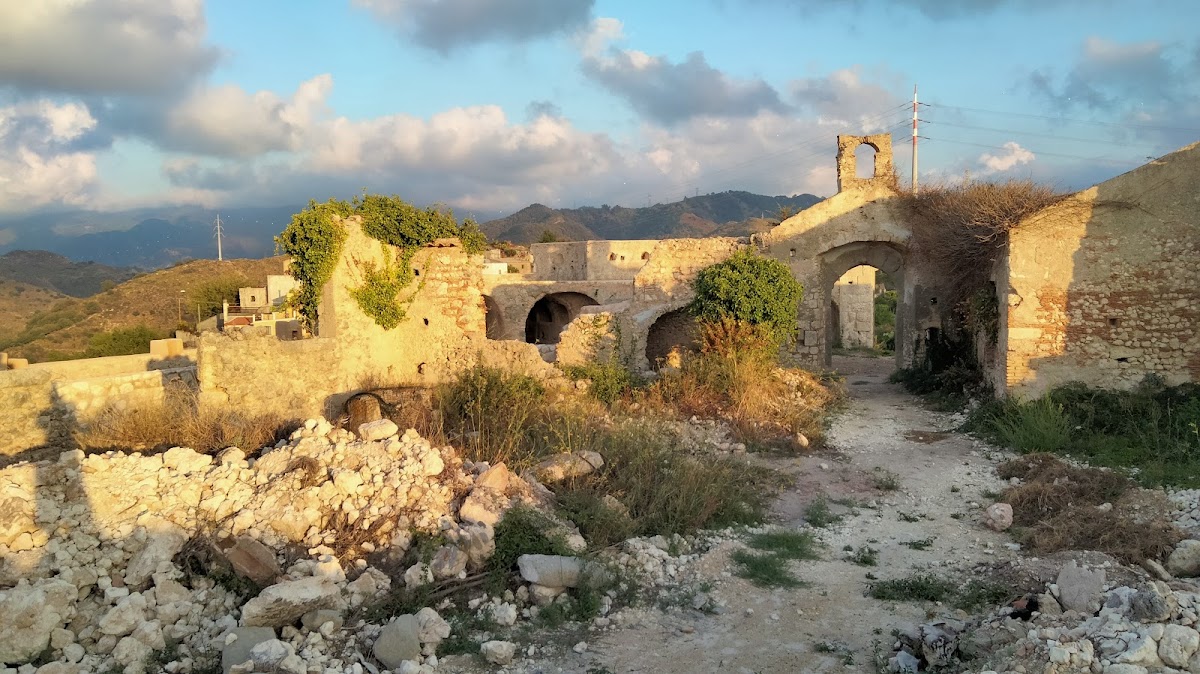
On the northwestern side, remains of large rooms formerly used as residential quarters could still be seen until 2012. These surviving spaces belong to the castle’s original dual role as both a defensive stronghold and a noble residence.
Chapel remains and lost features
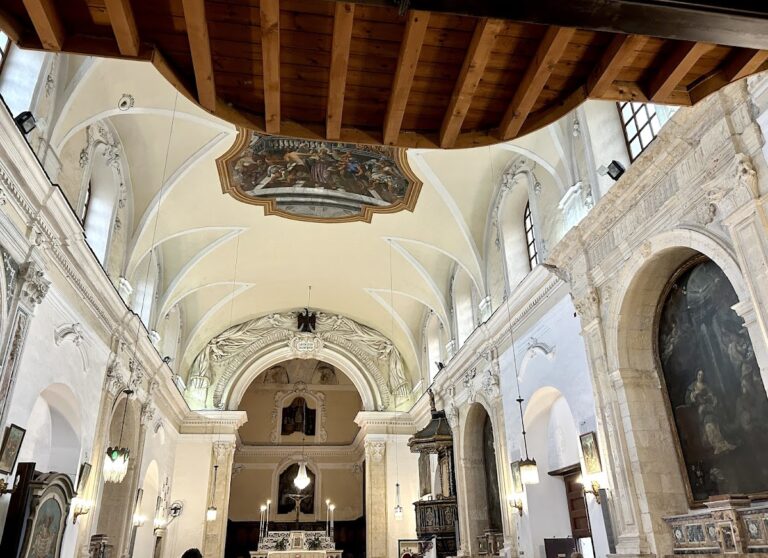
Remains of an ancient chapel were located on the eastern side of the castle. A cross of the Sovereign Order of Malta that had been visible there, along with a valuable medieval stone portal, was stolen. The chapel’s association with the order is connected with the documented knighthoods of members of the Spadafora family.
Attributions and traditions
The design has sometimes been attributed to Camillo Camilliani, an Italian architect and military engineer associated with fortification and territorial surveying in Sicily. No architectural evidence or documentation supports that attribution. A tradition that a secret passage connected Castello di Venetico with Spadafora Castle likewise has no supporting evidence.