Castello di Pomaro Monferrato: A Hilltop Fortress and Noble Residence in Italy


Site at a Glance
- Rating
- 4.3
- Popularity
- Low
- Country
- Italy
- Primary era
- Medieval
- External website
- Open
- Eras represented
- Medieval
- Civilizations
- Holy Roman Empire
- Site type
- Domestic
- Remains
- Castle
On this page6 sections
History
Castello di Pomaro Monferrato is a hilltop military complex in Italy, built by the Aleramici, the dynasty from which the marquises of Monferrato emerged, during the twelfth century. Its position on the border of the marquisate, a territorial lordship in northwestern Italy, made it a focus of struggles for control of the surrounding territory.
From fortress to marquises’ residence
In the fifteenth century, the castle passed to the Paleologi, the dynasty that ruled Monferrato during much of that period. They transformed the fortified site into a luxurious residence with a park, and it became a summer residence of the marquises of Monferrato.
During the seventeenth century, ownership passed to the Gonzaga, the ruling dynasty of Mantua. In 1637, during the Franco-Spanish War, a conflict between France and Spain within wider struggles for control of Italy and Europe, the Spanish army demolished much of the external fortifications. Explosions intended to compromise the structure also caused extensive damage to the castle.
Rebuilding and later inheritance
From 1685, the castle and the Pomaro fief, a territory held under a feudal grant in return for service or allegiance, belonged to the Ardizzone family of Casale Monferrato. The family rebuilt the damaged buildings and used the castle as its residence.
In the mid-nineteenth century, Rolando Giuseppe dalla Valle, a marquis and senator of the Subalpine Kingdom from 1848, inherited the castle and began a major restoration. The Subalpine Kingdom was the pre-unification Kingdom of Sardinia, centered in Piedmont. The property later passed to his son, Alessandro dalla Valle.
After Alessandro dalla Valle and his wife died, the castle passed in 1950, in accordance with Alessandro’s wishes, to Count Giorgio Carlo Calvi di Bergolo because Alessandro had no children. Count Calvi and his wife, Princess Iolanda Margherita of Savoy, agreed that it should become the residence of their son and his wife, the actress Marisa Allasio. They left the residence for Rome during the 1970s. The castle remains privately owned and has Italian national heritage designation, a legal status that recognizes and protects culturally significant historic property in Italy.
Remains
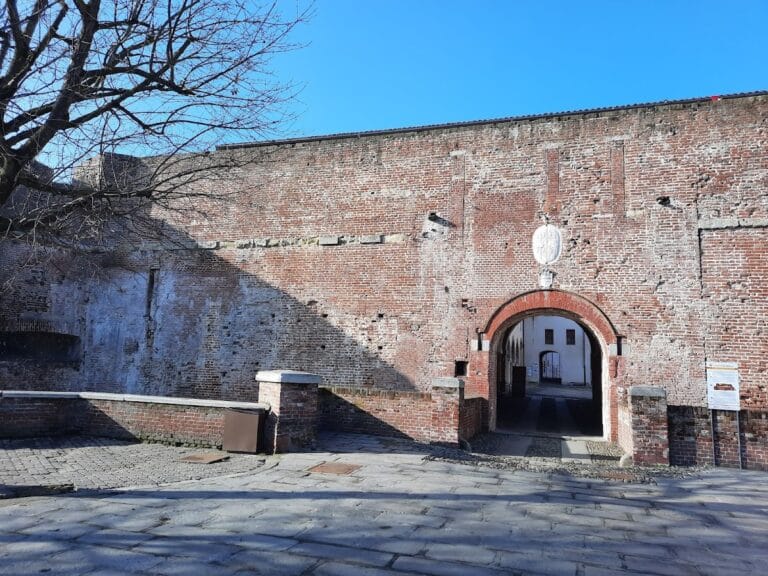
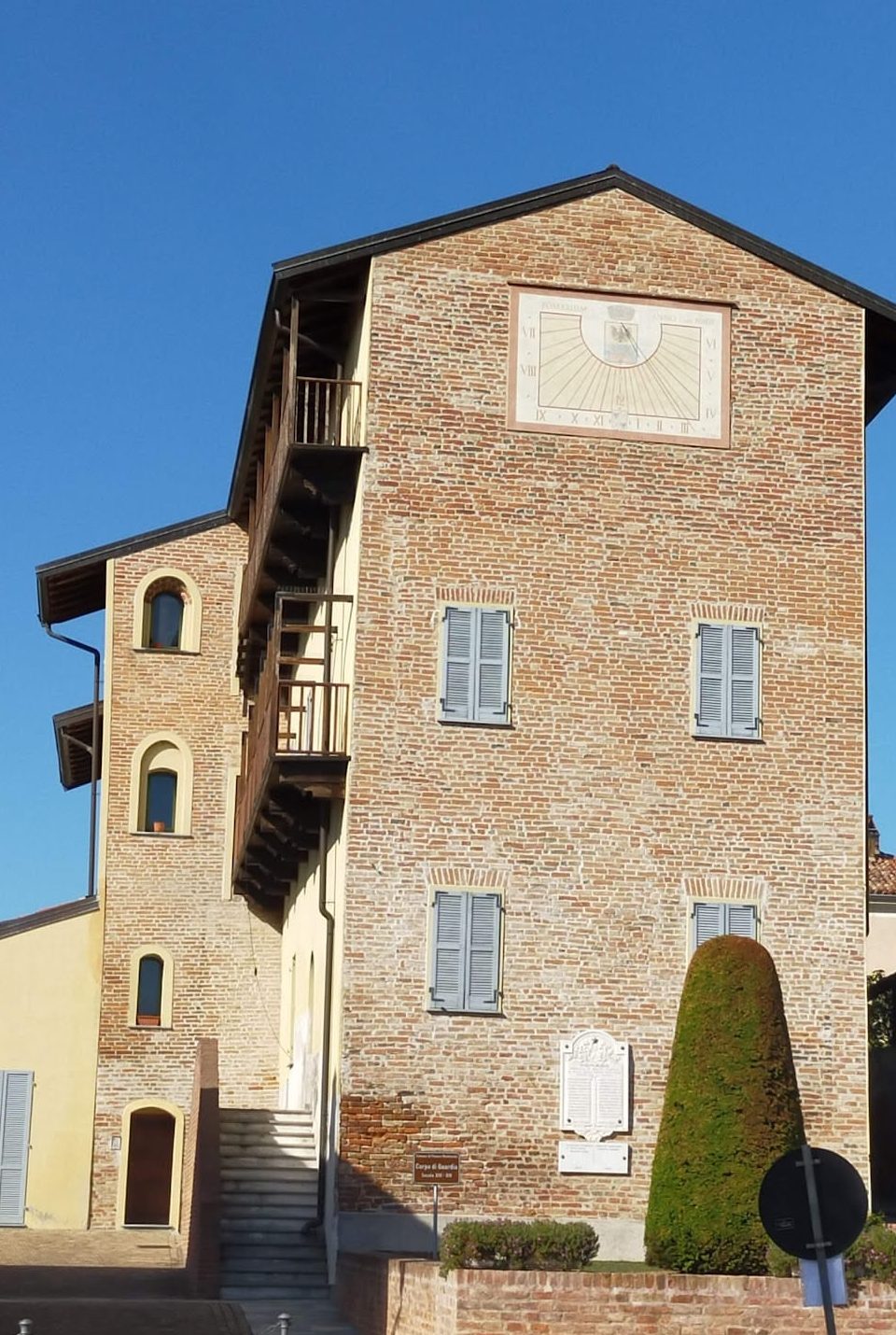
The surviving site is a hilltop fortified complex built principally of brick. Its present form reflects repeated alterations, including the major restoration associated with Rolando Giuseppe dalla Valle in the mid-nineteenth century. The most original elements are the three surviving towers, while the castle’s earlier defensive arrangement also included a watchtower, a moat, and external fortifications.
Defensive features
The moat and watchtower belonged to the castle’s original defensive organization. The external fortifications were largely demolished in 1637, when the Spanish army attacked the complex during the Franco-Spanish War and used explosions to damage its structure. The three towers preserve the clearest surviving elements of the earlier fortified arrangement.
Residential complex and park
The Paleologi’s fifteenth-century transformation gave the castle a residential character suited to the summer use of the marquises of Monferrato. That residence included a park, while later rebuilding and the nineteenth-century restoration reshaped the damaged buildings that continued to serve as a noble residence.