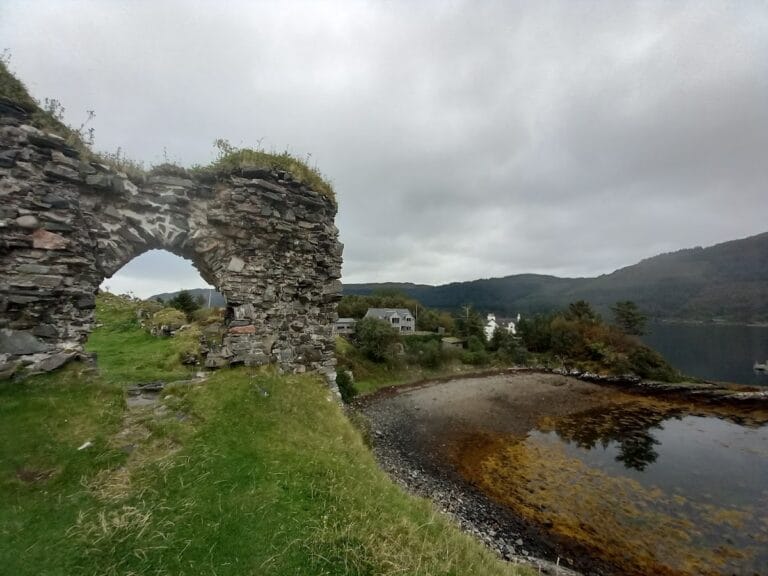
Armadale Castle: Former Seat of Clan MacDonald on the Isle of Skye
Site at a Glance
- Rating
- 4.4
- Popularity
- Medium
- Country
- United Kingdom
- Primary era
- Early Modern
- External website
- Open
- Eras represented
- Early Modern, Modern
- Civilizations
- British
- Site type
- Domestic
- Remains
- Castle
On this page12 sections
History
MacDonald residence at Armadale
Armadale Castle is a former Clan MacDonald residence in the United Kingdom, at Armadale on the Isle of Skye. Clan MacDonald, a major Scottish Highland clan with historic territories in the western Highlands and islands, established its principal presence at Armadale from the mid-seventeenth century. From 1650 to 1690, leading members of the clan lived there in two farmhouses before moving their residence to Duntulm Castle in northern Skye.
The MacDonalds commissioned a new mansion at Armadale around 1790. The building faced south-east across the Sound of Sleat and formed the basis of the later castle complex.
Tudor-Gothic expansion and rebuilding
In 1815, the mansion was enlarged and remodelled in the historicist Tudor-Gothic style by the Edinburgh architect James Gillespie Graham, who was associated with Gothic Revival and Tudor-Gothic buildings. The new work took the form of a square mock castle, a country house using castle-like forms for display and status rather than military defence.
A fire in 1855 largely destroyed the house, including its central and oldest sections. The damaged area was replaced by a central wing designed by David Bryce, a Scottish architect known for nineteenth-century Gothic Revival work.
Decline, restoration, and museum use
The MacDonald family left Armadale in 1925 because maintaining the property had become too expensive. They moved to a smaller residence on Sleat, and the building complex subsequently fell into ruin.
The Clan Donald Lands Trust acquired Armadale Castle and the surrounding estate in 1971. Parts of the castle were restored during the 1970s, and part of the complex was adapted for museum use from 1975. The Clan Donald Centre now operates the Museum of the Isles on the estate, while surviving buildings are also used for weddings. The gardens entered Scotland’s Inventory of Gardens and Designed Landscapes in 1987. Listed components of the estate include the stables at Category A, the castle, home farm, and bridge at Category B, and the laundry at Category C.
Remains
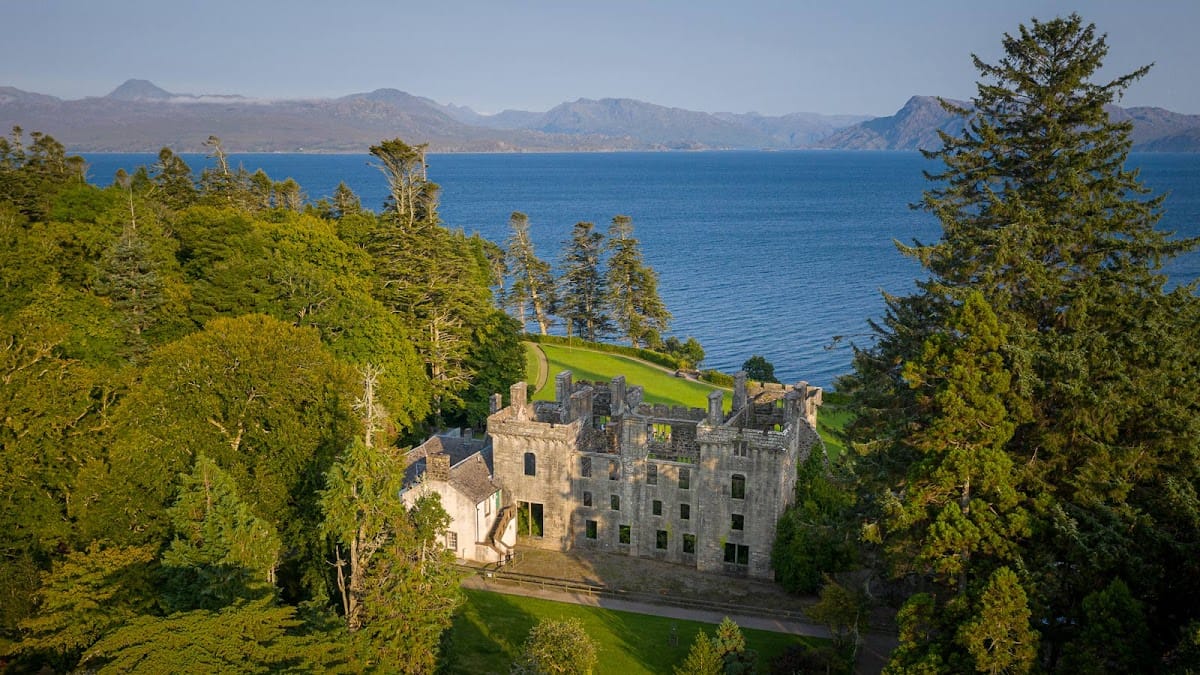
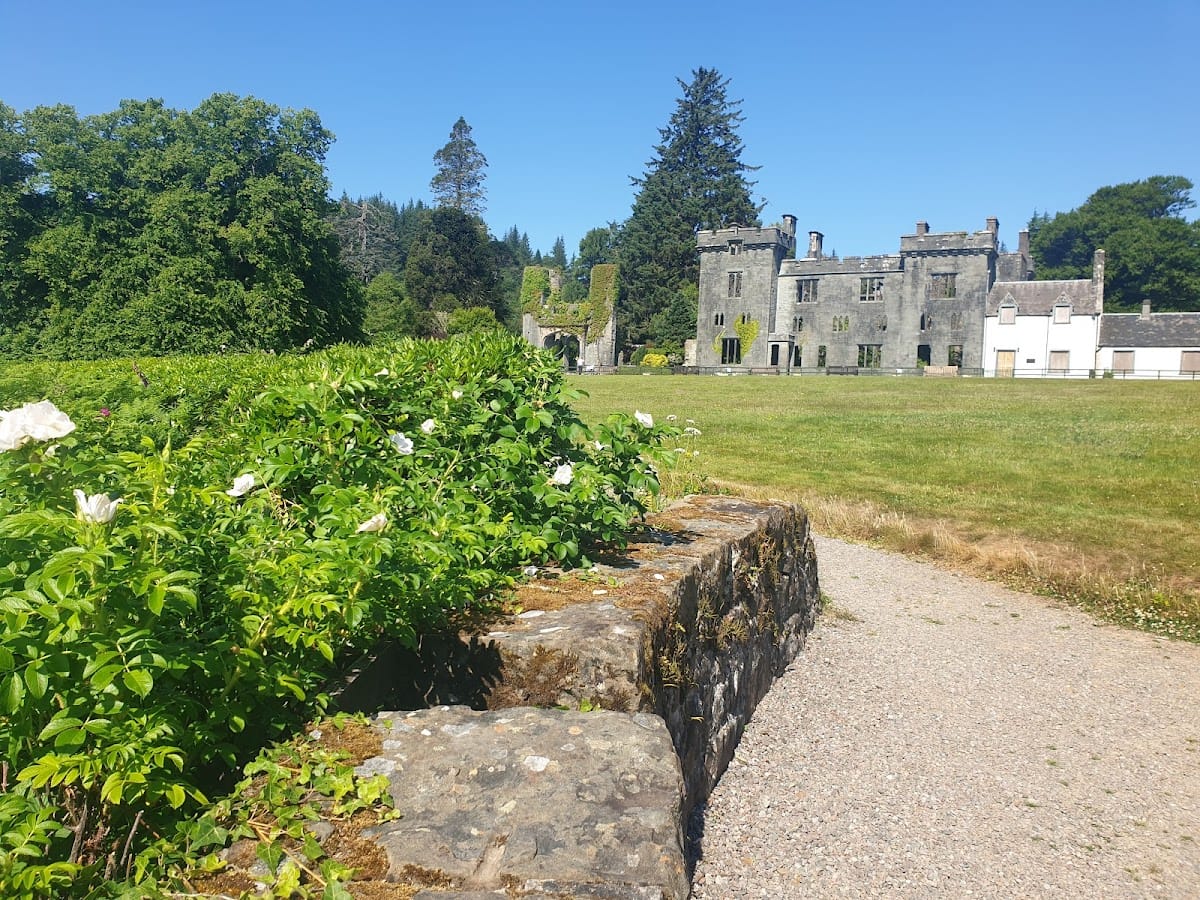
Armadale Castle stands between Ardvasar and Kilmore on the southern Sleat peninsula, along the A851. The complex combines the less formal northern wing of the 1790 mansion with ruined sections from the Tudor-Gothic enlargement and the rebuilding after the 1855 fire. The castle lies within a 20,000-acre estate that also contains gardens, service buildings, a bridge, and a museum.
Castle buildings
1790 mansion wing
The surviving northern wing belongs to the mansion commissioned around 1790. It is a usable, less formal two-storey section of the earlier building and forms part of the standing complex beside the later castle-like additions.
1815 Tudor-Gothic addition
The 1815 addition was a square Tudor-Gothic mock castle constructed beside the earlier mansion. Its castle-like appearance served visual display rather than defence, making it a distinct second construction phase within the complex. The southern sections associated with this building were demolished in 1971.
Central wing
David Bryce’s central wing replaced the sections destroyed by the 1855 fire. It survives as a roofless ruin and forms part of the later remains of the castle.
Gardens and estate buildings
Gardens
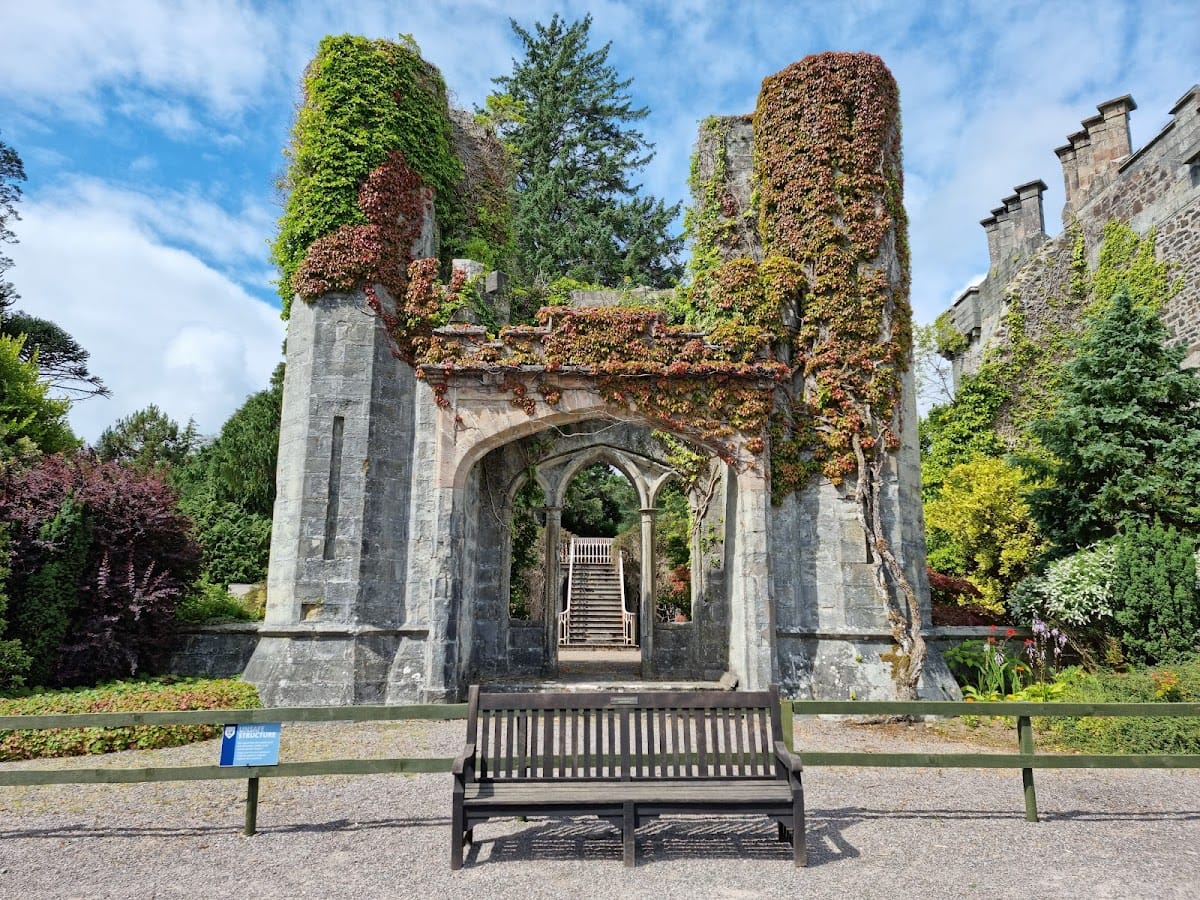
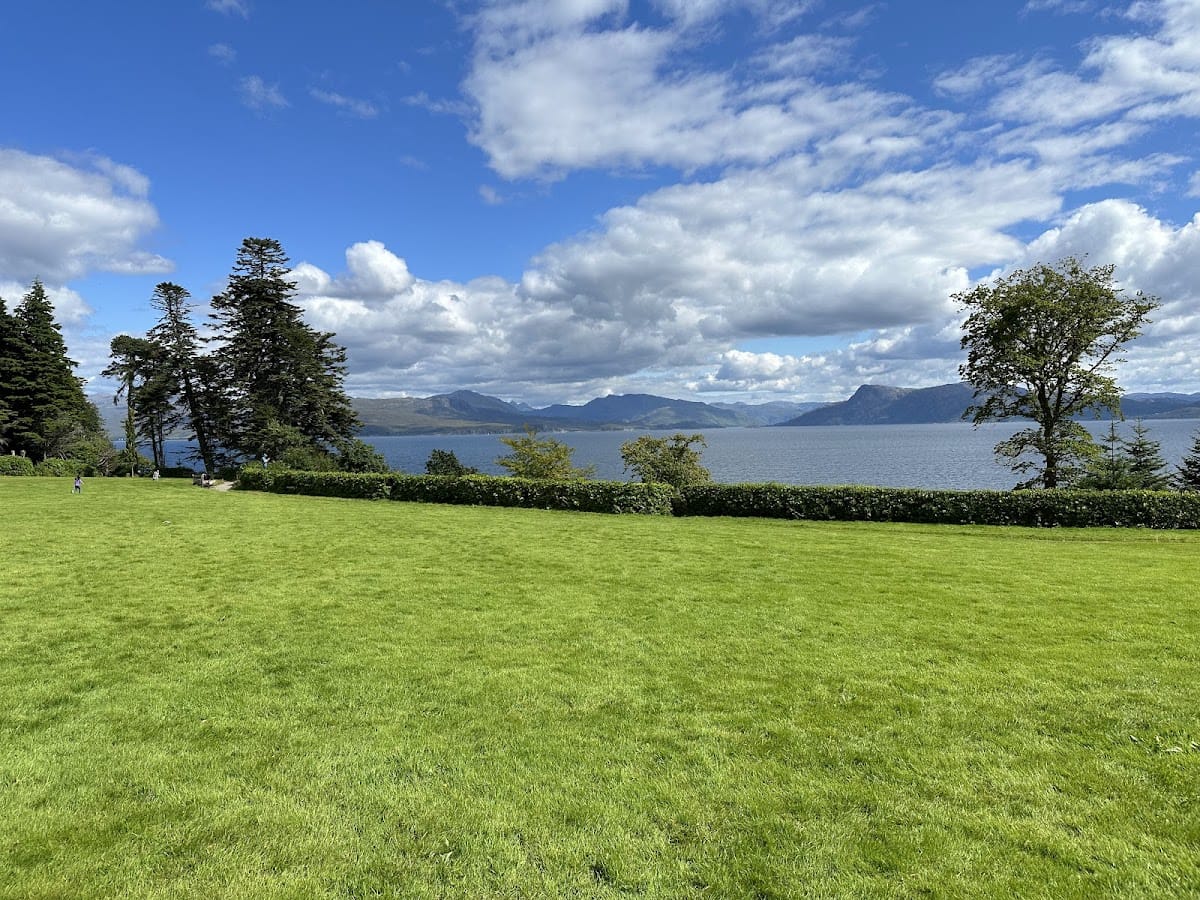
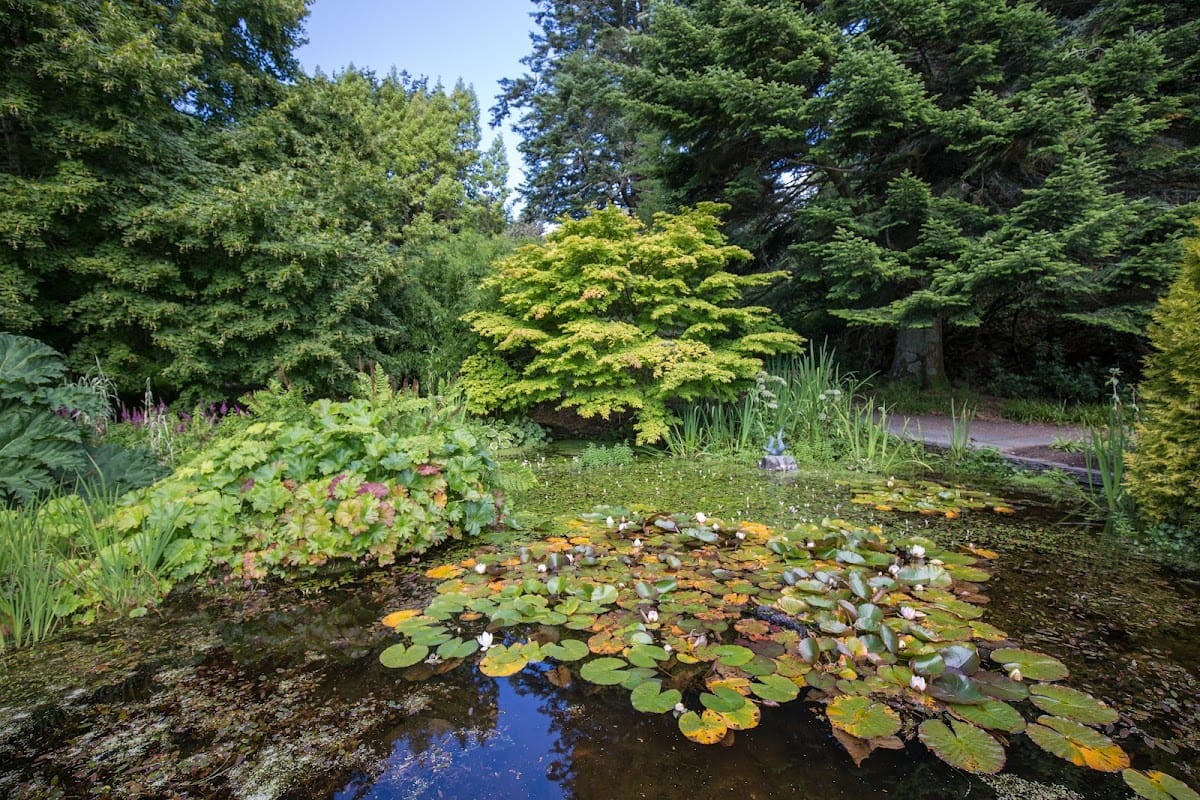
The surrounding gardens preserve an originally seventeenth-century layout, while much of their present form is associated with the development of the 1790 mansion. Many plants were introduced during the 1870s. Numerous exotic plants grow there, aided by the mild climate produced by the Gulf Stream.
Stables, home farm, laundry, and bridge
The estate buildings include the castle stables, home farm, and laundry, together with a bridge along the principal approach. Part of the grounds is occupied by the Museum of the Isles.