Castillo de Calatañazor: A Medieval Fortress in Spain


Site at a Glance
- Rating
- 4.5
- Popularity
- Medium
- Country
- Spain
- Primary era
- Medieval
- Eras represented
- Medieval
- Civilizations
- Crown of Castile
- Site type
- Military
- Remains
- Castle
On this page9 sections
History
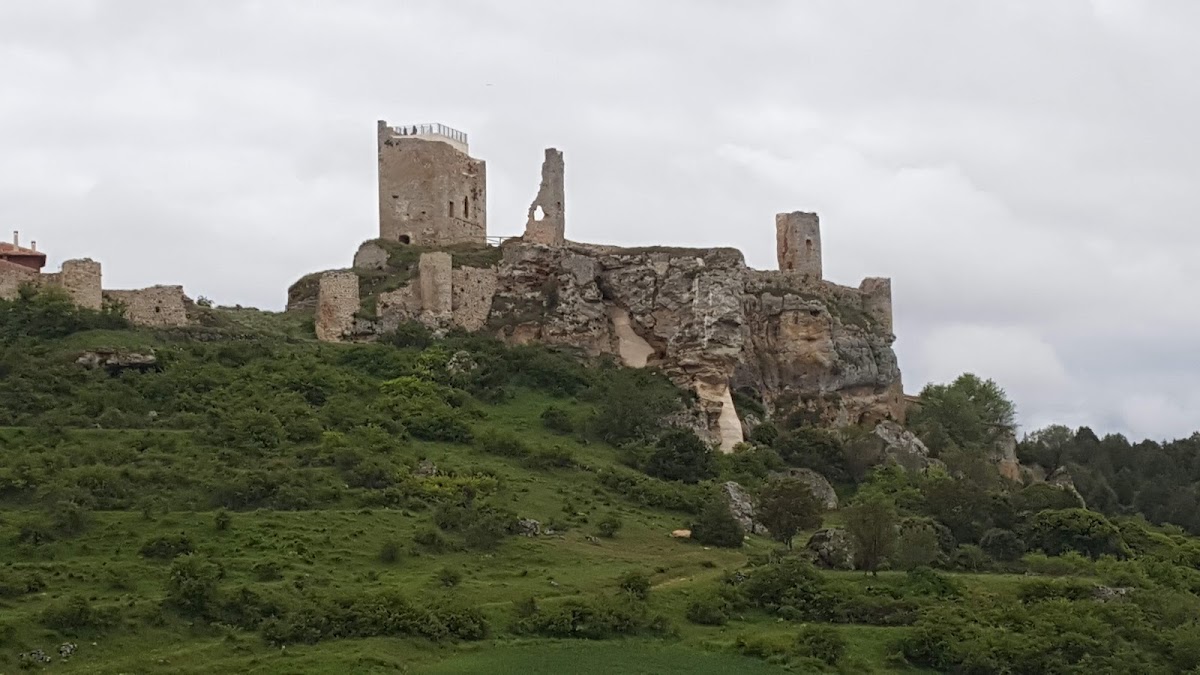
Castillo de Calatañazor is a medieval fortress in Spain, first built in the twelfth century and later reformed in the fourteenth century. The ruined but consolidated castle stands above the Valley of Blood at Calatañazor in Soria Province, Castile and León.
Name and early history
The name Calatañazor may derive from the Arabic expression Qalat al-Nasur, interpreted either as “castle of the vulture” or as “eagles’ nest.” The town occupies a historically prominent position above the Valley of Blood, traditionally identified with a battle fought in 1002 between Christian forces and the troops of Almanzor. Almanzor was the title and commonly used name of Abu Amir al-Mansur, the powerful military and political leader of the Umayyad Caliphate of Córdoba. Tradition says that he was defeated at Calatañazor, died later at Bordecorex, and was buried at Medinaceli.
The Padilla lordship
Calatañazor served as the administrative center of the Community of Villa and Tierra of Calatañazor, a territorial unit organized around a town and its dependent settlements and lands. In the fourteenth century, Enrique II of Castile granted the town’s jurisdictional lordship to Juan Fernández de Padilla, a royal chamberlain who served within the king’s household. Juan Fernández de Padilla made the castle the ancestral seat of the Padilla lineage, while the town and surrounding territory became the family’s geographical sphere of reference.
The castle and lordship later belonged to María de Molina, the Padilla family, and the Dukes of Medinaceli, a prominent Castilian noble house. The connection with the Dukes of Medinaceli continued until the nineteenth century. The alternative name Castillo de los Padilla reflects the fortress’s association with the Padilla family. The castle is protected as a Spanish Bien de Interés Cultural, a legal heritage designation for properties considered to possess significant cultural value.
Remains
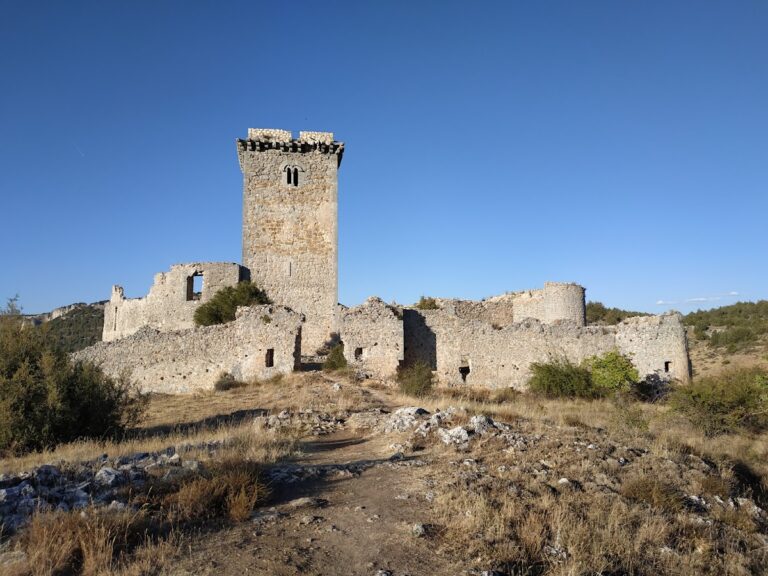
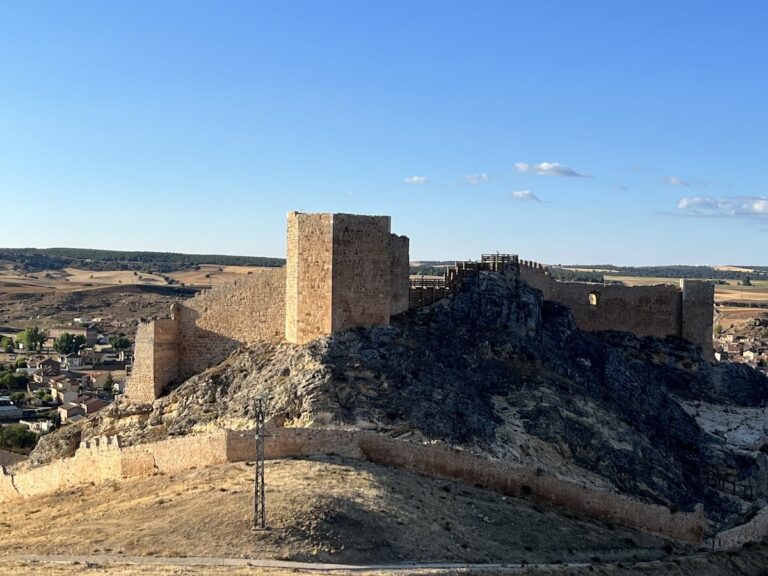
The castle occupies a rocky height above the Valley of Blood. Its surviving layout includes parts of the defensive walls and the principal fortified tower, or keep. The former parade ground now opens toward the settlement as an arcaded square, where the remains of the keep stand beside a jurisdictional roll, or pillory, a public monument expressing royal and seigneurial judicial authority.
Castle structures
The keep
The surviving keep is built mainly of rubble masonry, using irregular stones set in mortar, with carefully cut ashlar blocks reinforcing its corners. Its fabric contains indications of Arabic-style masonry and includes a Gothic window. The structure is now ruined, although its remains have been consolidated.
Defensive features
A moat protects the northwest side, identified as the fortress’s most vulnerable sector. Along the Valley of Blood, surrounding cliffs provided natural protection. Other surviving elements include an arrow slit and a turret.
Fortified settlement
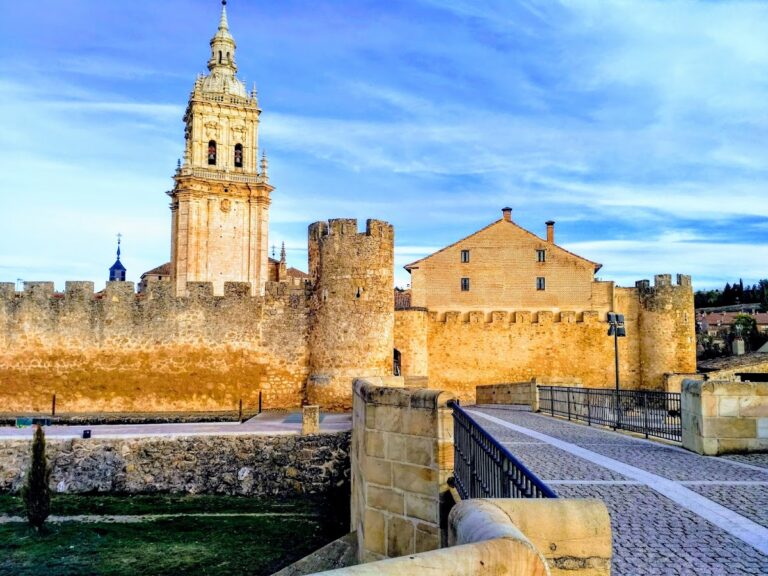
Calatañazor itself was enclosed by defensive walls. Sections survive on the northwest and south sides, together with drum towers and a small gate. The original wall construction dates from the twelfth century, and some sections reached a thickness of up to 18 metres.
Burial cut into the rock
Below the castle, a triple burial was cut into the bedrock. It can be dated from the tenth century onward and forms part of the archaeological remains associated with the fortified height.