Schloß Zeil: A Renaissance Palace in Germany
Site at a Glance
- Rating
- 4.7
- Popularity
- Medium
- Country
- Germany
- Primary era
- Early Modern
- External website
- Open
- Eras represented
- Early Modern, Modern
- Civilizations
- Holy Roman Empire
- Site type
- Domestic
- Remains
- Palace
On this page11 sections
History
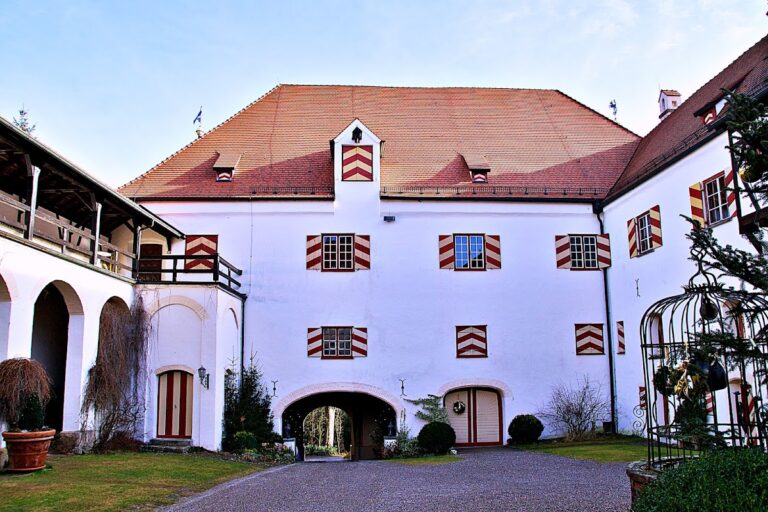
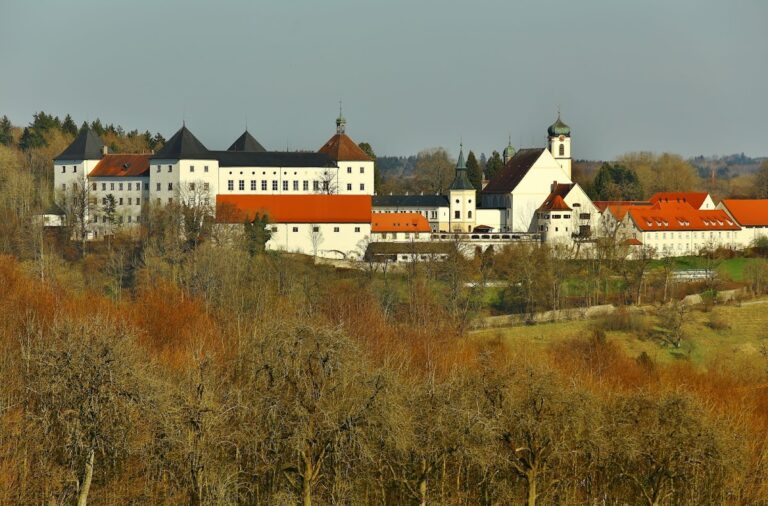
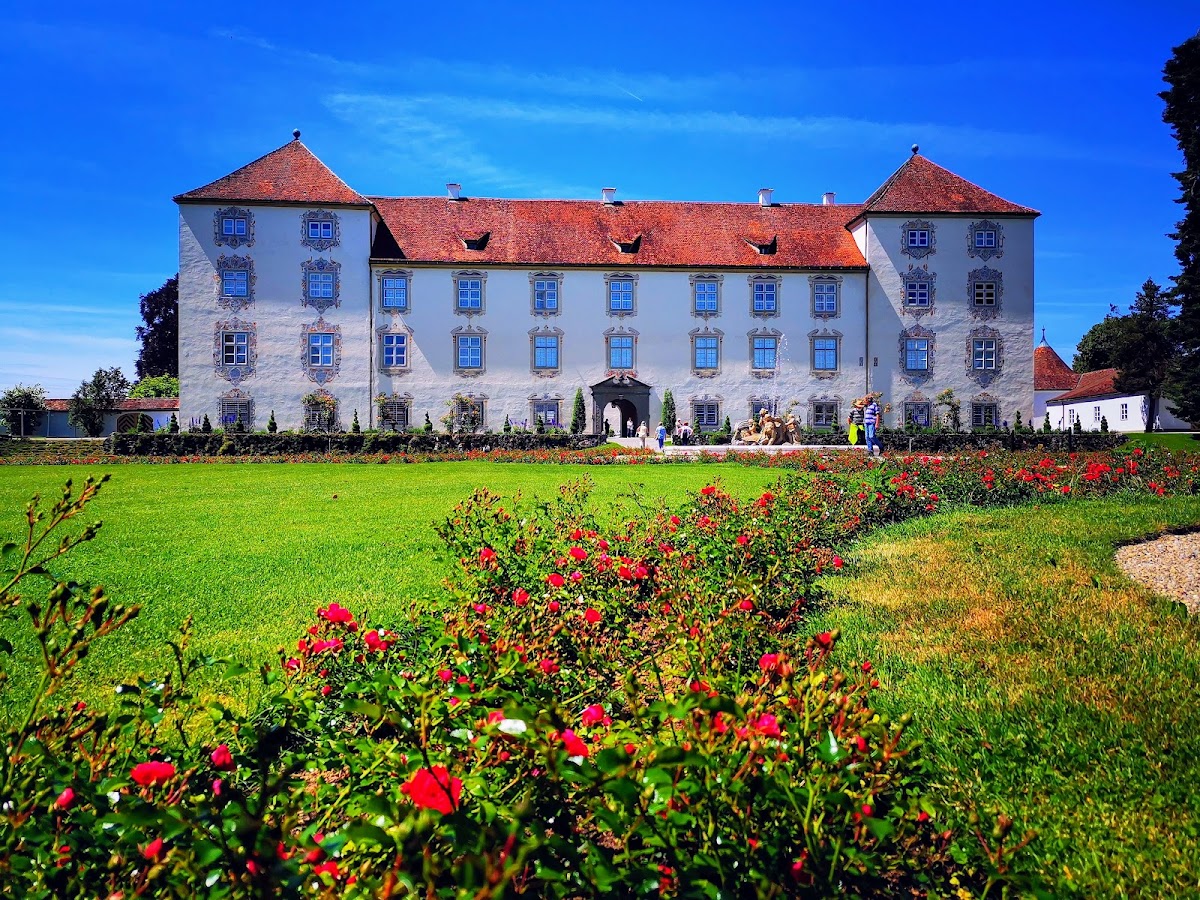
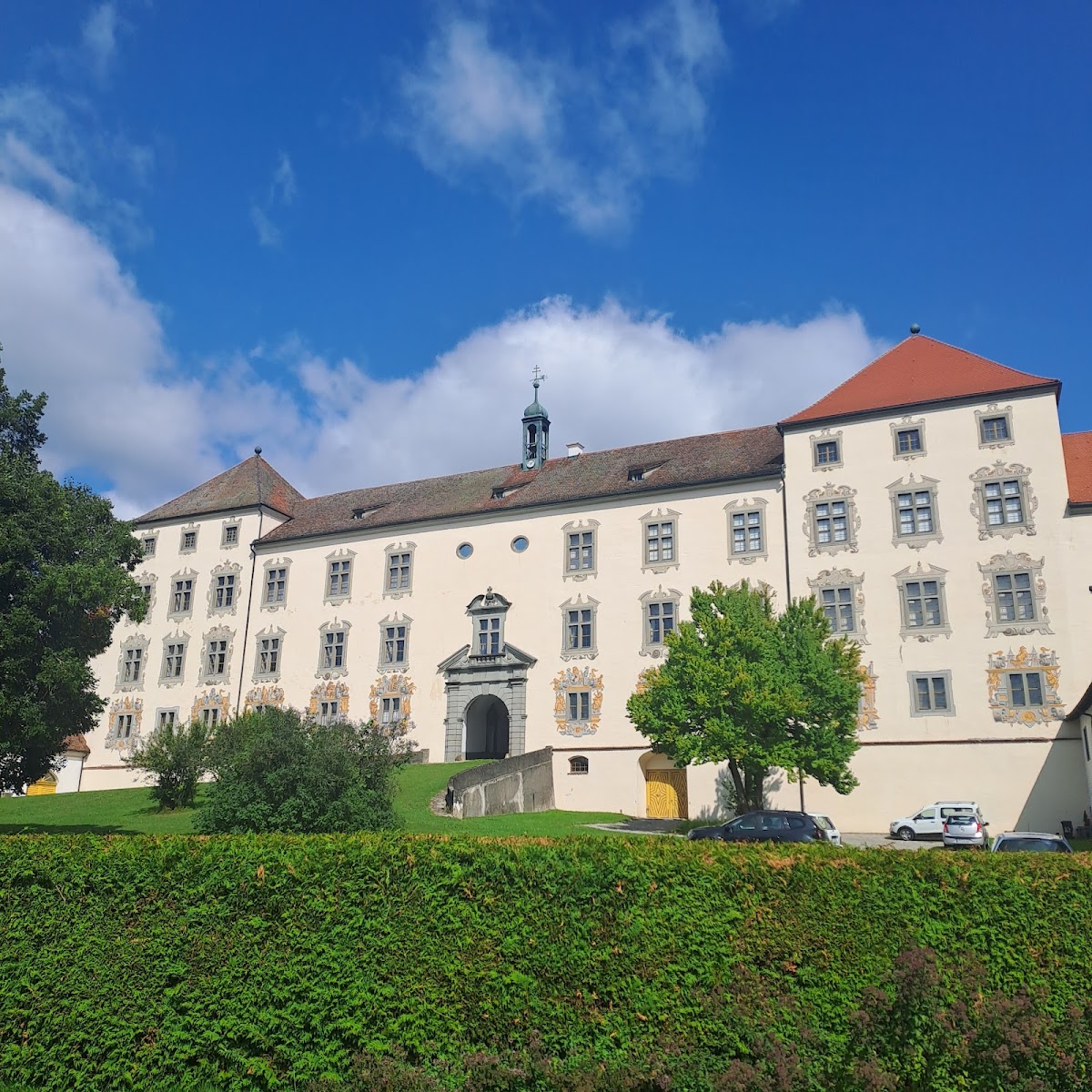
Schloß Zeil is a Renaissance palace in Germany, built between 1599 and 1614 under Froben, Truchsess of Waldburg-Zeil. It stands at 752 metres above sea level on a glacial terminal moraine, a ridge left by the furthest advance of a glacier, roughly 100 metres above Leutkirch. The site had already been settled during the Hallstatt period, an Early Iron Age culture of central Europe dated approximately from the eighth to the fifth century BC.
From early settlement to Renaissance palace
During the medieval period, the seneschals of Waldburg, members of the noble House of Waldburg, maintained a small castle on the site. That structure was demolished in 1598. Under Froben, whose title of Truchsess was associated with the office of seneschal or steward, the present four-wing palace was then constructed. Before this work began, Froben had commissioned a church and a house monastery, a monastery supported by a ruling or noble household.
The palace was accompanied by a Renaissance garden. Its design was altered during the Baroque period, reshaped again in the nineteenth century, and modified during the twentieth century. From the 1930s, further work pursued a more Renaissance-oriented character.
Twentieth-century history and continuing use
In 1945, Schloß Zeil temporarily accommodated members of the Vichy regime, the French government that collaborated with Nazi Germany during the Second World War. Among them was Marshal Philippe Pétain, who had been evacuated from Sigmaringen, where the group had operated as a French government in exile.
From 1961, the archaeologist Christoff Graf von Vojkffy von Vojkovic (1879–1970) lived at the palace as a guest. He carried out numerous field surveys in the surrounding area and found prehistoric artefacts, particularly Stone Age tools made from radiolarite, a hard siliceous rock used for tools. His extensive collection was later bequeathed to the Lake Dwelling Museum Unteruhldingen and the Research Institute for Prehistory and Early History at Lake Constance. Vojkffy remained at Schloß Zeil until his death in 1970 and was buried nearby in the cemetery of Reichenhofen-Unterzeil. He was the last male member of the Vojkffy von Vojkovic family.
Schloß Zeil remains the residence of the descendants of the Princes of Waldburg-Zeil. It is owned by Erich, Prince of Waldburg zu Zeil and Trauchburg, and functions as both the princely family’s private residence and premises for property administration. Most of the palace is rented as separate residential units. The complex also includes the parish church of St. Mary, dedicated to the Assumption of the Virgin Mary, while Schloß Zeil is an officially designated municipal district of Leutkirch im Allgäu.
Remains
Schloß Zeil is organized around a four-wing Renaissance palace with a courtyard and surrounding garden. The complex occupies an elevated glacial landform, and its position provides views across the Alpine arc, from the Karwendel and Wetterstein ranges in the southeast through the Allgäu and Lechtal Alps, Verwall, the Lechquellen Mountains, Rätikon, and Alpstein to the Glarus, Uri, and Bernese Alps. To the southwest, the view extends as far as Mount Pilatus, approximately 165 kilometres away.
Palace and garden
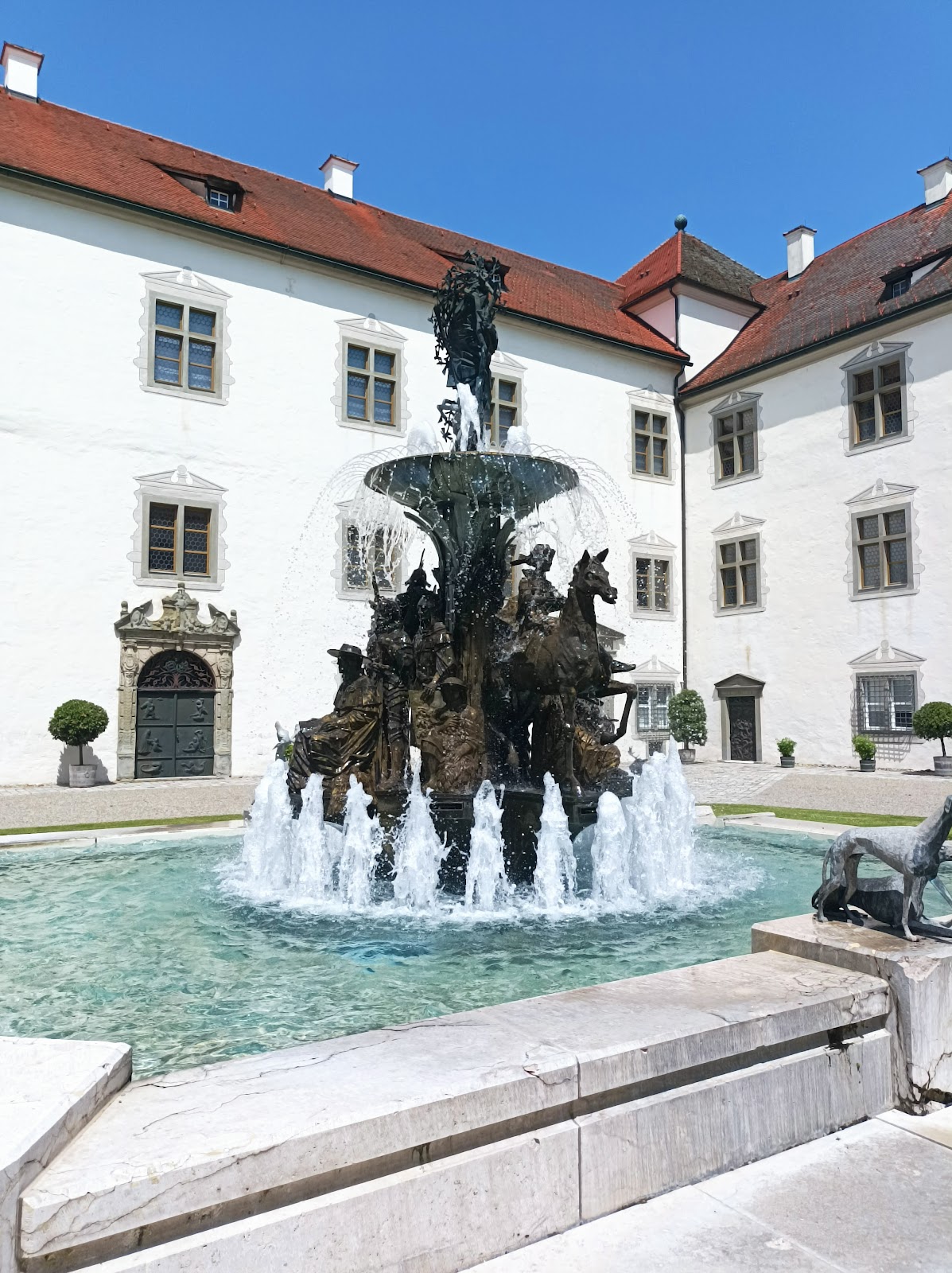
Four-wing palace
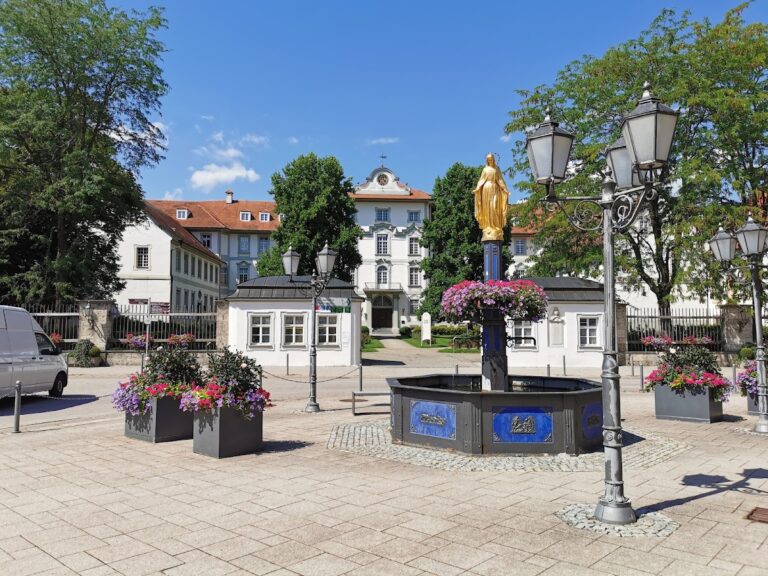
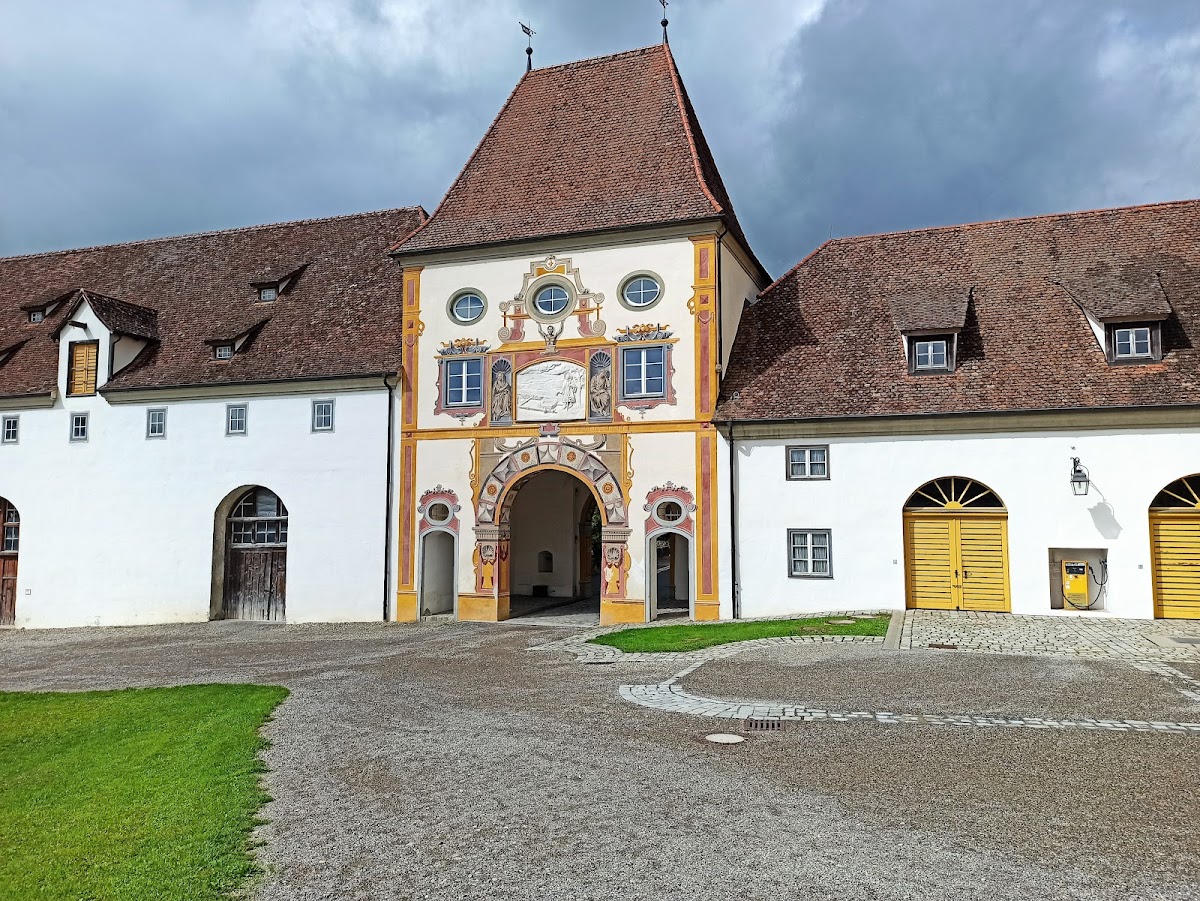
The principal building is a four-wing palace constructed in Renaissance style between 1599 and 1614. Its four wings enclose a courtyard, forming the central architectural core of the complex. A fountain installation created by the German sculptor and artist Maximilian Rueß between 1982 and 1989 stands in the courtyard.
Renaissance garden
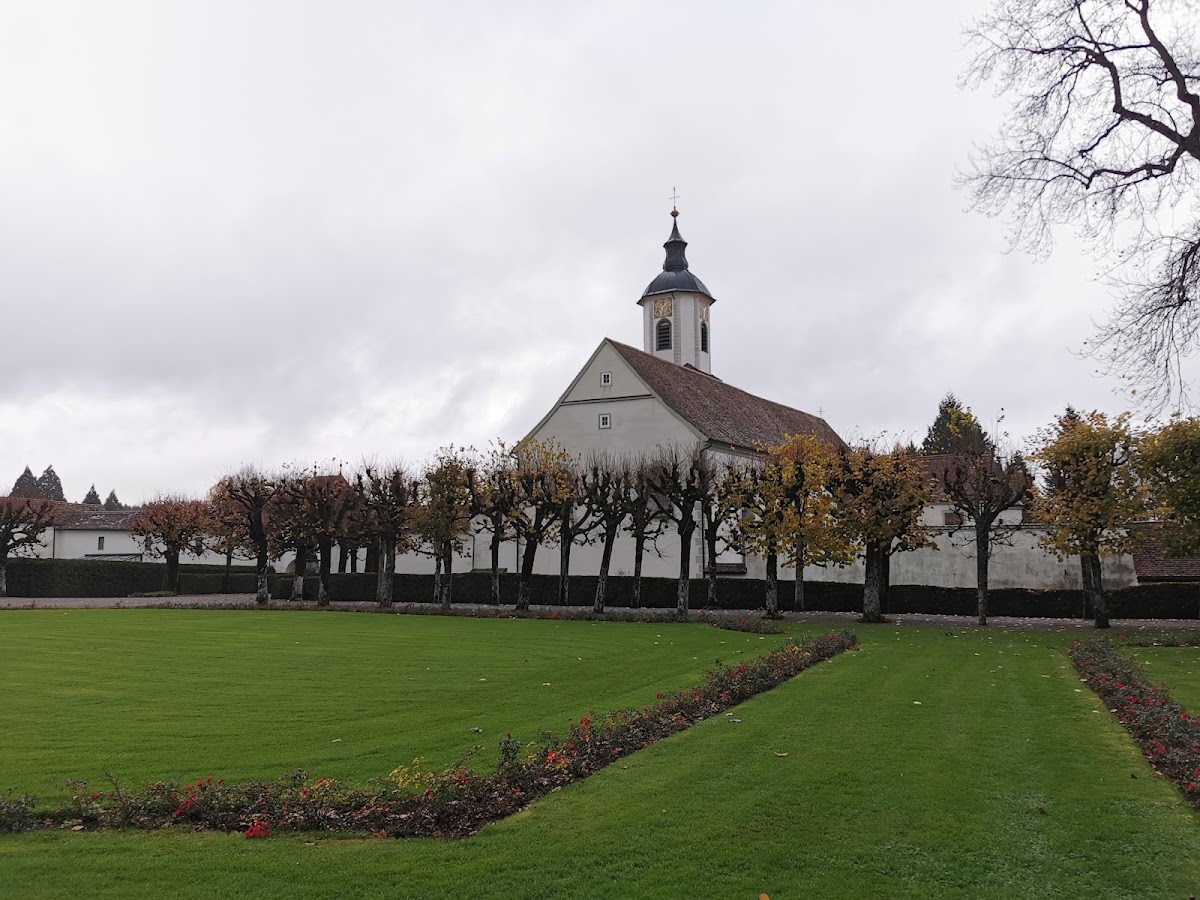
The garden surrounding the palace originated as a Renaissance garden. Its layout was subsequently reshaped in Baroque forms, during the nineteenth century, and during the twentieth century. Alterations made from the 1930s aimed to give the garden a Renaissance-oriented character.
Religious buildings
Parish church of St. Mary
The palace complex includes the parish church of St. Mary, which is also dedicated to the Assumption of the Virgin Mary. The church forms part of the wider architectural and religious setting established alongside the palace.
Chapel of St. Joseph
The small wooden Chapel of St. Joseph stands in the forest northeast of the palace. It was built in 1858 and remains a separate chapel within the landscape surrounding Schloß Zeil.
Archaeological evidence
Field surveys around the palace produced prehistoric artefacts, especially Stone Age tools made of radiolarite. These finds provide physical evidence for human activity in the area before the medieval castle and the Renaissance palace. The collection assembled through Christoff Graf von Vojkffy von Vojkovic’s work was later transferred to the Lake Dwelling Museum Unteruhldingen and the Research Institute for Prehistory and Early History at Lake Constance.