Garth Castle: A Fourteenth-Century Tower House in Glen Lyon
Site at a Glance
- Rating
- 3.6
- Popularity
- Very Low
- Country
- United Kingdom
- Primary era
- Medieval
- Eras represented
- Medieval
- Civilizations
- Kingdom of Scotland
- Site type
- Military
- Remains
- Castle
On this page6 sections
History
Garth Castle is a fourteenth-century Scottish castle in the United Kingdom, near Coshieville in Glen Lyon. Built in 1384, it is a fortified tower house associated with Alexander Stewart, 1st Earl of Buchan, a Scottish prince of the Stewart dynasty and son of King Robert II. Alexander, known as the Wolf of Badenoch, died at the castle in 1396. Major General David Stewart instead attributed its construction to James Stewart of Fortingall and Garth.
The Stewart lords
For about a century, the castle’s occupants remained loyal to the Stewart kings. Neil Stewart, described as the second laird of Fortingall, died at Garth Castle on 31 January 1499 and was buried in the graveyard of Dunkeld Cathedral. He was succeeded by Neil Stewart II, known as Red Neil of Fortingall. In 1502, Neil “Gointe” Stewart became the fourth laird of Fortingall, Garth, and Kilbrochan.
Mariota Stewart, the second wife of Neil Stewart II, was swept away by a torrent in the Keltnie Burn on 16 August 1545. Their children were John Stewart and Marie Stewart. John succeeded Neil Stewart II as fourth laird of Fortingall on 29 November 1554.
The 1654 siege
During the Glencairn Rising, a Scottish Royalist revolt against Oliver Cromwell’s Protectorate government in the mid-seventeenth century, Colonel Henry Wogan and 30 men occupied Garth Castle in 1654. Cromwell’s forces besieged the castle and shelled it with cannon. Wogan and his men then surrendered with little resistance.
The siege destroyed the drawbridge and caused the roof to be burnt. Garth Castle subsequently fell into ruin and remained in that state for more than 300 years. Its difficult access and the large stones used in its construction helped preserve it compared with similar dwellings and small rural settlements in the Atholl area.
Restoration and later ownership
In 1880, Scottish ship magnate Donald Currie bought the Garth Castle estate, the ruins, and Garth House. On 16 December that year, he launched the Glasgow-built steamer SS Garth Castle, named in honour of the castle. Currie partially restored the building, replacing badly damaged sections in a style intended to follow its original character.
In the 1960s, Mr Fry of Fry’s chocolate bought the castle with the intention of restoring it as a holiday home. Local architects in Aberfeldy carried out work based on Fry’s design, but he considered the result unsatisfactory. The English architect Leonard Manasseh was subsequently employed late in the project to produce a more acceptable design.
Remains
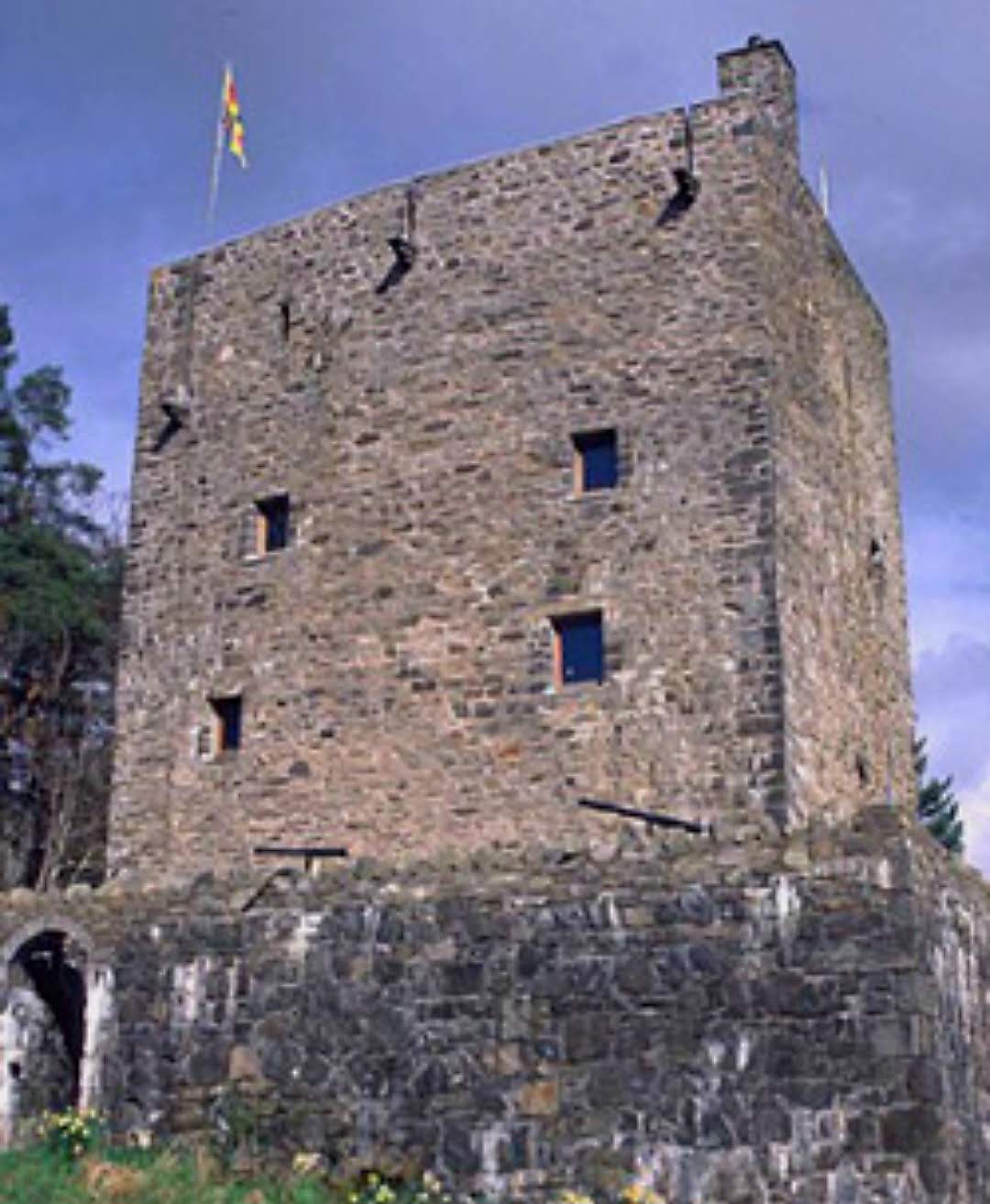
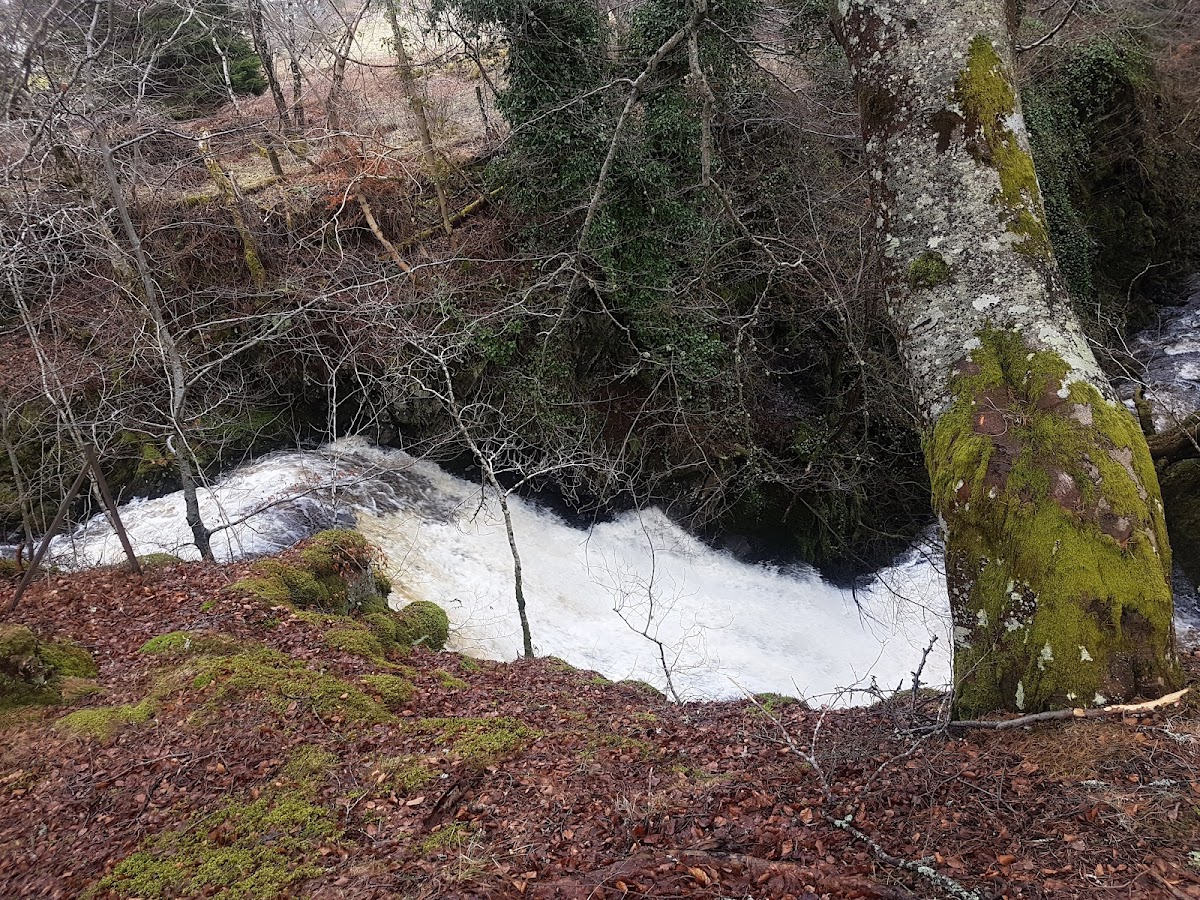
Garth Castle stands on a small, grass-covered knoll that is nearly isolated from the surrounding fields by two deep ravines. Two minor but fast-flowing streams pass through the ravines and meet a short distance south of the promontory. Their combined watercourse continues through a wooded ravine before joining the Keltnie Burn about a mile above its confluence with the River Lyon.
The tower house
The surviving building is a square tower house and keep, also described as a donjon, the principal fortified tower of a castle. Its walls combine unhewn boulders with quarried stone. They measure approximately 6.5 to 12 feet, or 2.0 to 3.7 metres, in thickness and rise to a parapet height of about 60 feet, or 18 metres.
Parts of the walls were badly damaged before the later restoration, which replaced sections in a style intended to match the castle’s natural character. The surviving tower therefore combines substantial medieval masonry with repaired sections shaped by the building’s modern restoration history.