La Sarraz Castle: A Fortified Seigneurial Residence and Museum in Switzerland


Site at a Glance
- Rating
- 4.6
- Popularity
- Low
- Country
- Switzerland
- Primary era
- Medieval
- External website
- Open
- Eras represented
- Medieval, Early Modern, Modern
- Civilizations
- Duchy of Savoy, Holy Roman Empire, Swiss
- Site type
- Military
- Remains
- Castle
On this page16 sections
History
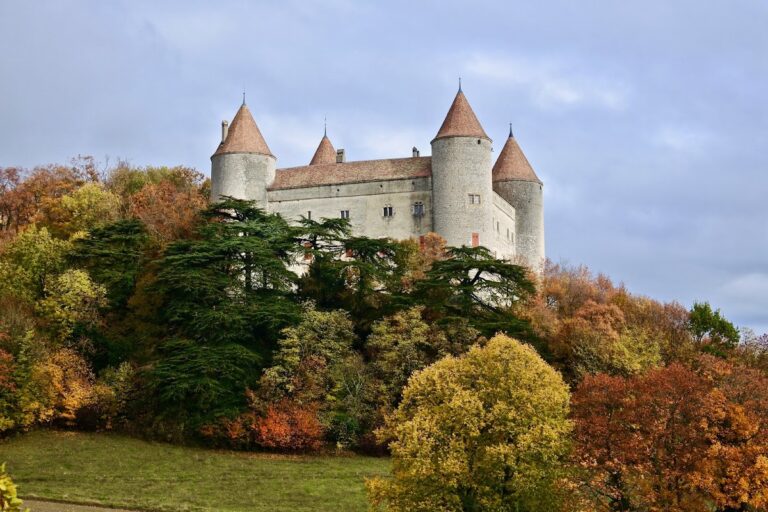
La Sarraz Castle is a fortified seigneurial residence in La Sarraz, Switzerland, developed by the La Sarraz family from the eleventh century and first mentioned as a fortification in 1049. It stood at the center of the local lordship and later became a museum, artists’ residence, and venue for international cultural movements.
Medieval lordship
The castle’s origins belong to the medieval formation of the La Sarraz lordship. The La Sarraz family established the site from the eleventh century, while another tradition attributes its construction in the twelfth century to the lords of Grandson. Ownership later passed through the Grandson-La Sarraz, Montferrant-La Sarraz, and Gingins-La Sarraz families and their descendants.
The castle probably suffered pillage in 1475 during the Burgundian Wars, conflicts between the Duchy of Burgundy and the Swiss Confederacy and its allies. Further destruction followed in 1536, when Bern conquered Vaud. The residence was subsequently renovated. François de Gingins acquired the lordship in 1542, and the Gingins family retained ownership until around 1900.
Gingins renovations and the dynastic museum
During the eighteenth century, the Gingins owners were established in Bern and in neighboring lordships, including Orny, and the castle was neglected. In the early nineteenth century, Frédéric Charles Jean de Gingins de la Sarraz returned to live there and carried out extensive renovations. He also conceived a dynastic museum based on the castle’s furniture and family portraits, enlarging it through acquisitions that included the book of hours associated with Jean II de Gingins.
In the late nineteenth century, the estate passed to the Mandrot family. Henri de Mandrot inherited it from his uncle Aymon de Gingins in 1893. Henri broadened the museum’s purpose from family history to the presentation of everyday life. The Société du Musée Romand was founded in 1911, and the castle became its property in 1920 in accordance with his wishes. The Musée Romand opened to the public in 1922, initially displaying the Knights’ Hall and Dining Room.
House of Artists and international modernism
Hélène de Mandrot, born Revilliod, owned the castle until her death in 1948 and continued its cultural role by establishing a House of Artists. From 26 to 29 June 1928, the castle hosted the first congress of CIAM, the International Congresses of Modern Architecture, an organization and series of meetings devoted to modern architectural design and urban planning. Participants included Le Corbusier and Pierre Chareau.
The castle also hosted the first congress of independent cinema in 1929. Sergei Eisenstein made Storm over La Sarraz there that year, although the film is now considered lost. Other guests and participants included the filmmaker Hans Richter and figures associated with modern art, architecture, and cinema.
Collections, restoration, and administration
After Hélène de Mandrot’s death, the castle and its furnishings passed to the Société des Amis du Château de La Sarraz. A conservator took office the following year. Charles Knébel expanded the collections with works from his own holdings, including watercolors by Charles-François Knébel and François Keiserman, and prepared the first inventory of the collections.
Major renovation and restoration took place from 1987 to 1999 through the project known as “Renovation 2000.” The work emphasized the character of the castle as a seigneurial residence and supplemented the period-room displays with thematic rooms containing display cases. A flood in 2012 caused extensive damage. Repairs revealed fragments of wall paintings, while the University of Lausanne documented and studied parts of the collections between 2012 and 2015.
In 2015, the museum presented The Helvetians at Mormont, an exhibition of objects from Celtic excavations at nearby Mormont Hill, where archaeological remains had been discovered in 2006. The museum reopened in 2021 with “900 Years of Dynasties,” an interactive route centered on continuous habitation and hereditary transmission through inheritance or marriage over nine centuries. The castle is administered by the Fondation du Château de La Sarraz, established on 30 June 2016 through the transfer of the assets and liabilities of the Société des Amis du Château de La Sarraz–Musée Romand. It is protected as a Swiss cultural property of national significance, included in the Swiss Inventory of Cultural Property of National Importance in category O, and has received the European Heritage Label.
The Swiss Horse Museum
The Swiss Horse Museum has occupied part of the castle site since 1982. It was established in 1978 after Switzerland abolished its mounted military units in 1972, then opened at La Sarraz in a former castle barn. The museum has permanent and temporary exhibitions and uses the courtyard and castle park for some events. It received Special Commendations from the European Museum Forum in 1984.
Remains
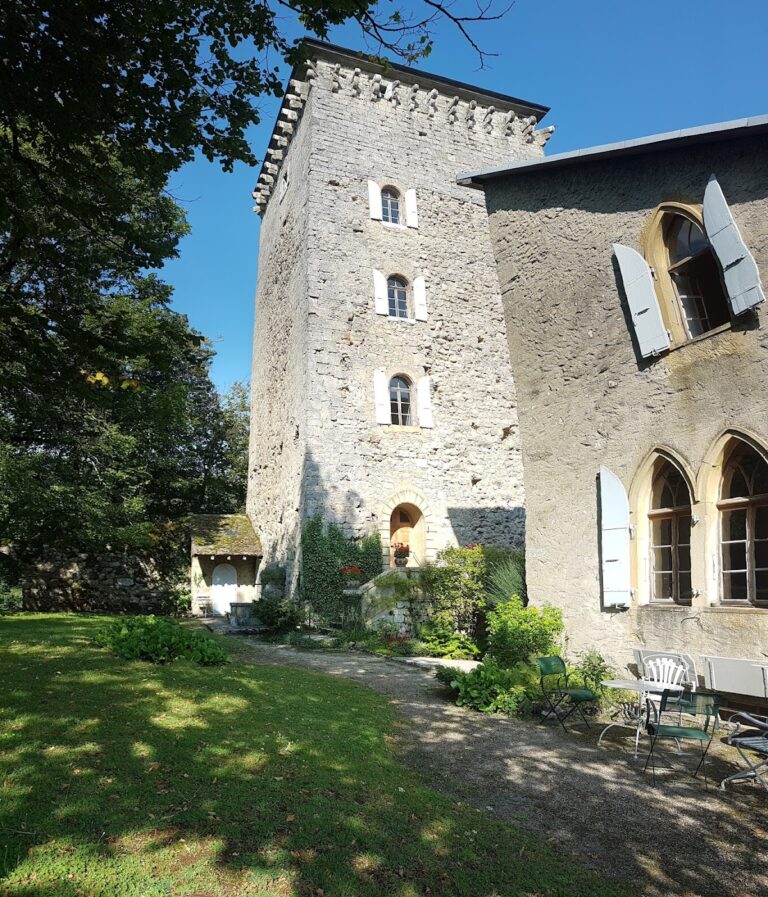
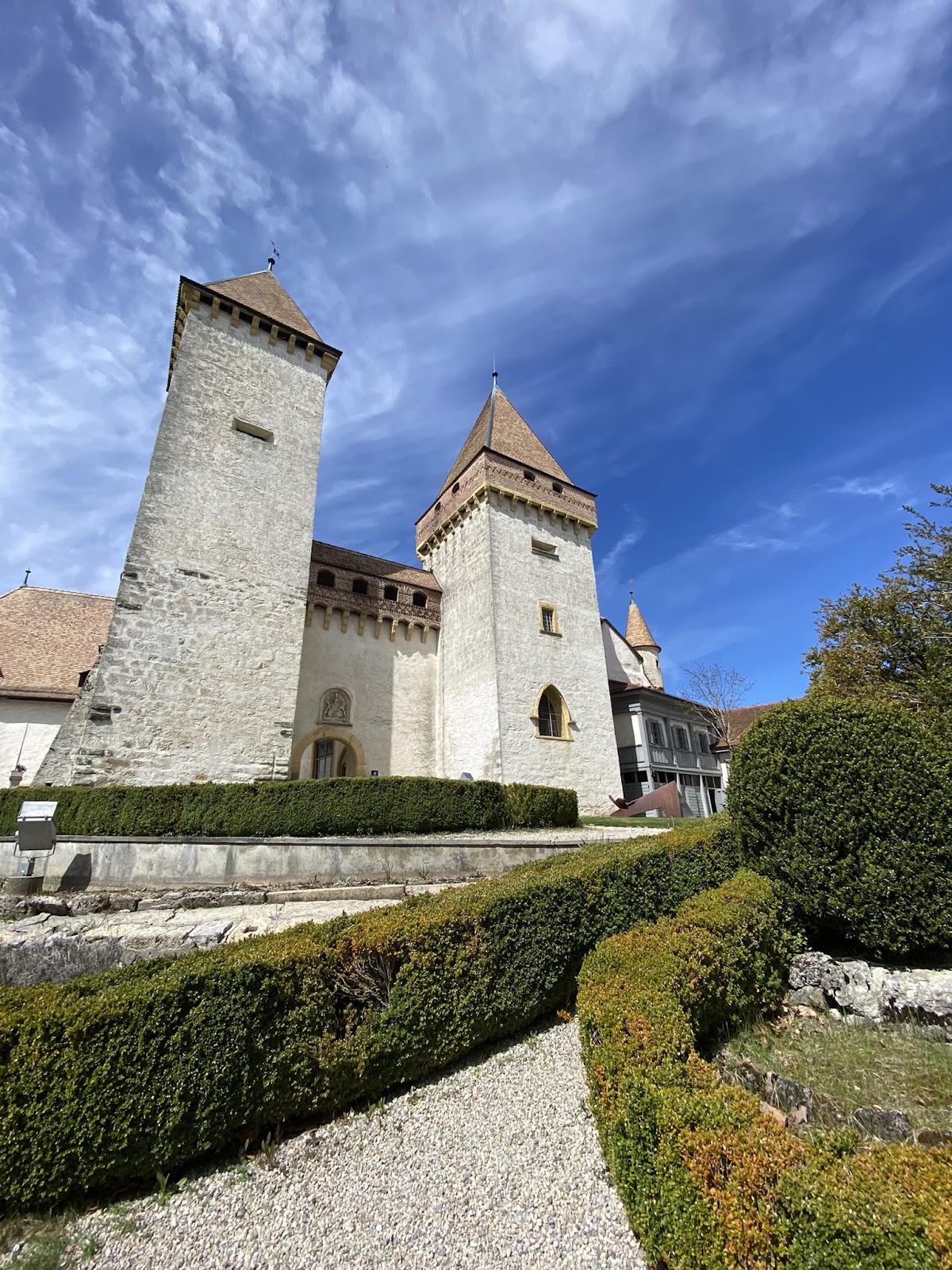
La Sarraz Castle occupies a rocky promontory on the Swiss Plateau along the Vallorbe–Lausanne axis. Its surviving complex is a fortified residence formed chiefly from medieval building phases, with a twelfth-century keep, a thirteenth-century residential range, and a fourteenth-century guard tower. Substantial alterations, especially during the sixteenth century, and later nineteenth-century interventions have given the site its present mixture of medieval, Neoclassical, and Neo-Gothic elements.
Medieval fortified residence
Keep
The keep belongs to the twelfth century and forms part of the castle’s medieval defensive core. It survives within the larger residence, whose successive additions developed the site from a fortified stronghold into the principal residential and administrative seat of the local lordship.
Residential range
The residential range dates from the thirteenth century. It provided the domestic and representational spaces of the seigneurial residence and was later altered as the castle was renovated and adapted for museum use.
Guard tower
The guard tower was built in the fourteenth century. Its eastern defensive tower contains a vaulted room at the base, which the architect Louis Wenger later adapted as a pseudo-chapel to house the tomb of François I of La Sarra. The tomb had recently been rediscovered in the neighboring Saint Anthony Chapel, also called the Jaquemart Chapel.
Later architectural transformations
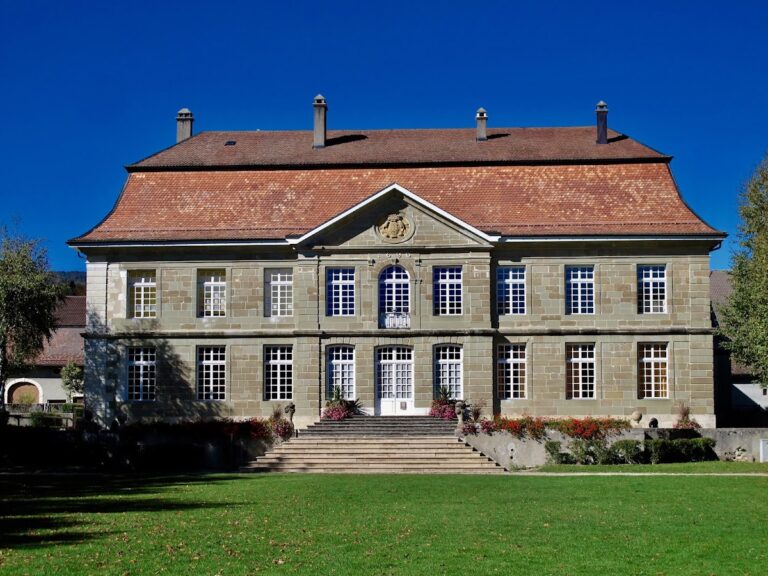
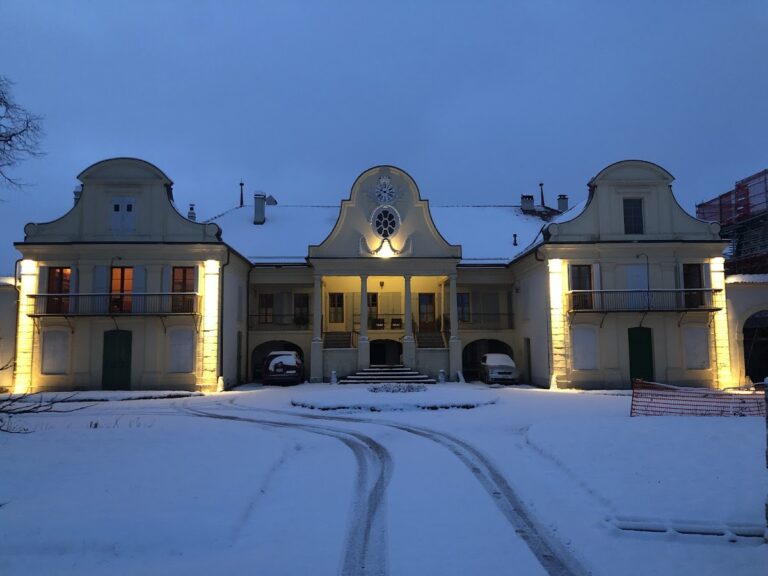
Several molded-beam ceilings date from approximately 1550 to 1600, including those in the Knights’ Hall. Nineteenth-century work by Frédéric Charles Jean de Gingins de la Sarraz renovated the outbuildings and interiors in a Neoclassical manner. Neo-Gothic stained glass was added, and the stair towers received height extensions and facades associated with the Lausanne architect François Recordon. The extensions were later removed.
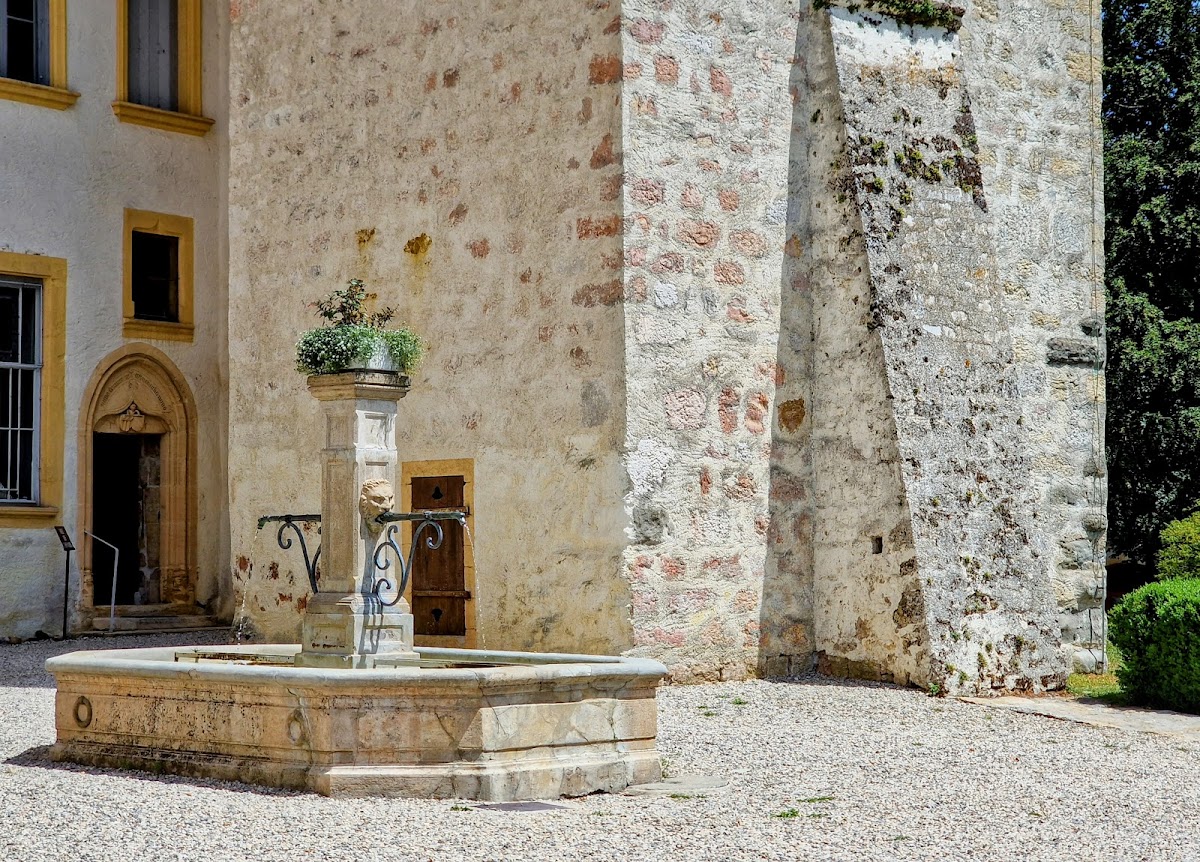
A large English-style park was created after the enclosing wall of the castle courtyard was demolished. The former barn used by the Swiss Horse Museum remains part of the castle site, alongside the courtyard and park.
Museum interiors and collections
Period rooms
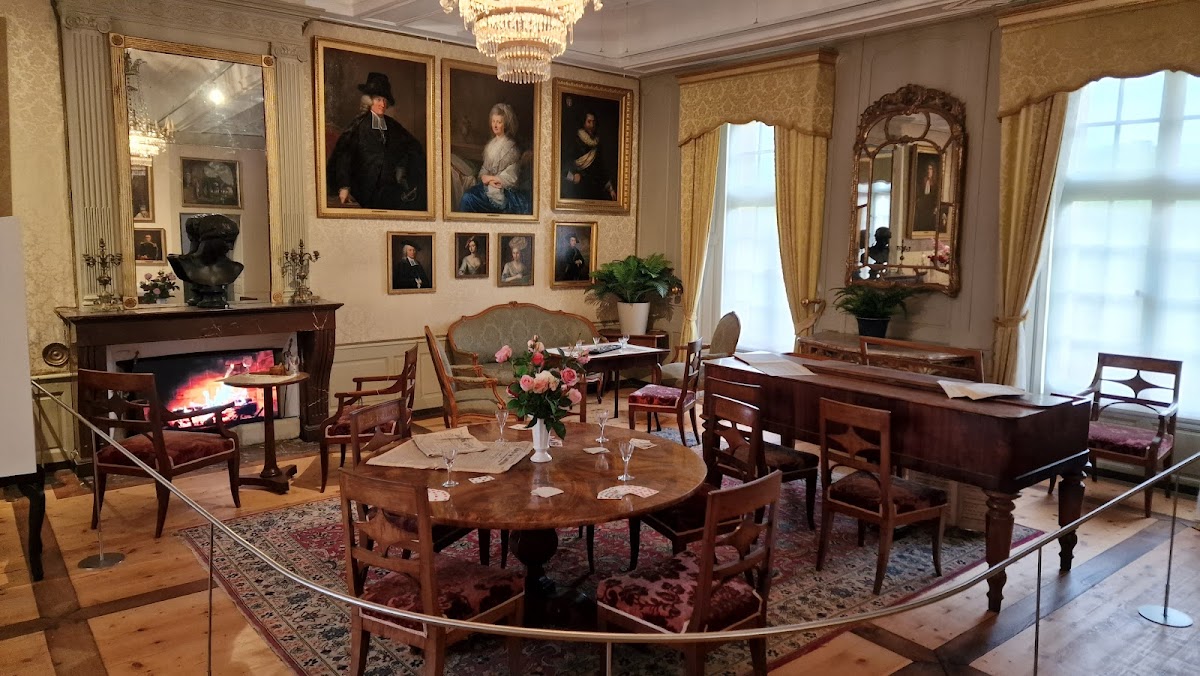
The early museum presentation preserved the Knights’ Hall in a state still relatively close to its 1922 appearance, together with the Dining Room. These displays use the period-room method, reconstructing interiors according to historical period or function with furniture and furnishings intended to form coherent settings.
White-cube installations
The later museum route adds white cubes, deliberately neutral, usually white and windowless gallery spaces. These rooms were inserted into existing interiors with additional flooring and stretched white wall coverings. They interrupt the route through the castle and direct attention toward individual objects rather than reconstructed domestic surroundings.
Collections
The collections include furniture, portraits, tableware, weapons, a library, and other material related to dynastic and everyday life. They contain works associated with the cabinetmakers and joiners Matthäus Funk, Johann Friedrich Funk, Johannes Äbersold, and Christophe Hopfengärtner, as well as portraits by Bernese painters including Johannes Dünz, Bartholomäus Sarburgh, and Emanuel Handmann. Some works by artists who visited through Hélène de Mandrot’s House of Artists also remained at the castle.