Castle of Santarém: A Hilltop Fortification in Portugal
Site at a Glance
- Rating
- 4.5
- Popularity
- Low
- Country
- Portugal
- Primary era
- Medieval
- Eras represented
- Classical, Medieval, Early Modern
- Civilizations
- Portuguese, Roman
- Site type
- Military
- Remains
- Castle
On this page13 sections
History
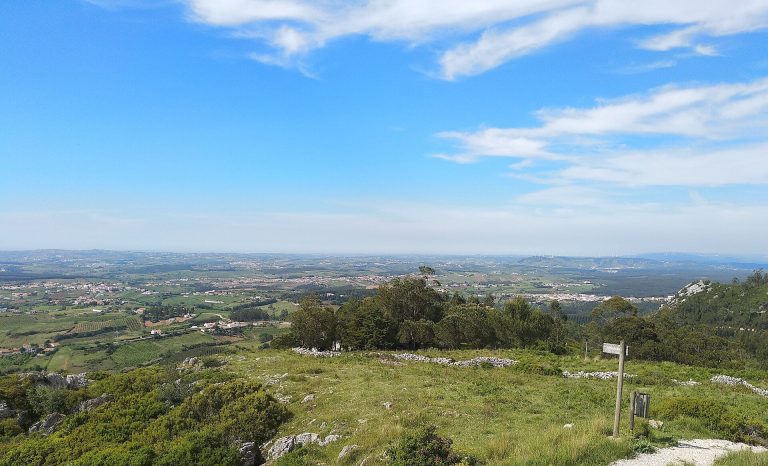
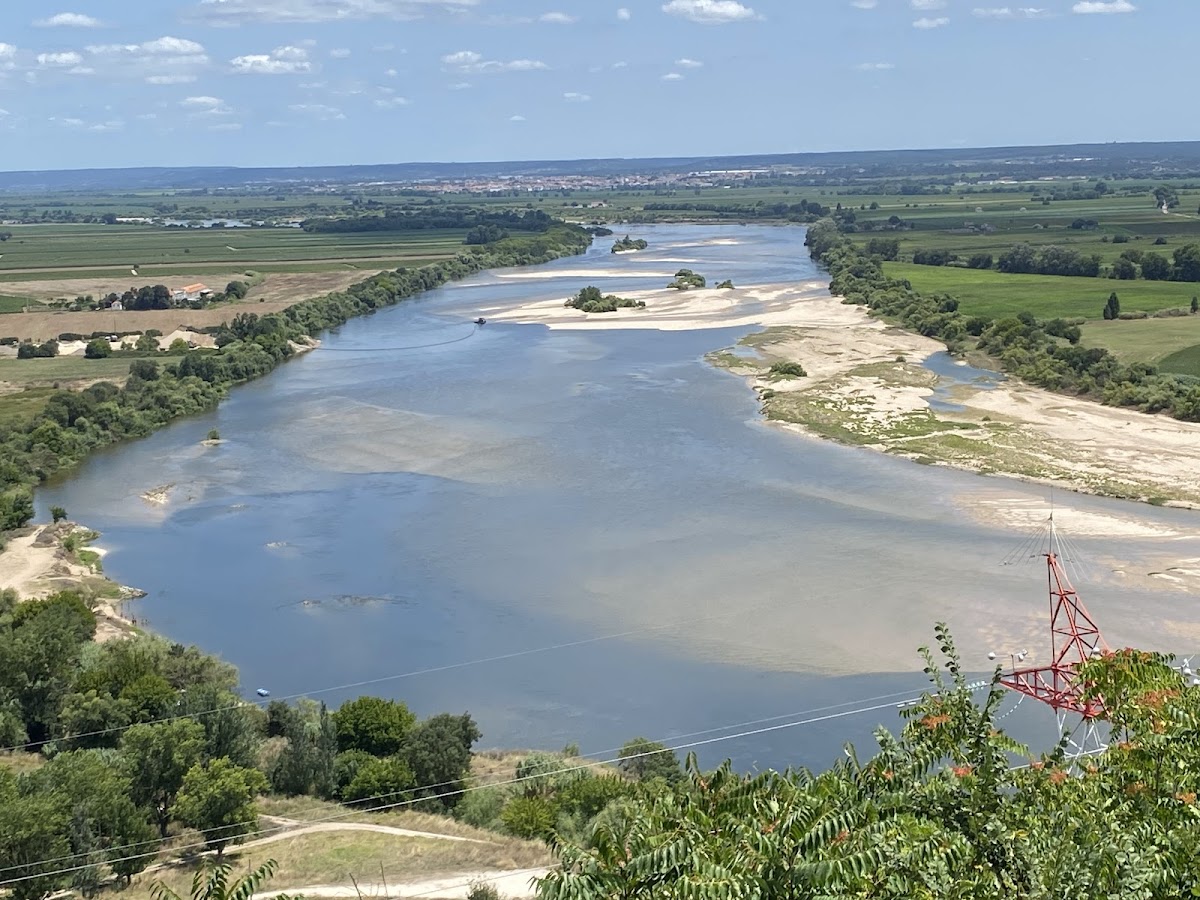
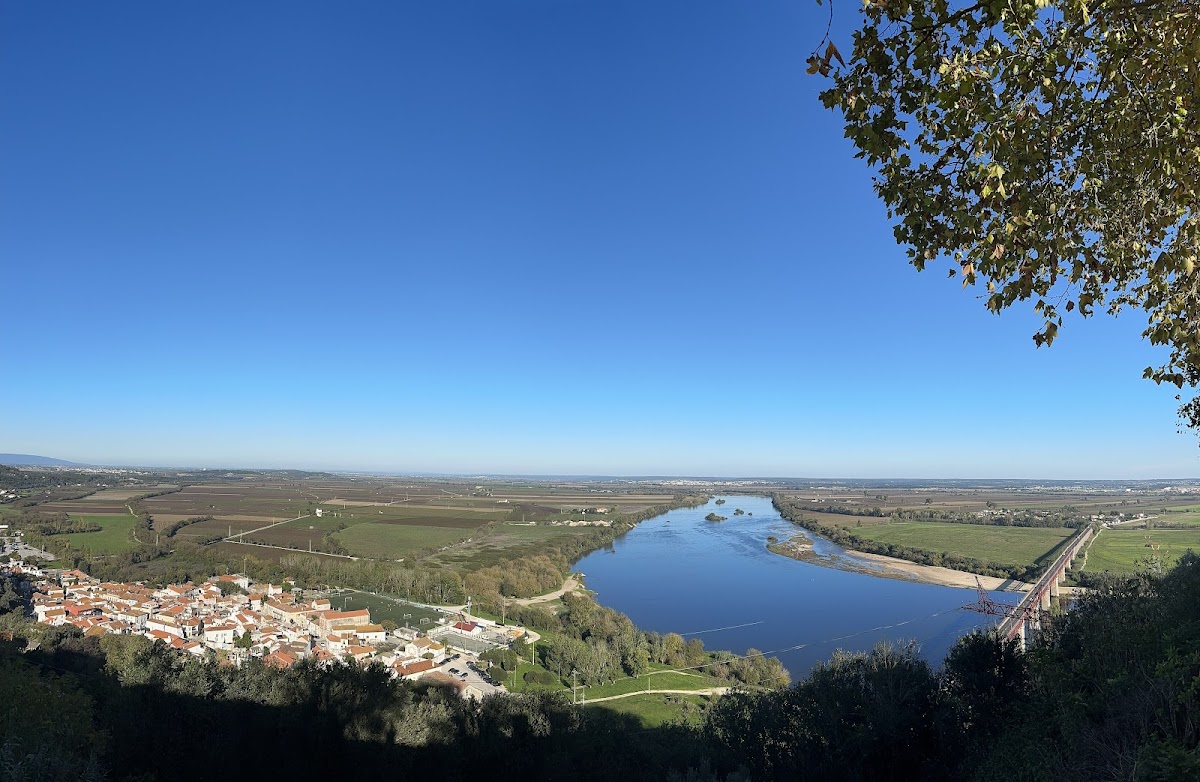
Castle of Santarém is a hilltop fortification in Santarém, Portugal, whose medieval defenses combined Romanesque and Gothic elements. Occupying a strategically defensive position above the Tagus River and fertile agricultural land, it formed part of the medieval defensive line along the river and controlled an important settlement.
Ancient settlement and Roman administration
Human occupation of the hill may reach back to a prehistoric hillfort and a settlement established in the eighth century BCE. Roman forces reached the settlement in 138 BCE. They called it Scalabi Castro or Escálabis, and developed it into a commercial entrepôt on the middle Tagus and an administrative center. After the Roman conquest, the settlement also received a permanent military garrison and was fortified under the name Praesidium Julia.
Late antique and Muslim rule
The settlement was given to Sunerico in 460. The Suebi took possession in 529, and the Visigoths followed in the seventh century. During the Visigothic period it was known as Sancta Irena. Muslim forces occupied Santarém at the beginning of the eighth century and called it Chantirein or Chantarim. They preserved the town’s urban structure while strengthening its agricultural, commercial, and administrative functions.
Christian conquest and frontier warfare
During the Reconquista, the long expansion of Christian rule into territories governed by Muslim states in the Iberian Peninsula, Asturian-Leonese rulers repeatedly attacked Santarém. Its Muslim fortifications were probably repaired and reinforced. Control of the town alternated between Muslim and Christian forces from the late eleventh century into the early twelfth century, before Santarém eventually came under the Almohad Caliphate, a North African Muslim empire that ruled parts of Iberia.
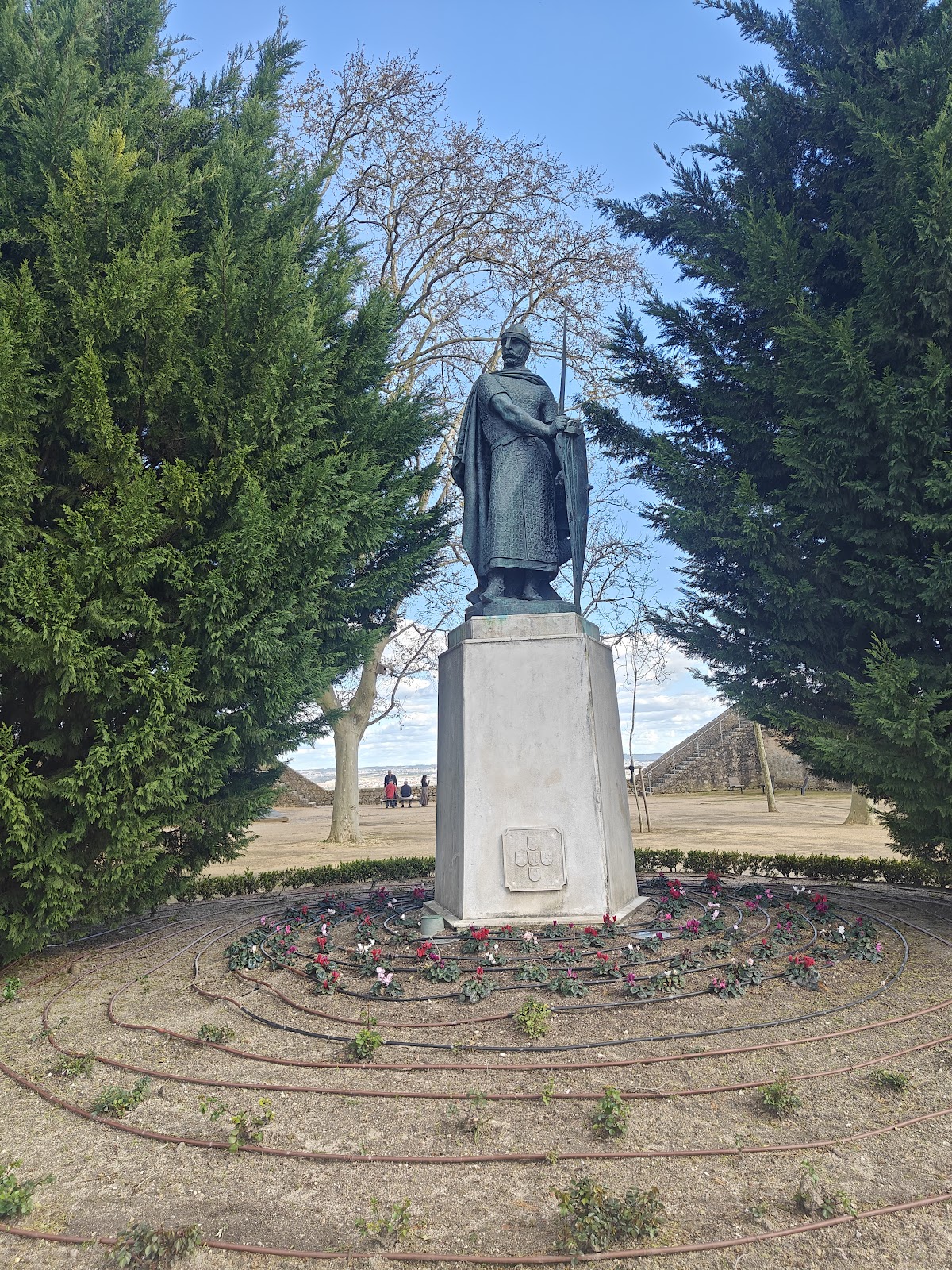
Portuguese forces commanded by King Afonso Henriques, the first king of Portugal, captured Santarém and its castle in a surprise night assault on 15 March 1147. Afonso Henriques later donated the settlement’s ecclesiastical rights to the Order of the Templars, a medieval Christian military-religious order with religious, military, and territorial responsibilities in Iberia. Monks of the Monastery of Santa Cruz of Coimbra commemorated the assault in the manuscript De expugnatione Scalabis.
The Almohads attacked the town and castle in 1171. Ferdinand II of León, Afonso Henriques’ son-in-law, helped disperse the attackers while he was in Santarém. A further Muslim attack in 1181 was repelled after the defenders launched a counteroffensive, with the Infante Sancho present in the city. Another Almohad offensive in 1184 became a siege lasting four months.
Political conflicts and defensive expansion
In 1245, the governor of Santarém recognized the authority of Infante Afonso, who had been appointed regent in place of his deposed brother, Sancho II. In 1324, Santarém and its castle supported another Infante Afonso, the son of King Denis, in his revolt against his father. The revolt was suppressed, and King Denis died at Santarém on 7 January 1325.
During the reign of King Ferdinand, the town’s defenses were strengthened and expanded. The Gate of Santiago was renovated with a pointed arch in 1382. During the political crisis of 1383–1385, the widowed Queen Leonor Teles took refuge inside the castle after Christmas 1383. She sought Castilian intervention on behalf of her daughter Beatriz, recognized John I of Castile as lord and governor of the kingdom in January 1384, and enabled him to install a Castilian garrison at Santarém. Portuguese control was restored soon after the Battle of Aljubarrota in 1385.
The possible death of Infante Afonso, son of King John II, in a riding accident at Mouchão de Alfange beside the Tagus in 1491 has been identified by some scholars as one reason for the court’s departure from Santarém and the town’s later administrative decline. The defenses were severely damaged by the earthquake of 1531.
Early modern military use and conservation
King John IV promoted the modernization and reinforcement of the defenses during the Portuguese Restoration War. King Miguel undertook similar works during the Liberal Wars and used the castle as a stronghold from October 1833 until 17 May 1834.
Santarém became a city in December 1868. Later urban expansion absorbed much of the medieval defensive system, leaving surviving wall sections and associated fortifications. Archaeological prospecting began in the 1990s to identify sections of the old walls, and some were consolidated. Research in the Alcáçova enclosure by the Centre for Archaeology of the University of Lisbon, supported by the Portuguese Institute of Architectural Heritage, exposed the base of a Roman temple approximately 15 metres square, probably dating from the first century BCE.
The surviving wall sections and the Tower of Cabaças have been classified as Immovable Cultural Heritage of Public Interest since 1917. The protected complex is also recorded as immovable cultural heritage of public interest.
Remains
Castle enclosure and medieval walls
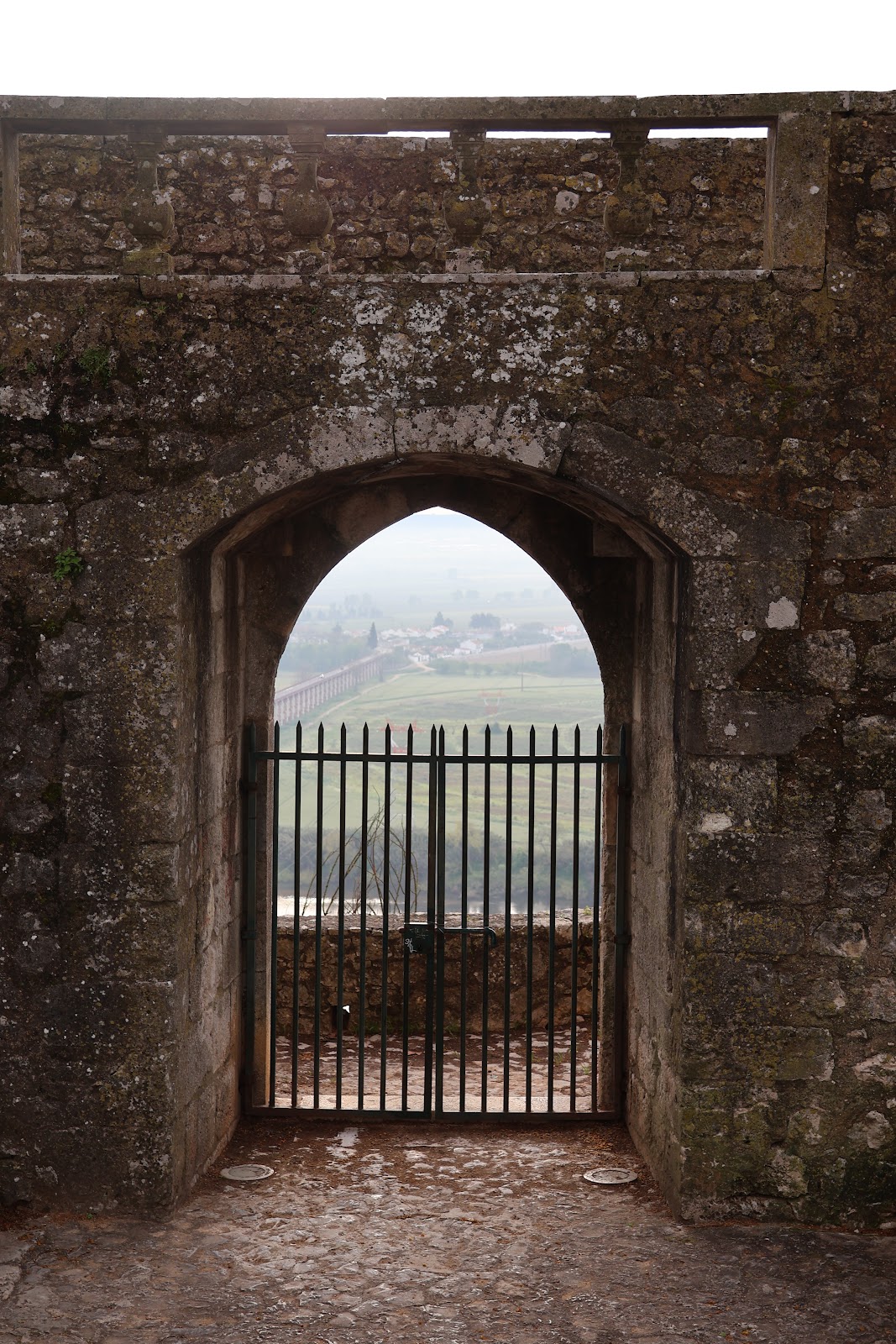
The original defenses consisted of the Alcáçova, the fortified citadel or inner enclosure, together with the town wall. A barbican, an advanced defensive work protecting an entrance or wall, strengthened the outer defenses, while the riverside districts of Ribeira and Alfange were also enclosed. The medieval walls had vertical curtain sections topped by prismatic merlons, the raised parts of a battlement, and pierced by loopholes, which were narrow openings for observation or defense. Square and semicircular bastions and square towers reinforced the walls at regular intervals, while the entrances used pointed-arch openings.
Gates and posterns
The town wall had seven principal gates linked to seven access routes. These included the Gate of the Sun, leading toward Alfange; the Alcáçova Gate; the Gate of Leiria; the Gate of São Manços and its postern; the Gate of Alpram or Alporão, leading toward Marvila; and the Gate of Valada. The Gate of Santiago also formed part of the defensive system. Other openings included the Gate of Atamarma, leading toward Ribeira; the Gate of Figueiras; the Postern of Gonçalo Eanes, also associated with Carreira or D. Margarida; the Postern of Santo Estêvão; the Postern of Vale de Rei; the Postern of Gonçalo Correia in the wall between the Alcáçova and Marvila; and the Postern of Ferragial in Marvila.
Gate of Santiago
The Gate of Santiago survives in the remains of its inner and outer pointed arches. A Portuguese coat of arms stands beside an inscription that is now mutilated and illegible. The gate’s pointed arch was renovated in 1382 during the expansion of the town’s defenses under King Ferdinand.
Towers and surviving wall sections
Recorded original towers include the Tower of Bufo in the Alcáçova, the Tower of Manços, and an albarrana tower, a projecting defensive tower set apart from or advanced beyond the main wall, beside the Alcáçova. The surviving feature known as the Cabaceiro or Tower of Cabaças forms part of the castle remains.
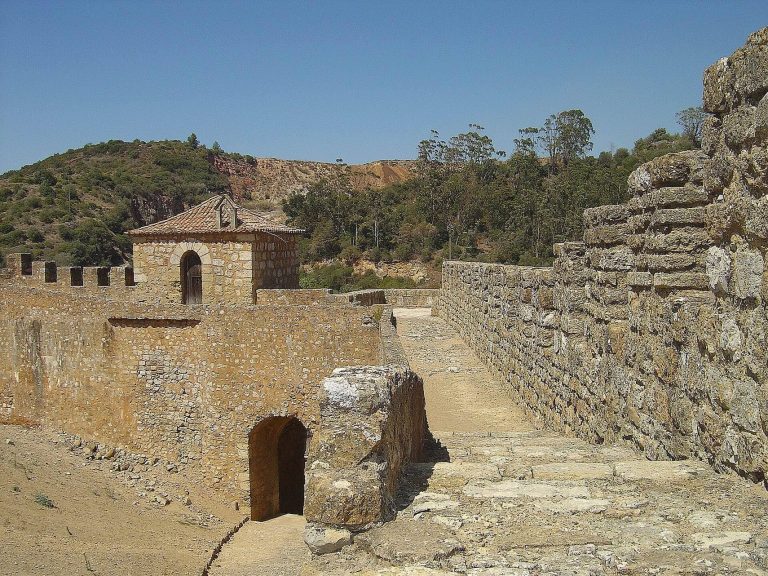
A surviving wall section beside the Gate of the Sun has three towers crowned with merlons. It extends above the Alfange valley and riverside, and one corner incorporates a seventeenth-century sentry box. Further wall sections survive beside the Gate of Treason on the hill above the Fountain of Figueiras, at the Marvila primary school in the Pereiro district, and opposite the church of the Gracians.
Seventeenth-century fortifications
The later fortification was built in the Mannerist style and included a ravelin, a detached triangular fortification placed in front of a defensive line. Its sloping wall faces led to a point crowned by a sentry box with a domed roof. This early modern work formed part of the modernization and reinforcement of the defenses during the Portuguese Restoration War.
Roman archaeological remains
Archaeological work within the Alcáçova exposed the podium, or base, of a Roman temple. The surviving base measures approximately 15 metres on each side and probably dates from the first century BCE, providing physical evidence of the settlement’s Roman administrative and military phase.