Bužim Castle: A Medieval Fortress and Noble Residence in Bosnia and Herzegovina

Site at a Glance
- Rating
- 4.8
- Popularity
- Low
- Country
- Bosnia and Herzegovina
- Primary era
- Medieval
- External website
- Open
- Eras represented
- Medieval, Early Modern
- Civilizations
- Hungarian, Ottoman
- Site type
- Military
- Remains
- Castle
On this page8 sections
History
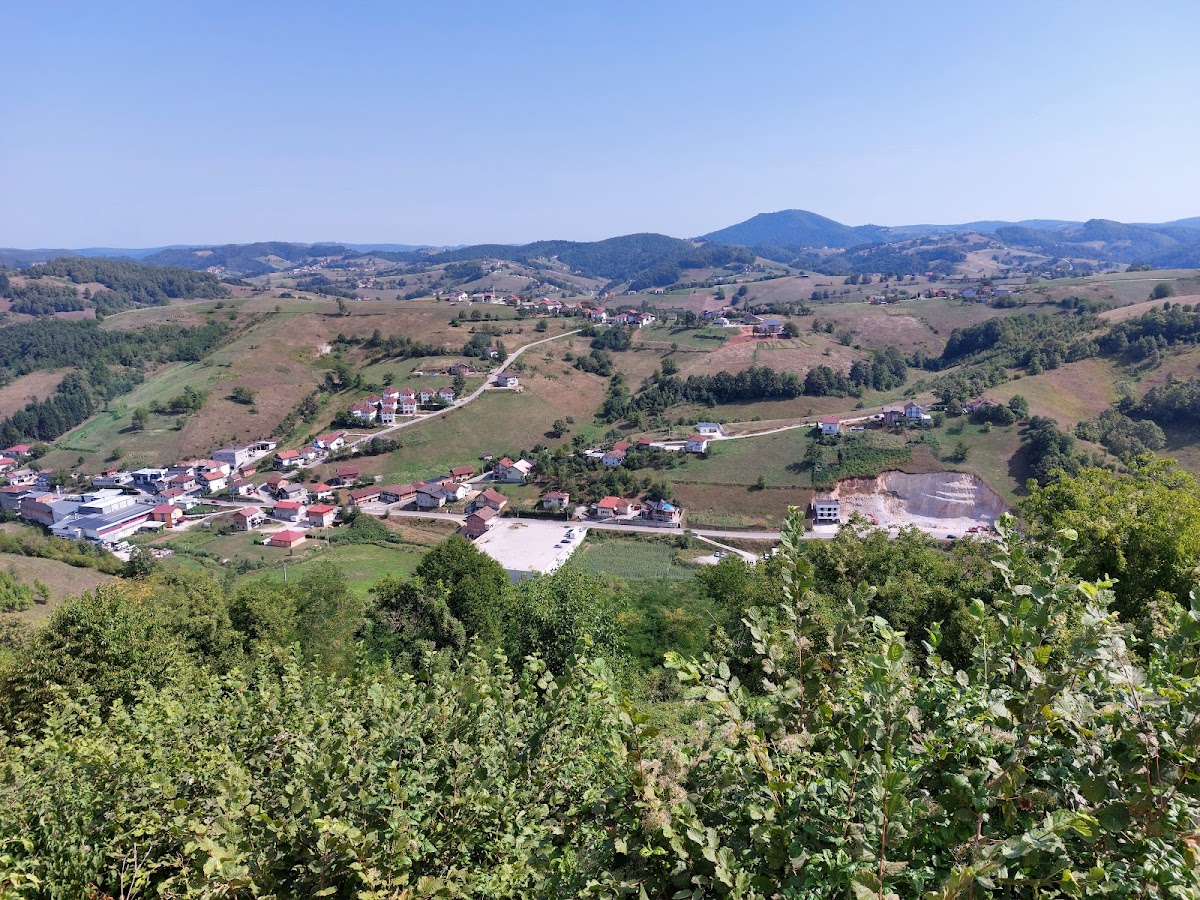
Bužim Castle is a medieval fortress and noble residence in Bosnia and Herzegovina, built by the medieval powers of the Bosnian-Croatian frontier and generally assigned to the fourteenth century. It stands above the settlement of Bužim in the historical Bosnian Krajina, a northwestern borderland region, and later became a Renaissance fortress adapted to artillery. The settlement developed at the foot of the castle, making the stronghold both a military hill fort and the center of a territorial estate.
Origins and Noble Lordship
The site is first mentioned in 1334, when the settlement was recorded as “Čave alias Bužim.” In the same year, a parish dedicated to Saint Clement was associated with the Zagreb bishopric, the medieval Roman Catholic diocese responsible for the area. A church dedicated to Saint Clement is described as having stood within Čavski Castle, another name for Bužim Castle. A twelfth-century origin has been proposed, but the castle’s beginnings are undocumented. Its construction is generally placed in the fourteenth century because of the form of the surviving fortification.
In 1336, Louis I, the Hungarian-Croatian king, granted the nobleman Grgur Galles administrative control of Bužim Castle. Control later passed to Grgur’s descendant Ivan Čavski and then to Ivan’s son, also named Ivan. In 1425, the two Ivans sold their share of the Bužim estate to Ladislav, Anton, and Ivan Blagajski, grandsons of Count Dujam Blagajski. By 1429, Bužim and its estate belonged to Sigismund of Luxembourg, who granted or pledged them to Frederick II, Count of Celje.
The estate remained with Ulrich II of Celje until his death in 1456. King Ladislaus then pledged Bužim for 12,000 forints to Dora Blagajski, the wife of Count Martin Frankopan. In 1463, King Matthias Corvinus granted Bužim to Martin Frankopan on the condition that he surrender the nearby castle of Krupa on the Una and return Bužim if war with the Ottomans made that necessary. After Martin’s death in 1479, Matthias transferred Bužim to the Croatian nobleman Juraj Mikuličić, who made the castle his seat.
Reconstruction and the Keglević Family
Under Juraj Mikuličić, the castle was extensively rebuilt in 1484 and enlarged into a fortress. In 1488, Mikuličić was summoned before the ban’s court, the court of a high-ranking governor and military-administrative official, after a dispute involving the killing of five neighboring Menić nobles protected by the Blagajski counts. He moved to Rome and sold Bužim in 1494 to his wife’s brother, Count Ivan Keglević.
Ivan Keglević governed Bužim with unusual autonomy, answering directly to the king rather than to the ban. In 1497, King Vladislaus II granted him additional neighboring territories, including the lordship of Kostajnica, formerly connected with Krupa. The Keglević family subsequently used the territorial designation “Bužimski” for about four centuries.
Ivan’s successor as administrator was his younger brother Petar Keglević, who lived from 1478 to 1554. Petar was lord of Bužim during the first and second decades of the sixteenth century. He later served as ban of the Jajce Banate, a territory governed by a ban, from 1520 to 1527, captain of the Bihać Captaincy, a frontier military-administrative district, from 1535 to 1538, and Croatian ban from 1537 to 1542. His military career included participation in the Battle of Krbava in 1493, the Battle of Mohács in 1526, and the defense of Vienna in 1529.
Ottoman and Habsburg Conflict
A separate castellan, the official responsible for administering and defending a castle, served at Bužim during the sixteenth century, although the surviving documents do not preserve the castellans’ names. The castle’s ownership and administration after Petar Keglević’s death in 1554 are unclear until the Ottoman conquest. A Jelačić family tradition linked the designation “Bužinski” with that family, possibly through Danijel Jelačić, who was described in a document dated between 1532 and 1550 as hereditary captain of the Bužim tower. This connection remains uncertain.
Bužim was repeatedly drawn into the wars between the Ottoman Empire, the imperial state ruled by the Ottoman dynasty, and the Habsburg Monarchy, the Central European dynastic state ruled by the Habsburgs. In 1521, while Petar Keglević was away, Ottoman prisoners escaped from the fortress and seized it. Ban Ivan Torkvat Karlović later recovered the castle. In 1564, an Ottoman army commanded by Mustafa Pasha Sokolović captured Bužim, but General Ivan Lenković retook it for the Habsburg emperor after a severe engagement.
Ferhad Pasha Sokolović finally captured Bužim in 1576 with an army of about 7,000 men. The Ottomans established a mosque inside the older castle and placed a military garrison in the fortress. They also captured neighboring Pećigrad in 1577. During peace negotiations that year, the Habsburg envoy David Ungnad demanded the return of Bužim and other captured castles. Grand Vizier Mehmed Pasha Sokolović refused, stating that a mosque had already been established there.
In the middle of 1578, Habsburg forces under Ban Christoph Ungnad captured Bužim, together with Cazin and Zrin, but held it for only a few months. The fortress then remained under Ottoman rule until 1878, when Bosnia and Herzegovina passed to Austria-Hungary. Habsburg and other Christian forces made repeated unsuccessful attempts to seize Bužim during the Great Turkish War and later conflicts. Christian forces also attacked the fortress in 1737 during the siege of Banja Luka without conquering it.
Later Use and Protection
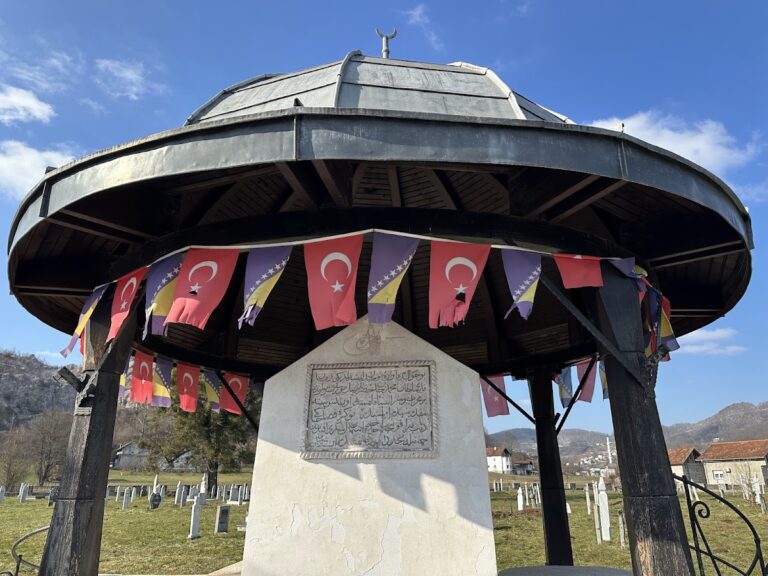
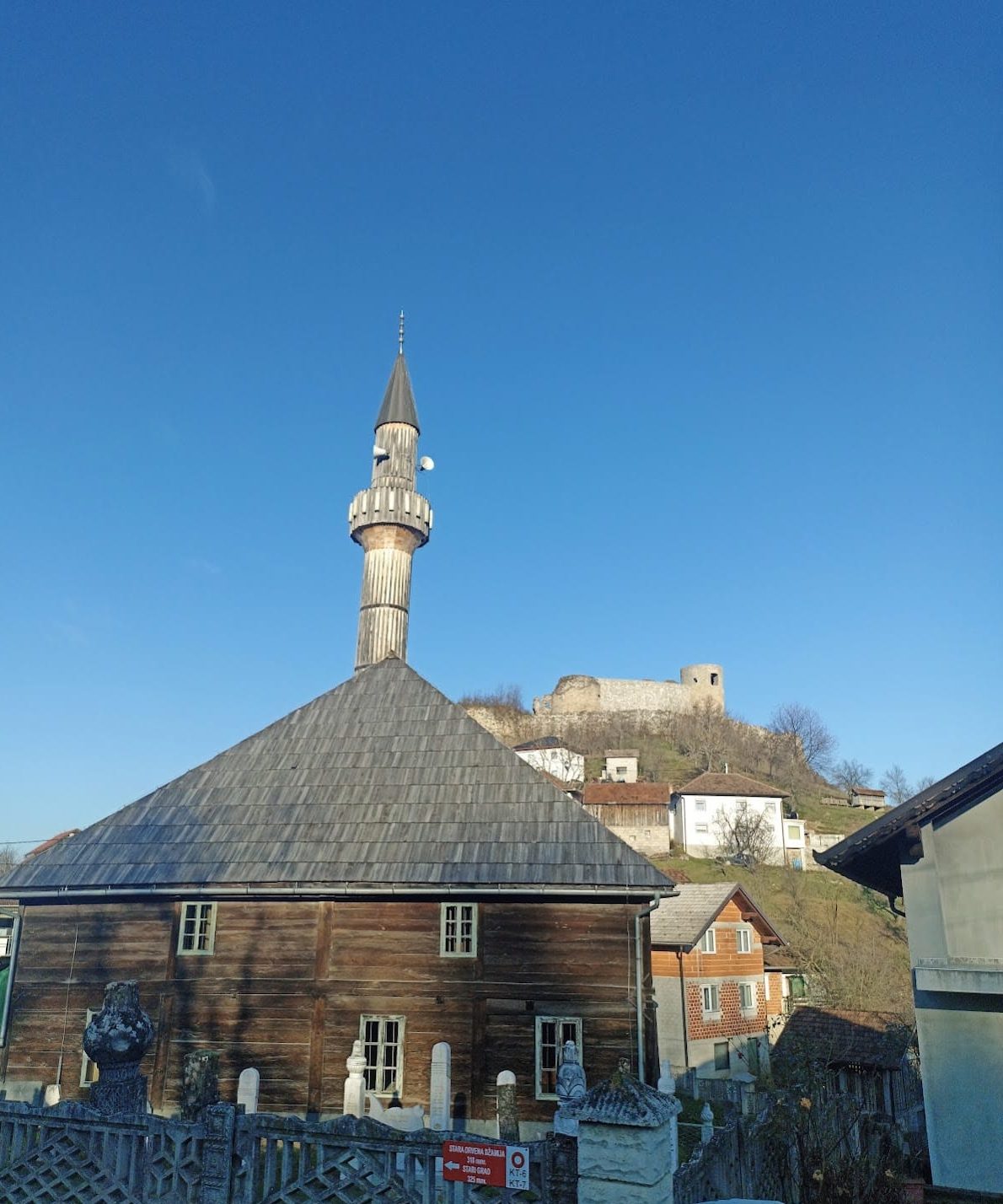
The fortress was repaired in 1626 and again in 1833. In that year, it contained 18 cannons and formed part of the Bosanska Krupa Captaincy. It was recorded as abandoned in 1851, although its use is also recorded as continuing until 1876. Bužim Castle and the nearby old mosque are protected as national monuments of Bosnia and Herzegovina.
Remains
Hilltop Layout and Defensive System
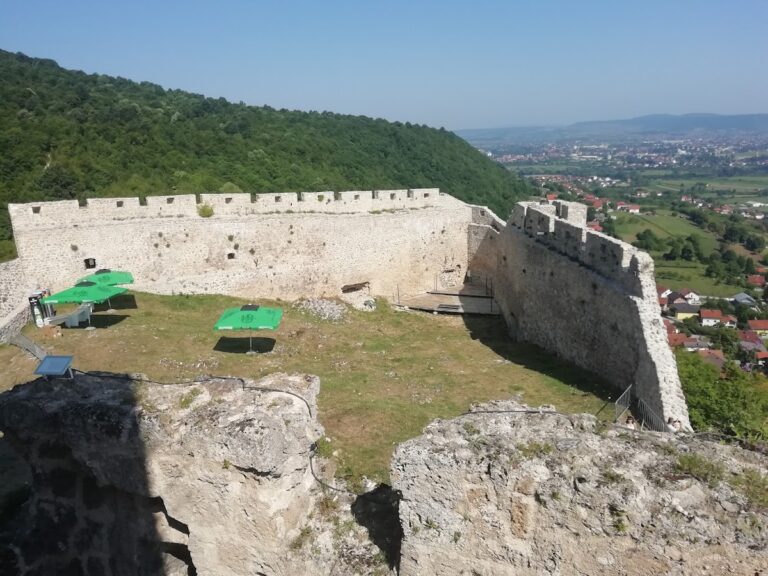
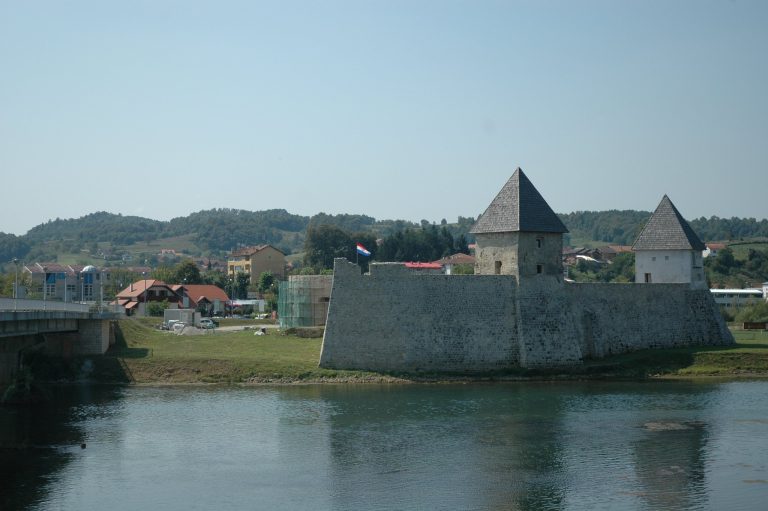
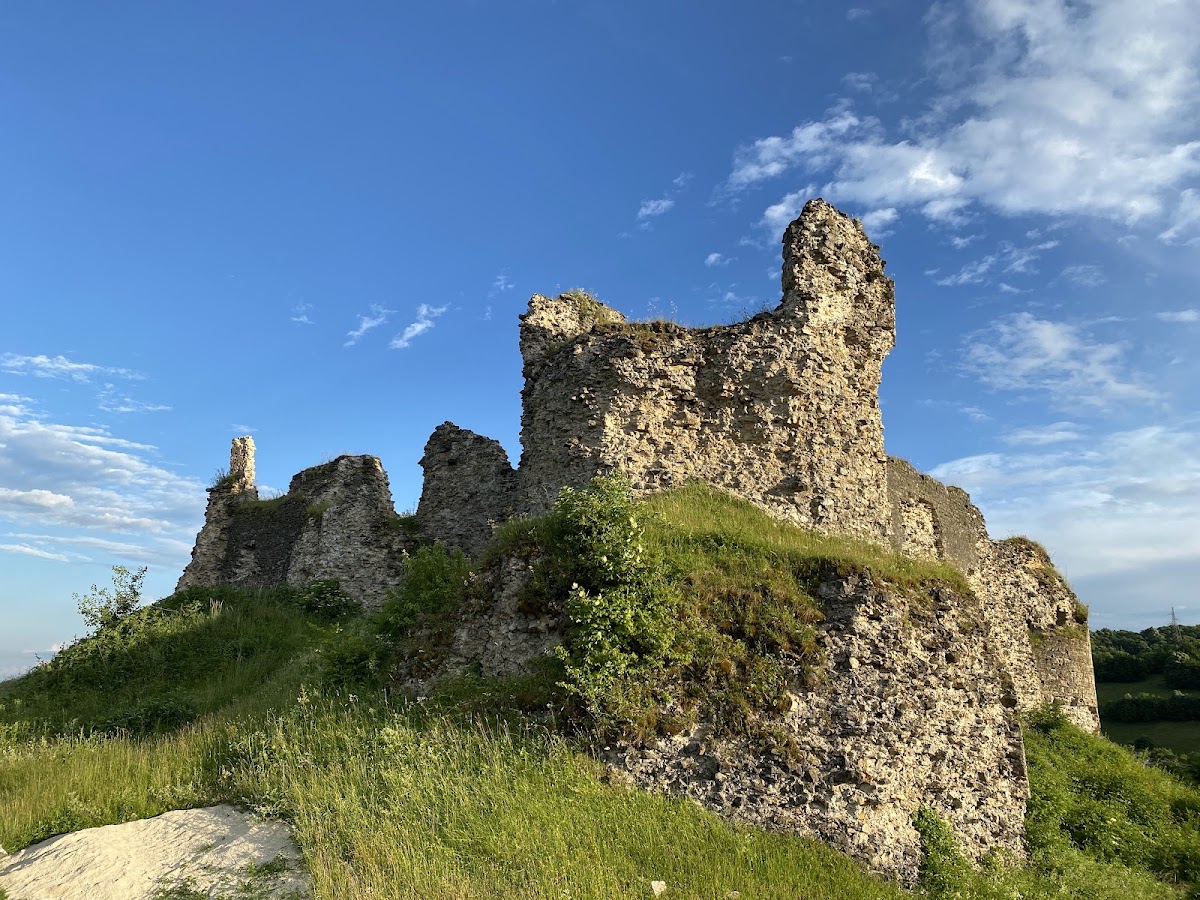
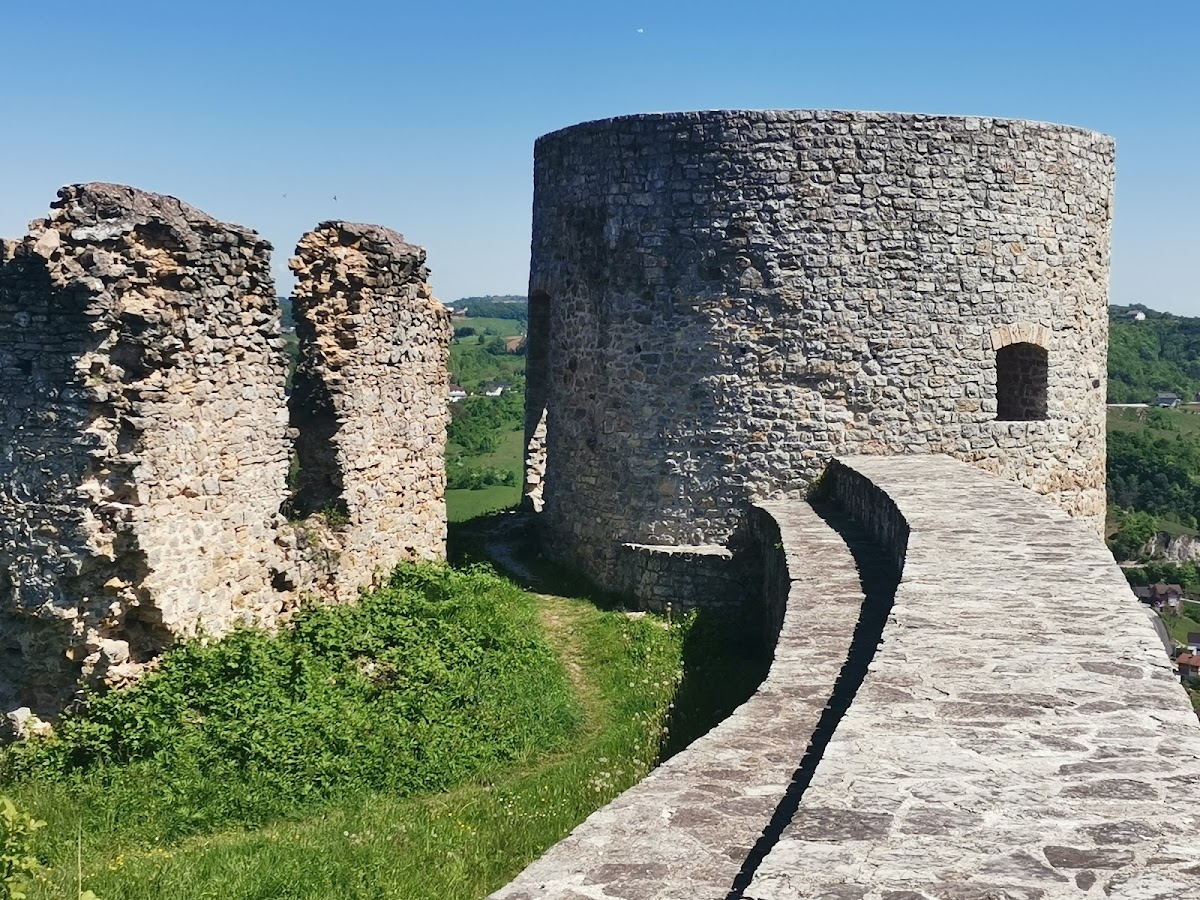
Bužim Castle occupies a hilltop at approximately 325 metres above sea level, where the streams Bužimkovac and Pomojdan meet at the foot of the hill. The complex covers about 7,267 square metres and combines an older inner fortification with a later outer fortress. The inner castle has a relatively regular quadrilateral plan with tall circular towers at its corners. The outer defensive line, added at the end of the fifteenth century, follows a roughly trapezoidal plan and has polygonal corner towers.
The walls of the outer fortification stood between 15 and 20 metres from the inner castle and were about 2 metres thick. The northern and western walls survive along their full lengths, while the southern wall survives in part and the eastern wall has been removed. The surviving sections rise approximately 5 to 8 metres. The outer walls and towers were substantially lower than the inner fortification, with cannon positions along their tops. Artillery openings and firing positions were also built into the inner towers and walls.
This arrangement allowed the outer defensive line to shield the older castle from direct artillery fire. The taller inner towers, in turn, enabled defenders to fire over the outer walls and protect access to the fortress. The combination of regular geometric planning, strengthened walls, towers, and artillery positions gives the complex its character as a Renaissance fortress. Today it survives as ruins.
Inner Castle and Mosque
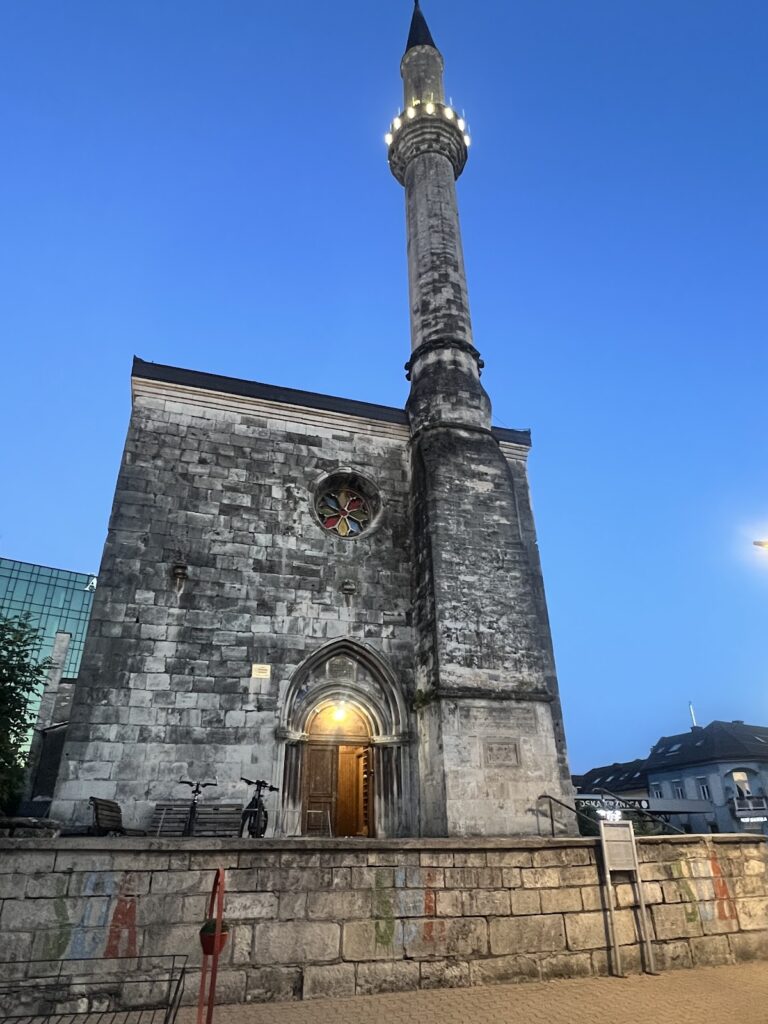
The older inner fortification formed the core of the medieval stronghold and included the castle’s tall circular corner towers. Its greater height provided the defenders with commanding firing positions over the later outer walls. After the Ottoman conquest, a large, solidly built stone mosque was erected within this older fortification. The mosque is part of the surviving historical complex, while the nearby old mosque is separately protected as a national monument.