Benevár: A Medieval Fortress near Gyöngyös
Site at a Glance
- Rating
- 4.6
- Popularity
- Low
- Country
- Hungary
- Primary era
- Medieval
- Eras represented
- Medieval
- Civilizations
- Hungarian
- Site type
- Military
- Remains
- Castle
On this page6 sections
History
Benevár is a ruined medieval stone castle near Mátrafüred, in Gyöngyös, Hungary. It may have begun as an extensive fortified site remembered in tradition as a pagan castle, associated with Bene, a grandson of Árpád’s commander Edömér, who may have been its first owner.
Rebuilding after the Mongol invasion
The earlier castle was destroyed during the Mongol invasion of 1241–1242, when Mongol forces devastated large parts of the Kingdom of Hungary. Between 1243 and 1250, Csobánka, a member of the prominent Aba kindred and a high-ranking medieval officeholder, rebuilt Benevár and made it the seat of his family. His son János later lived there with his own sons, who divided the castle buildings among themselves in 1301.
From the Csobánka family to the crown
At the beginning of the fourteenth century, Benevár’s lords were compelled to submit to Matthew Csák of Trencsén, a powerful Hungarian oligarch who challenged royal authority, and they supported him with their armed forces. After King Charles I of Anjou defeated his rivals and restored centralized royal rule, the Csobánka family fled Benevár. The king then granted the castle to the magnate Tamás Szécsényi.
Benevár subsequently became part of the Szécsényi family’s estate. The castle domain included dependent serf villages and the nearby market town of Gyöngyös, making it a valuable landed possession administered from the castle.
Confiscation, abandonment, and excavation
One interpretation connects the castle’s destruction with its early-fifteenth-century lord, Baron Miklós Salgói. King Sigismund of Luxembourg summoned Salgói to the royal court at Buda and accused him of producing counterfeit money and of having an adulterous relationship with Hedvig, the wife of the magnate János Garai and a princess. Salgói was sentenced to exile, and his estates were completely confiscated.
By 1424, Benevár belonged to King Sigismund, who granted it to Queen Barbara in 1430. In 1438, King Albert granted the castle to the Rozgonyi family. Benevár was probably demolished by Hussite military groups operating from the neighboring Castle of Pata. By 1497, it was listed as an abandoned castle site belonging to the Kanizsai family. Its remains continued to deteriorate until archaeological excavation and supplementary work were carried out during the 1980s.
Remains
Castle layout and defenses
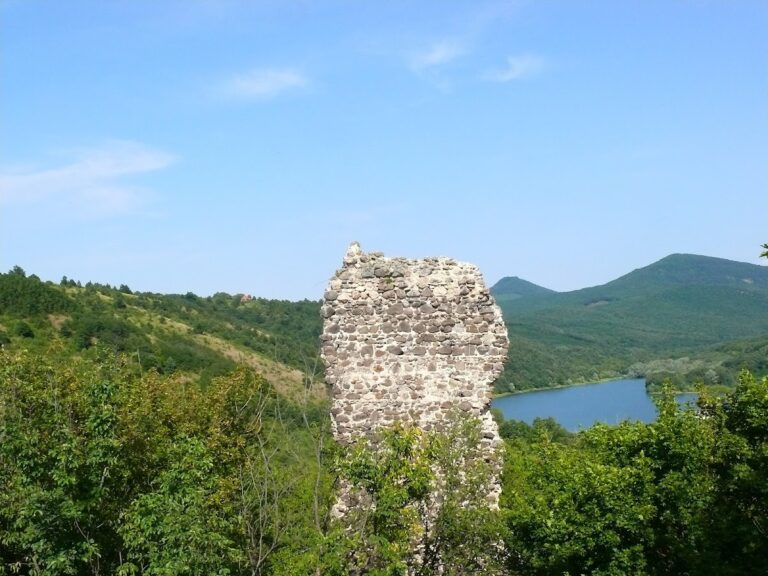
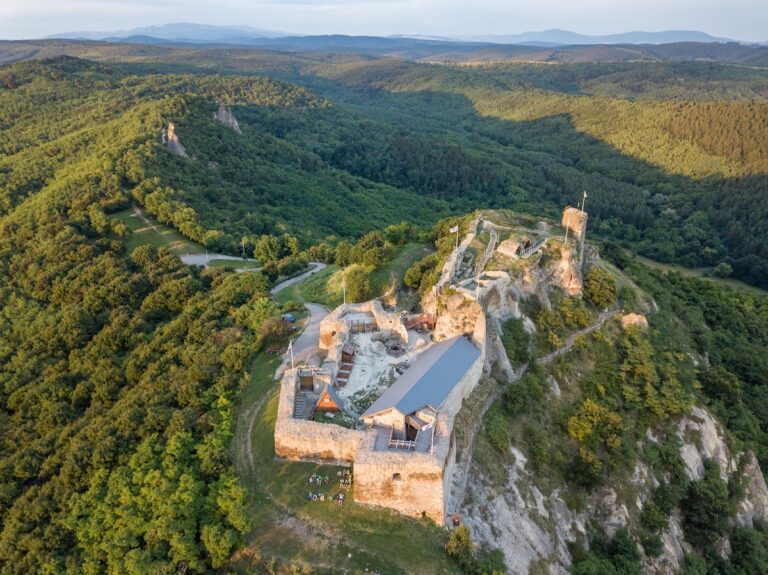
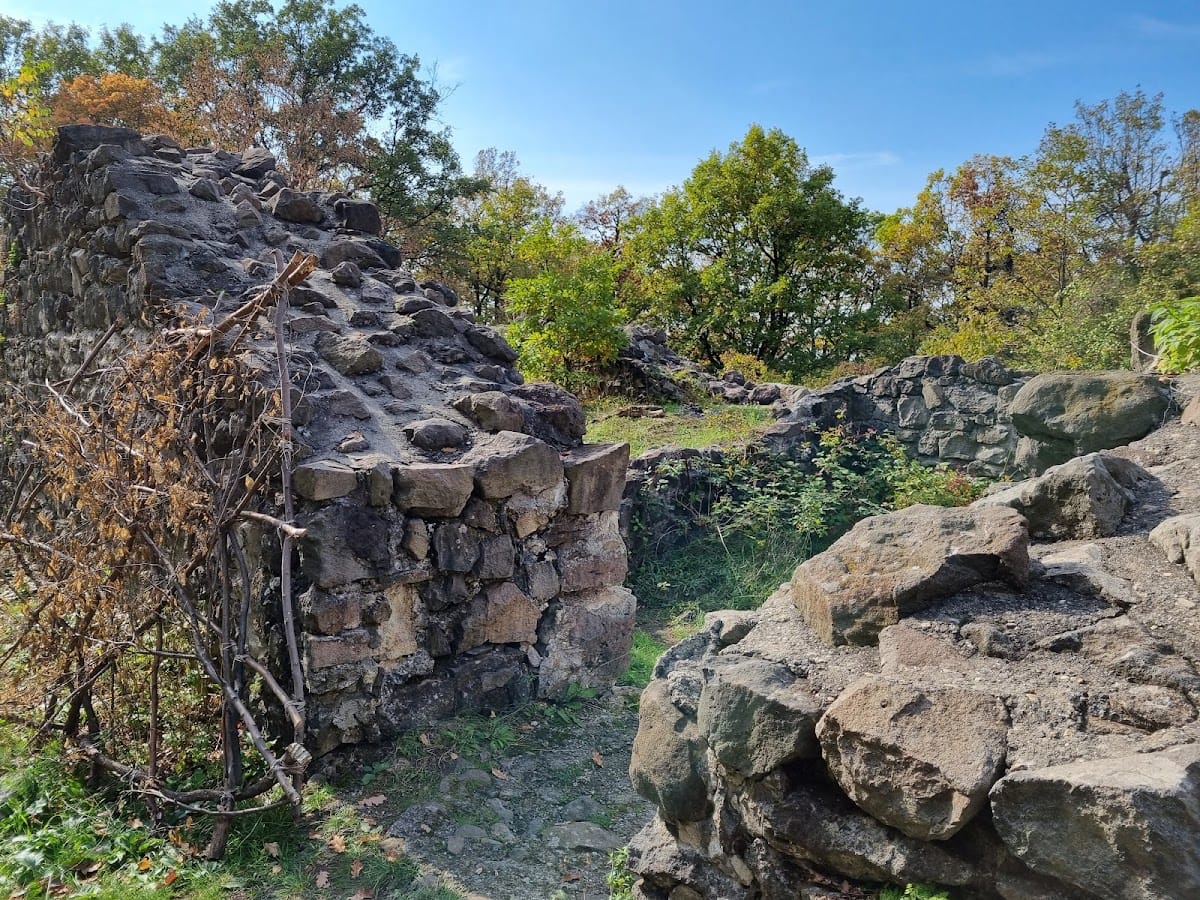
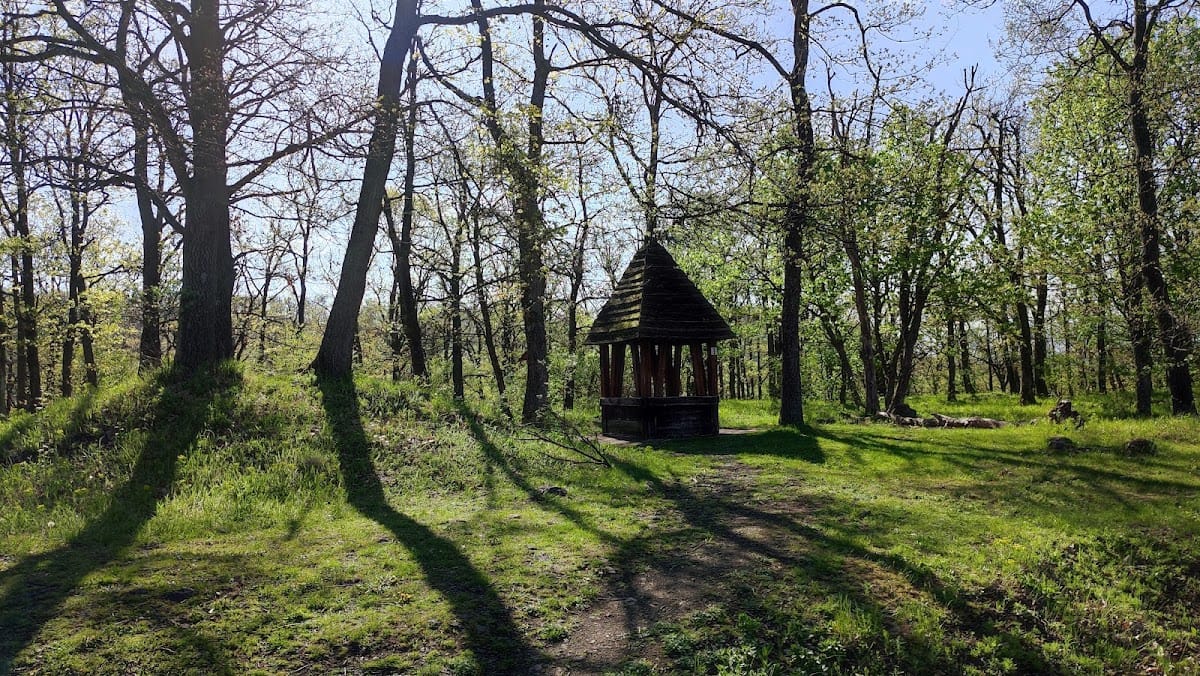
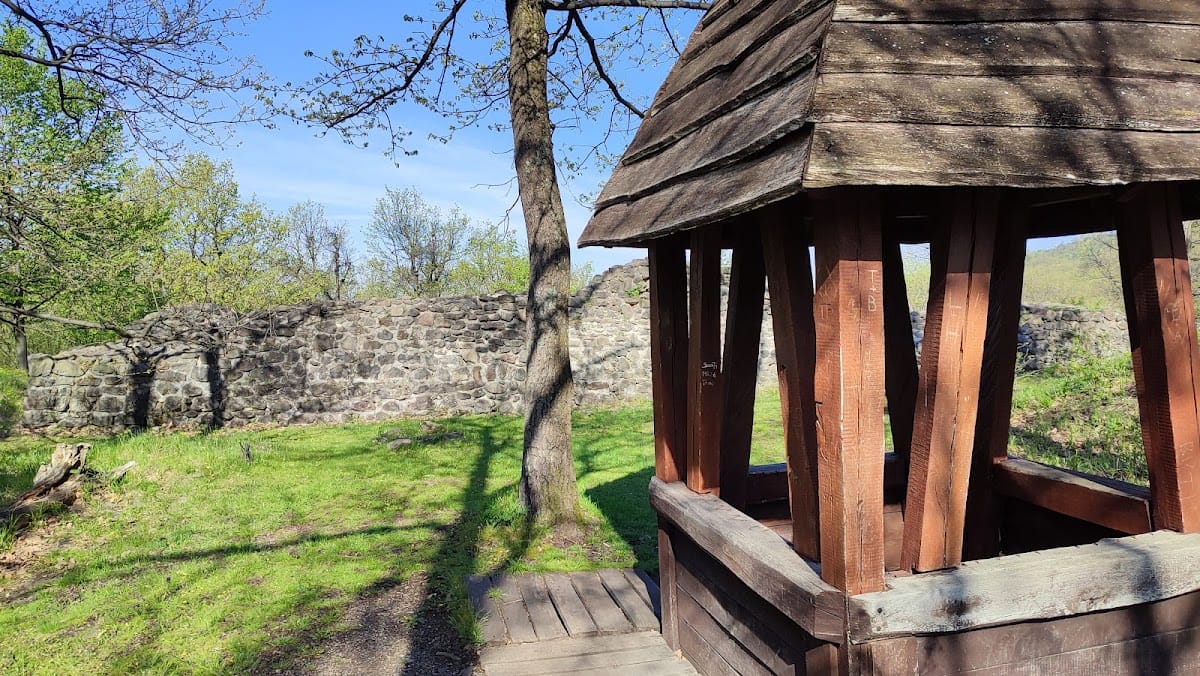
The ruins stand in the southern Mátra at the southern end of Benevár Ridge, between the Somor and Csatorna streams, at approximately 470–471 meters above sea level. The castle had an elongated pentagonal plan and was built of stone. A double dry moat formed its defensive enclosure.
A faded document describes a massive old tower, a palace wing beside it, smaller service and economic rooms, and a second tower that defended the entrance. The site is now ruined, with its surviving remains archaeologically exposed and supplemented during work in the 1980s.