Castle of Alcobaça: A Medieval Fortress in Portugal
Site at a Glance
- Rating
- 3.9
- Popularity
- Low
- Country
- Portugal
- Primary era
- Medieval
- Eras represented
- Medieval
- Civilizations
- Portuguese
- Site type
- Military
- Remains
- Castle
On this page9 sections
History
Uncertain origins and Christian conquest
Castle of Alcobaça is a ruined hilltop fortress in Portugal, above the town of Alcobaça. Its earliest foundation remains uncertain. Local tradition attributes the first fortification to the Visigoths, while other interpretations credit Muslim builders. A date around 650 has been proposed, but both the date and the identity of the builders remain disputed. The suggested Muslim name, Alcácer-bem-el Abbaci, was reportedly derived from the name of a city gate in Morocco.
During the Reconquista, the prolonged Christian conquest of territories ruled by Muslims in the Iberian Peninsula, forces led by Afonso Henriques took the Alcobaça region and probably captured the castle around 1148. In 1153, the territory was given to the Cistercians, a Catholic monastic order whose communities combined religious life with the management and cultivation of extensive rural lands. The donation was linked to the foundation of the Monastery of Santa Maria of Alcobaça and to the creation of the Alcobaça domains, which later grew through royal and other grants.
Cistercian rebuilding and defense
Muslim forces attacked the region in 1191 and again in 1195. Sancho I of Portugal subsequently reconquered the settlement and its lands and returned them to the Cistercians. The castle, which had been abandoned and had fallen into ruin, was rebuilt by the order. It became part of an advanced defensive line protecting Lisbon, alongside the castles of Leiria, Pombal, and Óbidos.
Once peace had been established, the Cistercian territories developed viticulture and winemaking. These activities contributed to the region’s later reputation as an important gastronomic reference. Around 1369, Abbot Dom Friar João de Ornelas strengthened the fortress by adding a barbican, rebuilding a collapsed tower, and reconstructing the wall facing the monastery. Local residents financed the work through a levy imposed for that purpose.
Earthquakes, administration, and decline
An earthquake severely damaged the castle in 1422, during the reign of John I of Portugal. Repairs to the tower and walls followed in 1424, and Abbot Dom Friar Gonçalo Ferreira rebuilt the keep in 1450. Further repairs took place in 1627, during the Philippine Dynasty, the period from 1580 to 1640 when Portugal and Spain were ruled by the same Habsburg monarchs.
The detached eastern tower was later used as a prison until the earthquake of 1755 ruined it. The abbots of Alcobaça held the right to appoint the castle’s governor. One such appointee was Geraldo Pereira Coutinho, a professor of theology and a canon of the University of Coimbra, who became governor on 10 November 1701.
After the castle lost its strategic and defensive purpose, the suppression of the monastery in 1834 brought it under the authority of the Municipality of Alcobaça. The municipality ordered its demolition in 1838 and used the remains as a source of stone for new construction in the town. Municipal records described the castle as extinct by 1854.
Conservation and archaeological investigation
In 1940, debris filled the abandoned castle, and its cistern was adapted to store drinking water for distribution to the population. The wall facing the monastery was partly reconstructed in 1952 and 1953 from a description left by Friar Fortunato Boaventura. Cleaning of the monument and its surroundings, including the access routes, followed in 1956, with minor repairs in 1965.
A four-year archaeological excavation project began in August 2002 with municipal funding. Coordinated by the archaeologists Jorge António and Manuela Pereira with volunteers and municipal workers, the project investigated the date and authorship of the castle’s foundation. The ruins have been classified as a Property of Public Interest since 1978.
Remains
Hilltop enclosure and towers
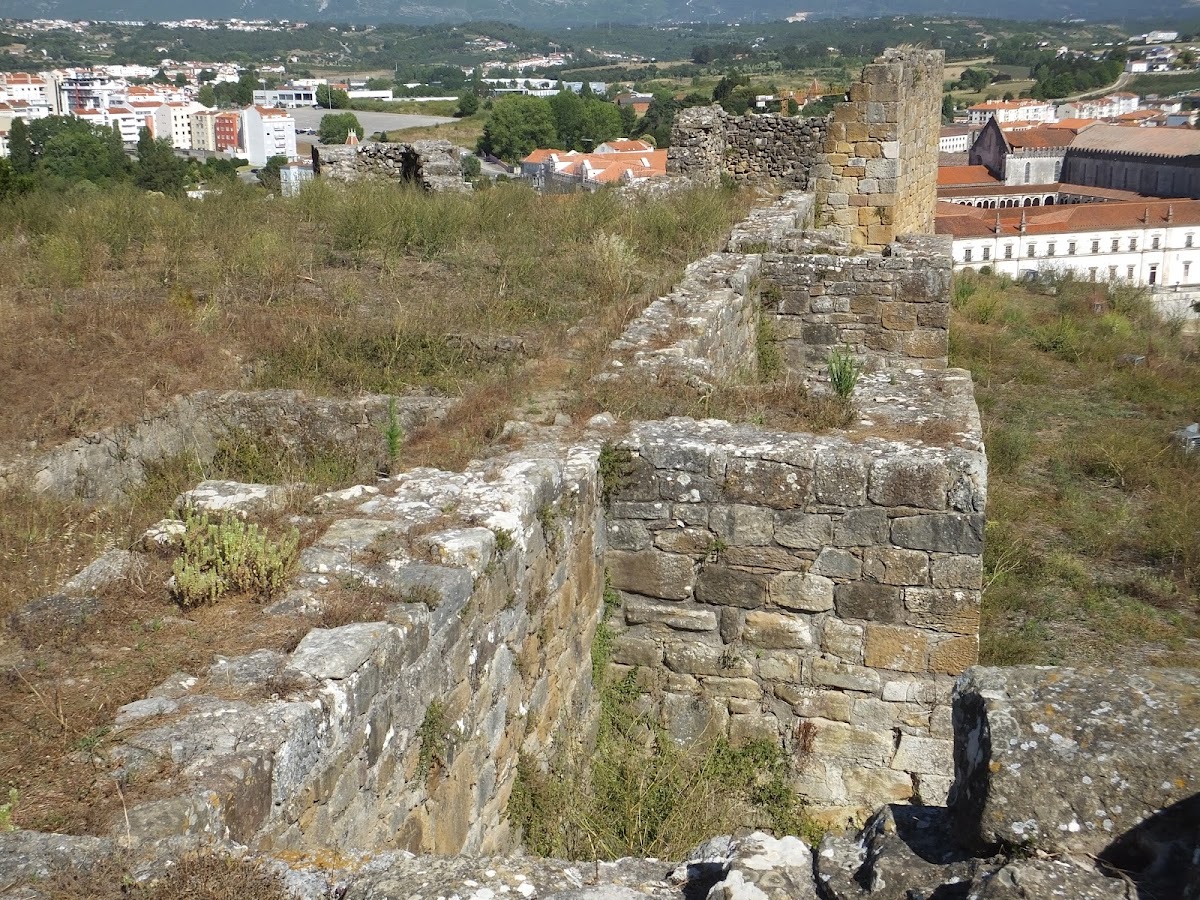
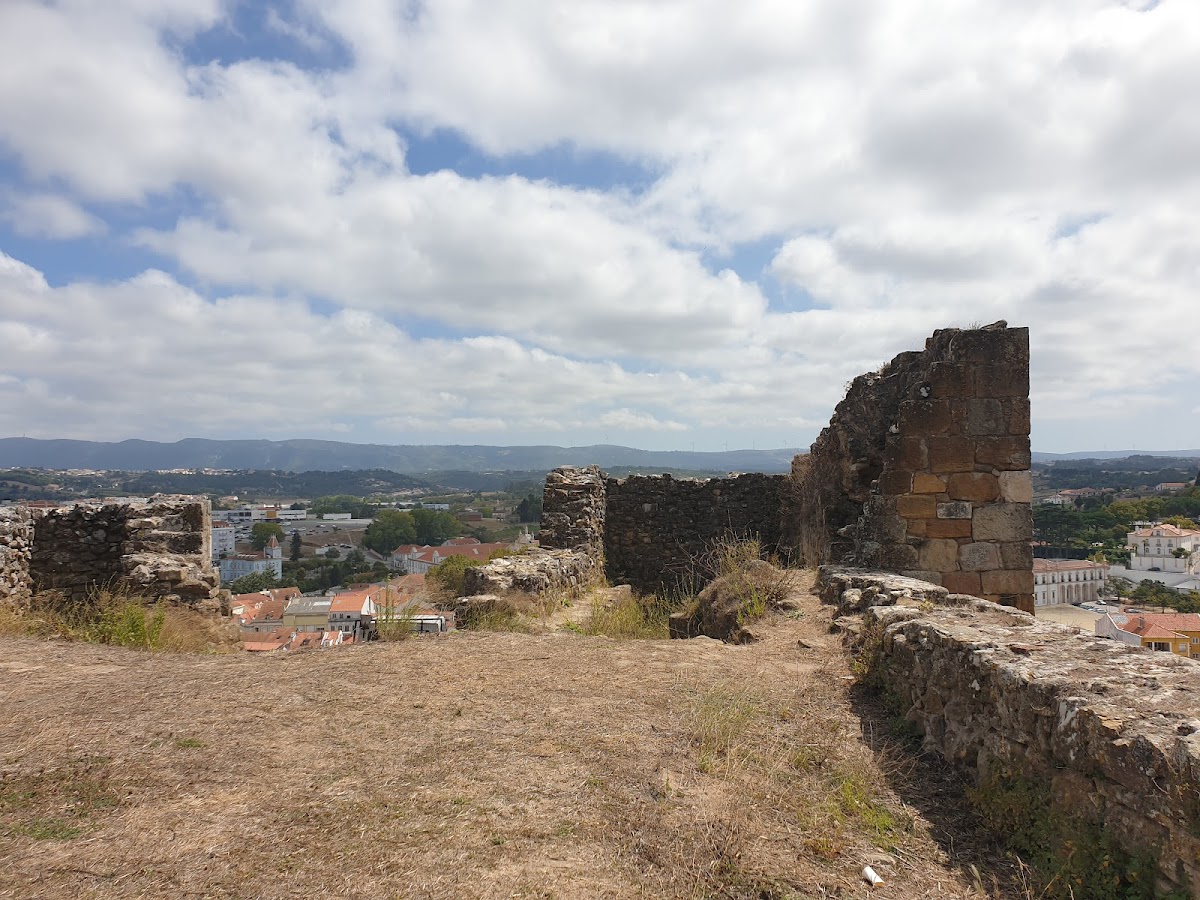
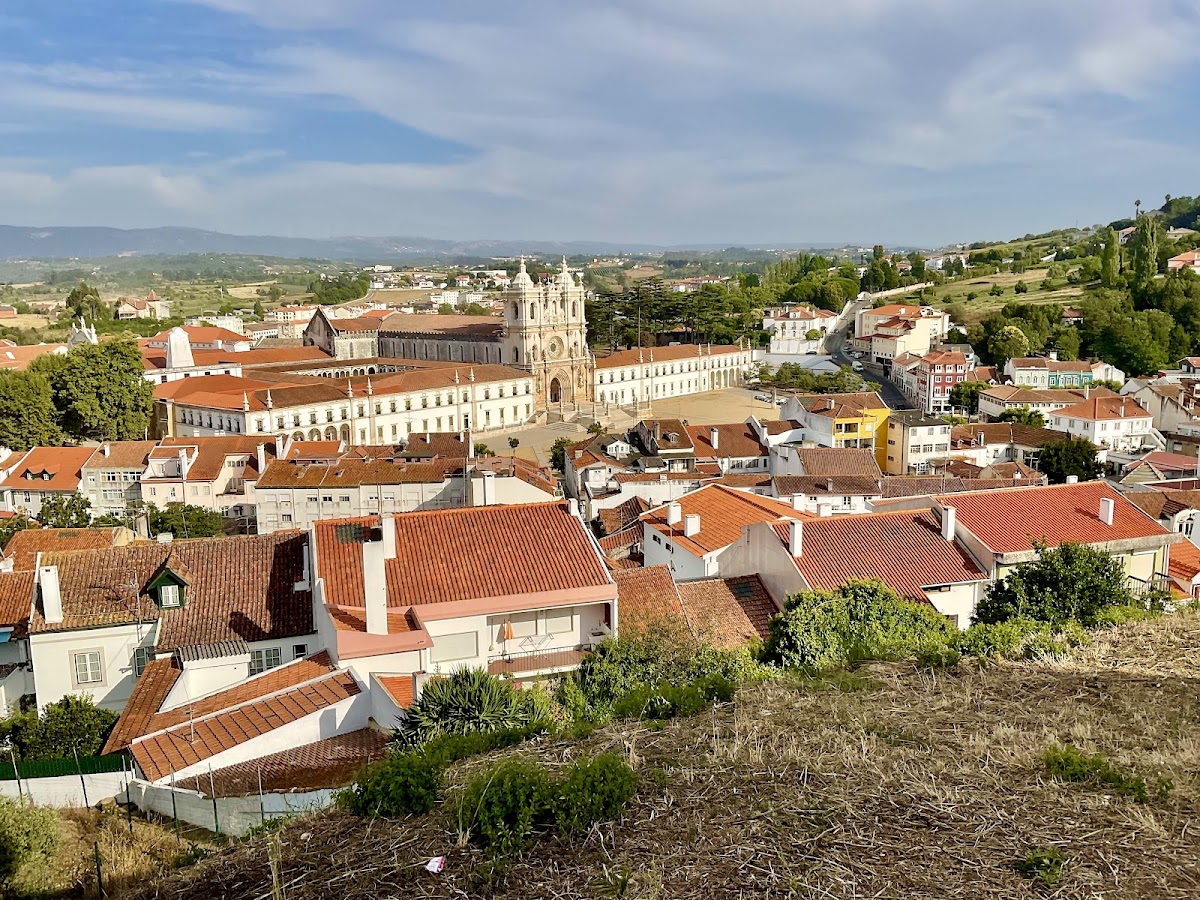
The ruins occupy a dominant hilltop at about 69 to 70 metres above sea level, northwest of Alcobaça on the left bank of the Baça River. From this position, the surviving fortress overlooks the town, the monastery, the surrounding fields, and the Serra dos Candeeiros mountain range. Its irregular, organic plan combines Romanesque and Gothic characteristics.
First enclosure and keep
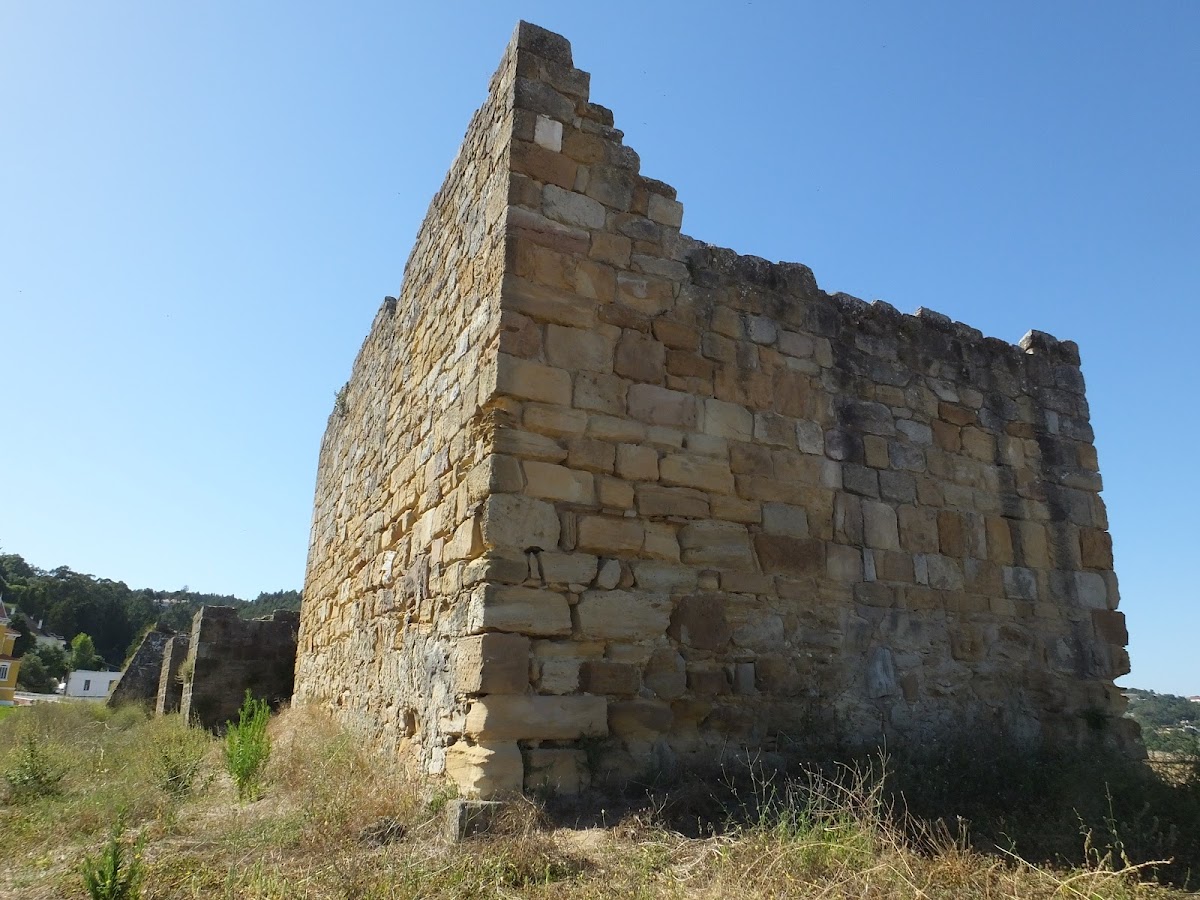
The first enclosure is formed by surviving limestone ashlar walls reinforced with seven square-plan turrets. A detached western tower stands opposite the monastery and is identified as the keep, the principal and strongest tower of a medieval castle. The walls and towers survive in a ruined condition, with sections rebuilt or repaired during successive phases of the fortress’s history.
Eastern tower and barbican
An eastern albarrana tower stands between the inner enclosure and an oval barbican. An albarrana tower is a detached defensive tower connected to the main fortification by a wall or other link, allowing it to project beyond the principal enclosure. The barbican, an outer defensive enclosure protecting an entrance or wall, has four turrets along its western side, including two with semicircular plans.
Nearby sites