Myrina Castle: A Byzantine and Venetian Fortress in Greece



Site at a Glance
- Rating
- 4.8
- Popularity
- Medium
- Country
- Greece
- Primary era
- Medieval
- External website
- Open
- Eras represented
- Medieval, Early Modern
- Civilizations
- Byzantine, Ottoman
- Site type
- Military
- Remains
- Castle
On this page7 sections
History
Myrina Castle is a fortified archaeological site in Greece, built in the Byzantine period during the twelfth century on the ancient acropolis of Myrina. The hill had already served as the fortified height of the ancient city, whose earliest known defenses were Cyclopean walls constructed from exceptionally large, roughly fitted stones during the Mycenaean period, around the thirteenth century BC.
Byzantine Foundations and Restoration
The present castle was first established under the Byzantine Empire, the Eastern Roman state centered on Constantinople. Its defenses were strengthened in 1185 during the reign of Emperor Andronikos I Komnenos, when it was known simply as “the Castle.” Byzantine forces recovered the fortress in 1278 under the leadership of Likari, also called Ikarios. In 1361, Emperor John V Palaiologos ordered another restoration.
Venetian and Genoese Rule
Venetian forces took control in 1207, and Filocalo Navigajoso became the castle’s ruler. He restored the fortress, which then served as the administrative center of the island. His son Leonardo Navigajoso and grandson Paolo Navigajoso later ruled from it. During this period, the Venetians called the castle Paleocastro, meaning “Old Castle,” distinguishing it from newer fortresses on Lemnos.
Genoese forces seized the castle in 1453, after which it passed to the Gattilusio family, a Genoese dynasty that controlled several territories in the medieval Aegean. The Ottomans captured it in 1462, while Venetian control returned briefly in 1464.
Ottoman Control
The Ottomans attempted to recover the fortress in 1476, and the Venetians finally ceded it to them in 1479. Venetian forces held it briefly again in 1656 and 1657, and they besieged it in 1770. Ottoman authorities continued to restore the fortifications, with work taking place at least as late as 1780.
Remains
Fortifications and Setting
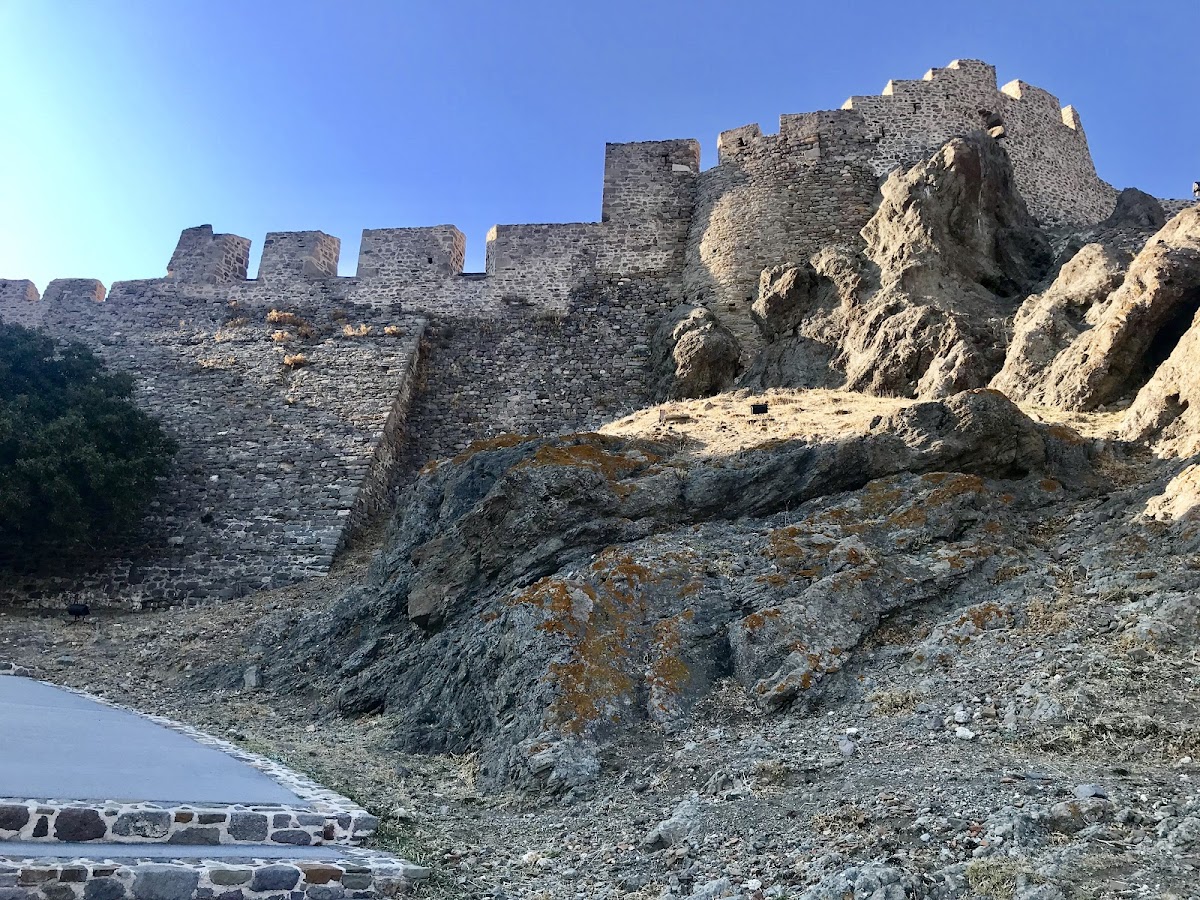
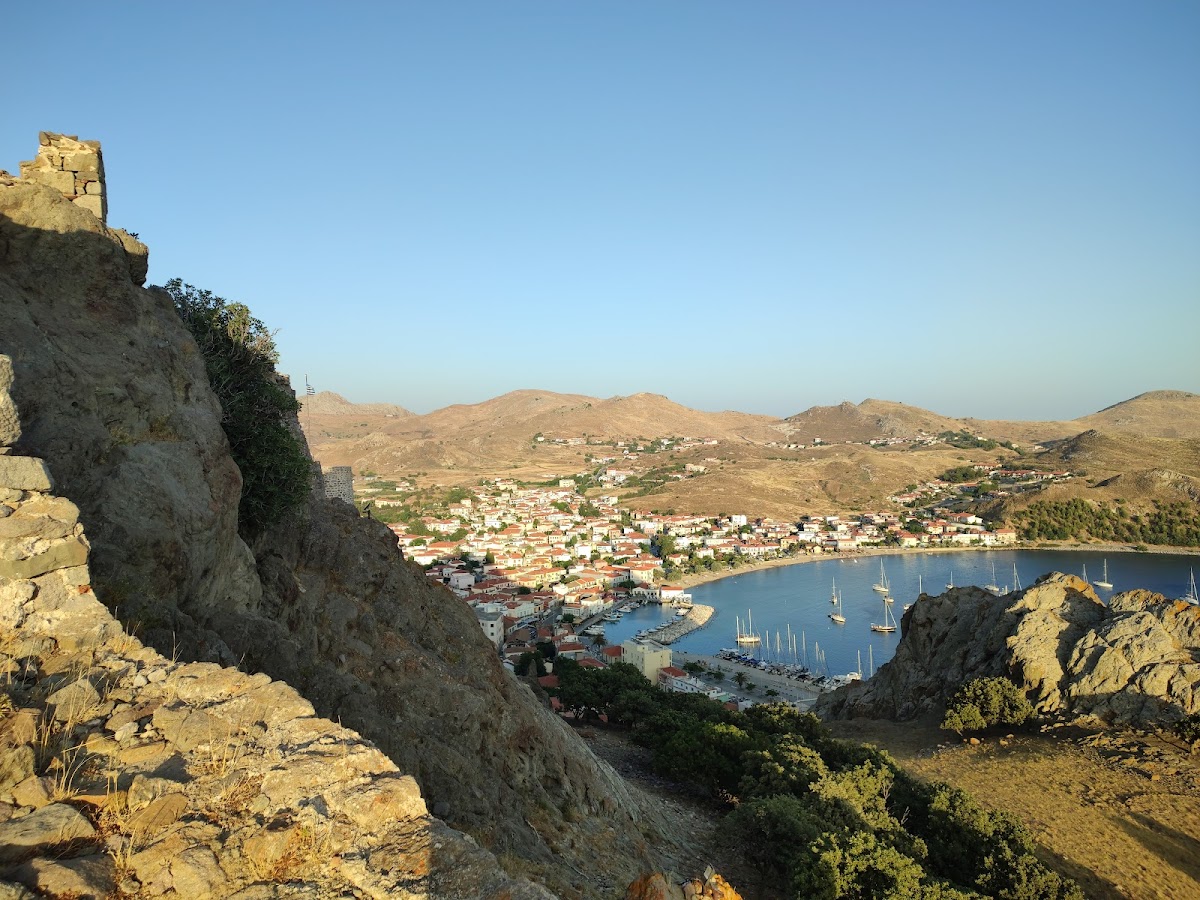
The castle stands on a hill on a peninsula west of Myrina, approximately 120 metres above sea level, and covers 14.4 hectares. Its defenses comprise three walls, each approximately eight metres high and 1.5 metres thick, supported by 14 towers. A large ditch once separated the fortified hill from the rest of Lemnos on the eastern side. The principal gate was also on the eastern side, while a second entrance stood to the north.
Interior Structures
Within the fortified enclosure are the ruins of an Ottoman-period mosque, underground vaulted spaces, and rainwater cisterns. The stones of the earlier building phases were reused in later construction, so the medieval remains form the surviving physical fabric of the castle. During the Ottoman period, the fortress reportedly contained 150 cannons.