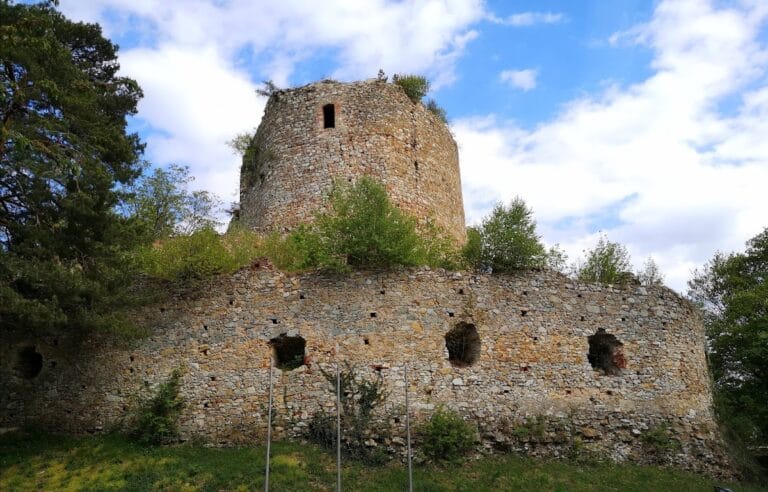
Jurisics Castle: A Medieval Fortress in Kőszeg, Hungary
Site at a Glance
- Rating
- 4.6
- Popularity
- Medium
- Country
- Hungary
- Primary era
- Medieval
- External website
- Open
- Eras represented
- Medieval, Modern
- Civilizations
- Hungarian
- Site type
- Military
- Remains
- Castle
On this page11 sections
History
Jurisics Castle is a medieval fortified complex in Kőszeg, Hungary, whose Lower Castle was under construction by 1263 at the latest. It became the territorial center of the settlement during the Middle Ages and is best known for the 1532 defense led by Nikola Jurišić against the Ottoman army advancing toward Vienna.
Early Fortifications and Medieval Rule
The earliest recorded reference connected with Kőszeg appears in 802, when Einhard’s chronicle mentioned a castellum Guntionis. Some researchers have rejected the identification of that place with Jurisics Castle. A later fortification was established beside the settlement in the valley after the Tatars withdrew in 1242. This Lower Castle gradually took over the territorial role of the more difficult-to-reach Upper Castle, and construction had begun by 1263 at the latest.
By the late thirteenth century, the castle belonged to the Héder kindred. Duke Albert captured it in 1289, and in 1291 Andrew III of Hungary ordered the Old Castle demolished under the terms of the Peace of Hainburg. After prolonged conflict, Charles Robert of Hungary took the castle from the Kőszegi family in 1327. He supported the development of Kőszeg by granting its inhabitants important privileges in 1336, while the town’s walls were gradually strengthened against Austrian incursions.
Dynastic Changes and the 1532 Siege
The castle passed to the Garai family in 1392 and to the Habsburgs in 1445. Matthias Corvinus recovered it in 1482, but the Habsburgs captured it again in 1492. The Habsburgs were a European ruling dynasty whose members held the Hungarian crown and controlled Kőszeg at several points in its history.
In 1532, the Ottoman army of Sultan Suleiman the Magnificent was advancing toward Vienna when it reached Kőszeg. Nikola Jurišić, a Croatian nobleman and the castle’s commander, organized about 1,000 defenders. Some were soldiers, but most were local serfs who had fled the invasion. They resisted for 25 days and withstood 19 assaults. The Ottoman forces employed all available means, but did not bombard the castle with artillery.
An agreement eventually allowed eight Ottoman flags to be displayed on eight towers. Grand Vizier Ibrahim Pasha could therefore present a nominal victory to the sultan, while the Ottoman army withdrew southward from Kőszeg. Suleiman observed the siege from a hill between Király Valley and Kálvária Hill, which later became known as Sultan’s Hill.
Because substantial Austrian forces were securing Vienna, Ferdinand I of Habsburg rewarded Jurišić for the defense by making him a baron and granting him Kőszeg. Jurišić later died without a male heir, and the town returned to the administration of the royal treasury.
Later Ownership, Fire, and Renewal
Kőszeg was besieged repeatedly in later centuries by Transylvanian, imperial, and Kuruc forces. Kuruc troops were anti-Habsburg insurgents active in the Kingdom of Hungary during the early-modern period. The town’s prosperous merchant houses made it a valuable target for plunder.
In 1695, the castle and its estate passed to Pál Esterházy, the palatine of Hungary. A palatine was a high-ranking officeholder in the Kingdom of Hungary. The Esterházy family retained the property until 1931, after which it was sold and became military property until 1955.
A fire devastated the castle in 1777, and most of its defensive works were demolished afterward. Restoration carried out between 1955 and 1963 allowed cultural institutions to occupy the renewed complex. The Jurisics Castle Cultural Center was established in 1963, and the Castle Theatre has been housed there since 1982. Its first performance commemorated the 450th anniversary of the 1532 siege.
Another reconstruction began in 2011 and lasted two years. It renewed the exterior and created a modern exhibition space presenting the castle’s history from its construction to 1945, with a separate room devoted to the Ottoman siege of 1532. The castle is now used for museum and cultural purposes.
Remains
Fortified Castle Layout
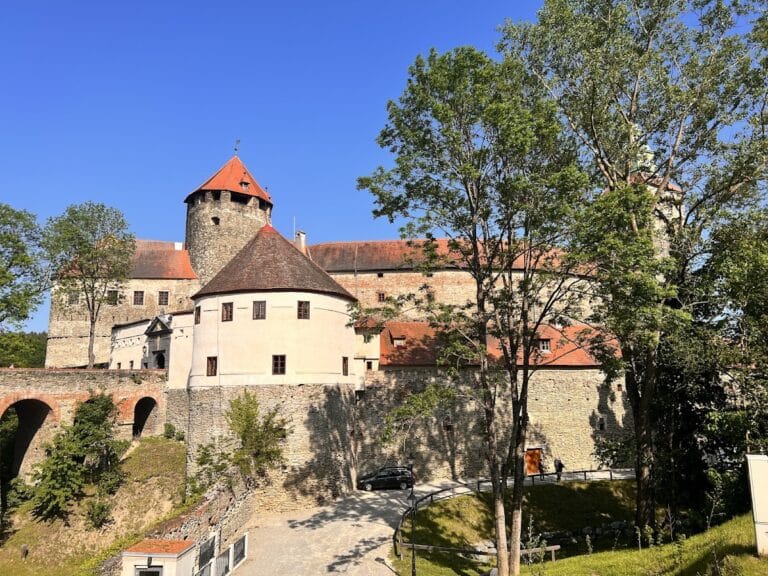
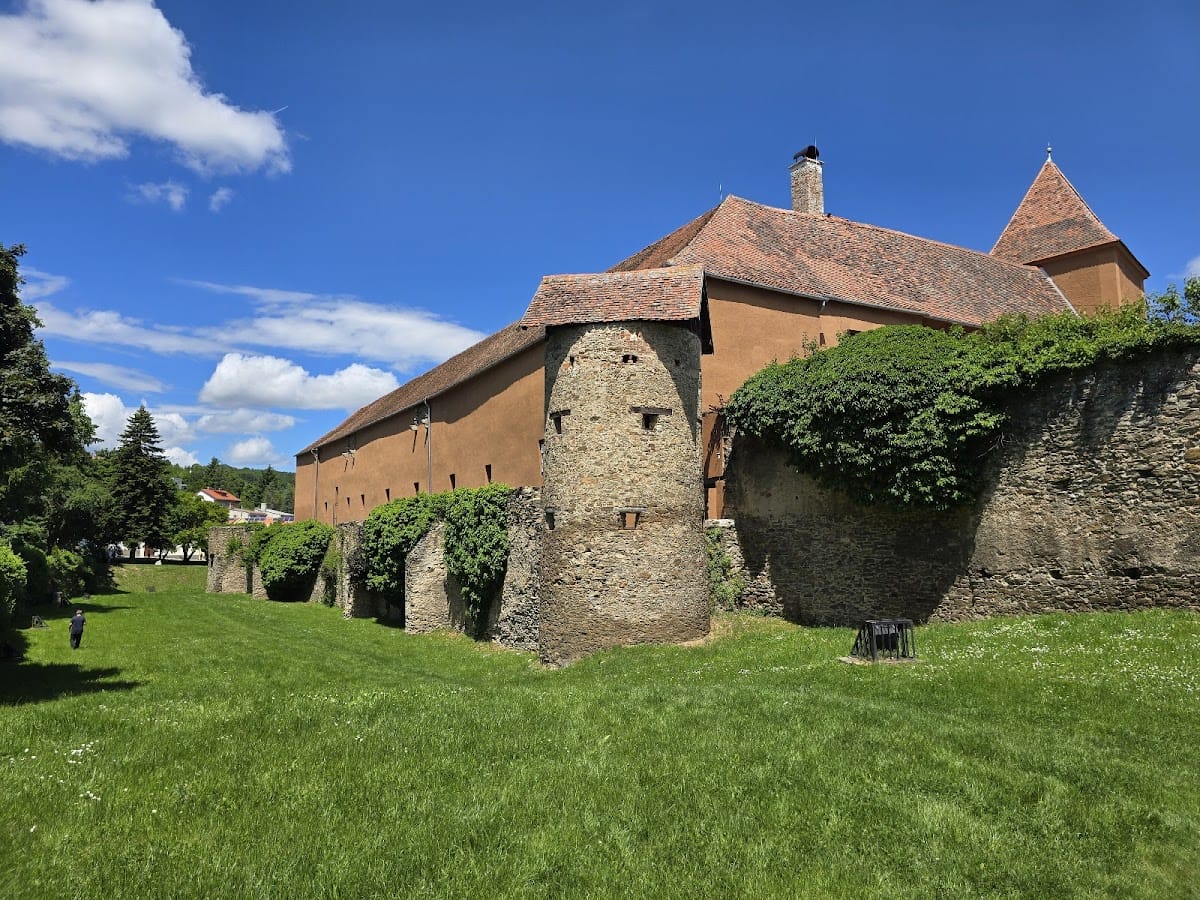
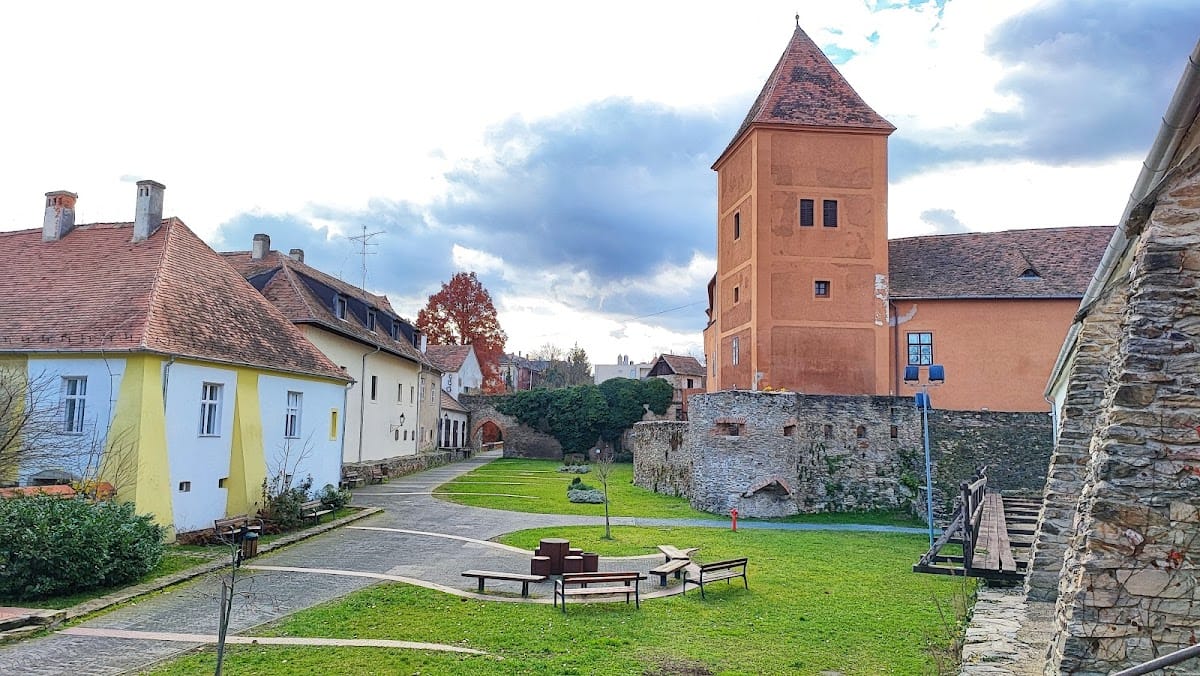
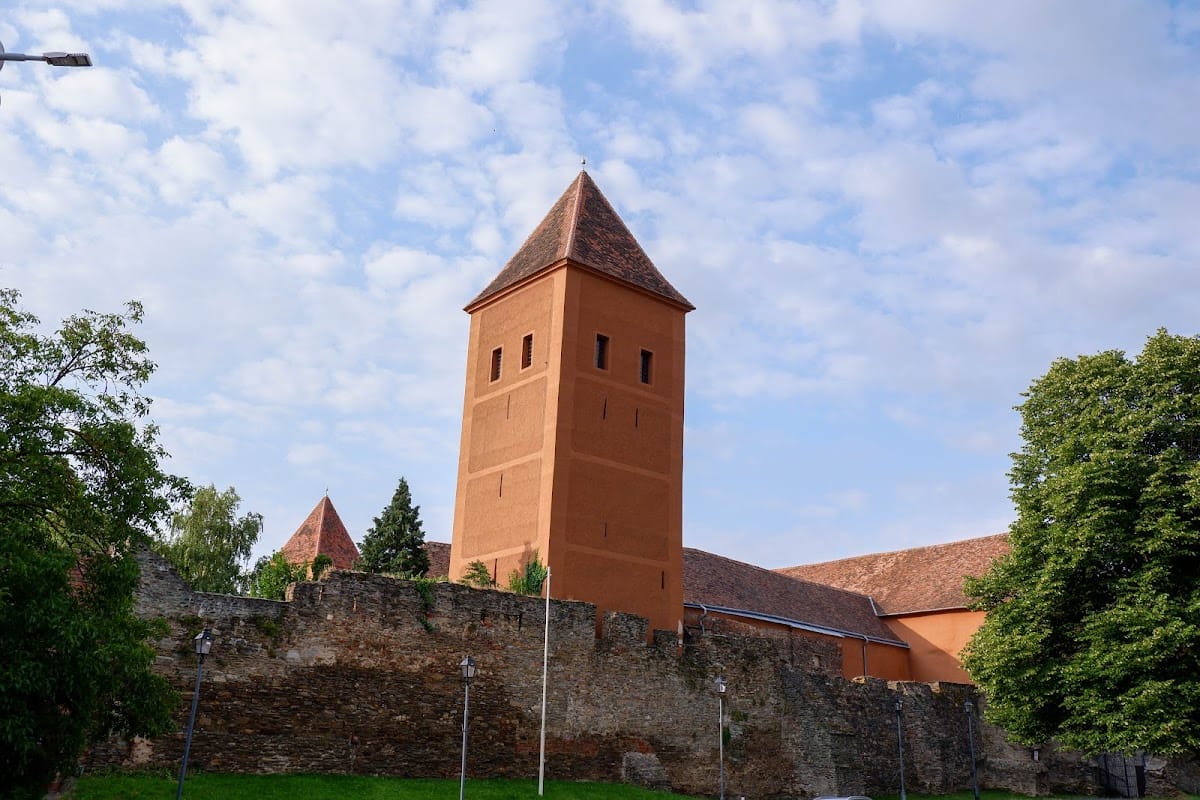
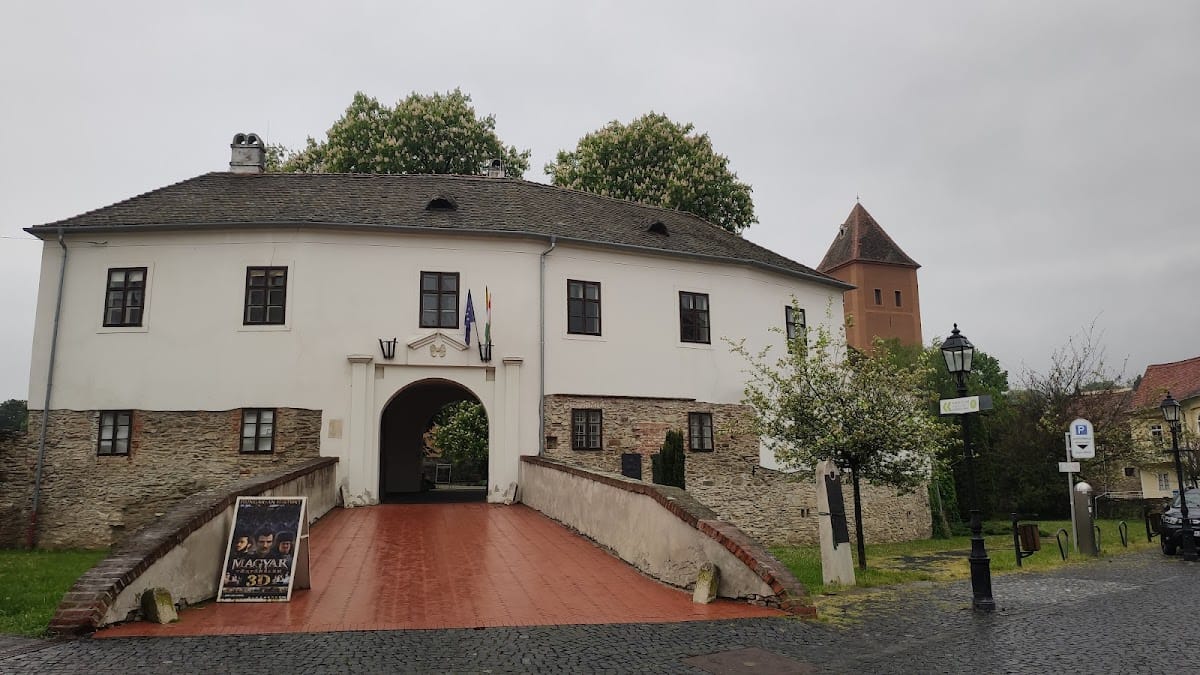
Jurisics Castle is a stone-built fortified complex divided into an Outer Castle and an Inner Castle. Its surviving arrangement includes a restored inner courtyard, a canopy over the entrance to the Inner Castle, a corridor in front of the Knights’ Hall, and a building adjoining the western wall.
Outer Castle
The Outer Castle forms part of the larger defensive complex associated with the town’s fortifications. Strong towers reinforced the town walls, and moats around the walls were supplied with water from the nearby Gyöngyös stream. The western side is associated with a moat and with a building attached to the town walls. The 1777 fire and the demolition that followed removed most of the defensive works.
Inner Castle
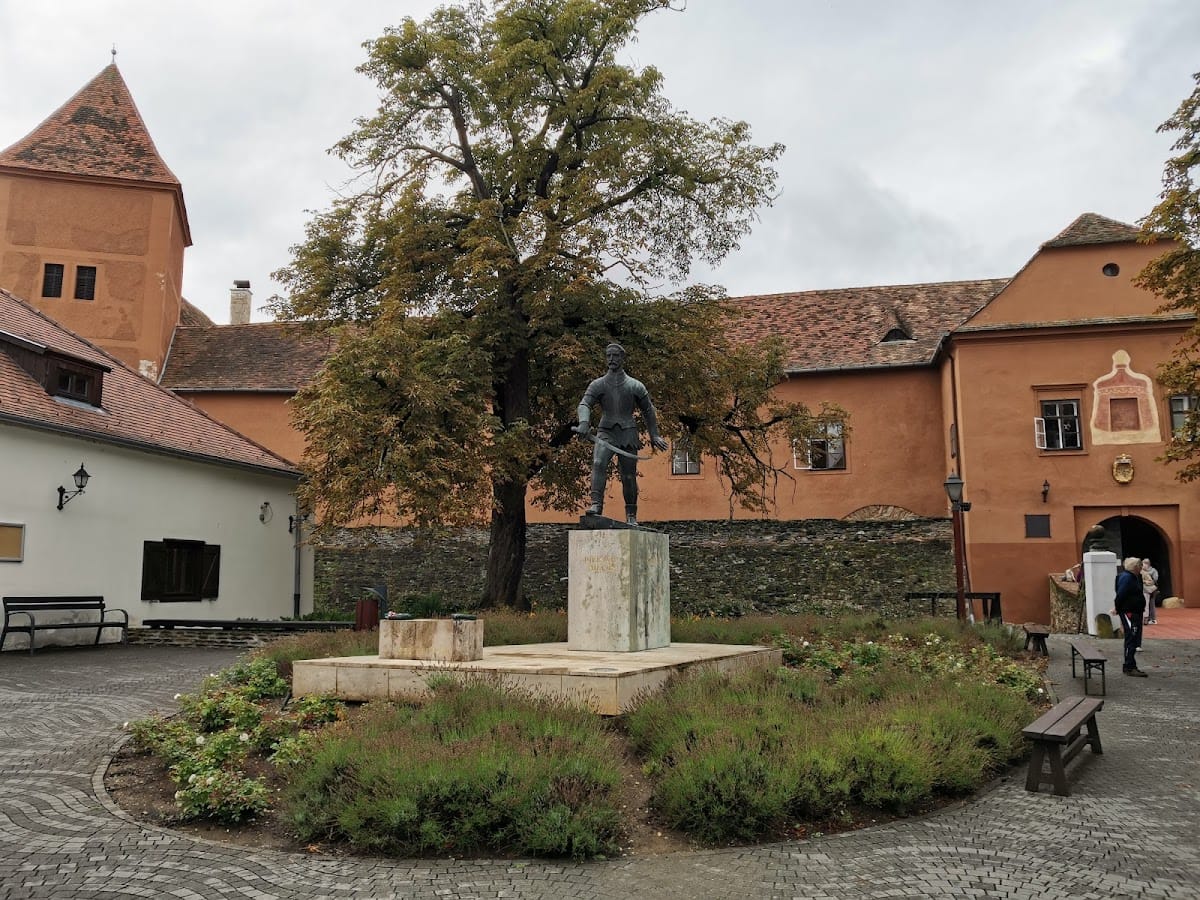
The Inner Castle contains the restored courtyard, the covered entrance, and the corridor in front of the Knights’ Hall. A monument to Nikola Jurišić stands within it, and the complex also preserves an Esterházy coat of arms. The Esterházy Altar was formerly located in the Inner Castle.
Altar and Cultural Displays
Esterházy Altar
The Esterházy Altar has the Madonna as its central figure. Hidden inscriptions behind the painting state that Miklós József Esterházy commissioned it in 1771. The altar was renovated in 1903 and reassembled during the 1963 restoration, when nails replaced its original wooden dowels.
Archaeological investigations begun in 2009 led to the altar’s dismantling and removal to storage. Its restoration and reconstruction started in December 2016, and the fully restored altar returned to Jurisics Castle on 12 May 2018.
Exhibition Space
The post-reconstruction exhibition area uses interactive displays and climate-controlled cases. Its presentation follows the history of the castle through the end of the Esterházy period in 1945, while giving particular attention to the 1532 siege.