Cathedral of the Holy Cross, Tyre: A Crusader Cathedral in Lebanon
Site at a Glance
- Popularity
- Medium
- Country
- Lebanon
- Primary era
- Medieval
- Eras represented
- Classical, Medieval
- Civilizations
- Crusader, Kingdom of Jerusalem, Roman
- Site type
- Religious
- Remains
- Cathedral
On this page8 sections
History
Foundation and ecclesiastical role
The Cathedral of the Holy Cross was built in 1129 in Tyre, Lebanon, under William I of Tyre, after Crusader forces led by Baldwin II, king of Jerusalem, captured the city in 1124. Dedicated to the Holy Cross, it became the seat of Tyre’s Latin Christian archdiocese, a major church district within the Latin Patriarchate of Jerusalem, the senior Latin Christian institution in the Crusader kingdom. Tyre’s was one of four archdioceses under the patriarchate, alongside Caesarea, Nazareth, and Petra.
William of Tyre, a Latin Christian churchman and historian distinct from William I, served as archbishop from 1175 to 1185 and was among the cathedral’s notable clergy.
Royal ceremonies and the end of Crusader rule
After the Crusader defeat at Hattin and Jerusalem’s capture by Saladin, sultan of the Ayyubid dynasty that ruled Egypt and parts of the Middle East, the cathedral became the traditional place for coronations of Jerusalem’s monarchs. It took this role from the Church of the Holy Sepulchre, Jerusalem’s major Christian shrine associated with Jesus’s crucifixion and burial. Royal weddings were also held at Tyre, whose cathedral was regarded as one of the largest and most important church buildings in the Latin Kingdom of Jerusalem.
A later tradition placed the bones of Frederick Barbarossa, Holy Roman Emperor, in the cathedral after his death in 1190 while travelling to the Holy Land during the Third Crusade. An earthquake in 1202 damaged the building, but it remained in use until the Crusader kingdom fell in 1291.
Destruction and later investigation
Following the Mamluk conquest of Tyre in 1291, the city was systematically destroyed. The cathedral was ruined and never rebuilt; Tyre remained uninhabited for centuries, and its remains were quarried for building stone.
In 1874, an expedition led by Bavarian historian Johann Nepomuk Sepp surveyed the cathedral while searching for Barbarossa’s grave. The search did not find his remains, but the expedition described the building and reconstructed its ground plan. Late-twentieth-century excavations led by archaeologist Denys Pringle exposed the cathedral’s foundations and supported the interpretation that it had been built on open ground, rather than above an earlier Byzantine church or Fatimid mosque. The cathedral is part of the World Heritage site at Tyre.
Remains
Plan and dimensions
The church stood in the old city’s Venetian quarter, near its southern boundary. It had a basilican layout, with a central nave flanked by two aisles, separated by two rows of six columns. The building measured about 70 metres from west to east. Its longitudinal section was approximately 31 metres wide, expanding to about 41 metres across the transept, the crosswise section intersecting the nave and aisles. At the eastern end, three apses, rounded spaces at the ends of the church, measured about 5.8 metres across at the centre and 4.6 metres at each side. The nave and aisles were correspondingly about 5.8 and 4.6 metres wide. The transept projected beyond the church’s northern and southern sides. The cathedral’s overall scale and outline closely resembled the Crusader cathedral at Nazareth; its projecting transept was an exception attributed to its dedication to the Holy Cross.
Materials and reused columns
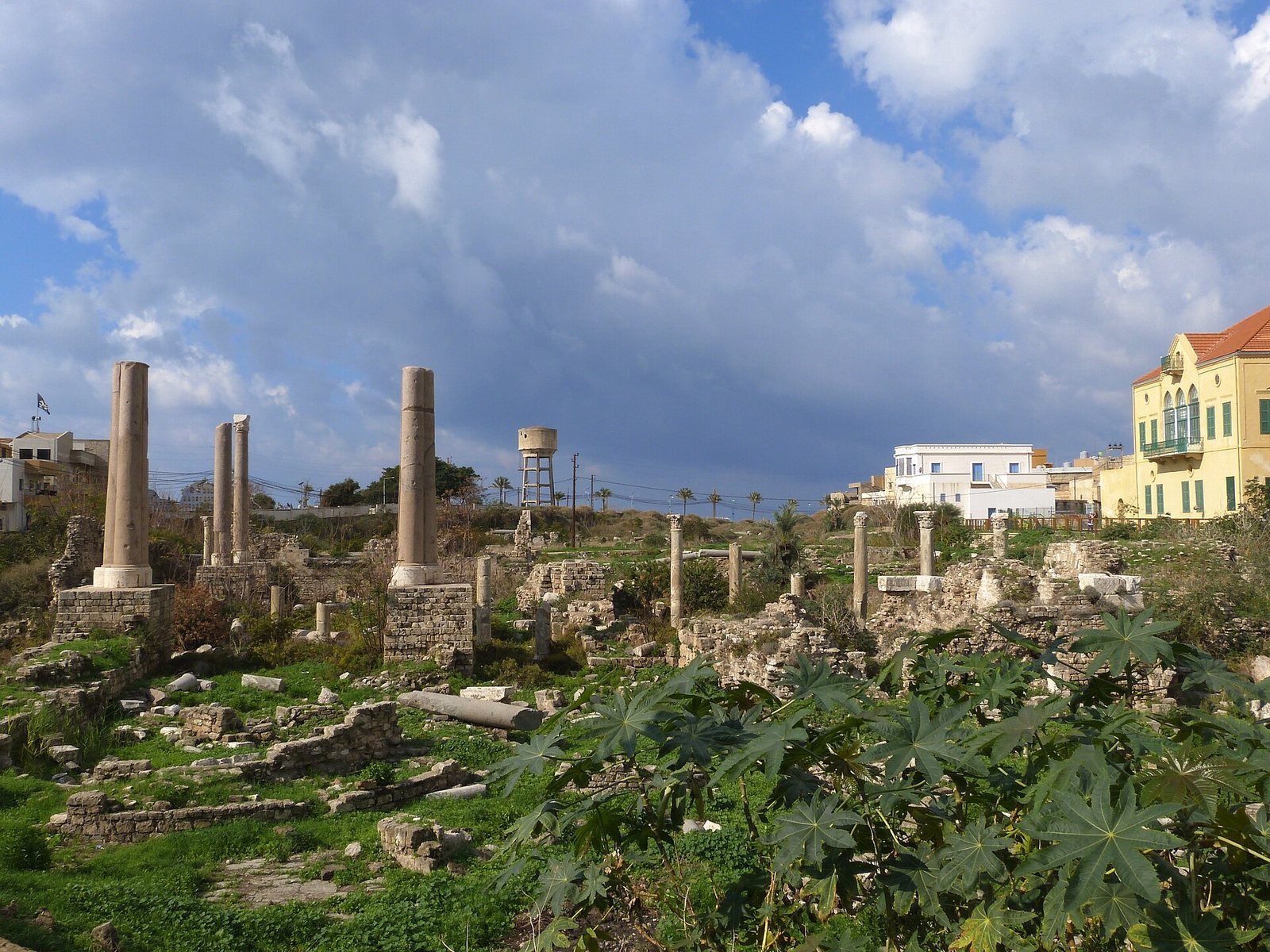
Local quartz-rich sandstone formed the walls. The interior included monolithic red-granite columns, each carved from a single block and about eight metres high, reused from Roman-period buildings. Two three-shafted columns of red porphyry, a hard decorative stone, were described among rubble beside the choir, the area used by clergy for services and singing. Al-Jazzar, the Ottoman governor of Acre, tried to have them moved to a mosque there, but his engineers could not transport them.
Surviving fabric and foundations
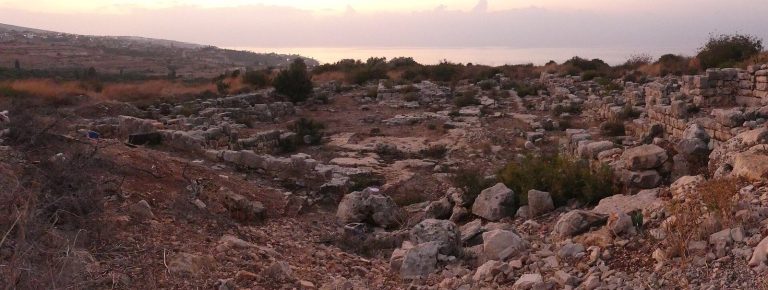
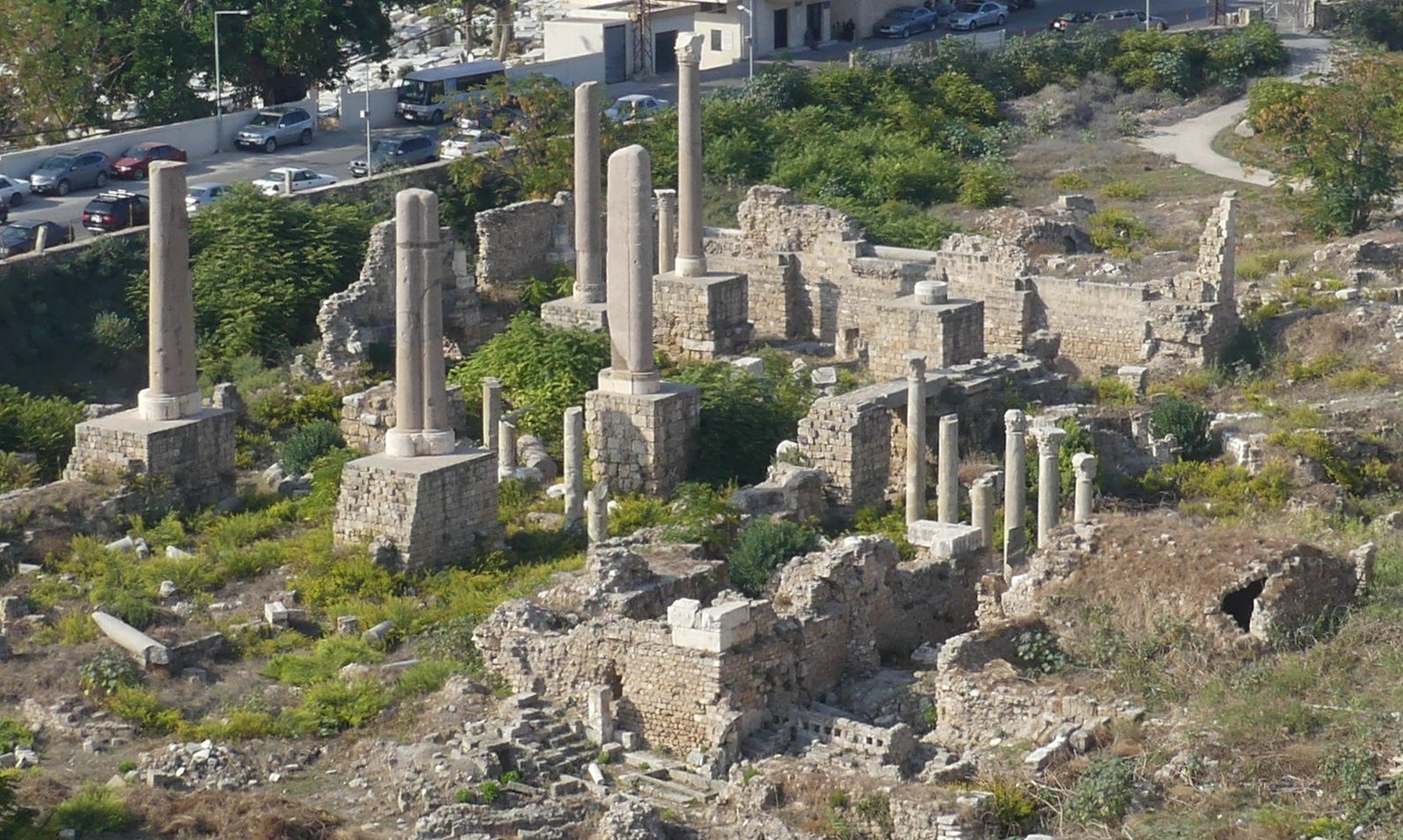
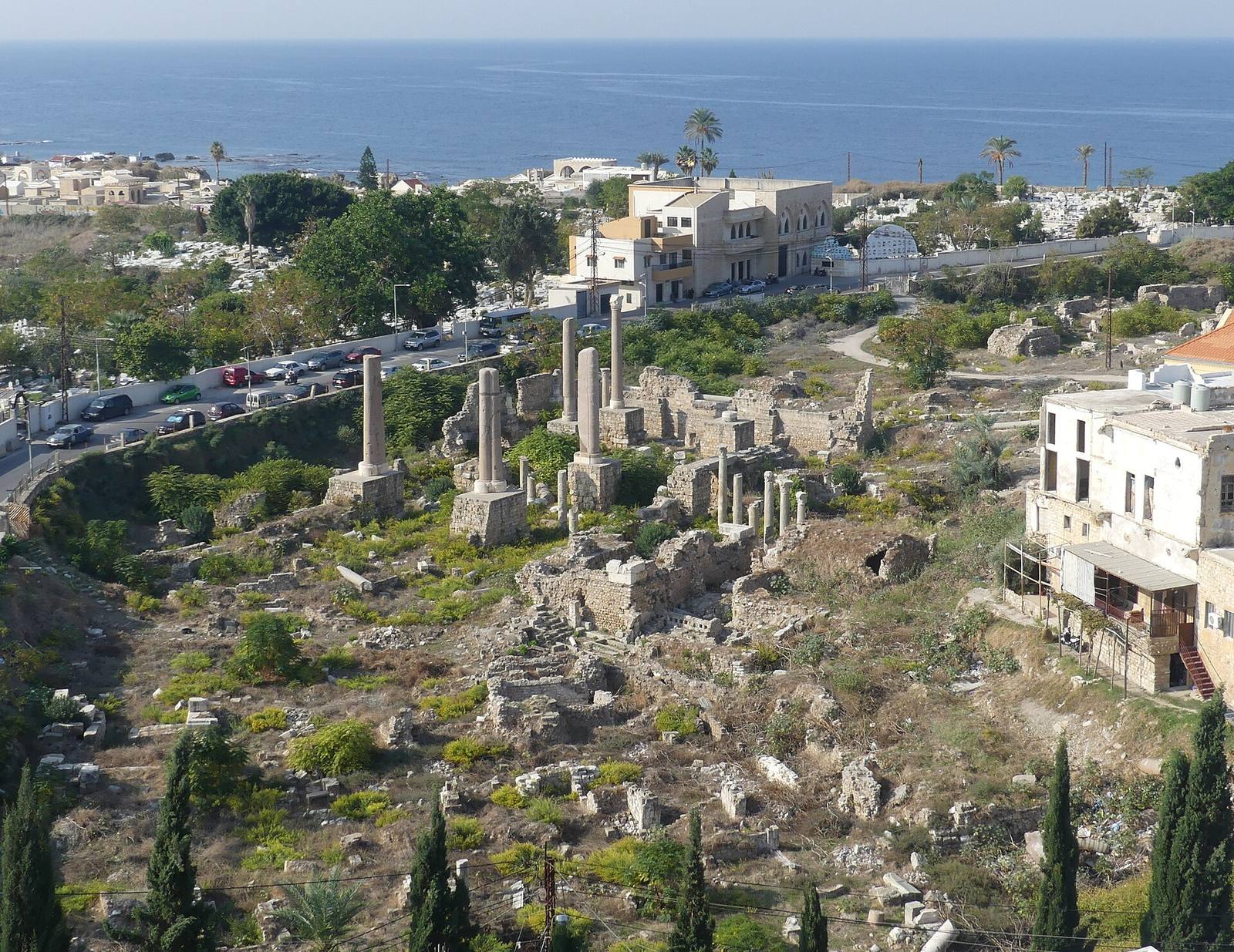
Travellers described the eastern part of the cathedral, including its three apses, as surviving almost to its original height. Another description noted that only part of the choir remained. Today, only a few remains are visible in the heart of old Tyre. Pringle’s excavations exposed the foundations across the building’s full footprint, where they met a Roman-period street directly.