St Blaise’s Church: A Baroque Parish Church in Dubrovnik
Site at a Glance
- Rating
- 4.7
- Popularity
- High
- Country
- Croatia
- Primary era
- Early Modern
- Eras represented
- Medieval, Early Modern
- Civilizations
- Republic of Ragusa, Venetian
- Site type
- Religious
- Remains
- Church
On this page13 sections
History
Medieval foundation
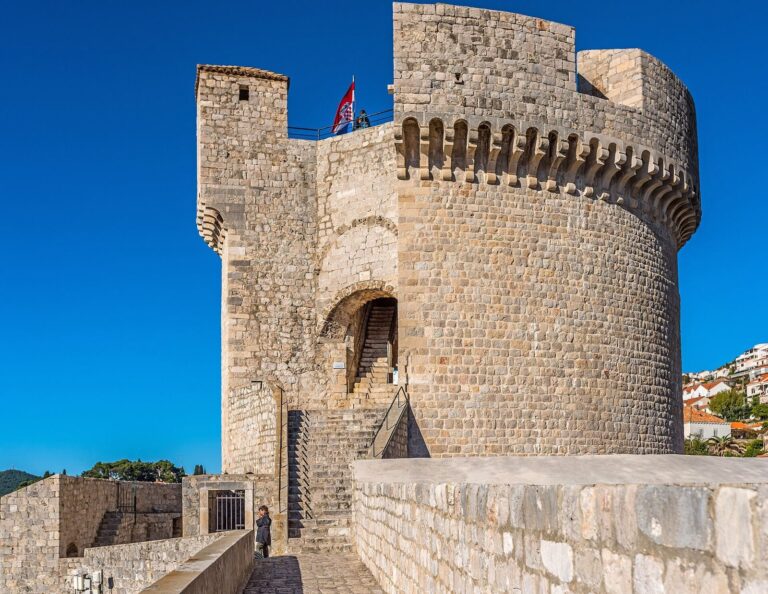
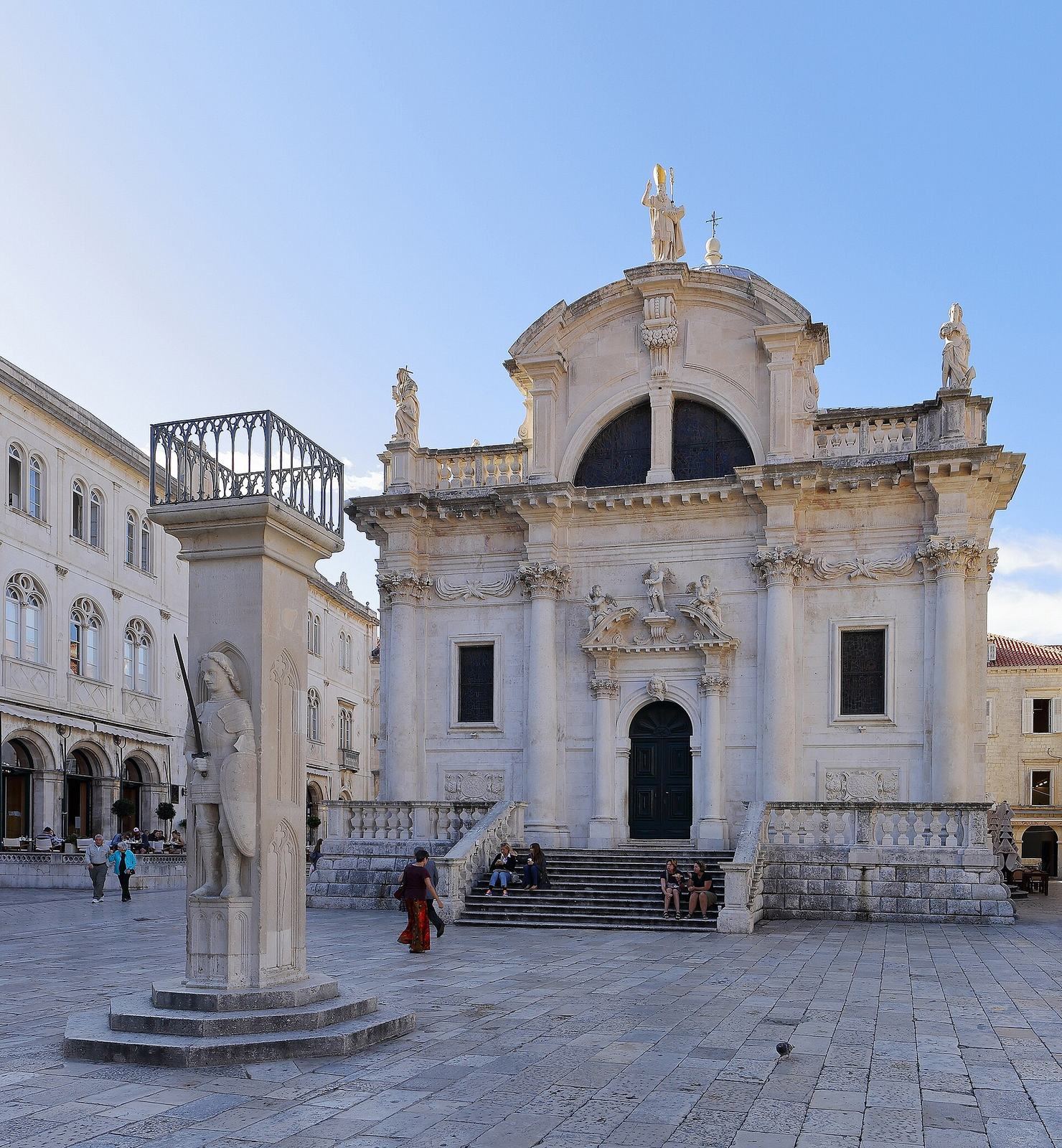
St Blaise’s Church is an active Roman Catholic parish church on Luža Square in Dubrovnik, Croatia. Its present Baroque building, an example of an early-modern European style, was constructed from 1706 to 1715. The church began as a Romanesque building, a medieval architectural style, dedicated to Saint Blaise, an early Christian bishop and martyr. He was Dubrovnik’s patron saint and had formerly been the protector of the Republic of Ragusa, the maritime republic centered on the city.
On 26 February 1348, the Great Council, Ragusa’s governing assembly, resolved to build the church at Platea Communis, or Public Square, in front of the council hall. Properties that had reverted to state ownership after the Black Death, the plague pandemic that spread across Europe in the mid-14th century, were assigned to help pay for the work. Archbishop Ilija Saraka laid the cornerstone. The choice of site and the ceremony have been interpreted as expressions of Dubrovnik’s desire for independence from Venetian rule. The church was completed in three years under the supervision of Andelo Lorrin, Butko, and Mihajlo Petrovic. It soon became the city’s second most important church after the cathedral.
Baroque rebuilding
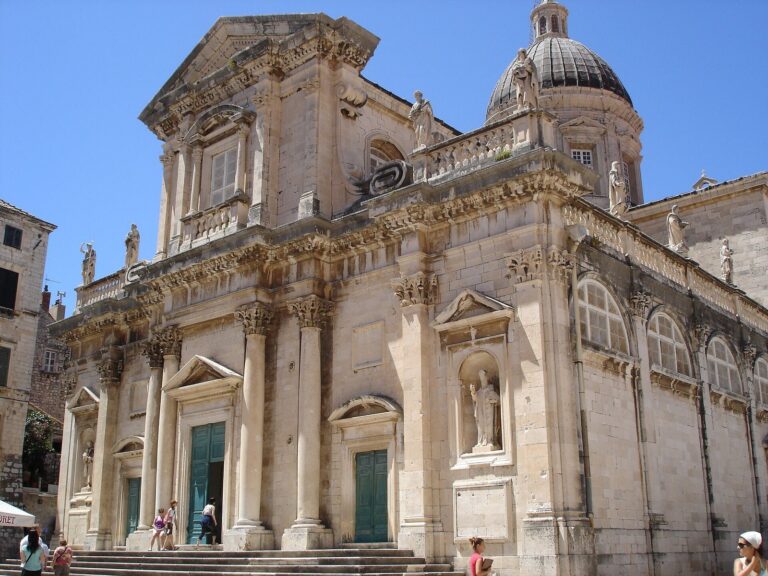
The Romanesque church came through the 1667 earthquake relatively well, but a fire destroyed it in 1706. A new church was built on its foundations between 1706 and 1715 to designs by Venetian architect and sculptor Marino Gropelli. It was dedicated in 1715.
Modern damage and continuing role
An earthquake damaged the church in 1979, and it suffered further damage during Croatia’s 1991-1992 War of Independence. St Blaise’s Church continues to play an important part in Dubrovnik’s annual Feast of Saint Blaise, held on 3 February. It is protected as cultural property in Croatia.
Remains
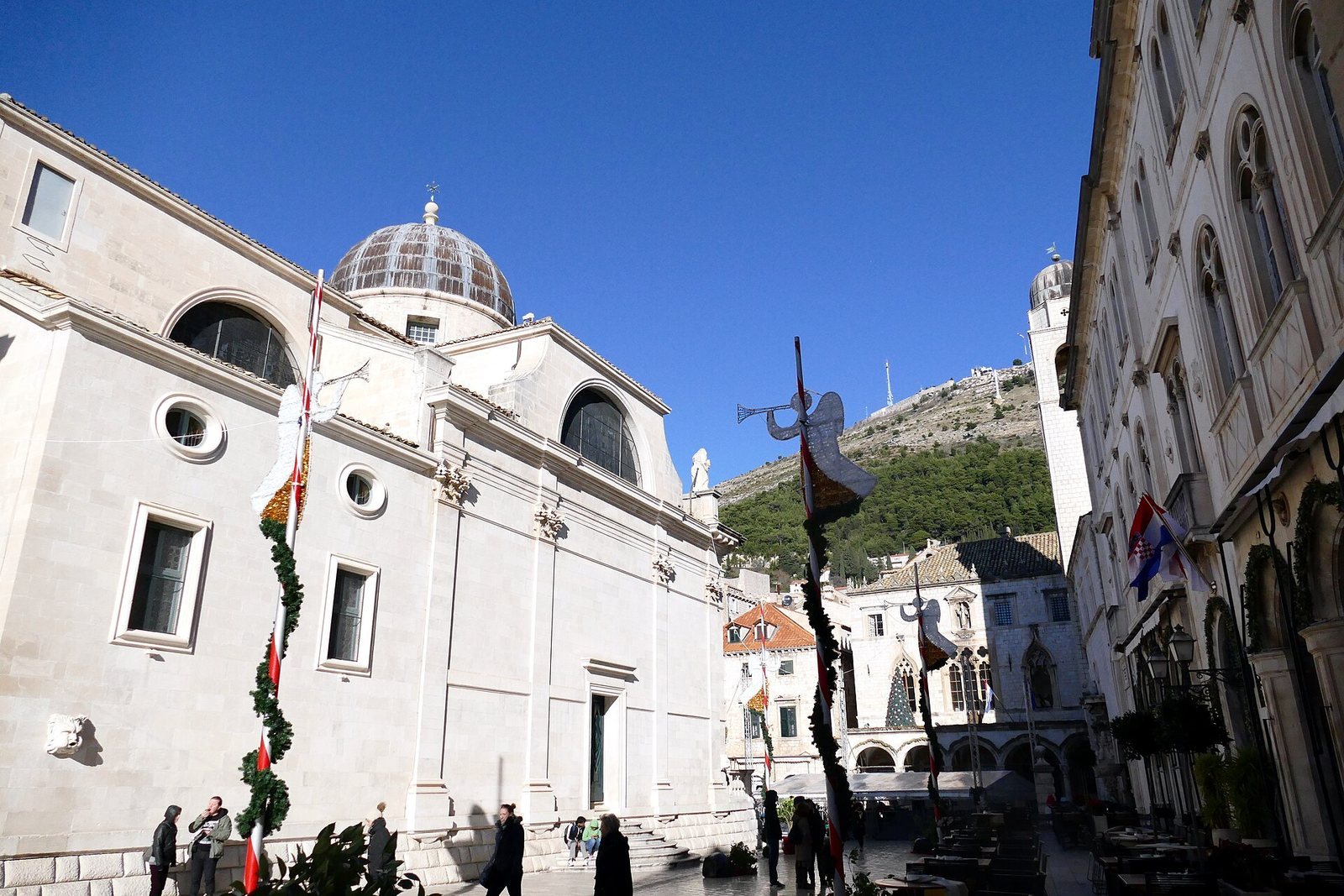
The present stone church stands on the foundations of its Romanesque predecessor. Its plan brings a central church space, sanctuary, and dome together within a compact square outline.
Plan and exterior
Plan and entrance
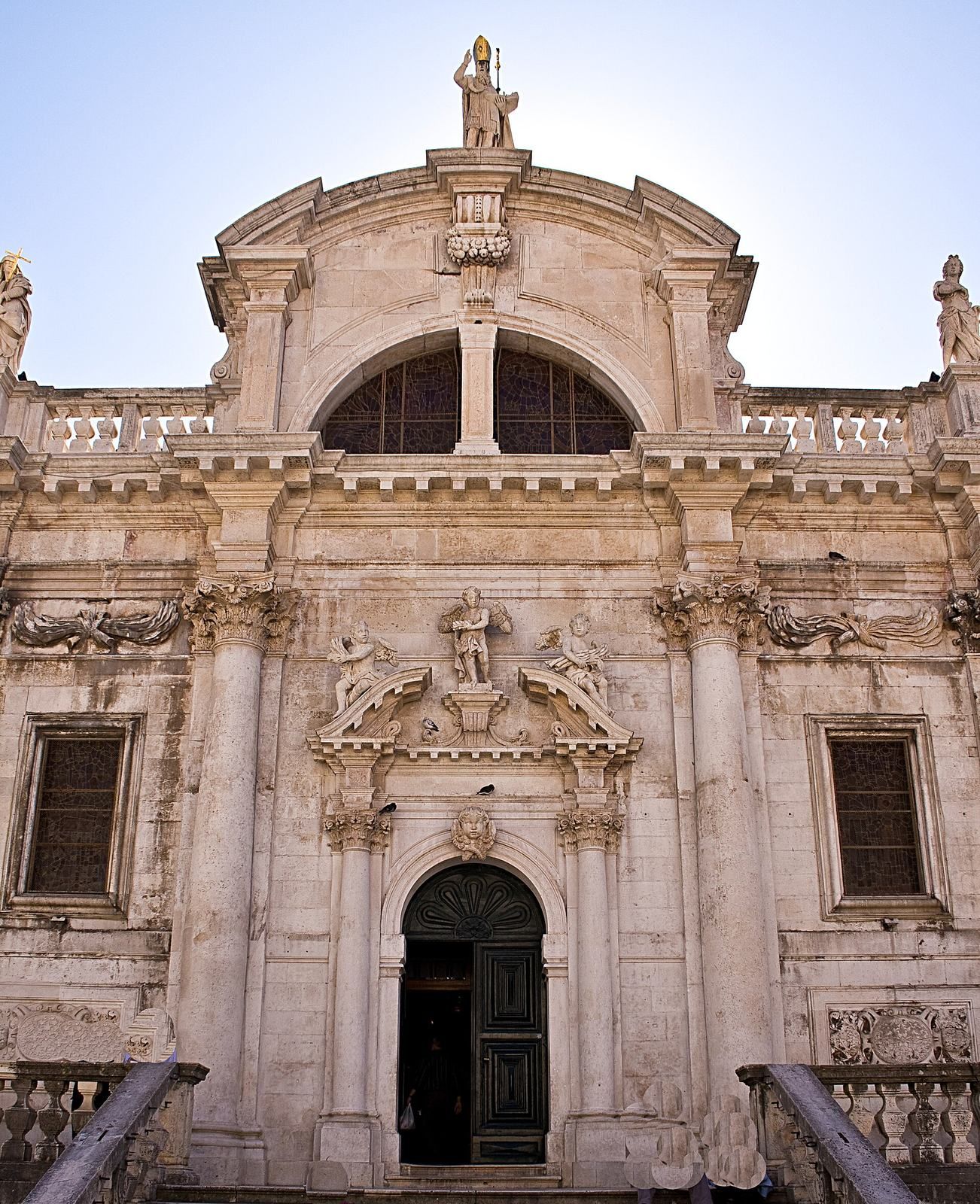
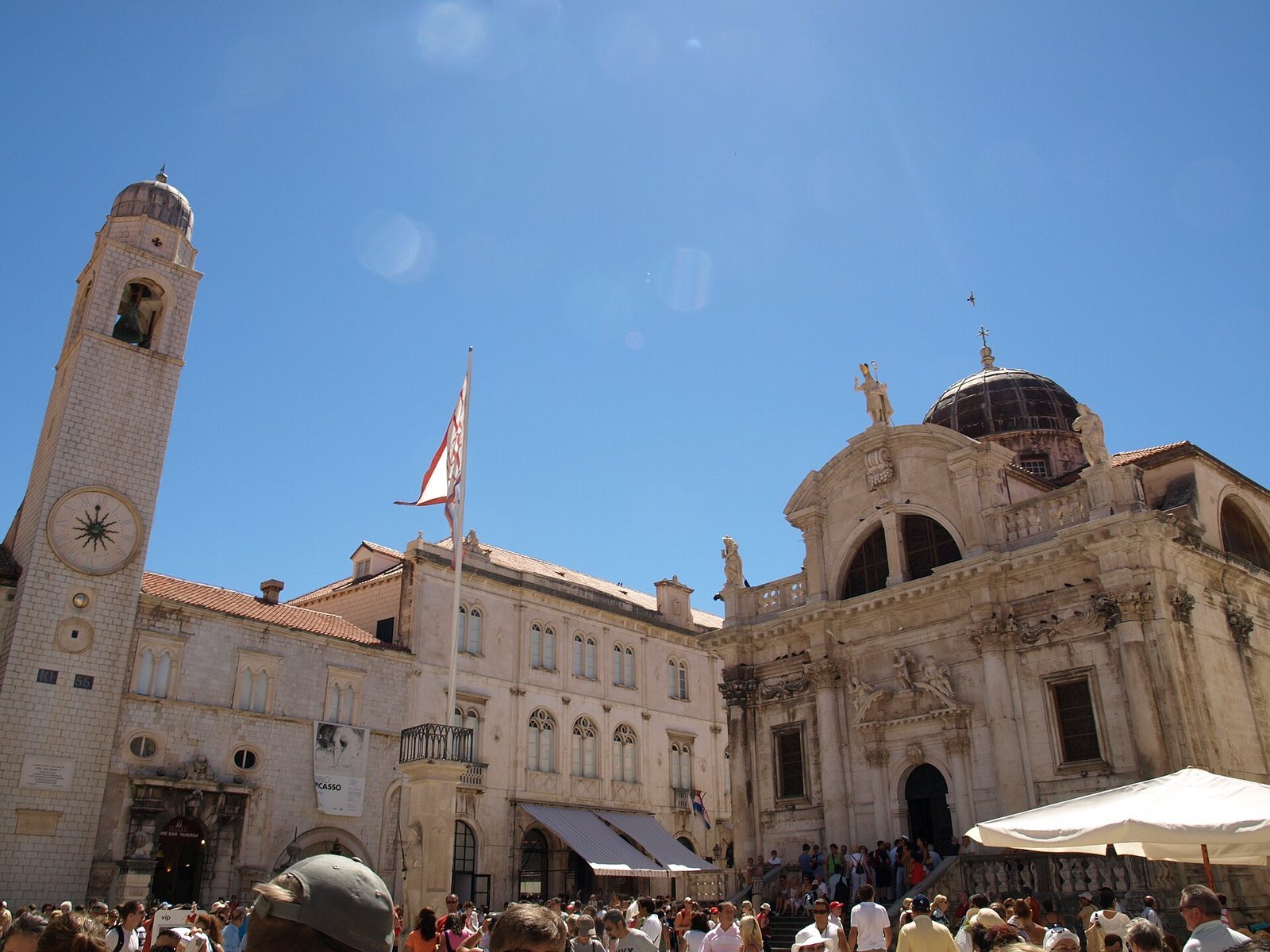
The church has a single nave, the main space for the congregation, arranged as a cross-shaped layout within a square. An apse, the sanctuary end, is flanked by two sacristies, rooms for clergy preparation and liturgical objects. An oblong cupola, or small dome, rises over the center. A broad flight of steps leads to the portal, which is decorated with statues of angels.
Façade
Four Corinthian columns, with ornate classical capitals, divide the façade. Above them, a semicircular gable and a railing support three statues by Gropelli. Saint Blaise stands between personifications of Faith and Hope.
Interior and furnishings
Vault and dome
The richly decorated interior has a barrel vault, a continuous arch-shaped ceiling. Central Corinthian columns support the cupola’s tambour, the structure beneath a dome, and its lantern, a small feature at the dome’s crown. Dome-like forms without openings occupy the corners of the nave.
Main altar and relics
The main altar combines white and multicolored marble. Its high niche holds a 15th-century Gothic statue, in the later-medieval style, of Saint Blaise, made from gilt silver by an unidentified local craftsperson. The saint holds a model of Dubrovnik as it stood before the 1667 earthquake, and two kneeling angels flank the figure. The statue survived both the earthquake and the 1706 fire, and was the only statue to survive the fire. The domed antependium, a decorative covering on the altar’s front, shows two angels drawing back a curtain before a medallion. The church also holds relics of Saint Silvan, physical remains or objects associated with a saint and kept for veneration.
Organ
Colombi made an organ installed in the church in 1558. Gebrüder Rieger built another organ for it in 1906, catalogue number 1242. The organ has a gilded case in Venetian style, dated to 1720, and an arrangement of stops and tonal resources in the Romantic style. Its transmission uses electronic and digital controls; it was pneumatic until 2001.
Earthquake and projectile damage
Projectile strikes during the 1991-1992 war caused the greatest damage to the roof and north façade.