Church of St Michael and All Angels in Ledbury: A Medieval Parish Church
Site at a Glance
- Rating
- 4.5
- Popularity
- Medium
- Country
- United Kingdom
- Primary era
- Medieval
- Eras represented
- Medieval, Early Modern, Modern
- Civilizations
- British, English, Norman
- Site type
- Religious
- Remains
- Church
On this page15 sections
History
Minster and Medieval Church
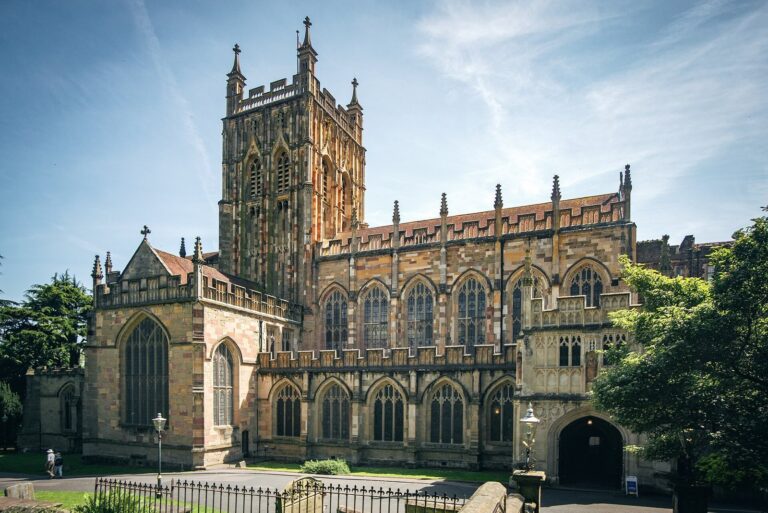
The Church of St Michael and All Angels in Ledbury, United Kingdom, is a Church of England parish church whose recorded history reaches back to a minster in 1086. A minster served a wider community at a time when village parish churches were not yet widespread.
The oldest parts of the present church date from the twelfth century, while most of its fabric belongs to the thirteenth and fourteenth centuries.
Restoration and Church Status
Nineteenth-century restoration brought stained-glass windows to the church and replaced its pews.
The church belongs to the Church of England, the Anglican church in England. Its administration falls within the Province of Canterbury, Diocese and Archdeaconry of Hereford, Deanery of Ledbury, and Parish of Ledbury, successive levels of territorial organization. It received Grade I listing in 1953, the highest listed-building category in England. The listing describes it as one of Herefordshire’s finest churches.
Remains
The surviving layout brings together the medieval church, aisles added in later centuries, a chapter house north of the north aisle, and a tower set apart to the north. The building’s fabric reflects several phases of construction, with later additions to the tower and interior.
Medieval Fabric
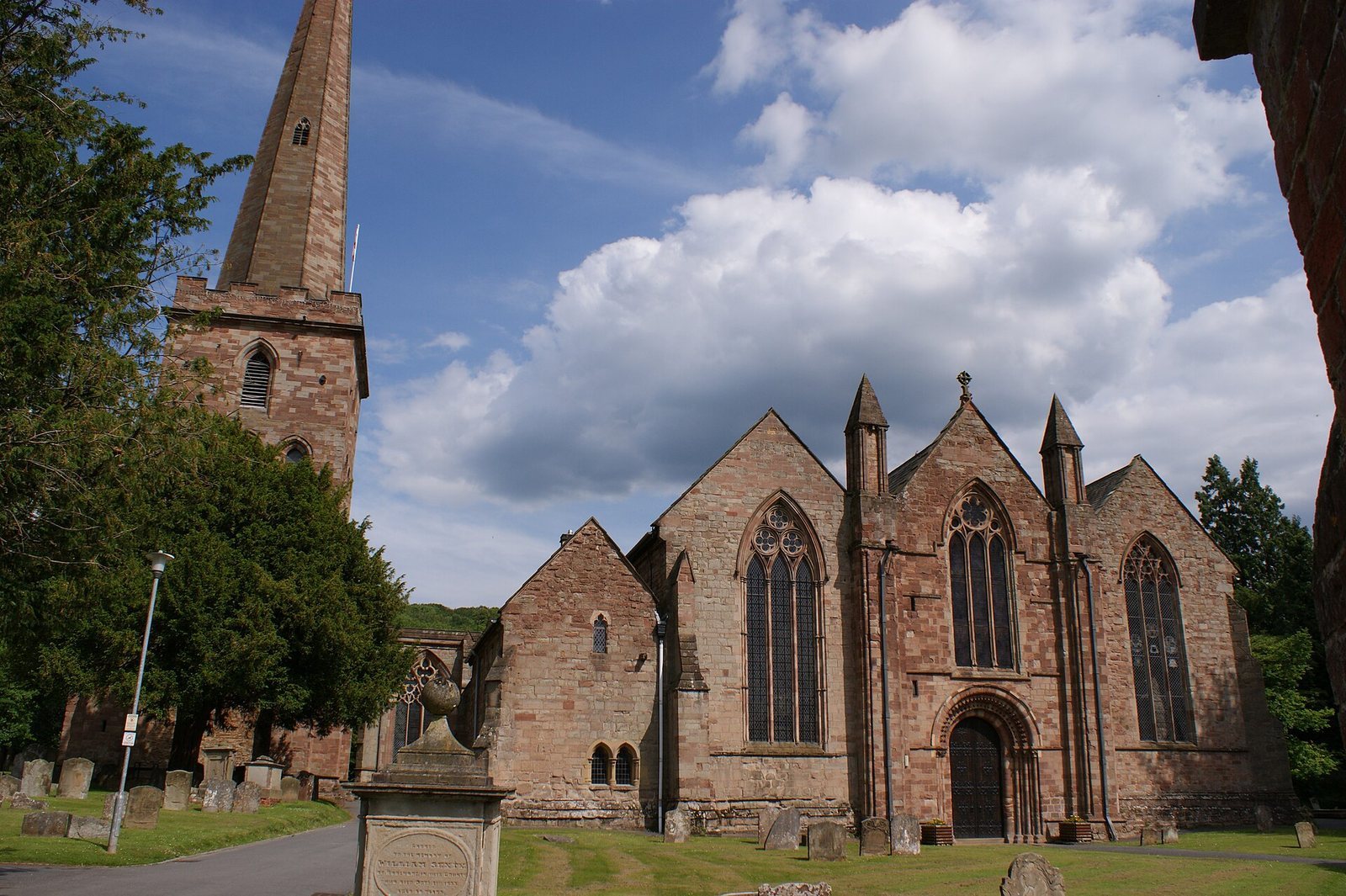
West Front and Chancel
The twelfth-century remains include the central part of the west front and its doorway surround, as well as the chancel, the area around the altar. High circular windows in the chancel walls once formed a clerestory, a row of high windows above lower adjoining spaces. They were above low aisles in the original building and are now seen from within the higher aisles.
Aisles and Arcades
The north aisle dates from the thirteenth century, while the south aisle and its arcade, a row of arches supported by piers, date from the fourteenth. The bases of pillars at the western end of the north aisle’s arcade are thought to belong to an earlier church in the Norman architectural style, associated with the Norman period in England.
Chapter House
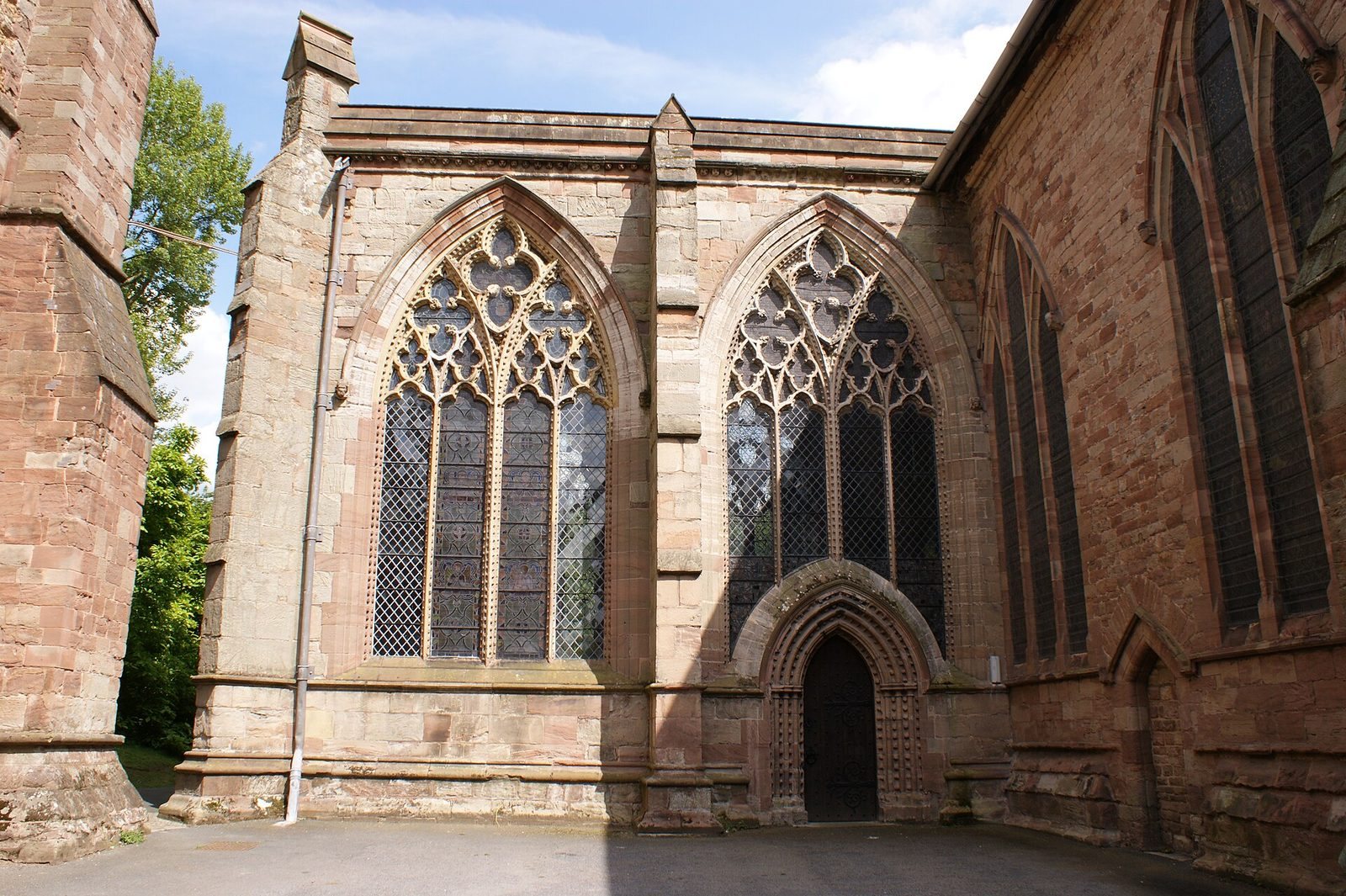
North of the north aisle, facing the chancel, stands a chapter house built about 1320. A chapter house was a meeting room for a religious community. The building may have been intended as a shrine to Katherine of Ledbury and was once called the Chapel of St Katherine.
North Tower
Tower
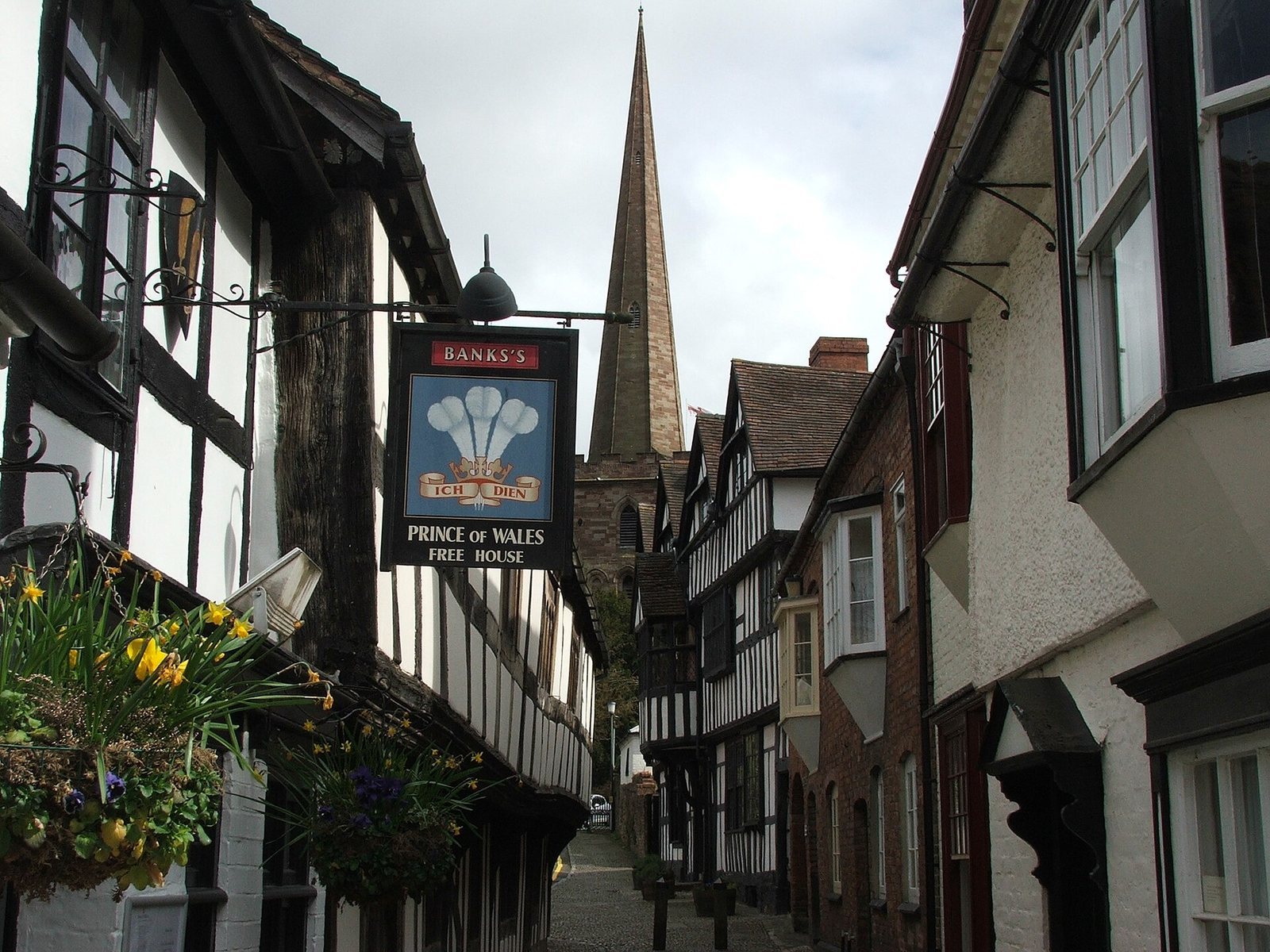
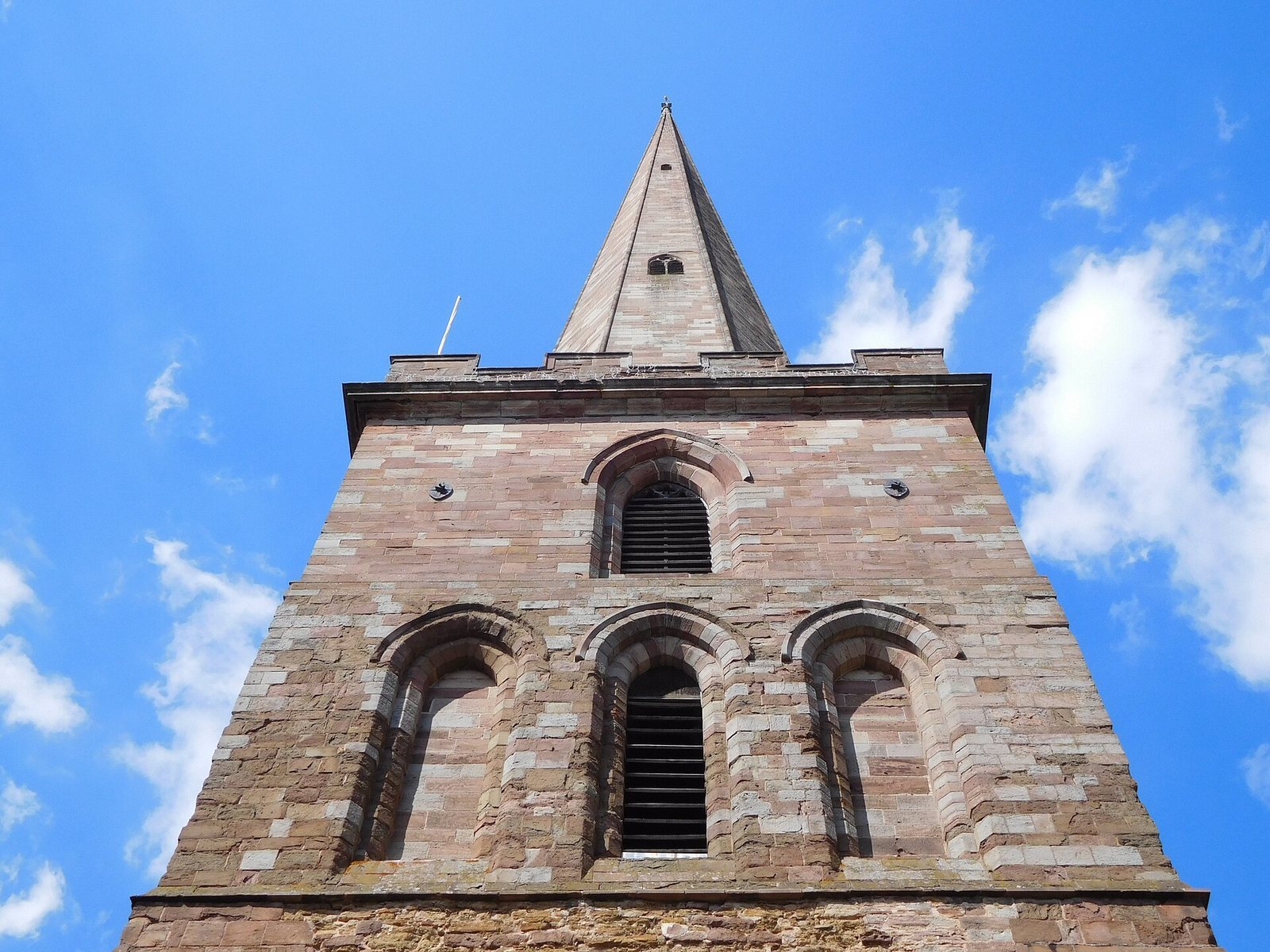
The tower stands separately to the north of the church and dates from about 1230. Its position may relate to a stream running beneath the church, which could have made the ground at the west end too unstable for a tower. The structure has three stages. In 1732, Nathaniel Wilkinson of Worcester added the upper stage and a stone spire with an octagonal plan. The upper stage has one light on each side and battlements.
Bells
The tower holds ten bells, a ring expanded in 2020 with two bells made by the Westley Group. The tenor, cast by Abel Rudhall in 1736, weighs 2,218 pounds (1,006 kg). The fifth bell, cast by Abraham I Rudhall in 1705, is the oldest in the ring.
Interior Fittings and Memorials
Organ
Thomas Elliot’s organ was installed in 1820. Nicholson & Co substantially rebuilt and enlarged it in 1863, retaining six ranks, or sets of pipes, from Elliot’s instrument on the Great keyboard. Nicholson rebuilt it again in 1970, and Percy Daniel & Co renovated it in 2000. The organ now has three manuals, or keyboards, and pedals, with 39 speaking stops, controls that bring pipe sets into use.
Memorials
Memorials include works by the British sculptors Richard Westmacott and John Flaxman. Westmacott made monuments to Daniel Ellis Saunders, who died in 1825, and Robert Myddelton Biddulph (1761–1814). Flaxman created a memorial to William Miles, who died in 1803. Other memorials commemorate Anthony Biddulph, who died in 1718, and his wife Constance, who died in 1706. A seventeenth-century canopied monument on the south wall near the altar depicts Edward and Elizabeth Skynner kneeling beside a baby who died young. Below them are their five sons and five daughters who survived to adulthood.
Painting of the Last Supper
The church contains a painting of the Last Supper probably made between 1560 and 1580 by more than one Venetian artist, including Titian. Ultraviolet light revealed the lettering TITIANVS on the painting.