Queen’s Chapel: A Royal Chapel at St James’s Palace
Site at a Glance
- Popularity
- High
- Country
- United Kingdom
- Primary era
- Early Modern
- Eras represented
- Early Modern
- Civilizations
- English
- Site type
- Religious
- Remains
- Chapel
On this page7 sections
History
Queen’s Chapel, officially Queen’s Chapel St James’s Palace, is a Church of England chapel in the United Kingdom, designed by English architect Inigo Jones and built in 1623–1625 as an adjunct to St James’s Palace. Its Palladian design, a classical style based on the work of Renaissance architect Andrea Palladio, was intended for Catholic worship. The chapel was built at a time when Catholic churches could not otherwise be constructed in England.
Construction and Stuart use
The chapel was planned for Infanta Maria Anna of Spain, a Spanish princess who later became Holy Roman Empress. She never used it, as her proposed marriage to Charles I did not take place. Charles’s French-born Catholic queen, Henrietta Maria, later worshipped there with her household and brought furnishings from France.
During the English Civil War, the conflict between royalists and supporters of Parliament from 1642 to 1651, the chapel was used as a stable. It was refurbished in 1662, then renovated by architect Christopher Wren in 1682–1684.
The German Chapel
From the 1690s, Protestant courtiers from continental Europe who served William III and Mary II worshipped at the chapel. In 1718 it was assigned to German courtiers who had come to England with George I, and became known as the German Chapel.
On 17 September 1782, German organist Augustus Frederic Christopher Kollmann began working at the Royal German Chapel. He remained there for the rest of his life, and his son, George Augustus, and daughter, Johanna Sophia, followed him in the post. Johanna died in 1849.
Return to the Chapel Royal
Queen Mary of Teck, who lived next door at Marlborough House, arranged for the chapel to return to the administration of the Chapel Royal in 1938. The Chapel Royal is the institution serving the sovereign and royal household, rather than the name of just one building. Services are held at Queen’s Chapel from Easter Day through July, with services at the older Chapel Royal building during the rest of the year. Queen Mary regularly attended Sunday morning worship, sitting in the royal pew for Mattins, a traditional form of Anglican morning prayer, and among the congregation for Holy Communion.
The private royal apartments beside the chapel burned down in 1809 and were not rebuilt. Marlborough Road was laid out between the palace and chapel in 1856–1857, making the chapel appear more closely connected with Marlborough House. In 2002, Queen Elizabeth The Queen Mother’s body lay in the chapel for several days before her lying-in-state in Westminster Hall.
Queen’s Chapel is a Church of England place of worship and part of the Chapel Royal. It is distinct from the separate Chapel Royal building inside St James’s Palace, which dates to 1540. The chapel is Grade I listed, England’s highest listed-building grade; its former south wing has a separate Grade I listing.
Remains
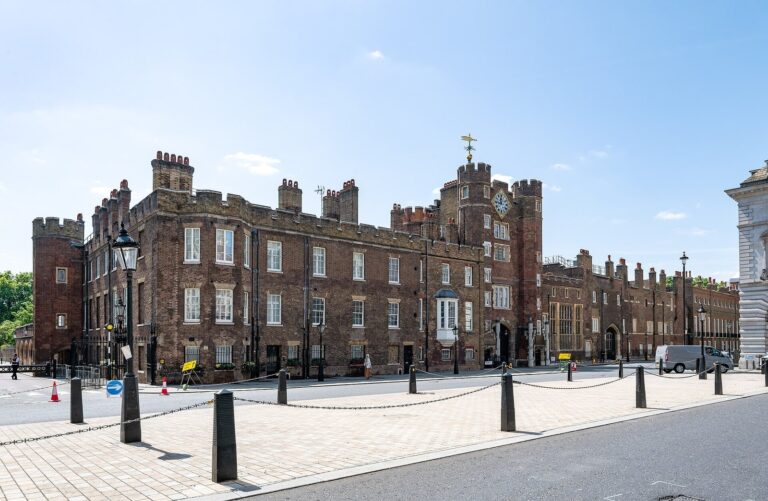
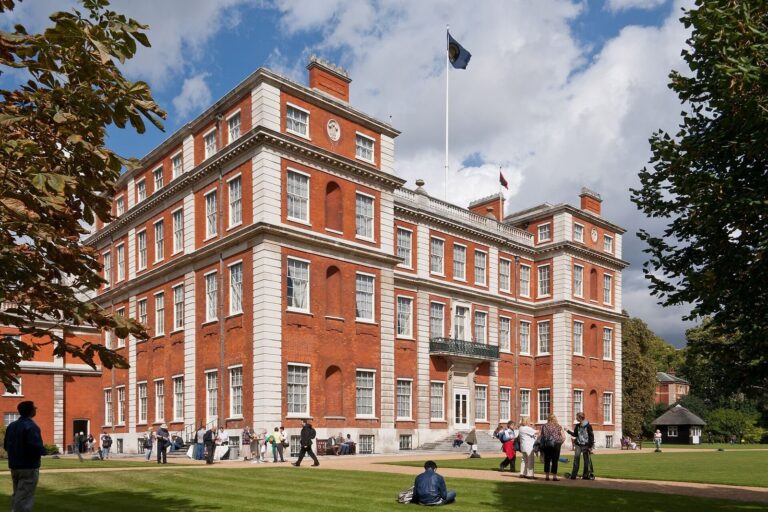
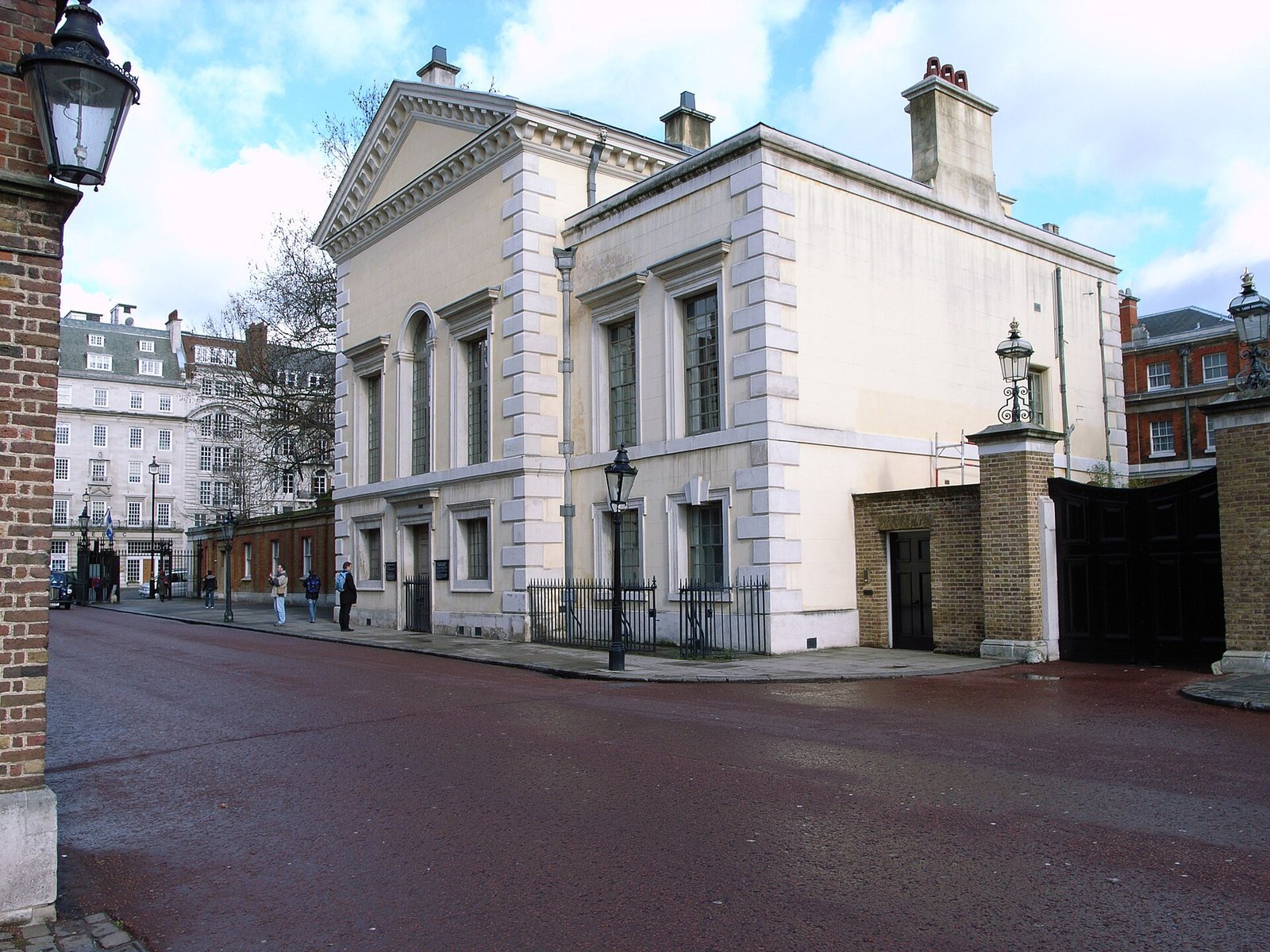
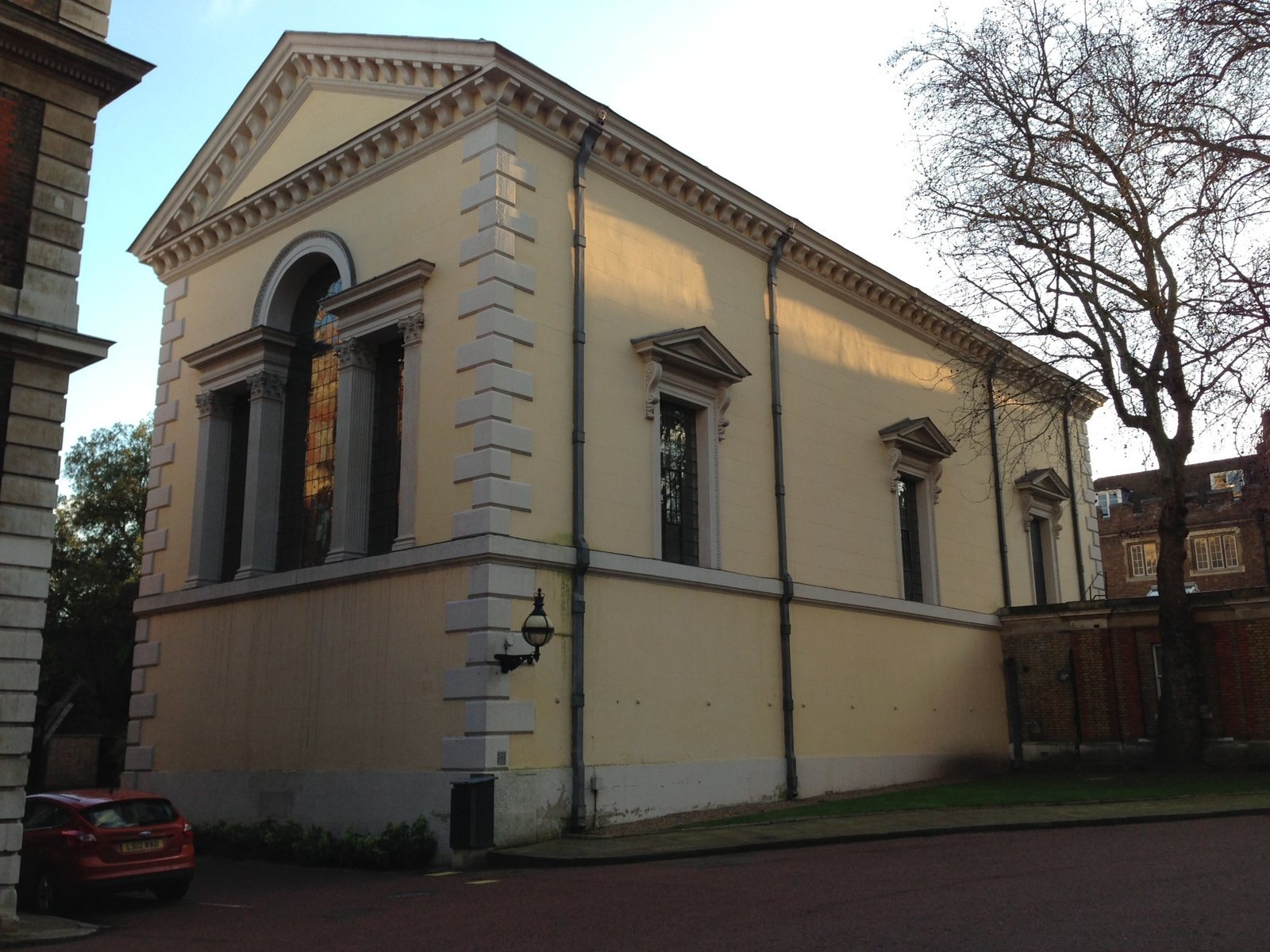
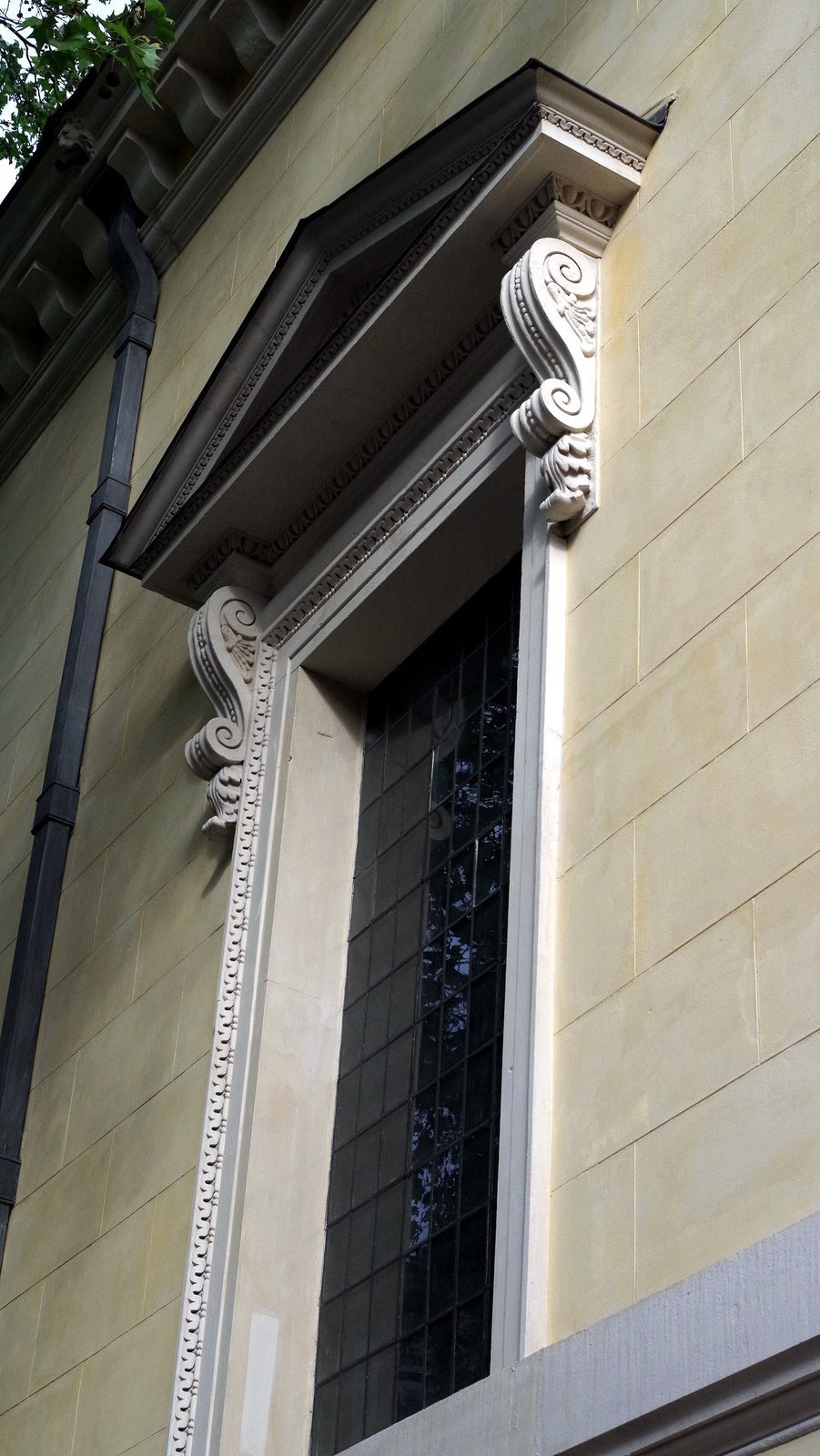
The chapel is a Palladian building made of brick and rendered to resemble stone. It stands across Marlborough Road from the older Chapel Royal inside St James’s Palace, while its east and north walls are viewed from the grounds of Marlborough House.
Building and interior
The chapel has gabled ends and pediments, the triangular features above its exterior walls. Inside, the curved ceiling is painted and gilded, and the royal pew, also called the closet, occupies the west gallery.
Former south wing
The chapel’s former south wing was converted into a two-storey residence for the dean.