St Mary Magdalene’s Church in East Ham: An Anglican Parish Church
Site at a Glance
- Rating
- 4.8
- Popularity
- Low
- Country
- United Kingdom
- Primary era
- Medieval
- Eras represented
- Medieval, Early Modern, Modern
- Civilizations
- British, English
- Site type
- Religious
- Remains
- Church
On this page10 sections
History
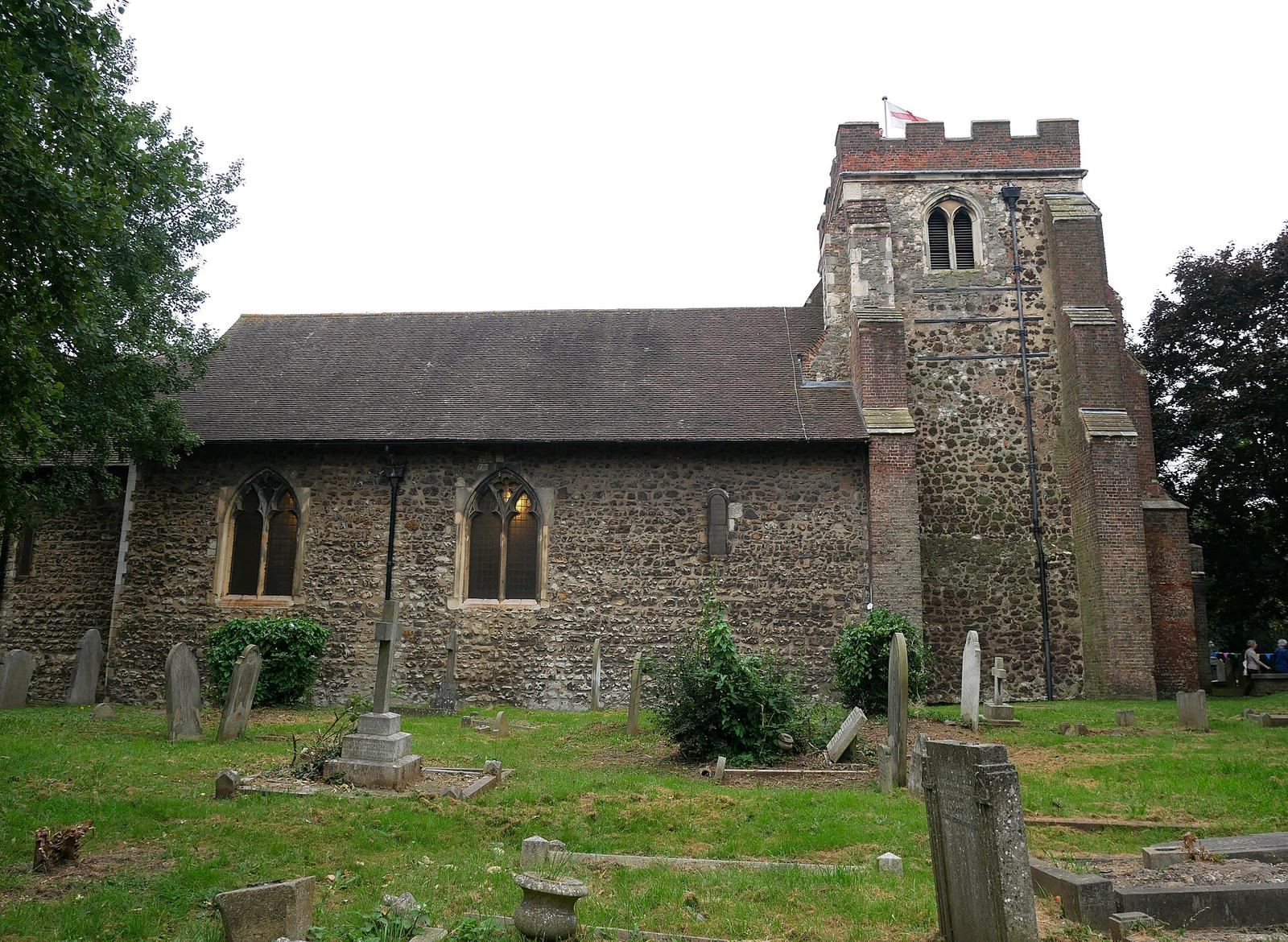
St Mary Magdalene’s Church in East Ham is an Anglican parish church in the United Kingdom, dedicated to Mary Magdalene, a New Testament figure revered as a saint in Christian tradition. Founded in 1150, it belongs to the Diocese of Chelmsford, a territorial church district overseen by a bishop. It is claimed to be the oldest parish church in Greater London still in weekly use.
Early modern changes
The church roofs were altered in the early 17th century. In 1639, Sir Richard Heigham gave the church its present font, a basin used for baptism. Edmond Nevill, who is said to have lived nearby at Green Street House, claimed the attainted title of Earl of Westmorland. Attainder was a legal penalty that could deprive a person of titles and rights.
Eighteenth- and nineteenth-century alterations
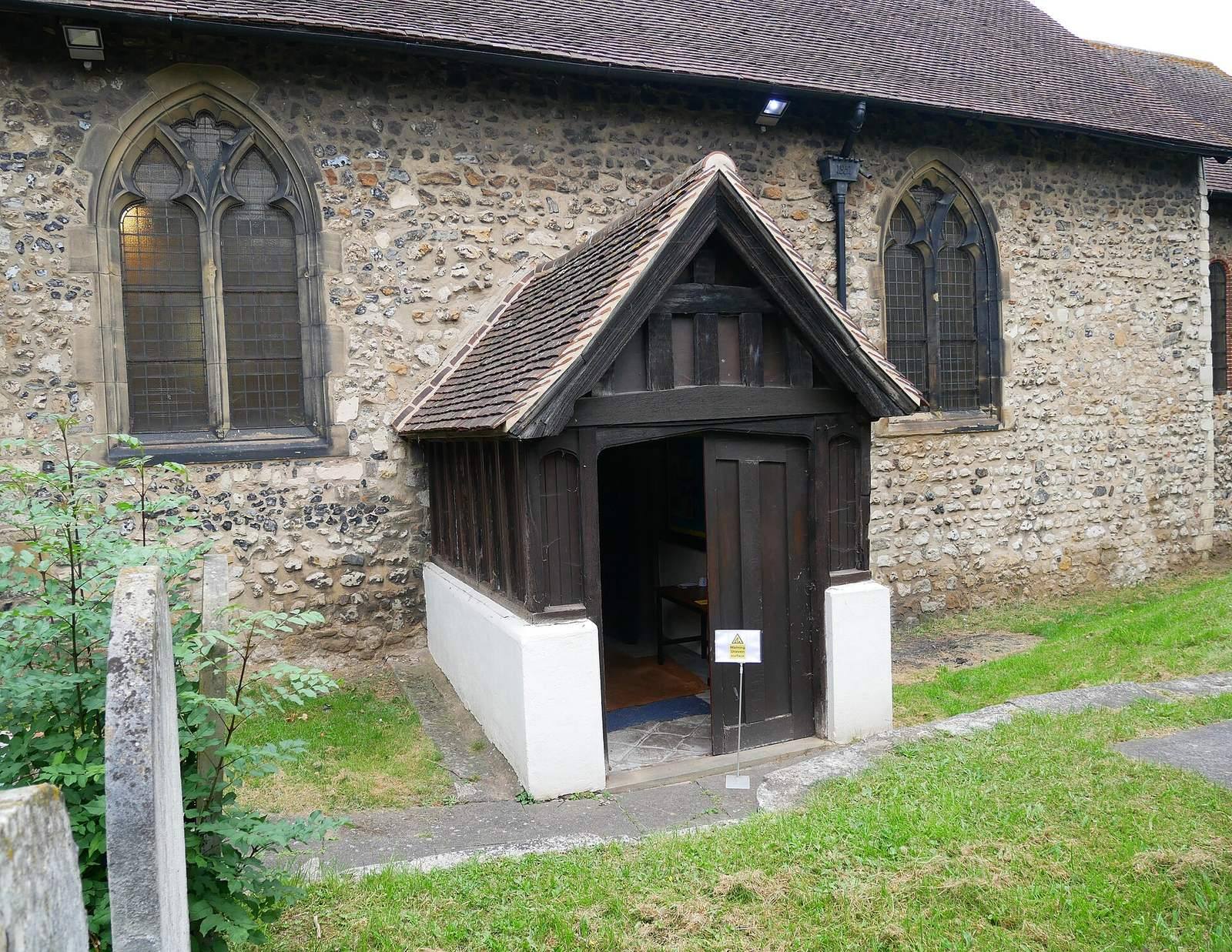
In the 18th century, the church received box pews, enclosed seating compartments, and a three-decker pulpit, with its levels arranged one above another. Both were replaced during the 1890s. A gallery for children was added in 1820 and removed in 1896, when further restoration work was completed. In 1830, the south porch became a vestry, a room where clergy prepare for services and keep church vestments.
A mission church, established to serve a particular community or area, opened in 1883 and later became St Michael and All Angels Church on Beckton Road. In 1908, a new level in the tower was made into a vestry, and the south porch stopped serving that purpose. A full restoration in 1931 included removing the ceilings in the apse and chancel, opening the stair leading to a loft associated with a church cross or crucifix, and stripping the tower’s external plaster.
War damage and later history
During the London Blitz, the wartime bombing of London, a 1941 raid destroyed the chancel roof and all the church’s stained glass and caused other damage. Repairs began immediately. The nave was restored by the end of the war, followed by more extensive work in 1950 and 1965–66.
William Stukeley, an English antiquary and early archaeologist, is said to have chosen the churchyard as his burial place while he was alive. He was buried there without a monument. The church was listed at Grade I in 1982, a category for buildings of exceptional interest and the highest grade of listed-building status in England. Since 1977, most of the churchyard has been managed by the London Borough of Newham as a nature reserve. The church is now part of East Ham Team Parish, also called the Parish of the Holy Trinity, a group served by shared clergy alongside St Edmund’s, St Bartholomew’s, and St Alban’s.
Remains
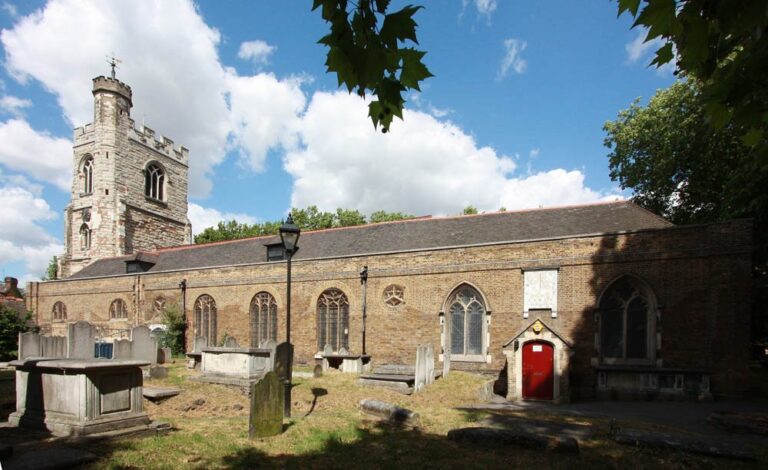
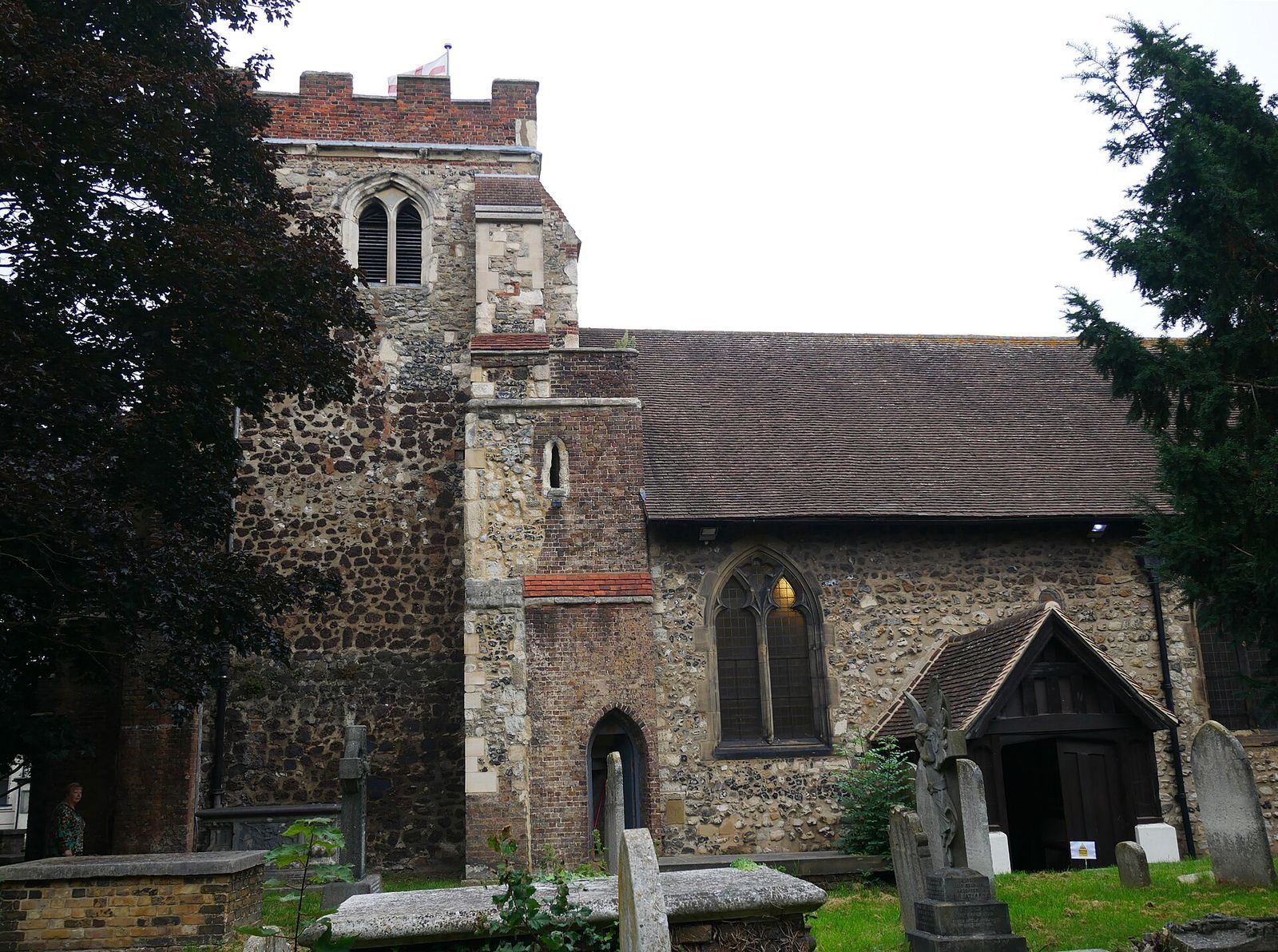
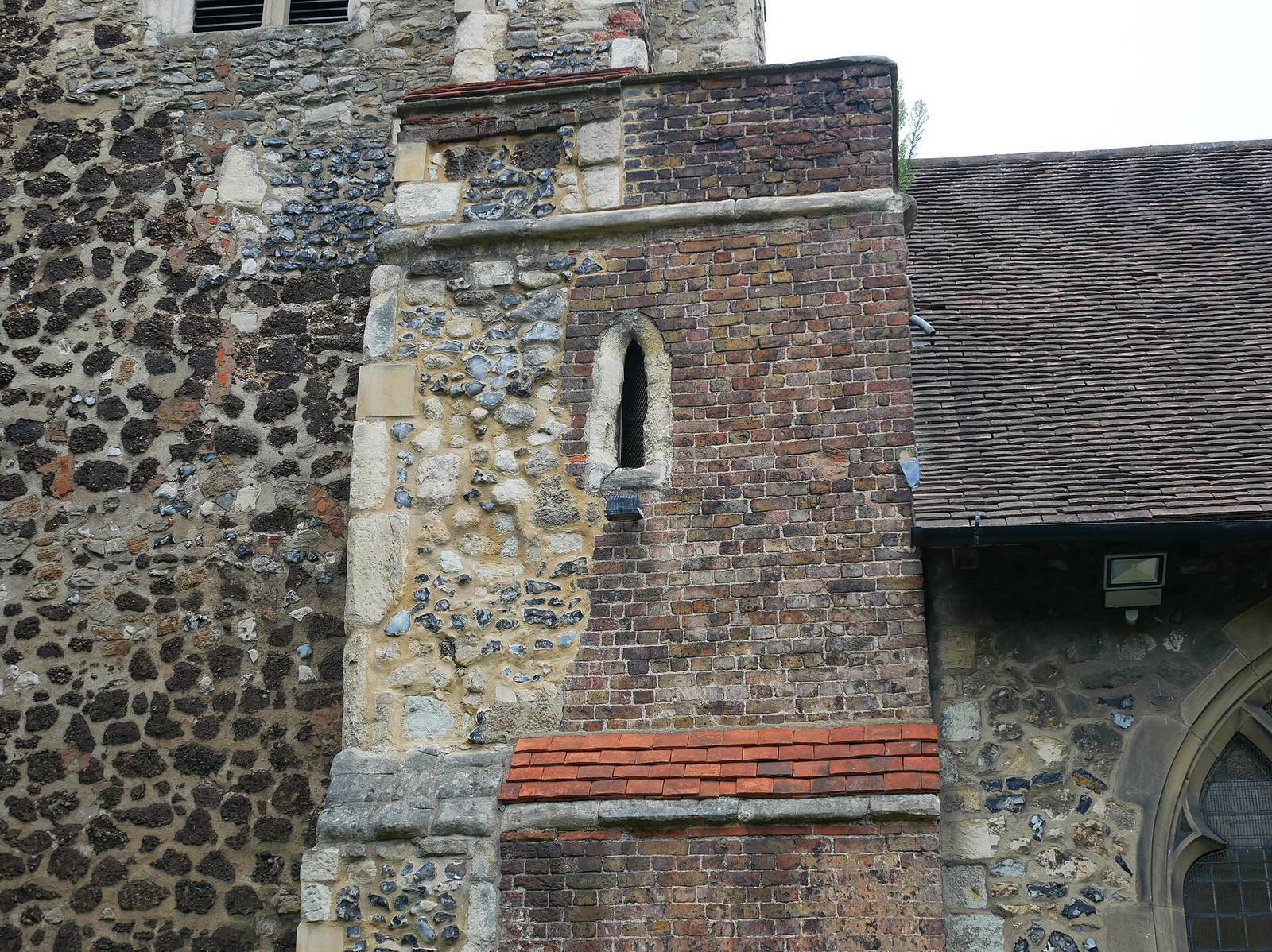
The church comprises a nave, chancel, and apse dating to the first half of the 12th century, together with a tower that probably dates to the early 13th century. The tower was partly rebuilt in the 16th century. A yellow-brick porch on the west side opens into the tower.
Surviving church fabric and grounds
Nave, chancel, and apse
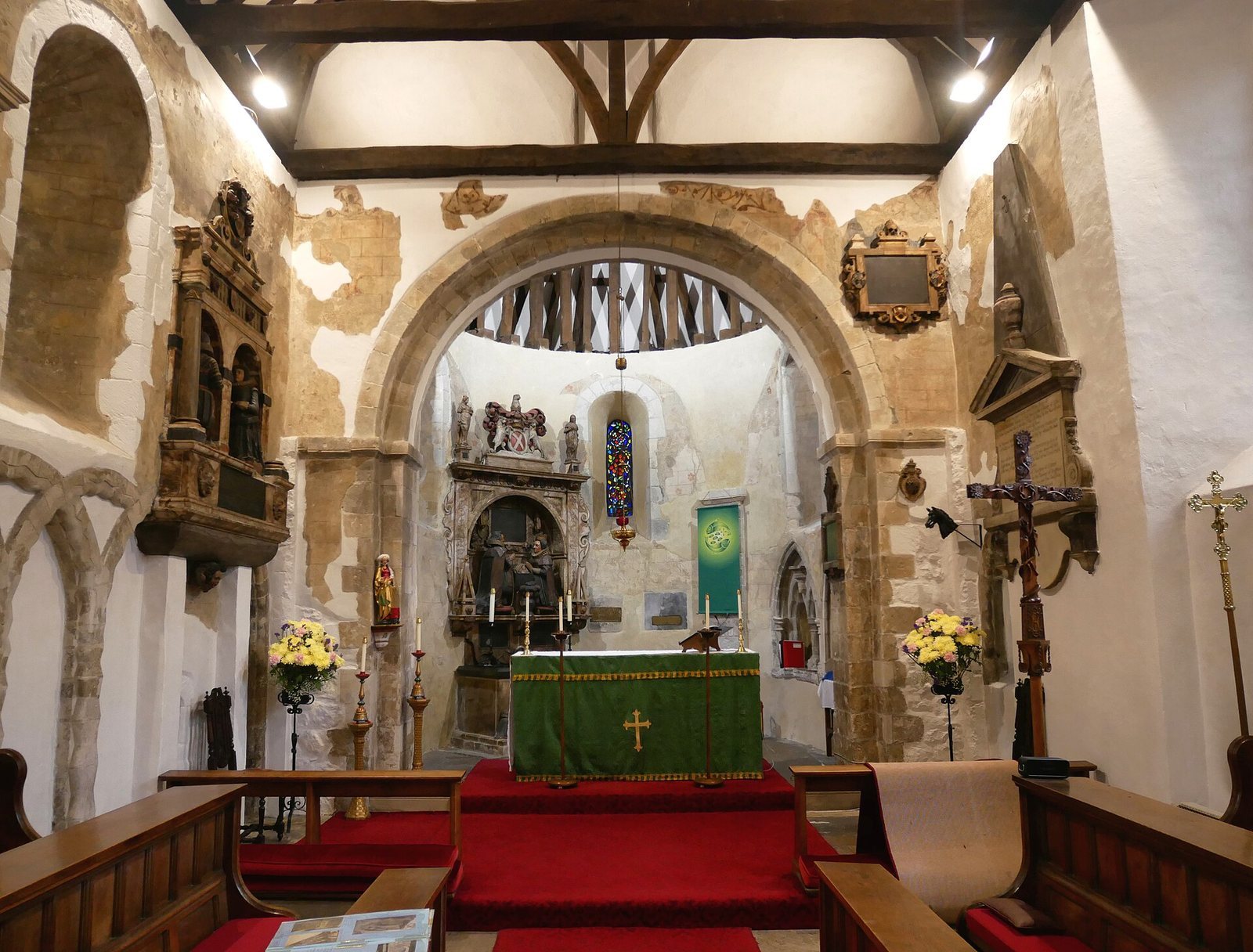
The nave is the main body of the church, while the chancel is the area around the altar. At the east end, the apse forms a recess, often rounded. A 13th-century recess in the nave’s south wall, beside the chancel, was made for an altar within the nave. It contains a piscina, a basin for washing sacred vessels. Faint remains of 13th-century wall paintings can still be seen on the apse.
Tower and porch
The tower includes a level created for use as a vestry. The west porch, built of yellow brick, provides an entrance into the tower.
Font and memorials
The present font is made of white marble. The church also contains a 17th-century memorial to Edmond Nevill and his daughter, Lady Katherine Nevill, as well as memorials to Giles Breame and William Heigham.
Churchyard
The churchyard covers about three hectares and is closed to burials. Most of its area is managed as a nature reserve.