Sanctuary of the Fountain: A Roman Imperial-Cult Site in Nîmes
Site at a Glance
- Rating
- 4.8
- Popularity
- Medium
- Country
- France
- Primary era
- Classical
- Eras represented
- Classical
- Civilizations
- Roman
- Site type
- Religious
- Remains
- Sanctuary
On this page13 sections
History
The Sanctuary of the Fountain was a Roman-era imperial-cult sanctuary at a spring in Nîmes, France, begun by local inhabitants shortly before the Common Era. It joined an older place of worship with honors for Augustus, Rome’s first emperor, and became one of two imperial-cult sites in the city.
Iron Age settlement and the spring
The area was occupied from the sixth century BC. The earliest settlement lay on the slope of Mont Cavalier and around the spring, which was probably a place of worship for the community. People associated the local water deity Nemausus with the spring; the deity’s name was also given to the colony of Augusta Nemausus.
Imperial worship in Roman Nîmes
Shortly before the Common Era, an altar to Augustus was set up at the spring, and a sanctuary gradually grew around it. The imperial cult, the religious honoring of an emperor, also served political purposes by linking a colony’s loyalty to Rome with the possibility of Roman favor. The sanctuary was probably established on local initiative in gratitude for benefits given to the city, rather than at Augustus’s command. Its location at an established sacred place allowed the new worship to coexist with older local practice.
Imperial worship was especially prominent in Gallia Narbonensis, a Roman province in southern Gaul that had been conquered early. Augustus had a close association with Nîmes and was popular there. Each province had an official imperial-cult altar in its capital, where a senior priest led sacrifices. Nîmes also honored the emperor at its own Augusteum, a sanctuary for imperial worship. Ceremonies there were led by a municipal flamen, a priest assigned to the cult, and by seviri, a prestigious group whose precise ceremonial duties are uncertain.
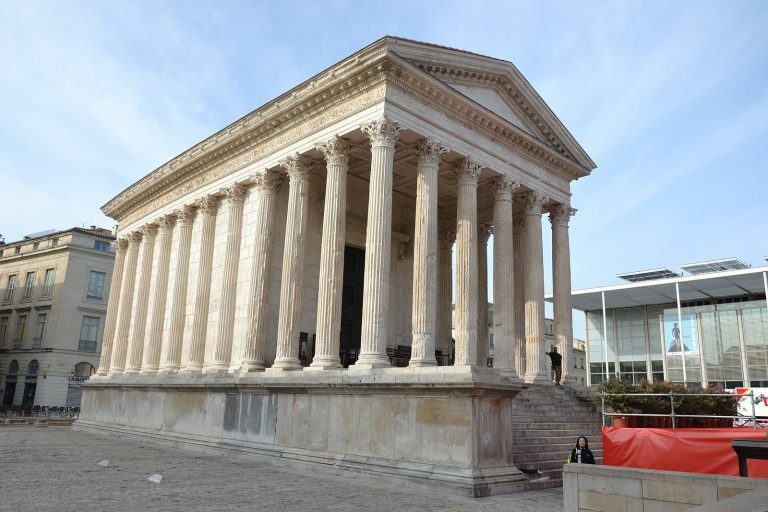
Nîmes was unusual in having a second imperial-cult site as well: a sanctuary in the forum, at the place now occupied by the Maison Carrée. Together, the city’s shrines show how imperial worship could be supported by local communities as well as by Roman authority.
Abandonment and rediscovery
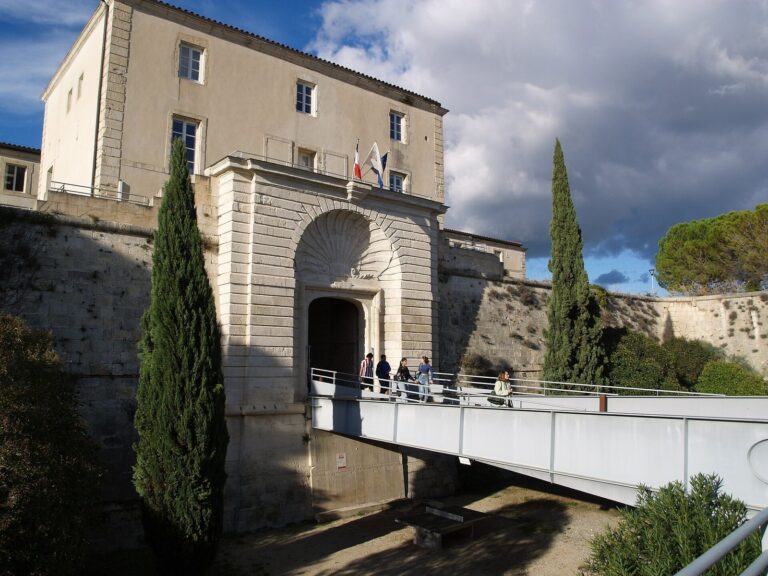
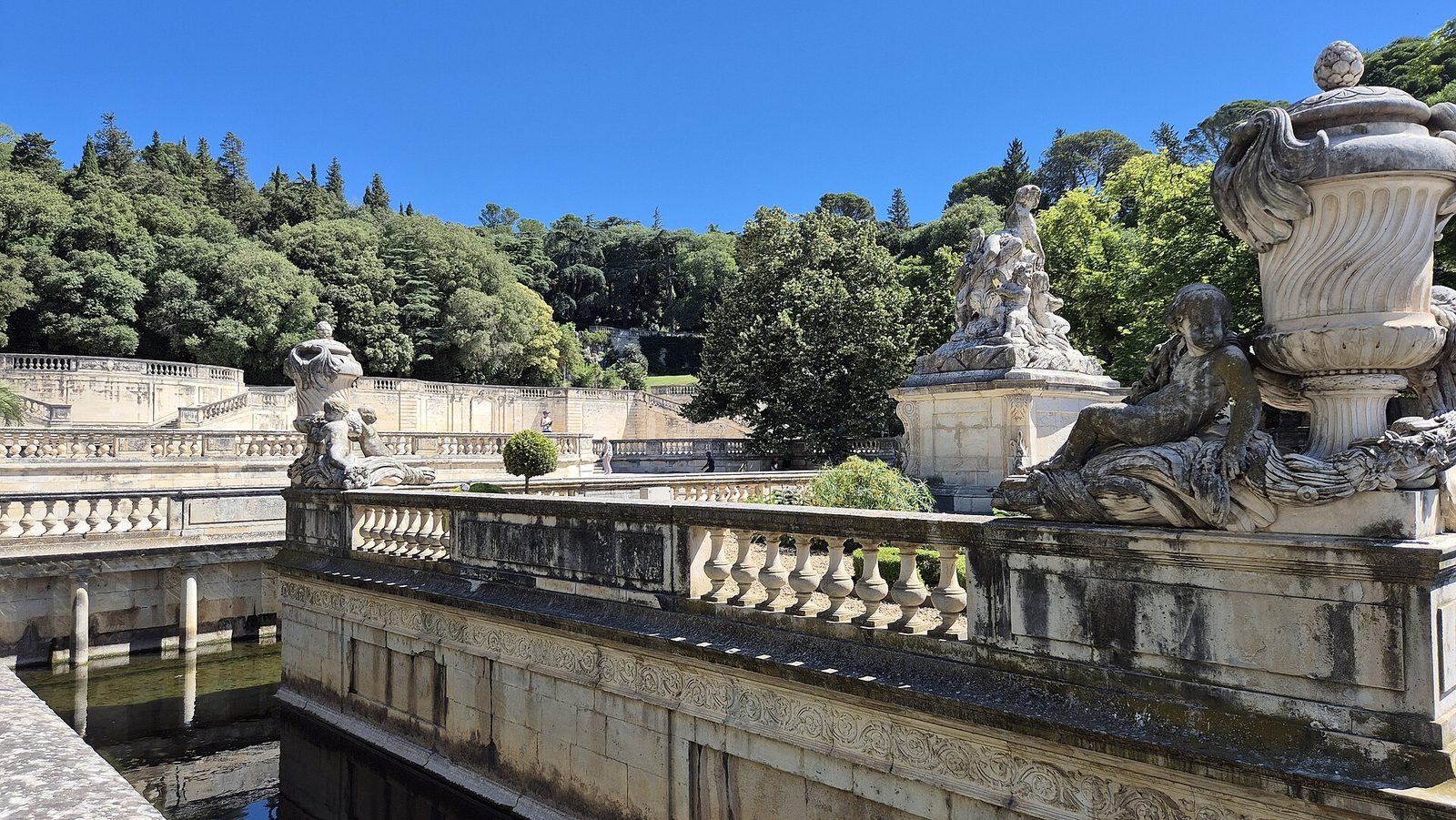
The sanctuary was abandoned by the end of the Roman Empire. In the eighteenth century, the spring still contributed to Nîmes’s water supply. Excavations in 1730, undertaken as part of efforts to improve water for the city’s commerce and industry, revealed the sanctuary and Roman waterworks. The king commissioned Jacques-Philippe Mareschal to plan water improvements and a garden promenade that would display the remains.
As the gardens were developed from 1740 to 1749, the ruins were first understood as baths and later identified as a sanctuary of the spring. In 1984, Pierre Gros proposed that the complex was an Augusteum situated between the spring and the forum of ancient Nîmes.
Remains
The remains lie within the Jardins de la Fontaine, arranged around a permanent spring and the enclosed sacred precinct. The sanctuary brought together water-related features, an altar, covered walkways, and other buildings.
Spring and inscriptions
The spring
The spring has an irregular flow and is fed by water filtering through the ground and surrounding rocks. A network of underground galleries leads to it and has been studied by cave researchers.
Inscriptions
Inscriptions attest worship of Nemausus. One of the fifteen such inscriptions held at the Nîmes Museum came from the spring and was found during excavations connected with the eighteenth-century works.
Sacred precinct and altar
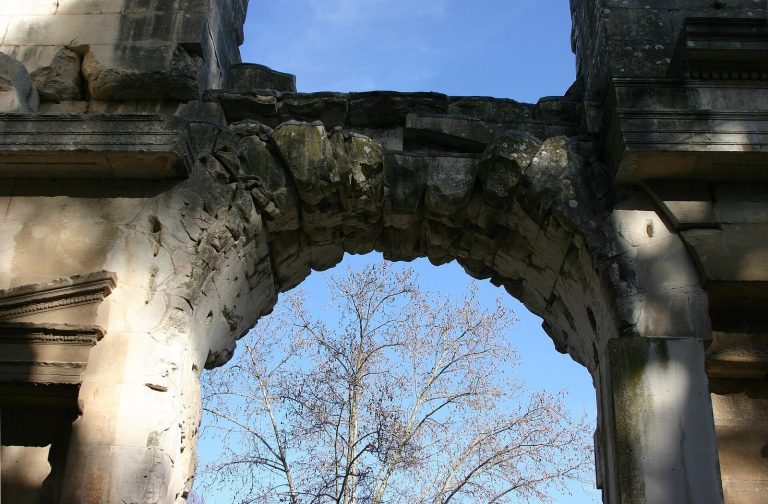
A U-shaped arrangement of three sections of covered, columned walkway separated the sacred enclosure from the rest of the city. A monumental entrance connected the precinct with the city. The altar stood at the center of a nymphaeum, a fountain sanctuary. Only the southern raised bases that supported columns are stated to survive.
Buildings and landmark
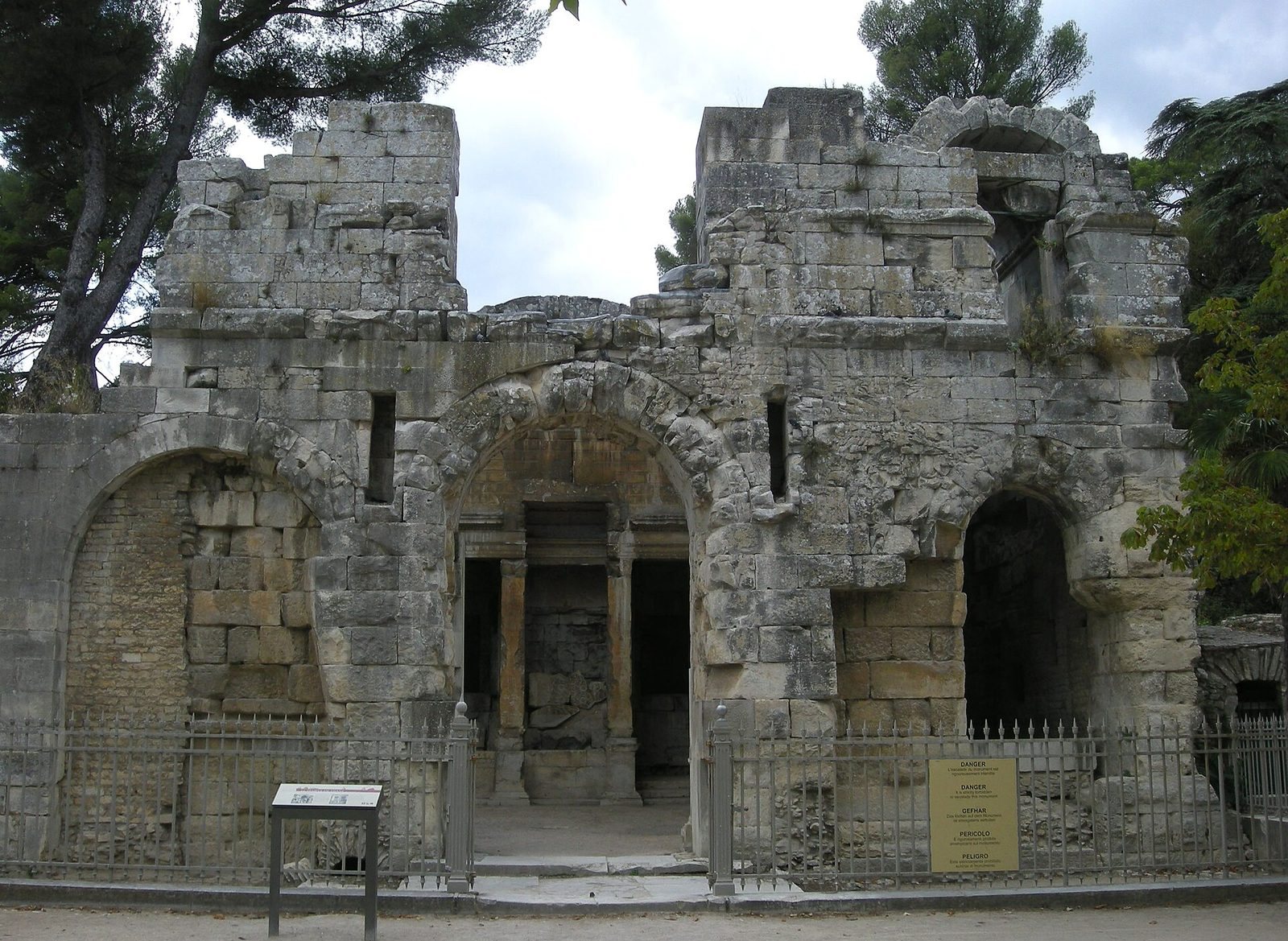
Temple of Diana
A northern walkway led toward the vaulted building now called the Temple of Diana. Its original function remains uncertain: it may have been a temple or a library, but neither interpretation is established.
Theatre
A second northern walkway led to the theatre, or odeon, in the northeastern part of the sacred precinct.
Tour Magne
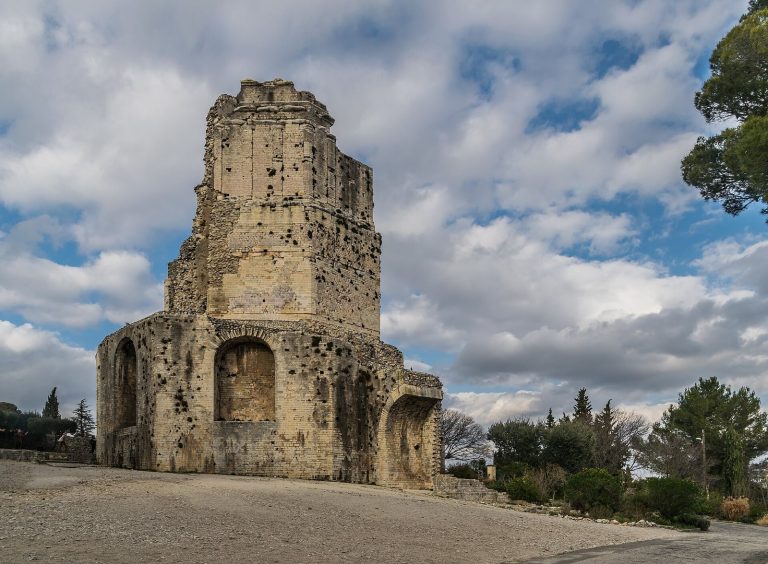
The Tour Magne overlooked the sanctuary and also signaled its location.