Ancient Tombs on the Donggou River: A Goguryeo Burial Complex in China
Site at a Glance
- Popularity
- Medium
- Country
- China
- Primary era
- Classical
- Eras represented
- Classical, Medieval
- Civilizations
- Goguryeo
- Site type
- Burial
- Remains
- Necropolis
On this page20 sections
History
Goguryeo rule and burial landscape
The Ancient Tombs on the Donggou River are a burial complex near Ji’an in Jilin, China, associated chiefly with Goguryeo, an ancient Korean kingdom. Most of the graves date from the third to seventh centuries CE, during Goguryeo’s existence from 37 BCE to 668 CE. A smaller number belong to the Bohai period, when the kingdom of Balhae flourished in Manchuria and northern Korea, or to other eras.
Goguryeo moved its capital to Guonei City at Ji’an in 3 CE, then transferred it to Pyongyang in 427. Ji’an served as the kingdom’s political, economic, cultural, and military center for more than four centuries. It remained prosperous as a secondary capital after the move. The tombs were arranged in groups reflecting family burial practices.
Recognition and protection
The complex takes its name from Donggou, a name also used for Tonggou from the late Qing period. The tombs were known by the transition between the Ming and Qing, successive Chinese imperial dynasties. During the Guangxu reign, from 1875 to 1908, the Stele of King Kwanggaeto and copies of its inscriptions circulated, attracting the attention of Chinese and foreign scholars. Japanese scholars surveyed, cleared, measured, and catalogued some tombs in the 1930s, and published studies that shaped later understanding of the complex.
A count in 1966 recorded more than 10,000 graves; the complex contains about 11,300. The seven administrative areas used today for protection and management do not closely follow the historical burial groups or their environmental boundaries. An area can include several clan cemeteries, while a single cemetery may cross administrative lines. Changchuan suffered severe damage from the late 1960s into the early 1970s. A survey counted 105 tombs there in 1983, and a remapping recorded 120 in 2005.
The complex, including the Stele of King Kwanggaeto, entered China’s first group of Major Historical and Cultural Sites Protected at the National Level in 1961. Changchuan and the hillside quarry near Gaotaizi village were added to the protected complex in 2001. Some tombs have also formed part of the UNESCO World Heritage property Capitals and Tombs of the Ancient Koguryo Kingdom since 2004.
Remains
Cemetery landscape and layout
Regional arrangement
The complex occupies foothills, river valleys, and plains around the Tonggou River. It extends about 35 kilometres in length and 2 to 4 kilometres in width, with a stated total area of 34.2 square kilometres. Its seven cemetery areas run broadly from east to west. The easternmost group lies mainly on slopes at the southern foot of Long Mountain and on a terrace along the Yalu River, although two tombs stand on level ground. The cemetery below Wandu Mountain City follows both banks of the Tonggou valley beneath the fortified Goguryeo mountain capital. Another group lies at the eastern foot of Seven Star Mountain, while a neighbouring cemetery adjoins the area on that mountain’s southern slope.
Recorded areas and grave numbers
Recorded figures show how varied the cemetery areas are in size and number of tombs. The easternmost area covers 40.32 hectares and has 52 tombs; the largest area covers 509.05 hectares and has 3,680. The area below Wandu Mountain City has 194.7 hectares and 1,881 tombs, while the southern-slope area of Seven Star Mountain has 99.17 hectares and 1,638. Its adjoining area covers 354 hectares and contains 2,576 tombs. Changchuan covers 31.12 hectares, with 120 tombs in the 2005 remapping. The area southwest of Wandu Mountain City is listed with 1,638 tombs and an extent of 9,917 hectares, a figure that conflicts with the stated total area of the whole complex, so its extent is uncertain.
Tomb forms and construction
Stone tombs
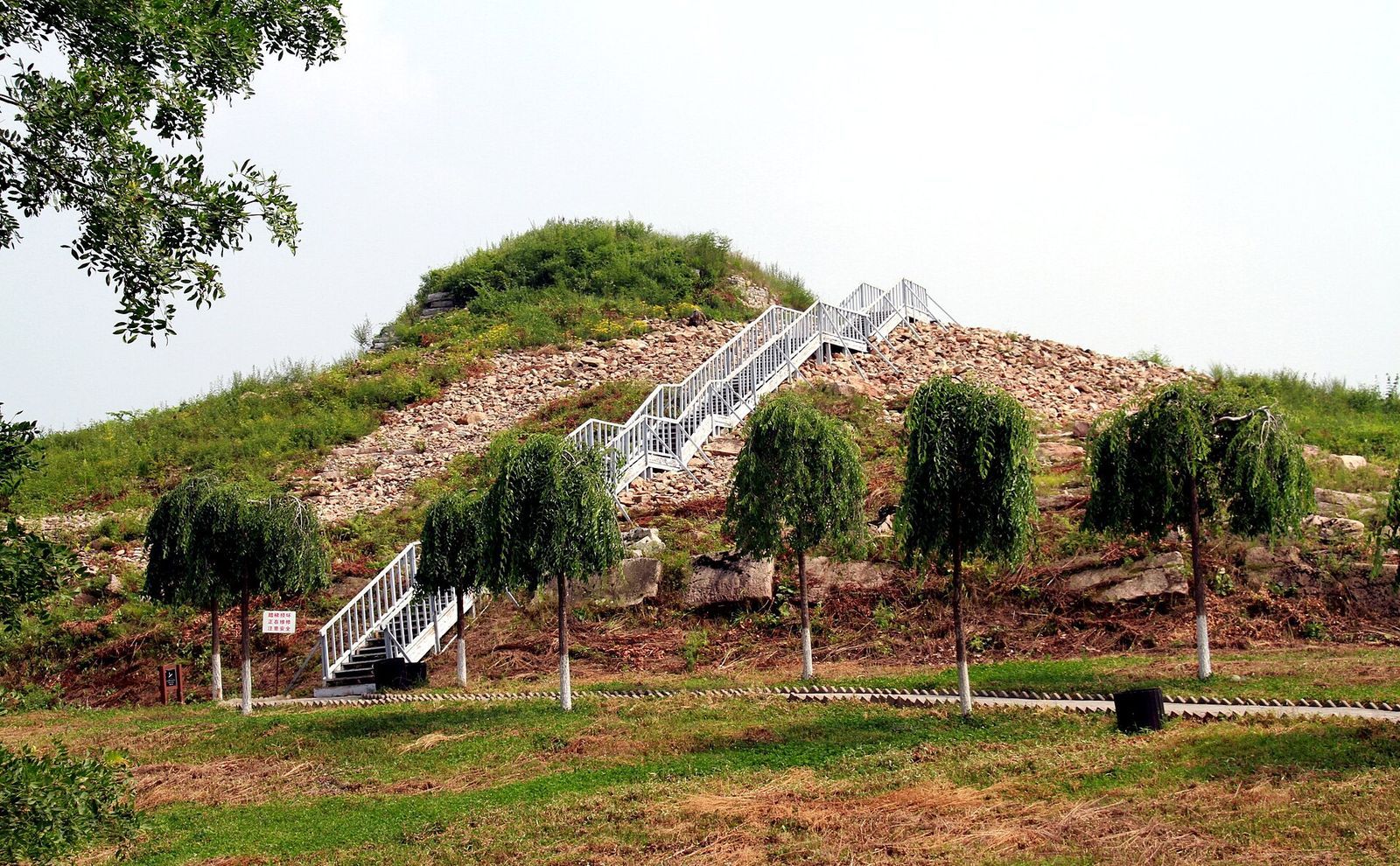
The tombs fall broadly into stone-built and earthen forms, with substantial variation in size. Stone tombs are generally earlier and reflect Goguryeo burial practices. Some were made by stacking stones into structures or square and stepped platforms; others combine a stepped stone base with a burial chamber. The largest cemetery area contains both stone and earthen tombs, including many large royal burials.
Earthen tombs
Earthen tombs are generally later and reflect either Han Chinese cultural influence on Goguryeo or the burial customs of other peoples within the kingdom. They include stone burial chambers beneath earthen mounds, sometimes arranged on square platforms. Chambers may have one, two, or three compartments. The stone-built chambers are covered with loess, a fine, wind-deposited soil. More than ten tombs contain ink inscriptions or coloured murals depicting noble life.
Monumental tombs
Mausoleum of Kwanggaeto
Also called the Mausoleum of the Great King, this is the largest tomb in the complex. Its square base measures 66 metres on each side, and the structure rises 14.8 metres. Roof tiles bear engraved lotus-petal designs. Bricks found at the summit carry a wish that the mausoleum stand like a high mountain, suggesting that a building once occupied the top. Kwanggaeto ruled Goguryeo from 391 to 413.
General’s Tomb
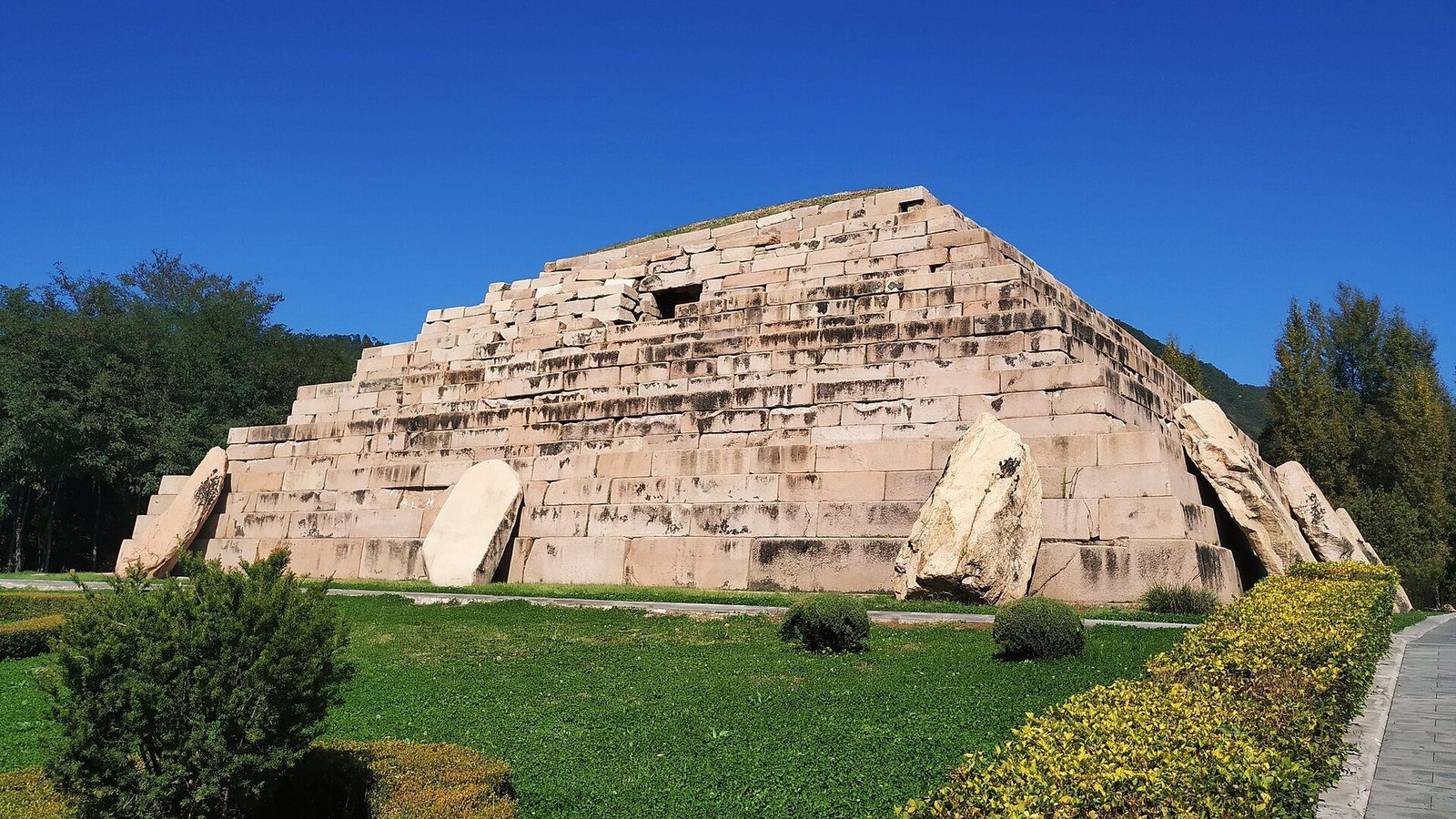
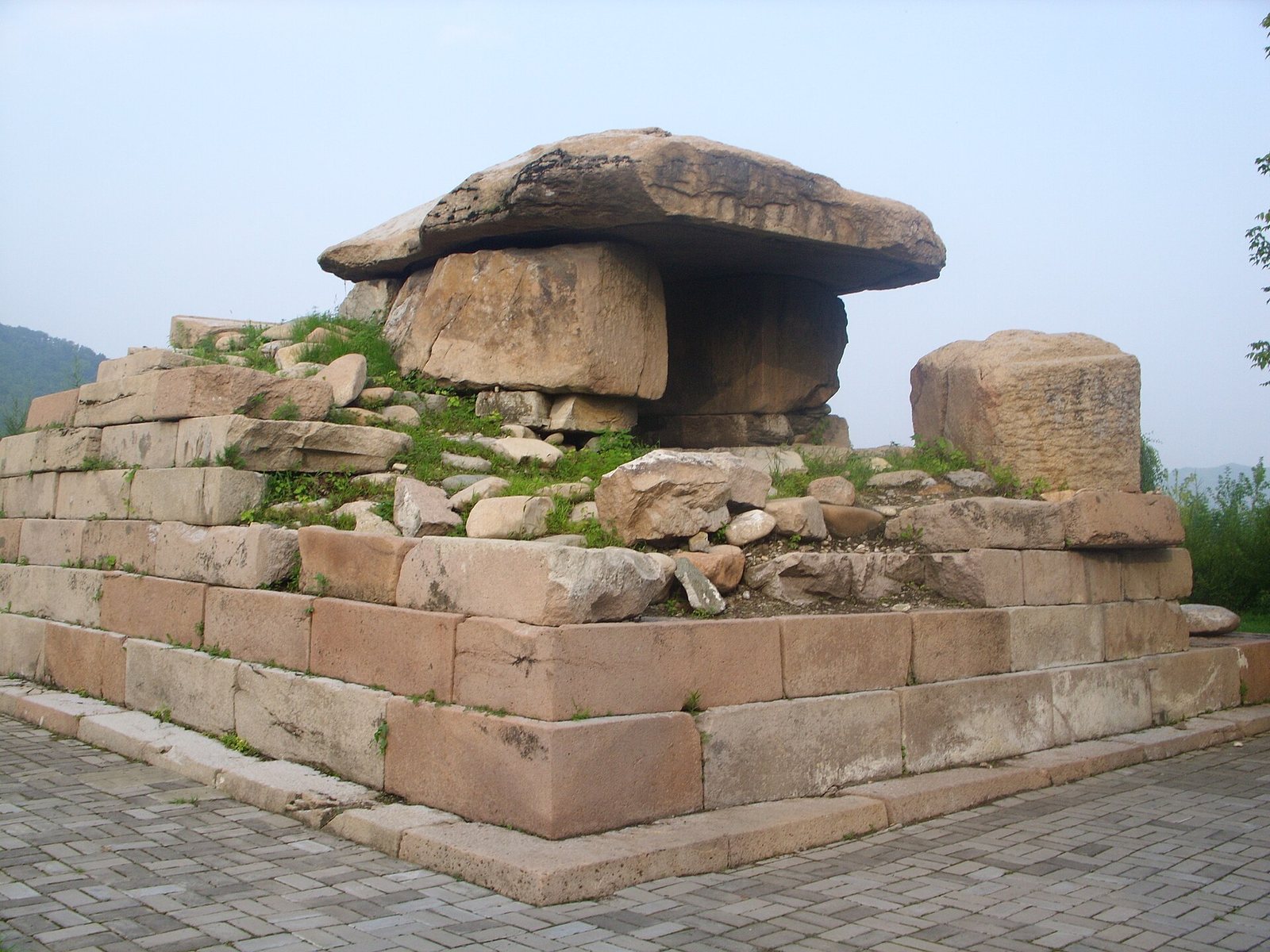
The General’s Tomb is a seven-tier pyramid built from large granite blocks. It measures 31.58 metres on each side and stands 12.4 metres high. A passage at the middle of the fifth tier leads into a burial chamber measuring 5 metres on each side and 5.5 metres in height. Inside, two groups of stone cists, or stone-built burial containers, lie beneath a large stone. Debris and stone chains at the summit suggest that a building stood there in the early fifth century. Its occupant remains disputed: Chinese specialists identify it as the tomb of King Changsu, while Korean scholars place his tomb at Pyongyang.
Qianqiu Tomb
The complex also contains the large Qianqiu Tomb. It is among the tombs noted for its scale within the burial landscape.
Murals and inscriptions
Other decorated tombs
Murals have been found in more than 30 tombs. Examples include a tomb known for its dance figures, a three-chamber tomb, Changchuan Tomb No. 1, and Tombs 4 and 5 of the Five Helmet Mounds.
Wuyong Tomb
Wuyong Tomb, also called Muyongchong, dates to about 400 CE. A mural on its south wall shows six dancers accompanied by seven singers.
Juedi Tomb
Juedi Tomb, also called Gakjeochong, dates to about the same time. Its painting shows two wrestlers beneath a tree while an old man watches. The wrestlers have prominent noses and deep-set eyes.
Donggou Tomb No. 12
Dating to the sixth century, Donggou Tomb No. 12 has murals depicting family life, hunting, dancing, and battle. Other scenes include Fuxi, a legendary figure in Chinese tradition, and Nuwa, a creator goddess, as well as celestial nymphs, the sun, moon, and stars.
Gaotaizi quarry
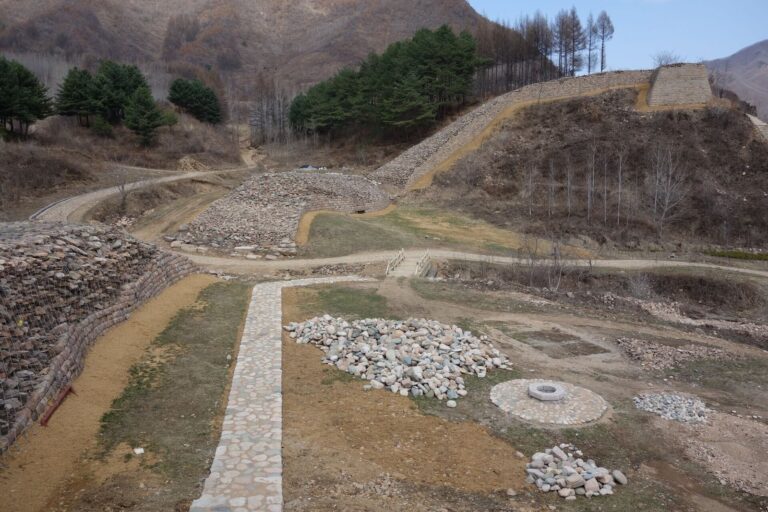
A hillside quarry near Gaotaizi village contains large boulders, including stone cut from the rock but not yet worked or moved. The material matches the stone used for the Mausoleum of Kwanggaeto and the General’s Tomb. The quarry is believed to have supplied stone for royal tombs and is the only confirmed quarry from the Goguryeo period.