Schlosskirche Meisenheim: A Late Gothic Hall Church in Germany
Site at a Glance
- Rating
- 4.7
- Popularity
- Medium
- Country
- Germany
- Primary era
- Medieval
- Eras represented
- Medieval, Early Modern, Modern
- Civilizations
- German, Holy Roman Empire
- Site type
- Religious
- Remains
- Church
On this page11 sections
History
Early church and pastoral care
The early history of Schlosskirche Meisenheim is uncertain, but Meisenheim probably had its own parish church by the 10th century. The town lay near the early Christian centers of Disibodenberg and Medard. From the 13th century, the Counts of Veldenz were responsible for maintaining the church. In 1321, they transferred pastoral care to the Order of Saint John, also known as the Knights Hospitaller, a religious order that undertook military, charitable, and pastoral work. Its members moved their seat from Herren-Sulzbach to Meisenheim.
Rebuilding and dynastic burials
When the Veldenz line ended in 1444, its county passed to Palatinate-Zweibrücken, a German principality ruled by a branch of the Wittelsbach dynasty. Duke Ludwig I moved his residence to Meisenheim. The town’s earlier church had been destroyed in 1461 during a bombardment by Frederick I, Elector Palatine, a ruler of the Electoral Palatinate. The present Late Gothic church was begun in 1479 and consecrated in 1504.
The burial chapel was completed before the main church and became the resting place of members of Palatinate-Zweibrücken and related dynasties from the 15th to the 17th century. They included Duke Wolfgang, an advocate of the Reformation, the 16th-century movement that established Protestant churches in parts of Europe; Count Palatine Karl I, a prince of the ruling family and an ancestor of later Bavarian kings; and Countess Palatine Charlotte Friederike. In 1689, Charlotte Friederike saved the church and town from possible destruction by the French.
Religious change and restoration
The Reformation was introduced in 1532, and the church’s medieval altars were auctioned. From 1766 to 1770, a Baroque-style renovation brought major changes to the interior. The work removed the rood screen, a partition separating the choir from the nave, and added galleries, a pulpit, and an organ case while leaving the Gothic structure otherwise largely undisturbed.
A restoration followed in 1873–76. The church is protected as cultural property under the Hague Convention, an international agreement intended to safeguard cultural property during armed conflict.
Remains
Plan and vaulting
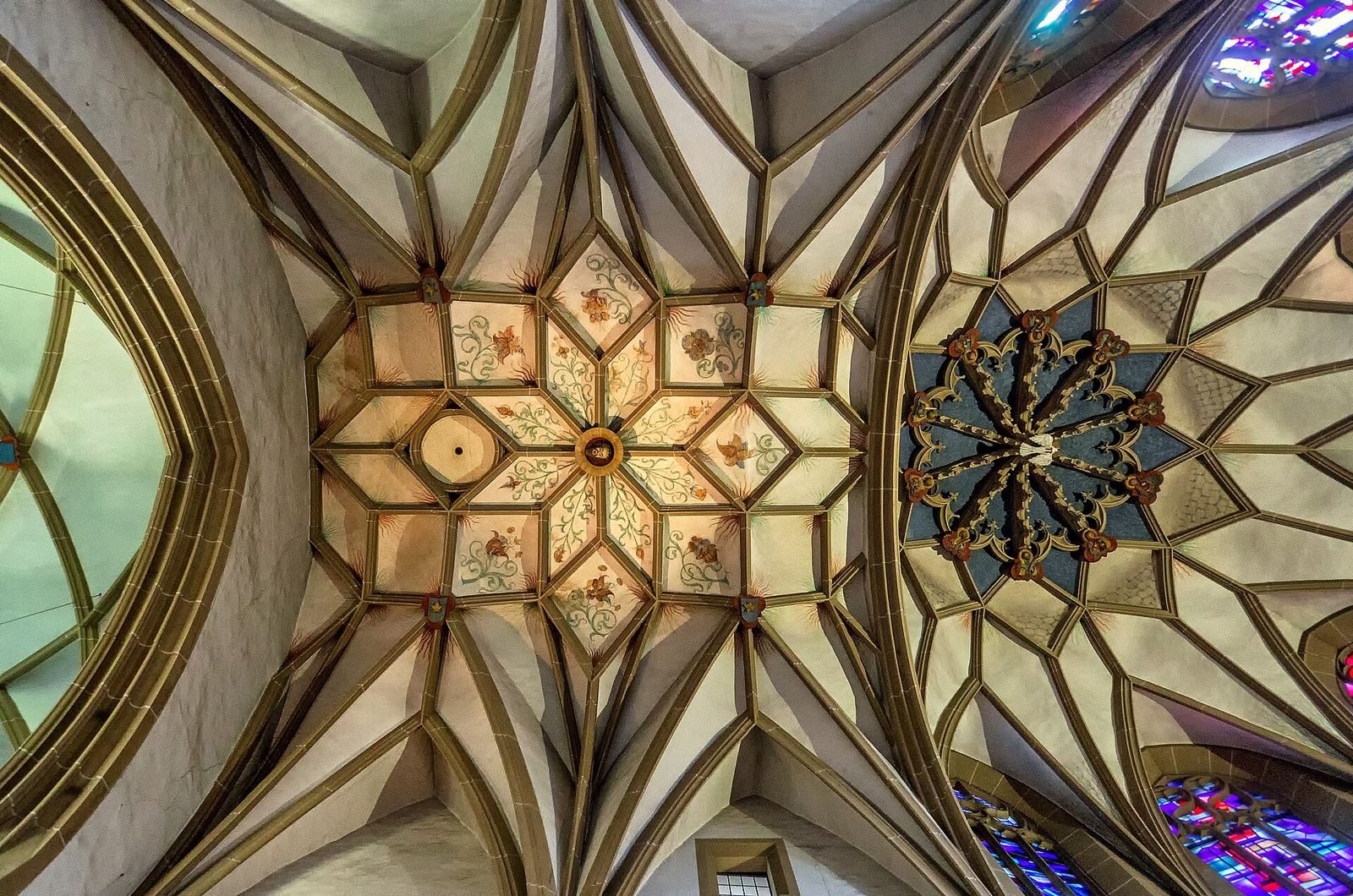
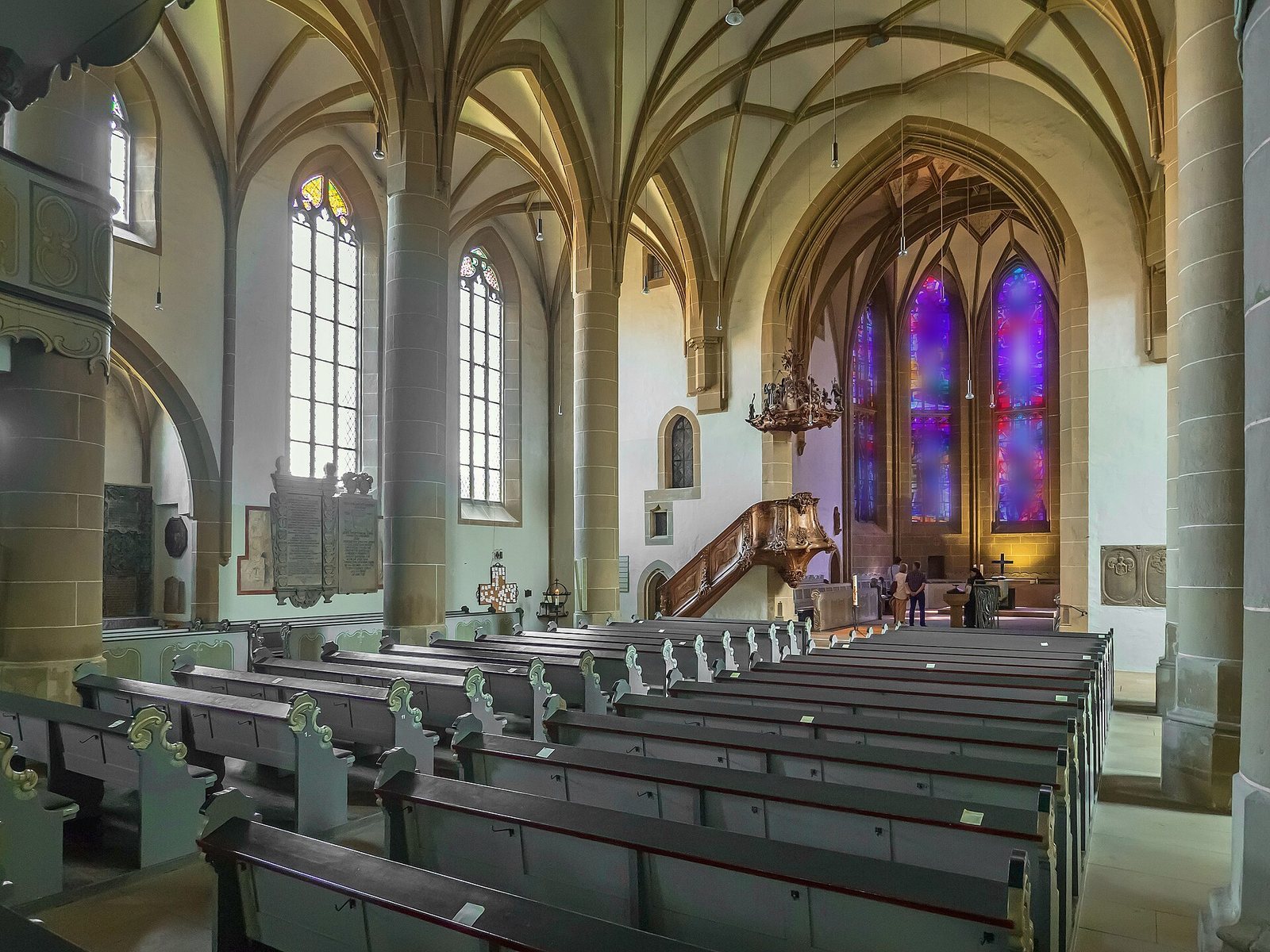
Schlosskirche Meisenheim is a three-aisled hall church divided into five structural sections. Net-rib vaults, formed by intersecting ribs in a mesh-like pattern, cover the interior. At the eastern end, a square section before the choir is flanked by the south burial chapel and a north sacristy. The choir has a central plan, organized around a center rather than a long axis, and follows seven sides of an intended ten-sided design. Its vaulting, along with that of the section before it and the south chapel, is more complex than the nave vaults. The side aisles have different vault designs, and the chapel includes ribs that hang freely. Round piers without attached shafts support the nave vaults. Stone patterns in the windows vary from one opening to another; the choir windows were made by Helmut Ammann of Munich in 1968.
Tower and eastern boundary
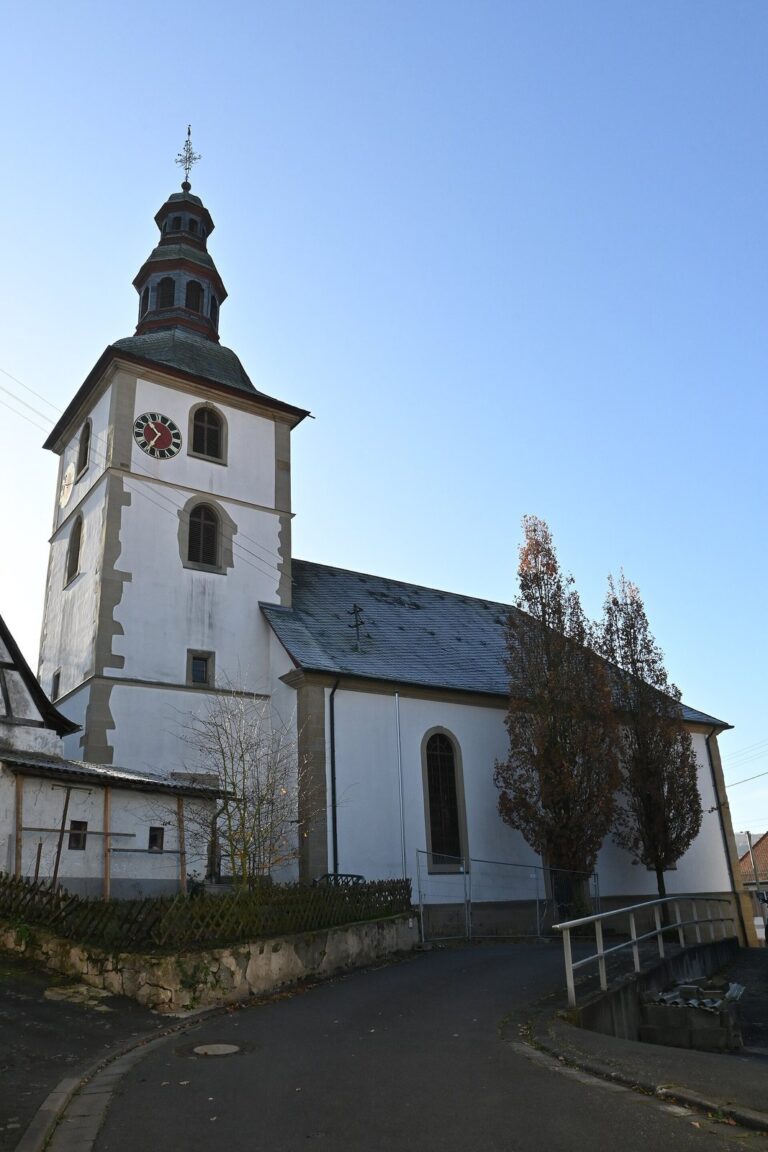
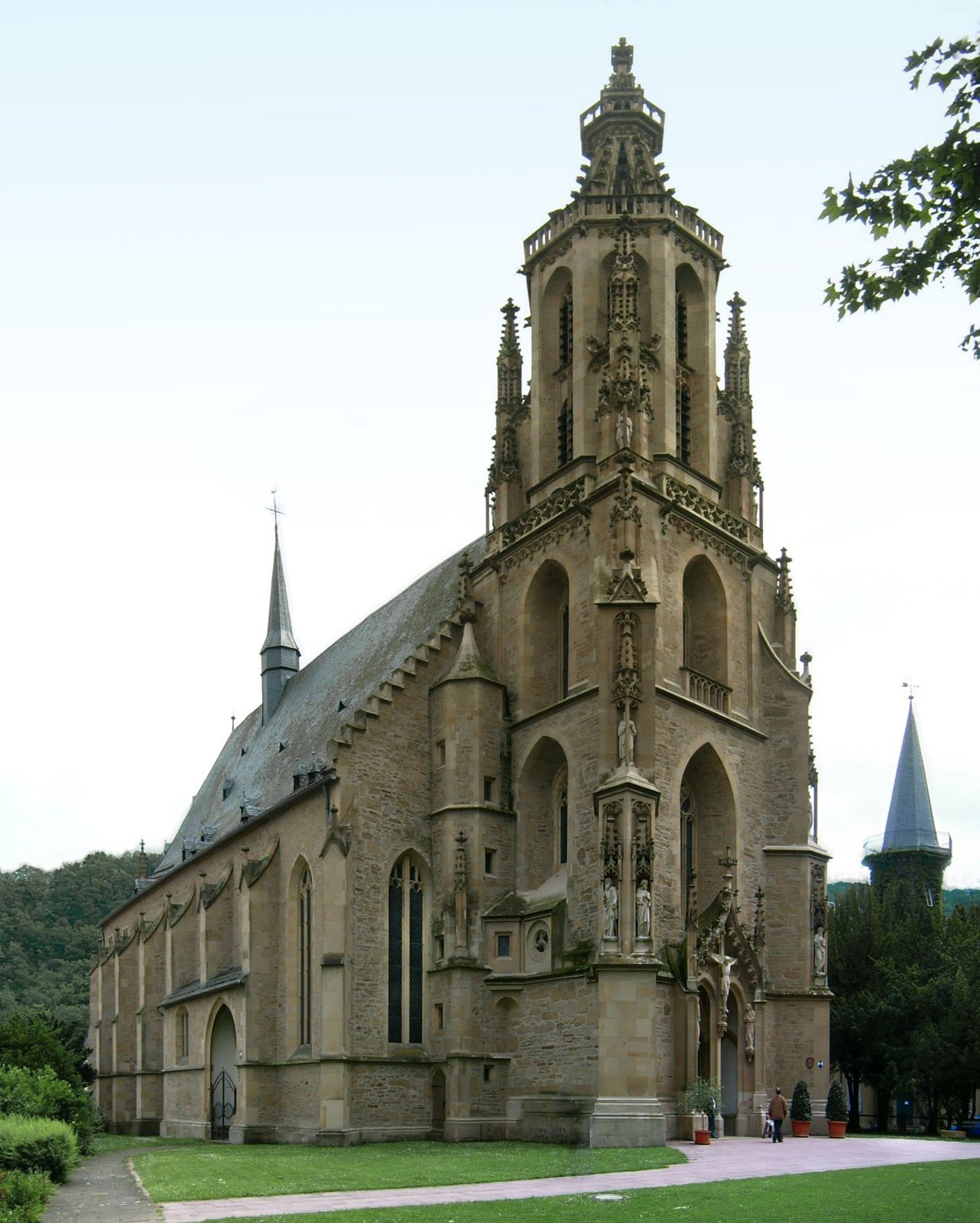
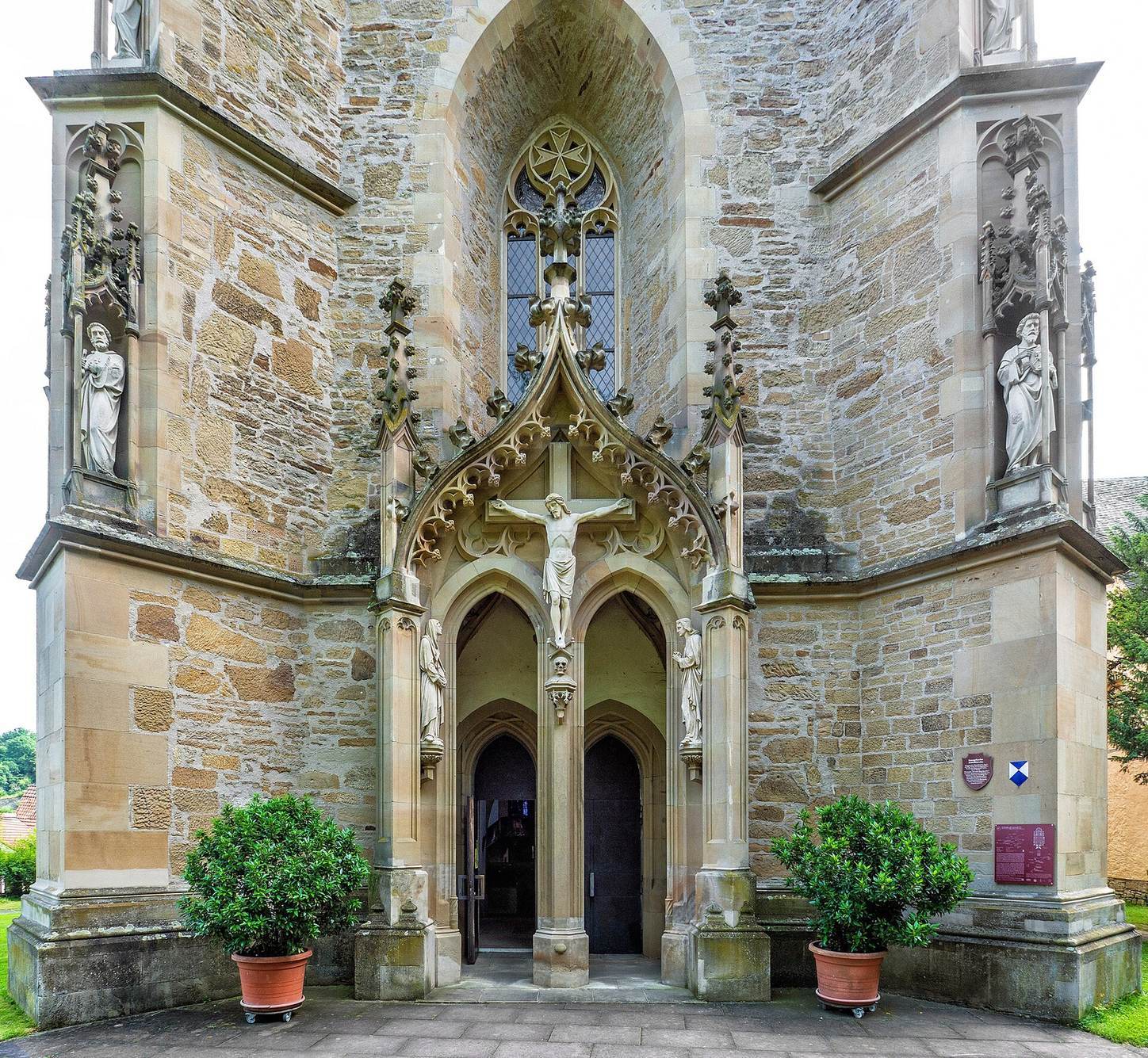
A comparatively low tower closes the church at the west. It is square at its lower levels, becomes octagonal from the third storey upward, and ends in a spire with a broken outline. Neo-Gothic sculptures were added to the tower. On the east, facing the lower Amtsgasse, a high retaining wall marks the edge of the church precinct. A Late Gothic entrance portal with interior stairways passes through it. A building inscription dated 1479 that once stood above the portal was destroyed; the heraldic stone there was replaced by a replica in 1911.
Burial chapel and memorials
The south chapel serves as the Palatine burial chapel. Its Renaissance memorials include the tomb of Duke Wolfgang, who died in 1569, and his wife Anna of Hesse, who died in 1591. The monument is attributed to Johann von Trarbach. An epitaph for Count Palatine Karl I is also preserved in the church.
Baroque furnishings
Pulpit and gallery
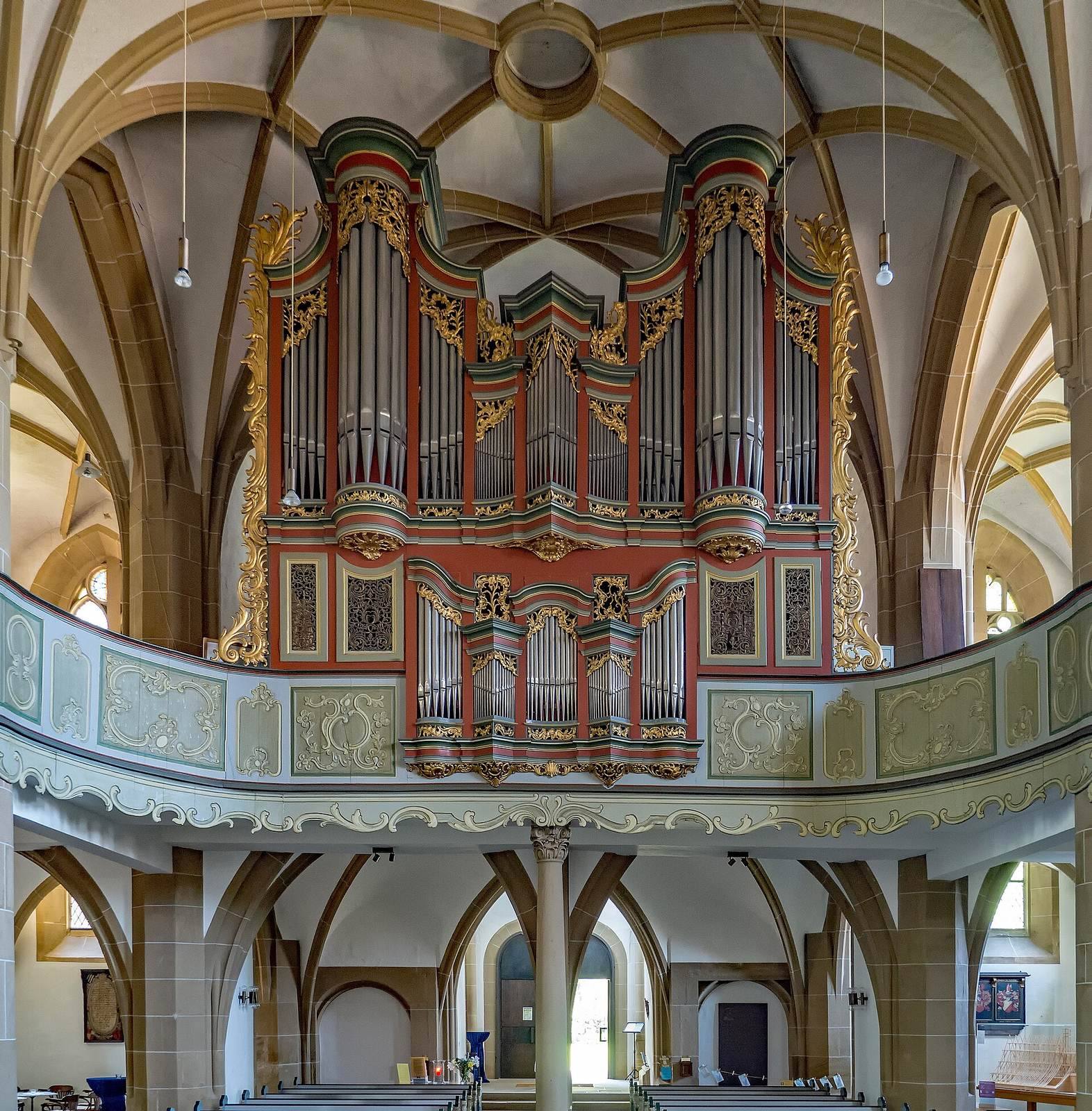
The Baroque interior retains its pulpit and gallery. The gallery was shortened in 1967.
Stumm organ
The two-keyboard Stumm organ was made in 1767. The Meyer company of Herford altered it in the 19th century, and the Oberlinger workshop restored it in 1968, returning it to its original arrangement of stops. It has 29 stops, sets of pipes selected by the player, across two keyboards and a pedal. All its pipework is original, including the only surviving bass Vox angelica 2-foot stop. The organ is regarded as the best-preserved 18th-century Stumm organ. In 1993–94, the Förster & Nicolaus workshop expanded its pedal keyboard from 20 keys, spanning C to G, to 27 for liturgical use.