Sertorian University of Huesca: A Medieval University and Its Historic Buildings
Site at a Glance
- Popularity
- Medium
- Country
- Spain
- Primary era
- Early Modern
- Eras represented
- Medieval, Early Modern
- Civilizations
- Crown of Aragon, Habsburg, Habsburg Spain, Spanish
- Site type
- Civic
- Remains
- University
On this page9 sections
History
Foundation and teaching
The Sertorian University of Huesca was a medieval centre of higher learning in Spain, founded by Peter IV of Aragon on 12 March 1354. Peter issued its founding document at Alcañiz. Its establishment challenged an earlier privilege granted by James II of Aragon, who had reserved for Lleida the exclusive right to establish a studium generale, a medieval institution authorized to teach a broad curriculum, within the Crown of Aragon, a composite polity under the Aragonese monarchy.
Huesca had an Academy of Latin Studies in the time of Sertorius, a Roman military commander who died there in 72 BC. The university’s foundation document did not refer to this earlier tradition, but the institution later adopted the name Sertorian in its memory. In the fourteenth century, its teaching focused on theology, while the city’s municipal magistrates governed and patronized the university. In 1450, John II of Aragon promoted economic and administrative reforms to strengthen it. During the fifteenth century, instruction also expanded to include law, medicine and philosophy.
Colleges, reforms and rivalry
Competition with the University of Lleida led each institution to reject the other’s titles and degrees. In the sixteenth century, a royal grant from Philip II allowed the university to extend its premises into rooms in the former Royal Palace of Aragon. It also established the Imperial College of St James, a major college for university students modeled on one at Salamanca. The college had places for thirteen students and a rector elected by them. A second major college, dedicated to Saint Vincent the Martyr, was founded in 1587.
At Philip II’s request, a papal bull issued by Pope Pius V in 1571 replaced the university chancellery with a scholastic, an ecclesiastical office connected with teaching and university administration. The first person appointed to the office did not take it up until 1585. Competition with Lleida and the emerging University of Zaragoza contributed to Huesca’s university declining from the late sixteenth century.
Closure and later uses
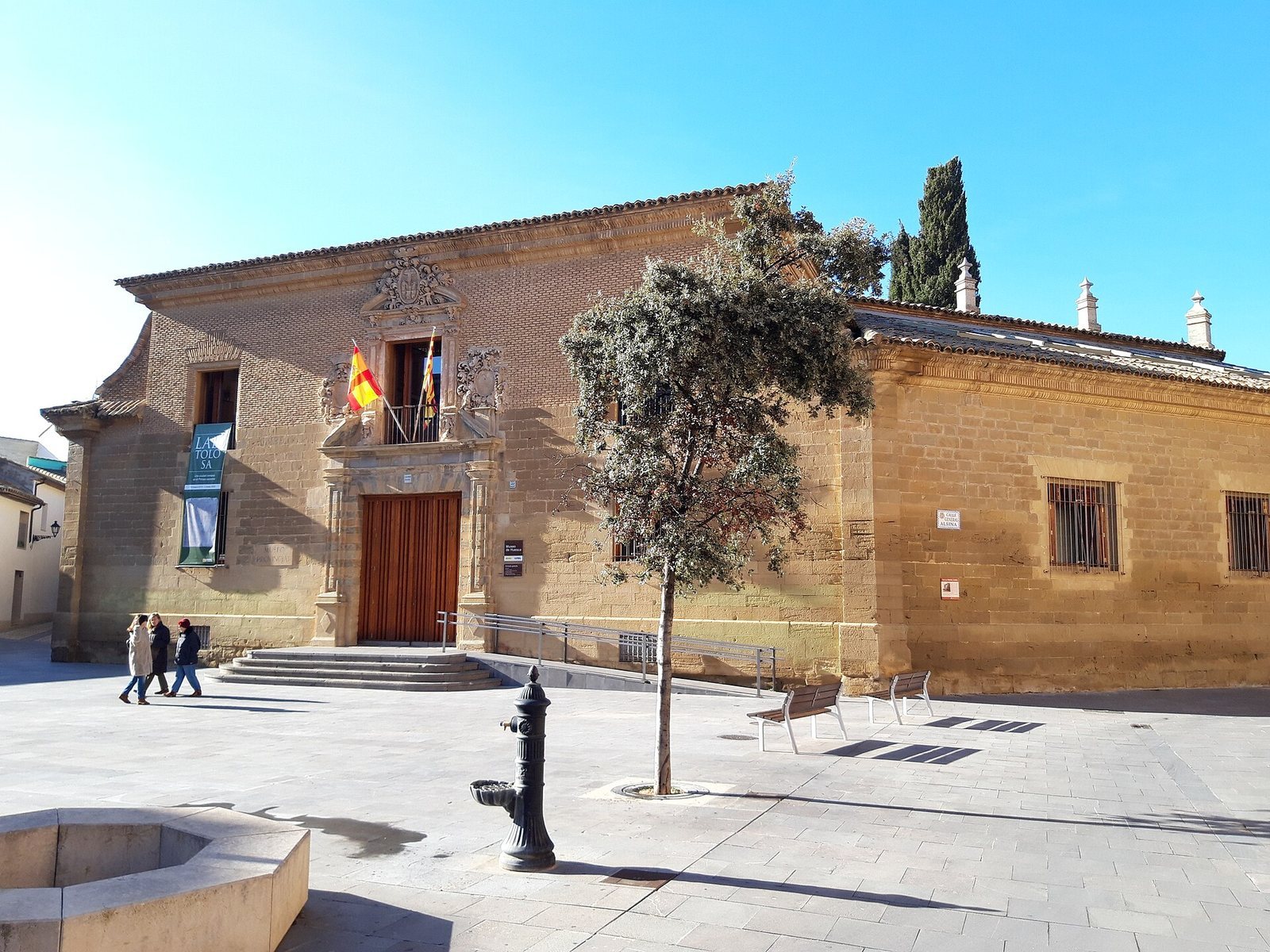
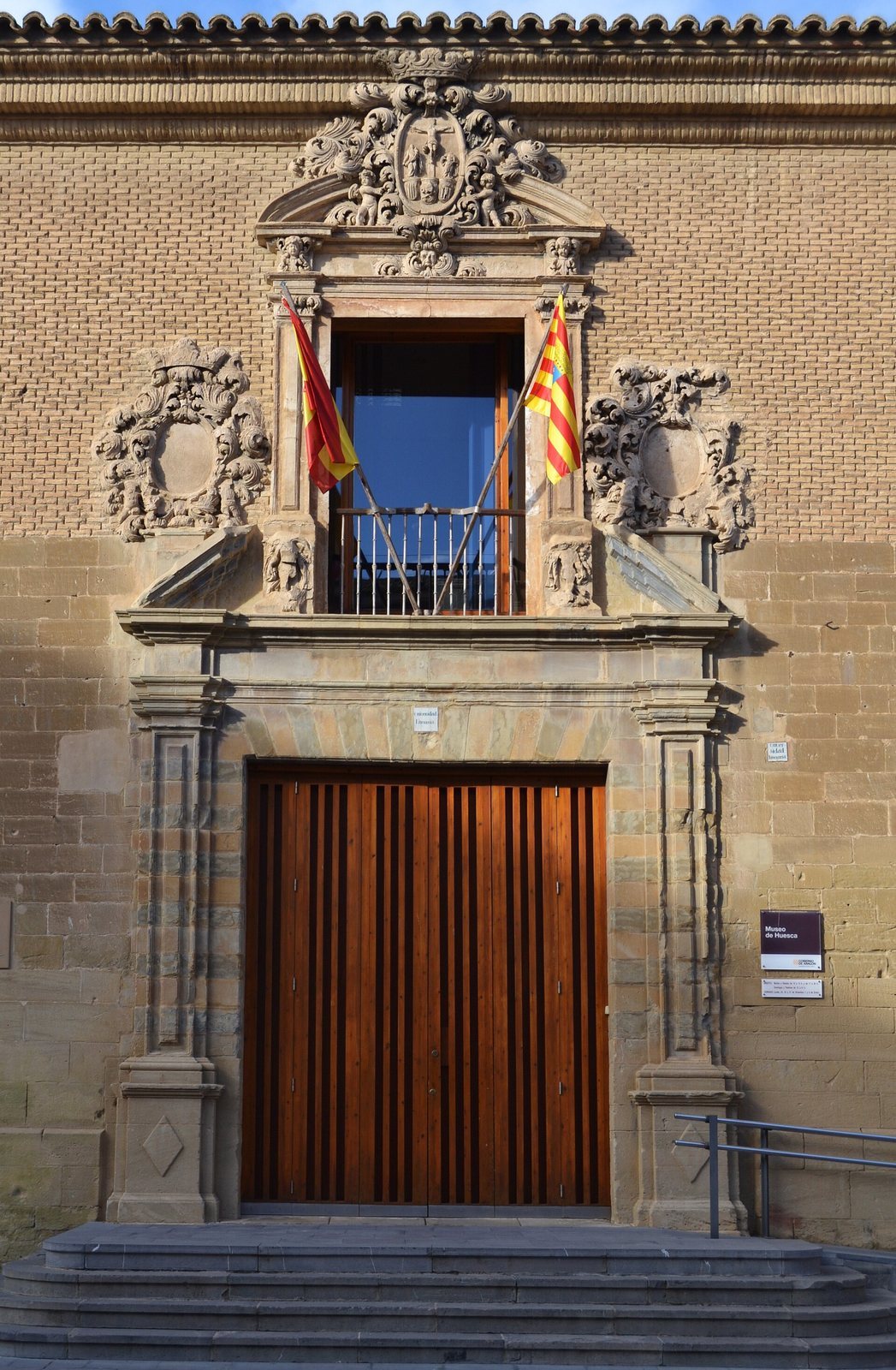
The university did not recover and closed in 1845 amid liberal reforms to education. From 1850, plans were considered to create a museum from its collections. Valentín Carderera, a former student who was a painter and scholar, helped advance the project and donated much of his private collection. The museum opened in June 1873. In 1968, the Provincial Museum of Huesca moved into the former university premises. A major renovation began in 1993, and the museum reopened in 1999.
The university’s archival collection is held by the Provincial Historical Archive of Huesca. Its 459 archival units contain documents dated from 1434 to 1845, mostly from the eighteenth and nineteenth centuries. Organized into Council, Academic Senate and Academic Subjects sections, they cover the institution’s administration and history, its curricula, appointments to teaching chairs and student life. The collection was transferred from Huesca’s then Institute of Secondary Education between 16 December 1940 and 3 May 1941. Further university and college records are held in the city’s municipal and cathedral archives and public library.
Remains
Royal Palace remains
Palace chambers
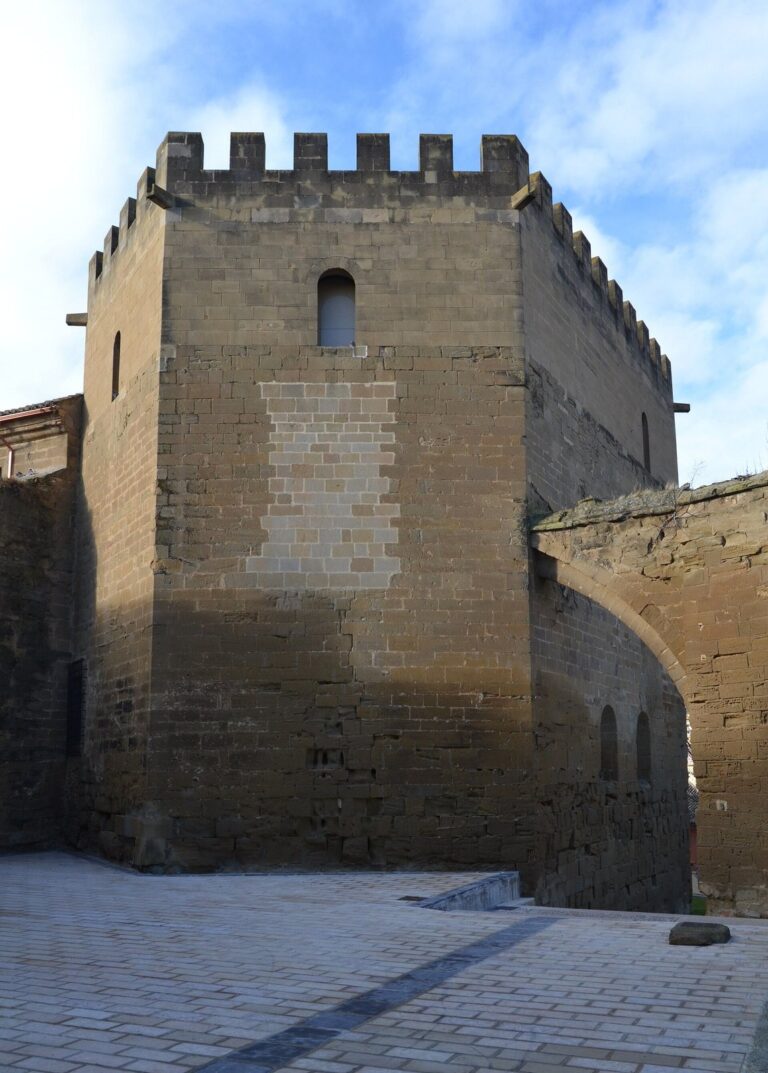
The former university premises include rooms from the twelfth-century Palace of the Kings of Aragon. The palace was built above a tower from the Islamic period, and its Romanesque masonry is topped by crenellations, alternating raised blocks and gaps along the roofline.
Bell Tower of Huesca
The Bell Tower is the most important surviving part of the Royal Palace and a unique Spanish example of Romanesque architecture for civic buildings in an urban setting. Its base incorporates a tower from the Arabic period, with an elongated hexagonal plan. The resulting structure forms a long central space with a semicircular apse at each short end.
The lower level, known as the Bell Room, retains three Romanesque windows. Above it, Queen Petronila’s Room has walls decorated with Romanesque columns and capitals carved with figures or scenes. These support blind, non-opening semicircular arches.
Main university building
Designed by Francisco de Artiga in 1690, the main university building has an austere Baroque design with Herrerian influences, a restrained Spanish architectural style associated with Juan de Herrera. Its octagonal plan encloses a central courtyard with a portico. Archaeological remains from the Museum of Huesca are housed in the courtyard.