Temple of Serapis: A Disputed Sanctuary on Rome’s Quirinal Hill
Site at a Glance
- Rating
- 4.3
- Popularity
- Very Low
- Country
- Italy
- Primary era
- Classical
- Eras represented
- Classical
- Civilizations
- Roman
- Site type
- Religious
- Remains
- Temple
On this page11 sections
History
The Temple of Serapis was a sanctuary in Rome, Italy, traditionally associated with colossal remains on the Quirinal Hill, although the identification of those ruins is disputed. Serapis was a Greco-Egyptian deity, worshipped alongside the Egyptian goddess Isis, whose worship also spread through the Greco-Roman world.
Imperial-era evidence and disputed identification
The fourth-century Regionary Catalogue, a record of Rome’s districts and notable places, lists a Serapis sanctuary in Regio VI, near the ancient Temple of Salus on the Quirinal. An inscription from the reign of Caracalla, emperor from AD 198 to 217, also refers to Serapis. Its lettering, about 29 centimetres high, is too large for a temple dedication, but it points to activity connected with the sanctuary during his rule. Other inscriptions and finds associated with Serapis have come from different parts of the Quirinal. The sanctuary may have replaced an earlier dynastic temple founded under the Flavian dynasty, which ruled Rome in the late first century AD.
Several interpretations have been proposed for the huge Quirinal ruins. A sixteenth-century identification named them as a Temple of Sol Invictus, a Roman solar deity, built under Aurelian, emperor from AD 270 to 275. Other scholars have favored a temple to Liber Pater, a Roman god of wine and fertility, and Hercules, a hero and god in Roman religion, erected under Septimius Severus, emperor from AD 193 to 211. The historian Cassius Dio describes a vast temple commissioned by Severus; some interpretations connect his reference to Dionysus, a Greek god often identified with Liber Pater, to Serapis. The building has also been assigned to Severus, perhaps with enlargement or completion under Caracalla. Other proposals place a Serapis temple under Hadrian, emperor from AD 117 to 138, or identify the Quirinal building as the Temple of Salus, a goddess associated with well-being, from the second-century Antonine period. The sanctuary’s location itself remains uncertain.
Late antiquity
The temple’s decline may have begun during the reign of Constantine. By late antiquity it was falling into ruin, and marble and worked architectural pieces were repeatedly taken for reuse. Late-fourth-century Theodosian decrees, imperial laws restricting pagan religious practices, brought the worship of Serapis and Isis in Rome to an end. The Quirinal consequently became a source of marble and other building materials.
Medieval and early modern reuse
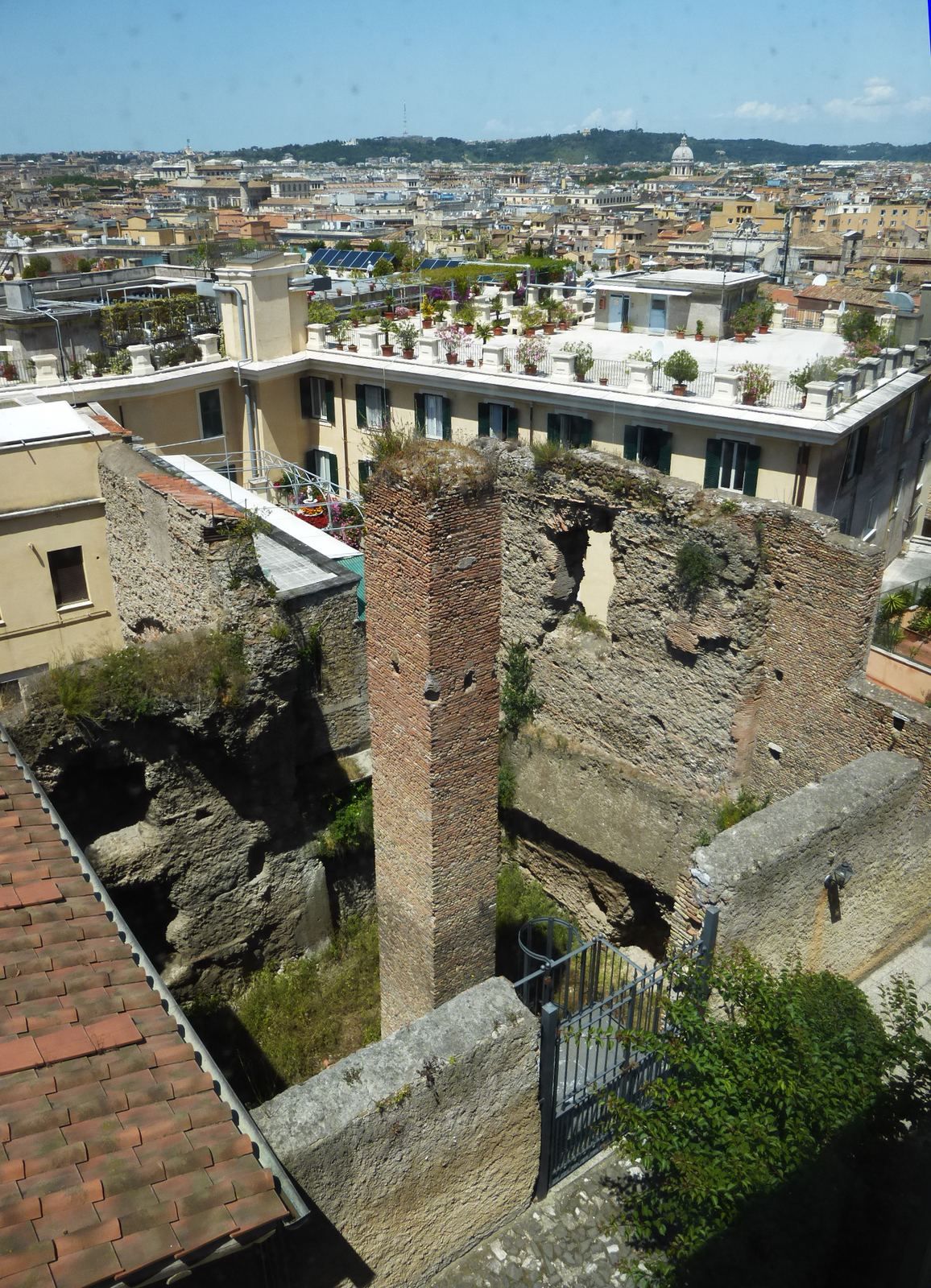
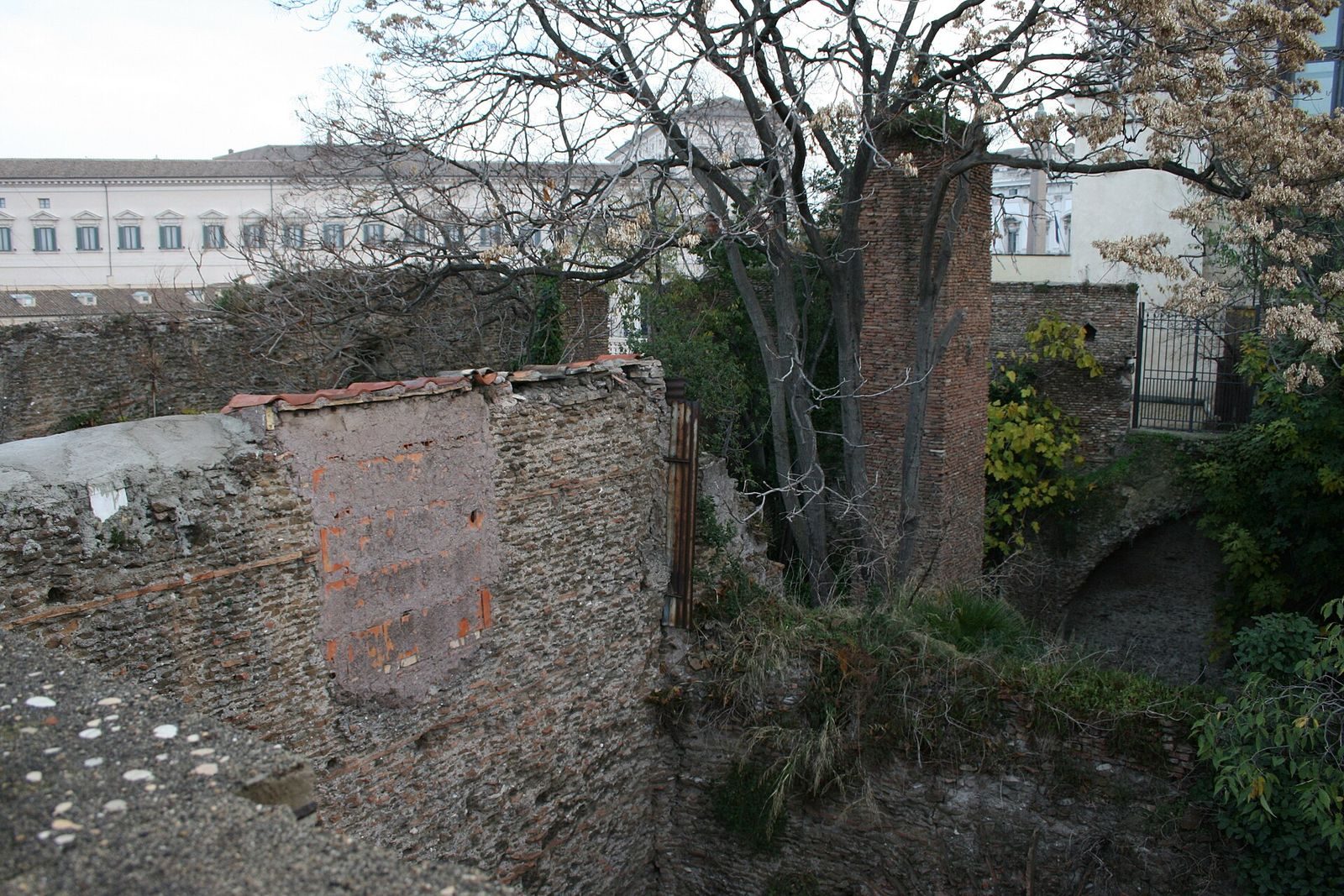
In the Middle Ages, the Colonna, a powerful Roman noble family, incorporated temple ruins into their fortifications and built a leaning tower beside the old walls. In the sixteenth century, the tower was believed to be the place from which the emperor Nero watched Rome’s fire in AD 64. That story is now associated with a tower in the Gardens of Maecenas on the Esquiline. In 1630, Duke Filippo I Colonna had the remaining temple ruins and tower demolished so their materials could be reused.
Remains
Terrace and temple complex
The colossal remains associated with the sanctuary lie in the gardens of Palazzo Colonna, between the palace and the Pontifical Gregorian University. The complex occupied about 13,320 square metres on a terrace partly formed artificially along the Quirinal’s western slope. Its east-facing temple measured 56 by 84 metres, slightly less than the nearby Temple of Venus and Roma. A broad open area in front of the temple was bordered on three sides by porticoes, or roofed colonnades. The sanctuary comprised this large court and the temple proper, which was decorated with statues and obelisks.
A broad staircase climbed from the west to the sanctuary, so people approaching from that direction reached the temple from behind. The building stood above a natural rise. Its columns were about 21.17 metres high and approximately two metres in diameter.
Stonework and architectural blocks
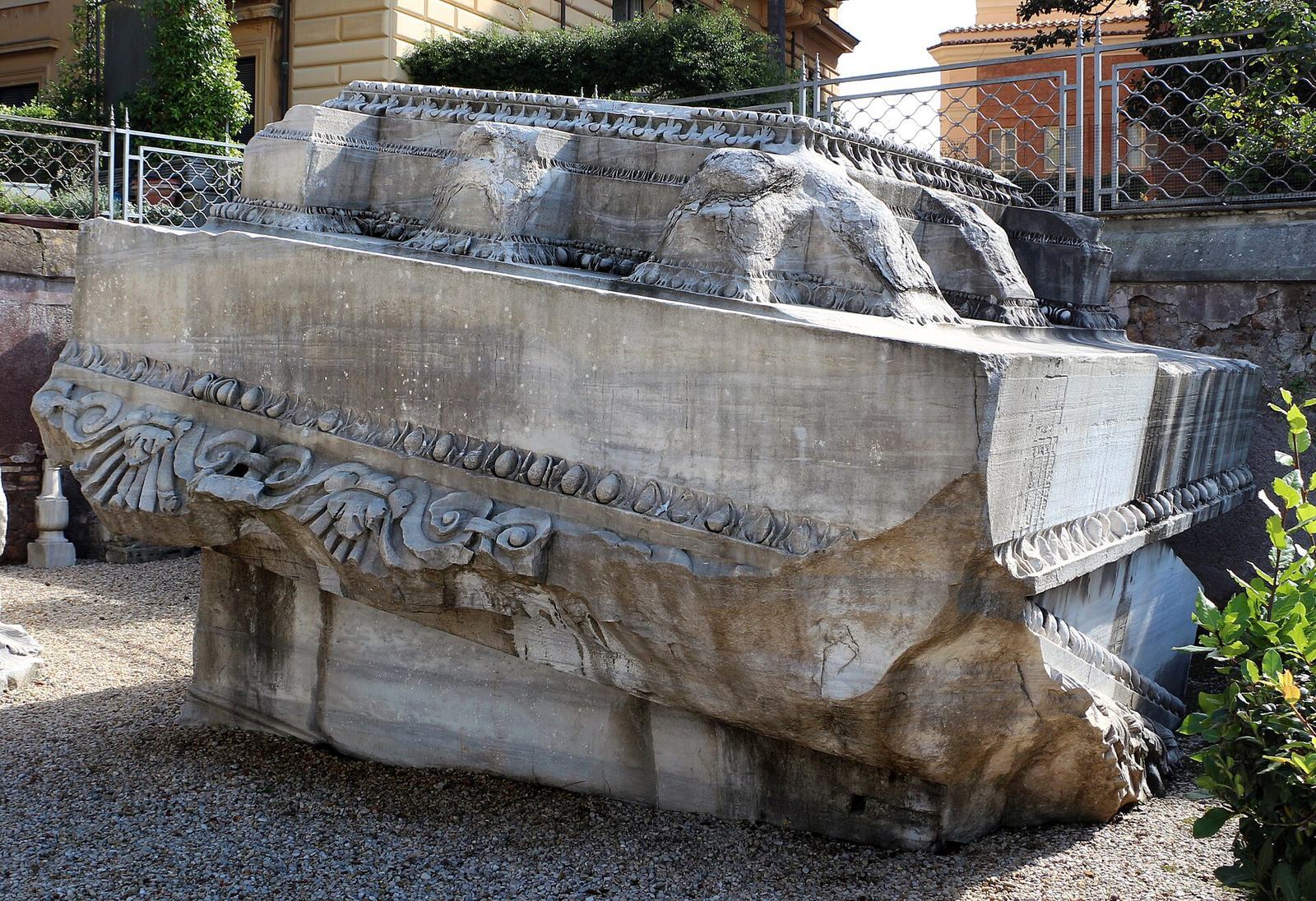
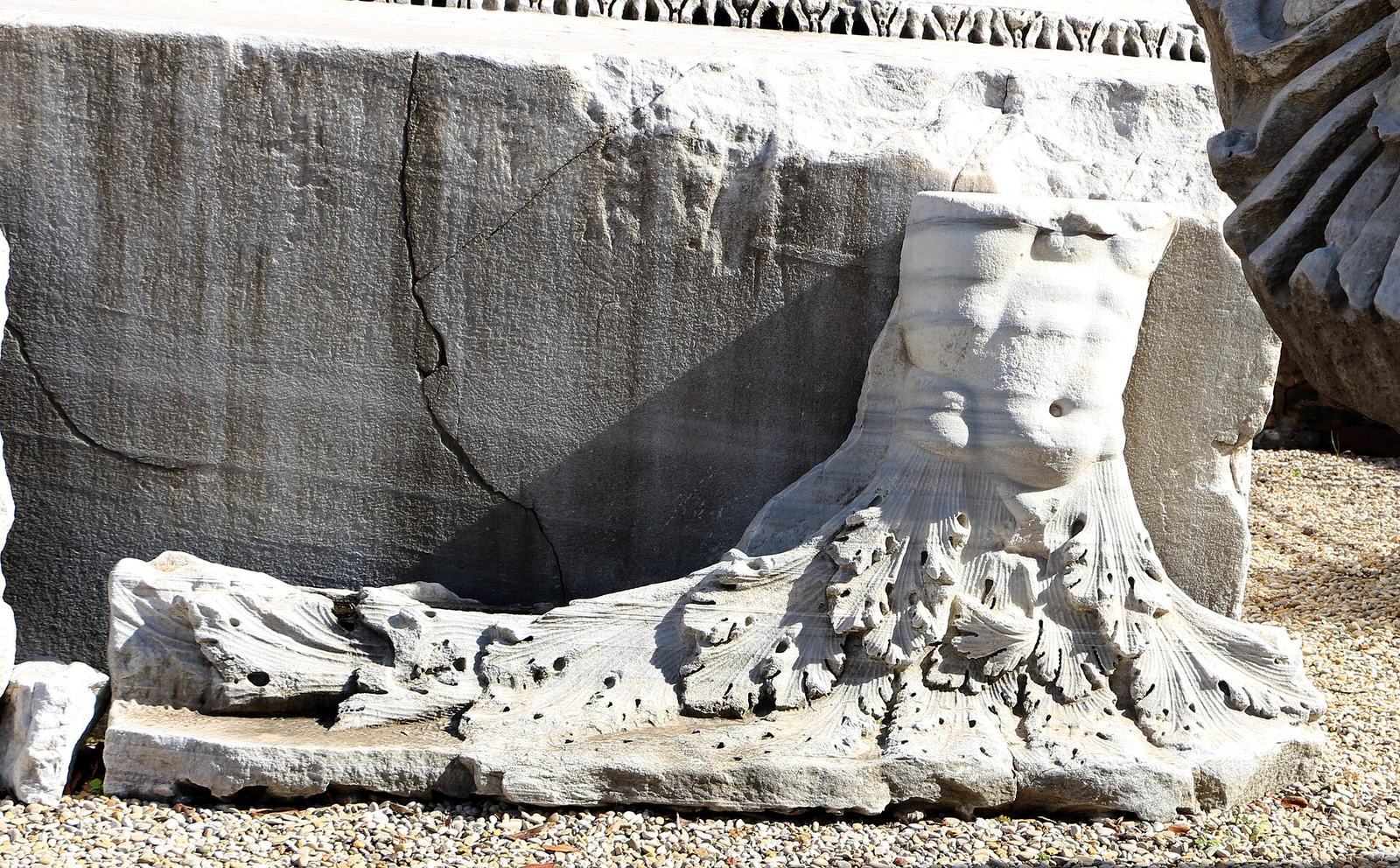
Decorative architectural elements were made of Proconnesian marble, quarried on an island in the Sea of Marmara. The ashlar masonry, made from regularly cut stone blocks, used peperino, a volcanic stone, probably beneath a facing. Some architectural blocks were exceptionally large. A single-piece marble entablature, the horizontal structure supported by columns, broke when it fell. One fragment weighed about 90 to 100 tonnes and measured more than 34 cubic metres. The fragments remained in the palace garden, and the largest rank among the biggest Roman architectural blocks. The right corner of the rear pediment, the triangular gable above a temple façade, survived until its destruction in 1630.
Torre Mesa
Torre Mesa stood beside the old temple walls as part of the medieval fortifications. It was reportedly inclined, and its name may refer to its tilt. The tower was demolished with the temple ruins in 1630.
Associated sculpture
Nile and Tiber
Two statues representing the river gods Nile and Tiber have been attributed to the sanctuary. Michelangelo placed them in front of the Palazzo Senatorio on the Piazza del Campidoglio.
The Dioscuri
Two statues of the Dioscuri, the twins Castor and Pollux, show the figures with horses and stand about 6.5 metres high. Found at the Baths of Constantine, they now form part of the Dioscuri Fountain, completed in 1818. A proposal made in 1947 linked them to the Serapis sanctuary, but their original location is uncertain.