Unstan Chambered Cairn: A Neolithic Tomb in Orkney
Site at a Glance
- Rating
- 4.6
- Popularity
- Medium
- Country
- United Kingdom
- Primary era
- Stone Age
- Eras represented
- Stone Age, Modern
- Civilizations
- British
- Site type
- Burial
- Remains
- Tomb
On this page6 sections
History
Unstan Chambered Cairn is a Neolithic, or later Stone Age, chambered tomb on Mainland in Orkney, United Kingdom. Neolithic communities probably built it between 3400 and 2800 BC, a date estimated by comparing it with nearby tombs. Its design combines two recognized forms of chambered cairn, Orkney–Cromarty and Maeshowe.
In 1884, pottery of a style later named Unstan ware was first found at the tomb. Unstan may have remained in use well into the second millennium BC, after the Neolithic.
The name also appears as Onstan and Onston. Its endings, stan and ston, derive from an Orcadian form of the Norse word stadr, meaning a farm settlement. The cairn is a scheduled monument cared for by Historic Environment Scotland, Scotland’s public body responsible for historic sites.
Remains
Setting and architecture
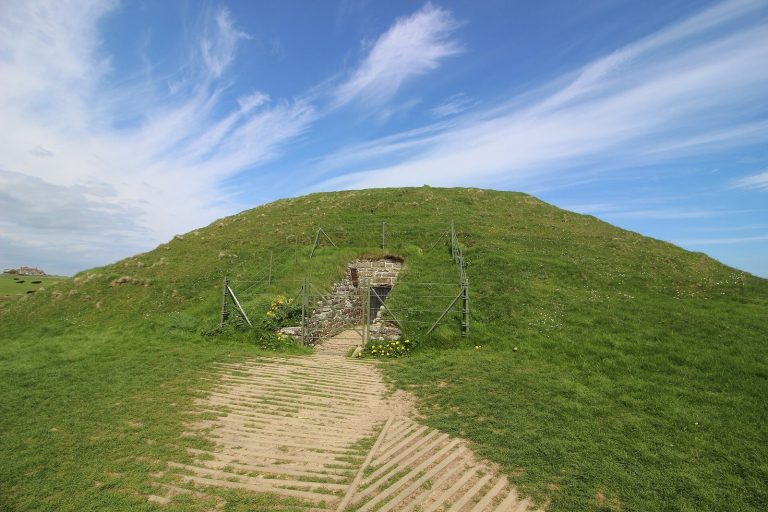
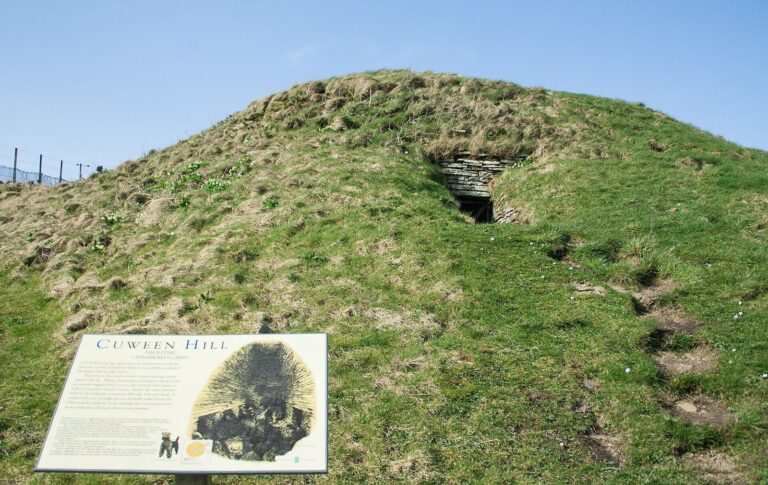
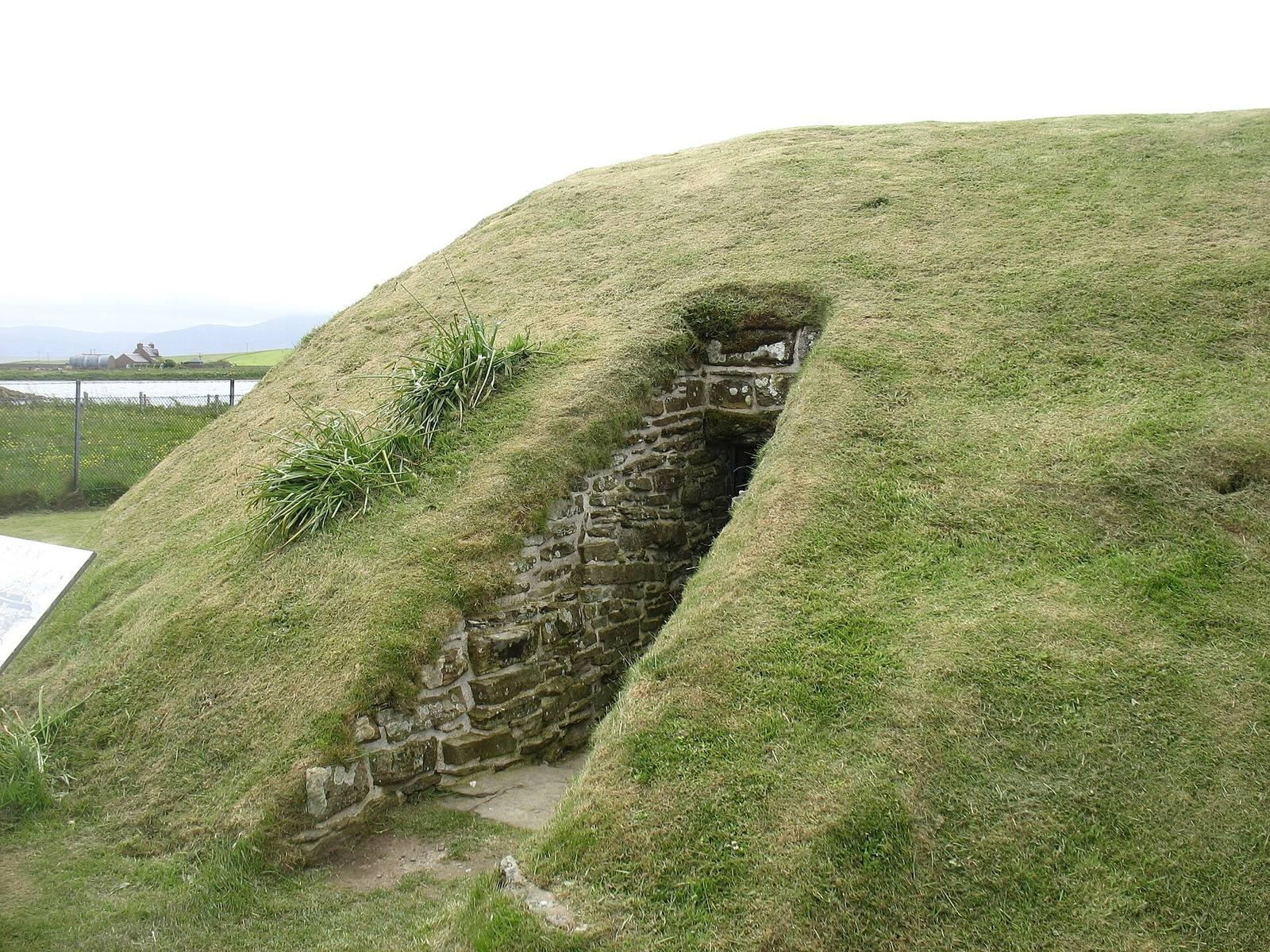
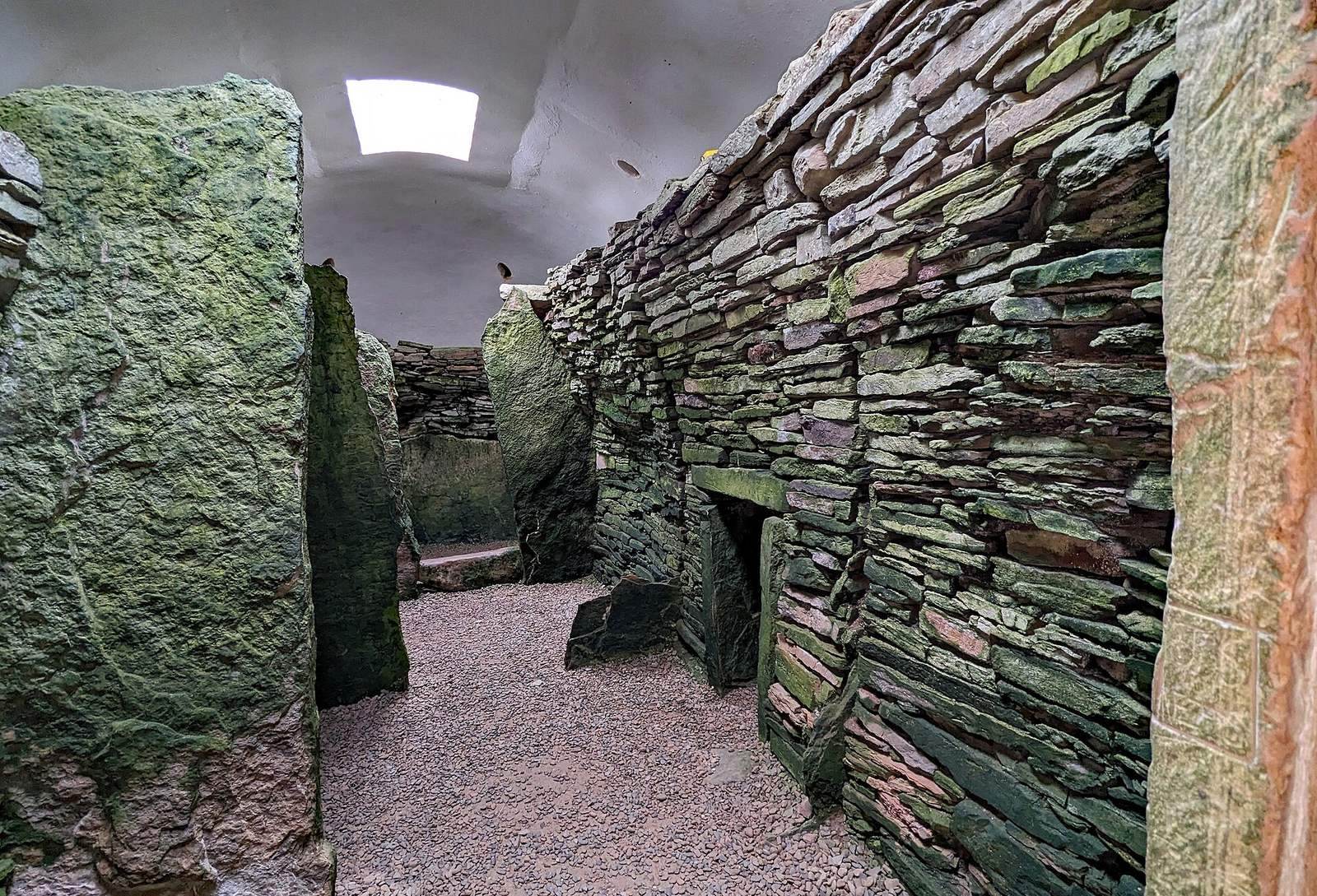
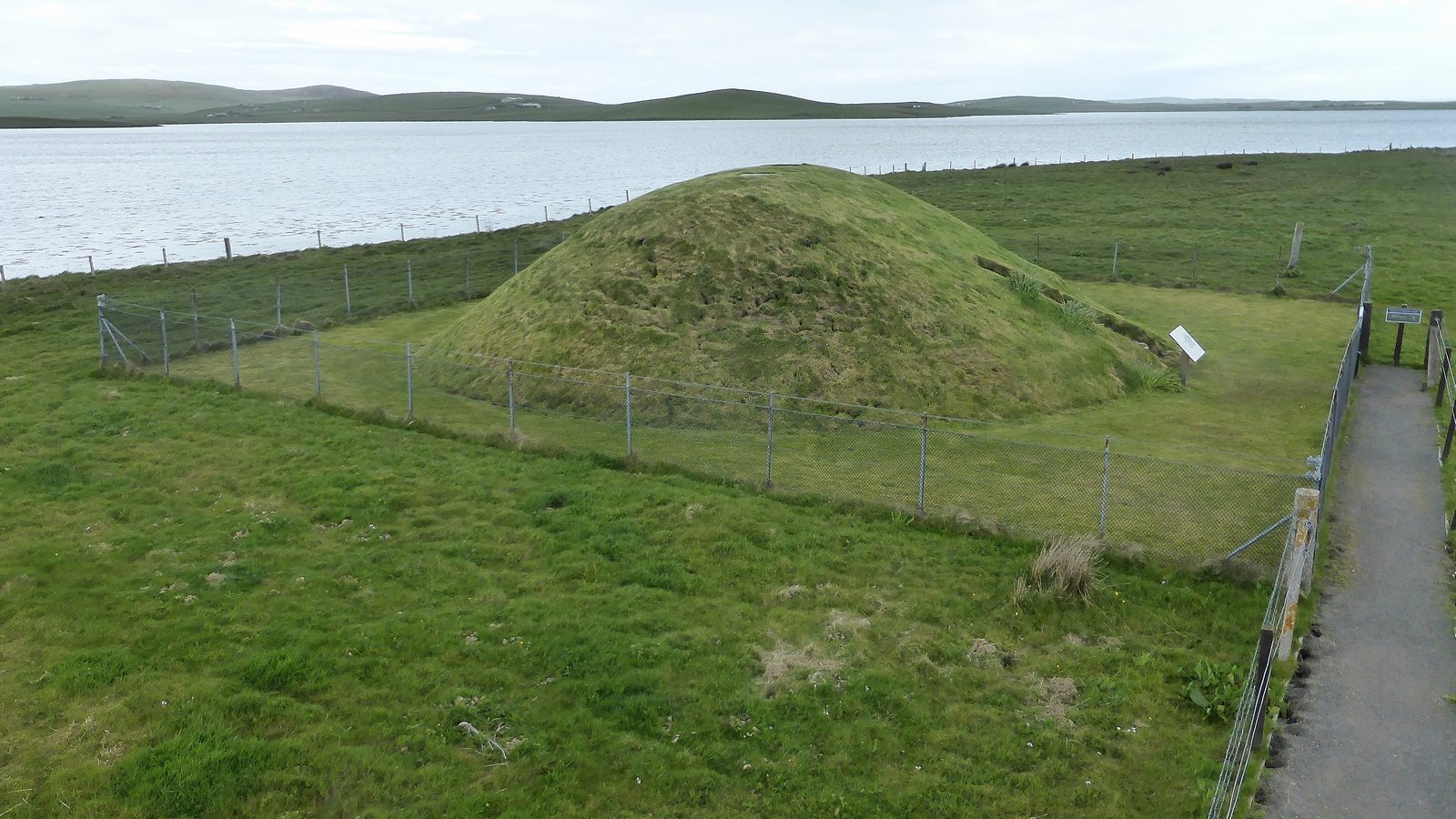
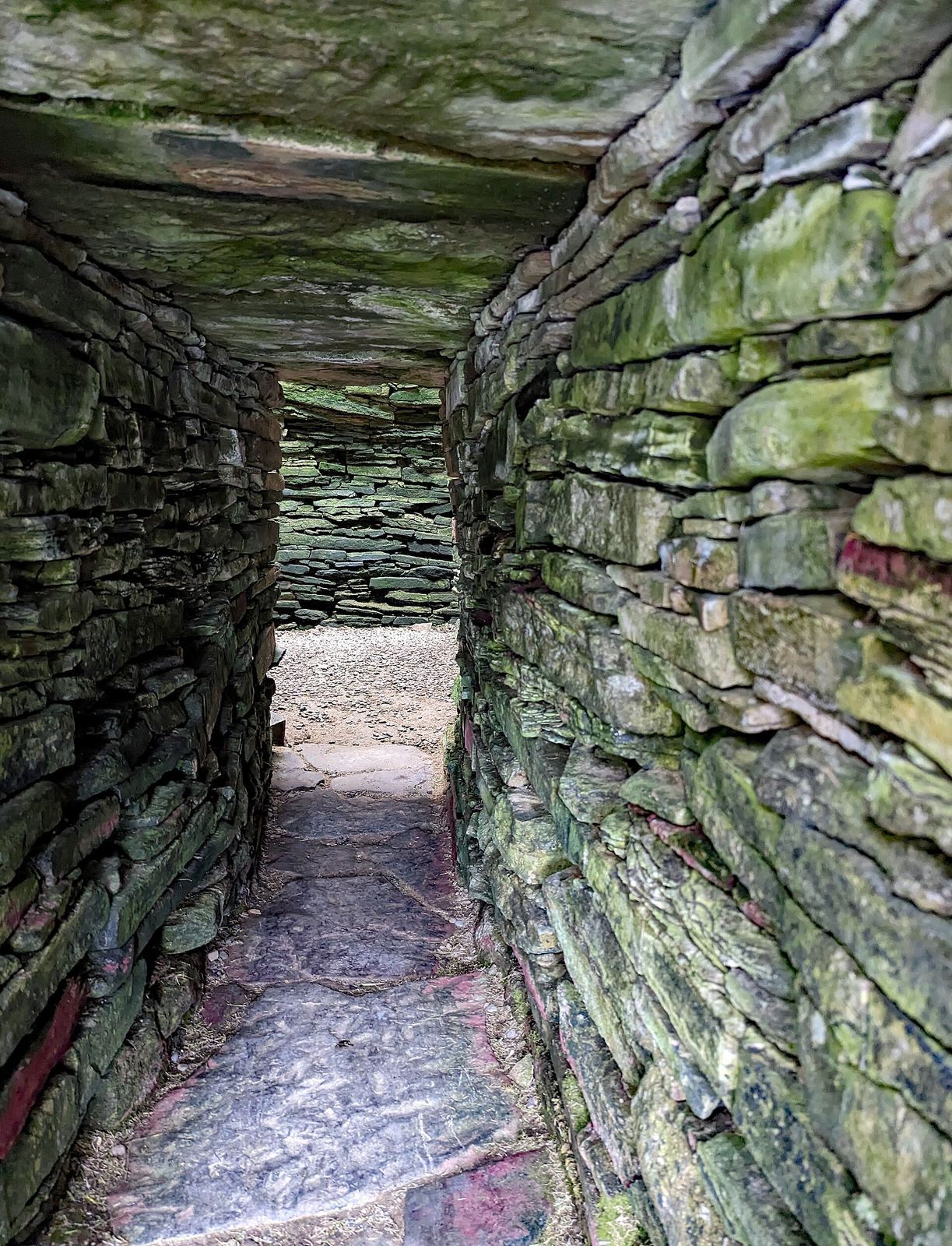
The cairn stands on a promontory reaching into the Loch of Stenness, near the settlement of Howe and about 3 km northeast of Stromness. Its circular mound measures 13 m across and is formed from two or three concentric rows of stonework. This shape, unlike the oblong or rectangular form usual for this type, has been attributed to the side chamber. Inside, a 6.4 m passage is bordered by five chambers in a stalled plan, where stones divide the spaces beside the passage into compartments. The main chamber opens along the passage’s side rather than at its end, and a further chamber projects from the side. The surviving walls, almost 2 m high, are made mainly of thin, stacked local flagstone from the Devonian Old Red Sandstone. The original roof is gone; a protective concrete dome installed in the 1930s now covers the tomb.
Burials and finds
Human remains and associated finds
Two crouched skeletons were found in the side chamber, with several more in the main compartment and bones scattered elsewhere in the tomb. Animal bones and charcoal were also recovered. An arrowhead found inside has a form associated with Beaker culture, an archaeological term for communities linked to distinctive bell-shaped pottery from the later Neolithic and Bronze Age.
Pottery
Fragments from between twenty and thirty bowls were recovered, many belonging to Unstan ware. Most were broken or incomplete, suggesting that they had been deliberately shattered for burial. Impressions of barley grains on some fragments indicate that the bowls had been used before deposition. Several pieces lay in a shallow hollow in the clay floor, and reconstructed vessels are held by the National Museum of Scotland.
Unstan ware includes shallow bowls with a band of grooves below the rim, made by pressing and dragging a tool across the clay, as well as plain, round-bottomed bowls. Some makers mixed volcanic rock into the clay to strengthen it. After firing, they polished bowl surfaces with bone tools until they were glossy and impermeable.