Our Lady and the English Martyrs Church: A Roman Catholic Parish Church in Cambridge
Site at a Glance
- Rating
- 4.8
- Popularity
- High
- Country
- United Kingdom
- Primary era
- Modern
- Eras represented
- Modern
- Civilizations
- British
- Site type
- Religious
- Remains
- Church
On this page16 sections
History
Our Lady and the English Martyrs Church is a Roman Catholic parish church in Cambridge, United Kingdom. Built in the Gothic Revival style, its construction began in 1885 and it was consecrated on 8 October 1890. Its dedication honours the Assumption of Mary, the Catholic belief that she was taken bodily into heaven, and the Forty Martyrs of England and Wales, Catholic martyrs. The church became an important centre for the city’s Catholic community.
Before construction
St Andrew’s Catholic Church, opened in Cambridge in 1843, was the city’s first Roman Catholic church after the English Reformation, the sixteenth-century break between the English church and papal authority. It remained the city’s only Catholic chapel until Our Lady and the English Martyrs was built.
In 1865, parish priest Canon Thomas Quinlivan acquired additional land beside the future church site, but a lack of funds delayed construction. With the help of Henry Fitzalan-Howard, the 15th Duke of Norfolk, the Lensfield estate was purchased in 1879. Quinlivan’s successor, Monsignor Christopher Scott, continued fundraising.
Construction and opening
On the Feast of the Assumption in 1884, Yolande Lyne-Stephens, a former ballerina and widow of the wealthy Stephens Lyne-Stephens, offered £70,000 toward the building. The church was designed by architectural partners Archibald Matthias Dunn and Edward Joseph Hansom, with construction undertaken by Rattee and Kett. Work began in 1885, and the foundation stone was laid in June 1887.
The church’s prominent position and its dedication to the Forty Martyrs stirred controversy among local Anglicans and members of the University. The building was completed and consecrated in 1890. The first Mass was attended by the Catholic bishops of England and Wales, apart from Cardinal Manning and Bishop Vaughan.
Parish life and twentieth-century events
After the church opened, the parish’s Catholic population grew substantially. The preaching of Father Robert Benson and the work of Monsignor Scott were among the factors associated with this increase. In 1902, St Andrew’s was dismantled and rebuilt in St Ives as Sacred Heart Church.
In 1921, Our Lady and the English Martyrs hosted the Bible Congress, the largest Catholic gathering in Cambridge since the English Reformation. The church also served as the home of the Cambridge Summer School of Catholic Studies from 1922 to 1946.
Damage, liturgical change and later status
During an air raid in 1941, a bomb hit the sacristy, a room used to prepare for worship and keep vestments and sacred vessels. It damaged the roof and the Sacred Heart chapel, shattered most of the windows and brought down part of the organ gallery. Repairs included replacement windows made to the original designs.
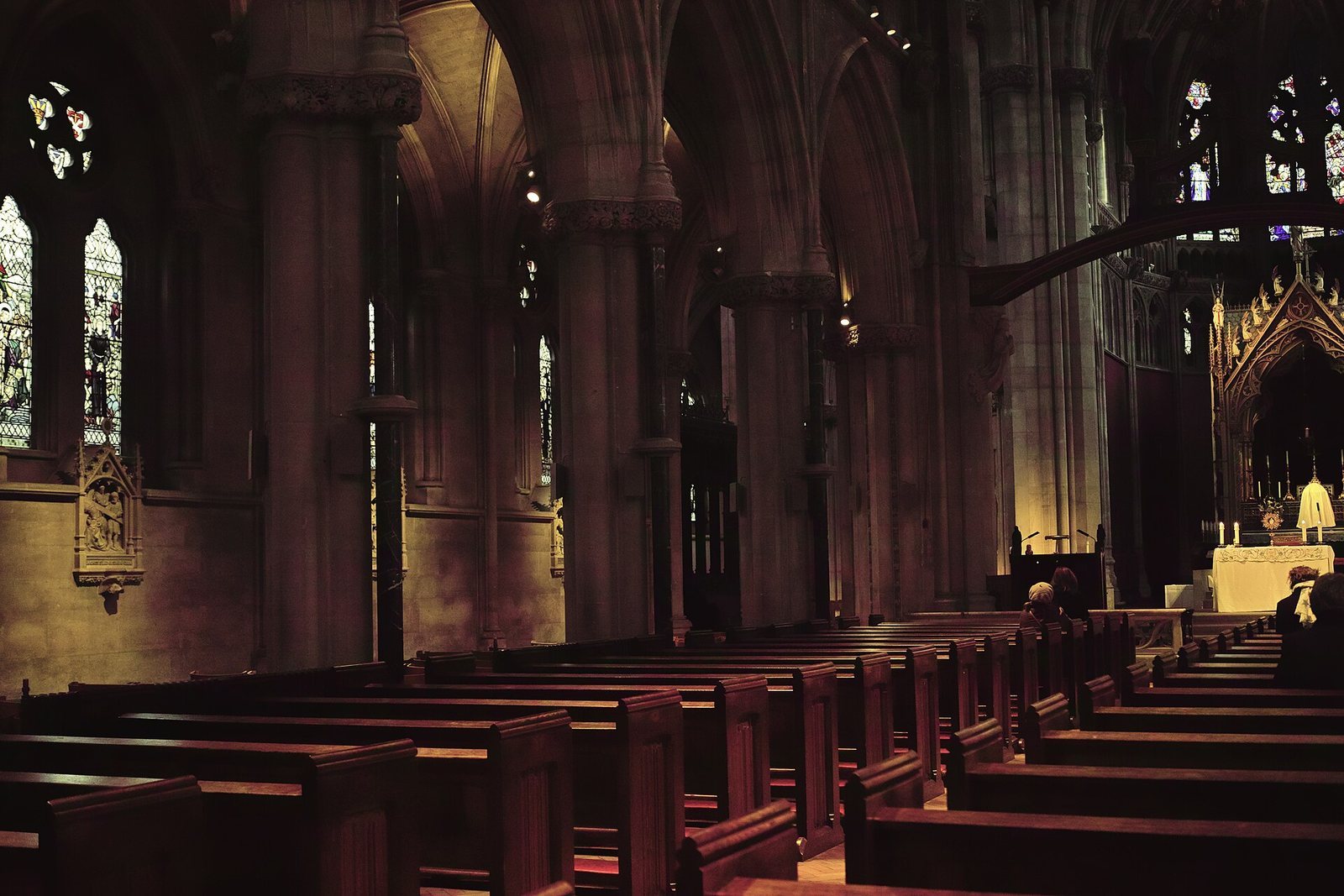
Following liturgical directives associated with the Second Vatican Council, held from 1962 to 1965, architect Gerard Goalen redesigned the sanctuary. On 7 April 1973, Charles Grant, Bishop of Northampton, consecrated the present central altar. The original high altar was thereafter used mainly to reserve the Blessed Sacrament, the consecrated Eucharist kept in a church for communion or devotion.
The church’s listed status was raised from Grade II* to Grade I in 2022. Grade I is England’s highest listed-building category, reserved for buildings of exceptional interest. In 2026, the church was added to Historic England’s Heritage at Risk Register.
Remains
Church plan and fabric
Plan and exterior
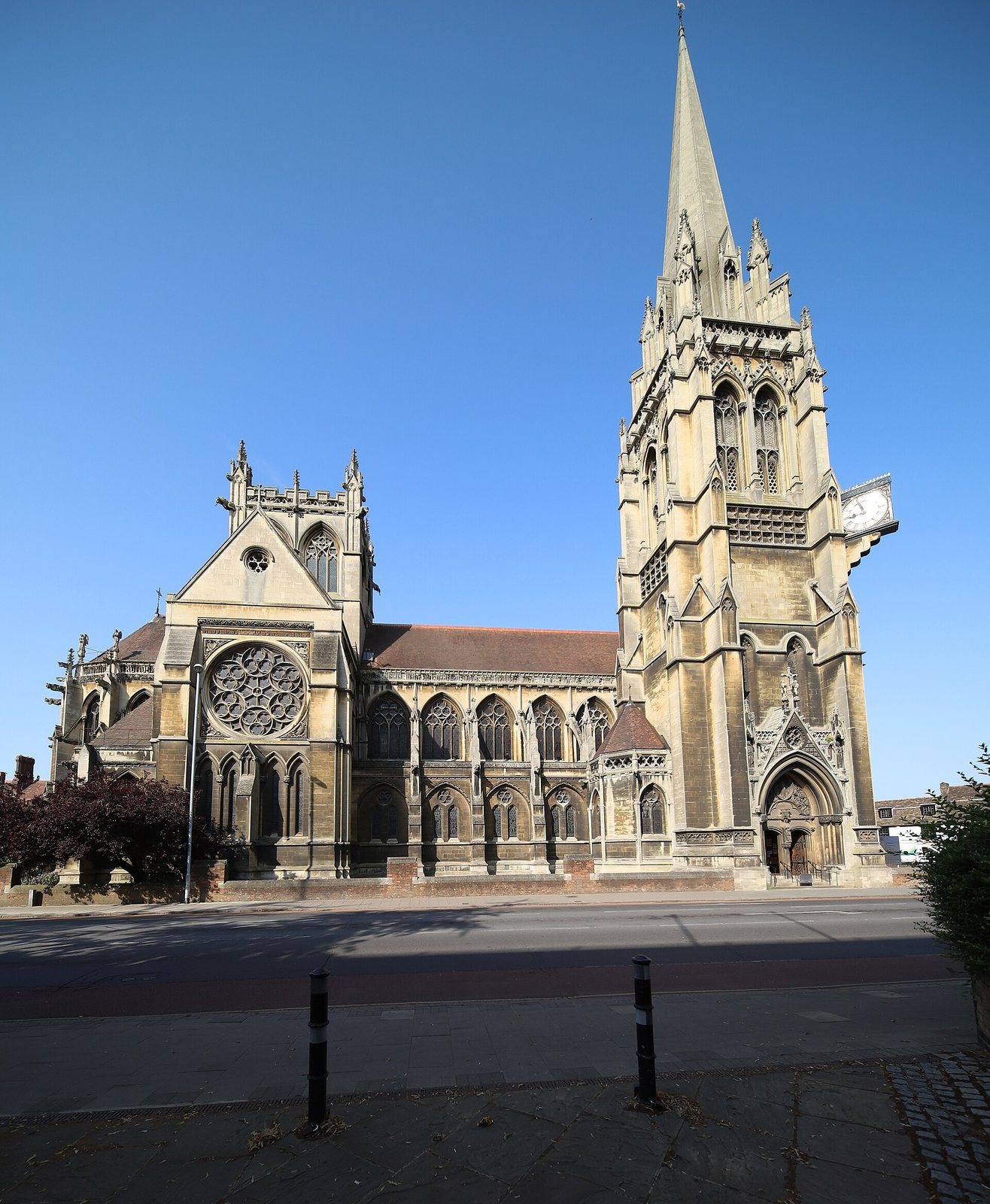
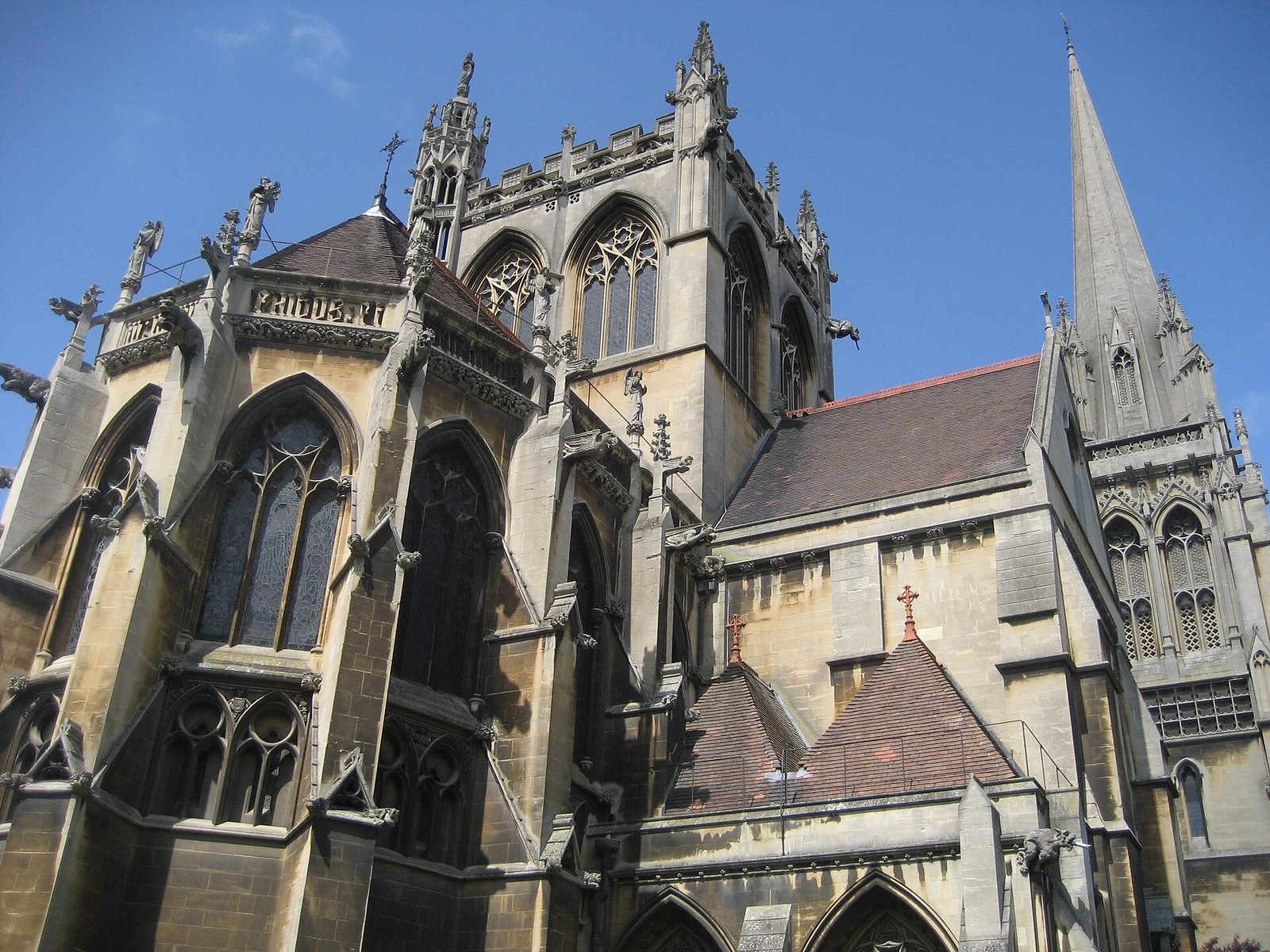
The church follows a cross-shaped, or cruciform, plan and has an interior length of 48 metres. A polygonal apse, the projecting end of the church, stands at the southeastern end, while a four-sided lantern tower with openings to admit light rises at the centre. The spire is at the northeastern end and reaches about 65 metres, or 214 feet. It is the tallest spire in Cambridge, and the church is the city’s tallest building. The spire can be seen from several miles away, and the church is among the largest Catholic churches in the United Kingdom.
Materials and stained glass
The foundations use Casterton stone, the base is Ancaster stone, and Combe Down stone forms the remaining exterior. Inside, the materials include Bath stone, Plymouth marble and Newbiggin stone. Stained-glass windows show Cambridge colleges and scenes from the lives of English martyrs, particularly John Fisher, a Catholic bishop executed in 1535 after opposing Henry VIII’s annulment of his marriage to Catherine of Aragon.
Devotional features
Altars
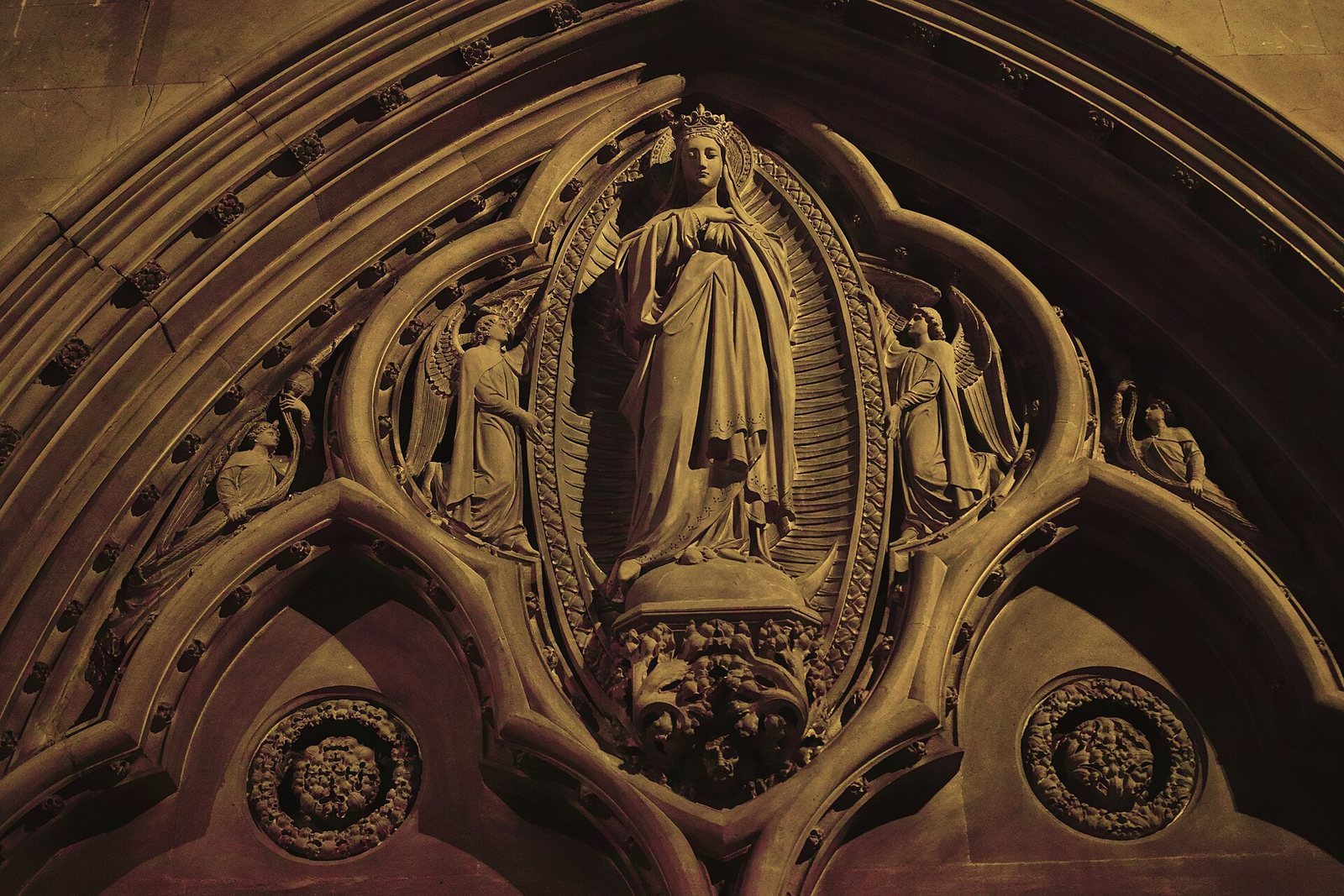
An altar bears an image of the Blessed Virgin. A ciborium, a canopy above an altar, stands over the high altar.
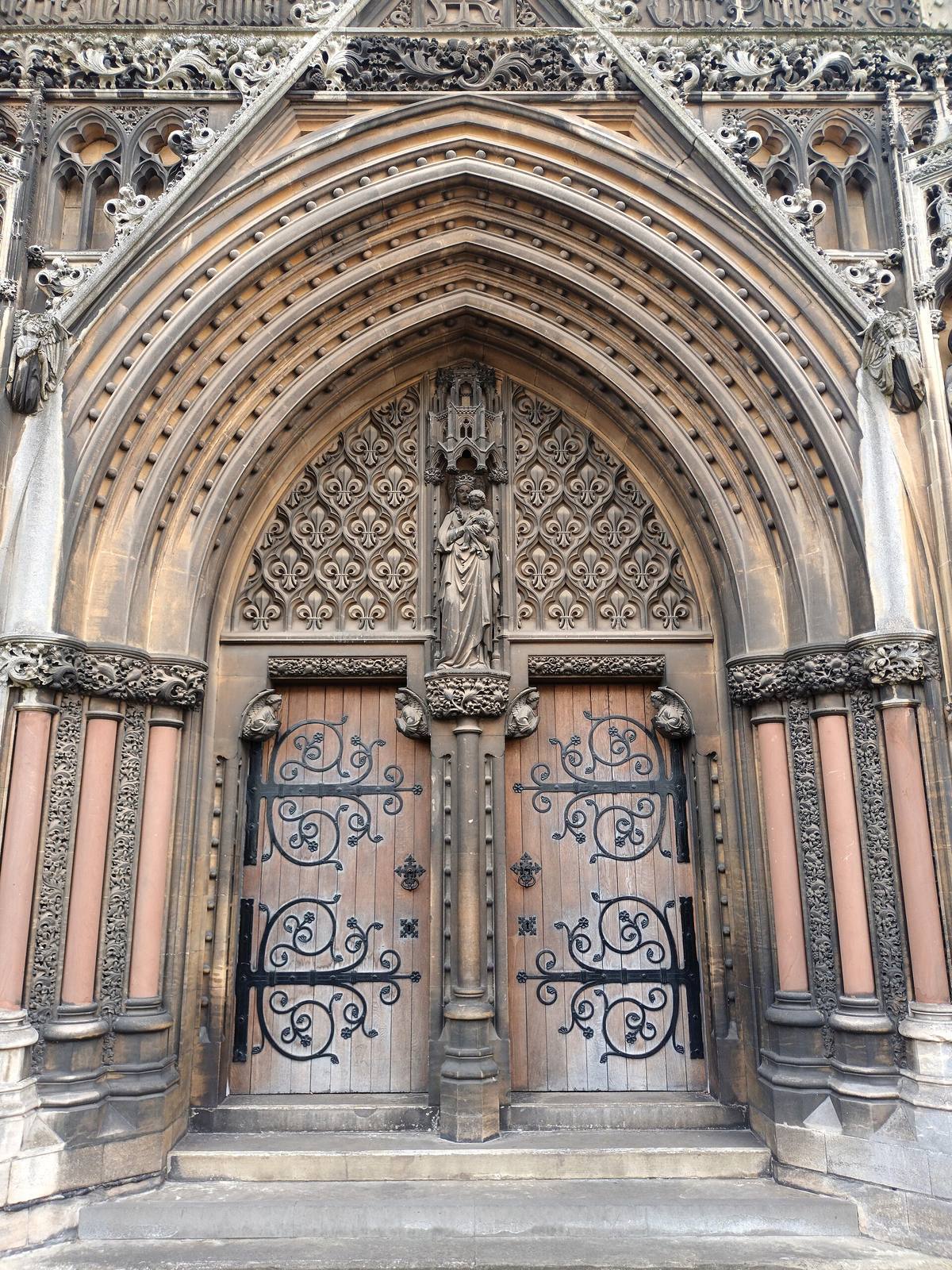
Virgin and Child statue
The church houses an oak statue of the Virgin and Child dating to the mid-sixteenth century. It is about half life-size. The statue may have been found at Emmanuel College in 1850 and may be the image Thomas Cromwell, a leading minister of Henry VIII, ordered removed on 30 August 1538. An inscription beneath the statue says it formerly stood in the Dominican priory on the site now occupied by the college.
Rectory and musical fittings
Rectory
The rectory, a residence for parish clergy, stands immediately south of the church and dates from around 1890. Its Tudor-style design combines red brick and stone dressings with a castellated slate roof.
Organ
Abbott and Smith built the organ in 1890 to a specification by composer Charles Villiers Stanford. Nicholson & Co. renovated it in 2002.
Bells and chimes
The belfry holds eight bells for change ringing, in which bells sound in changing sequences, and a ninth bell for the Angelus, a Catholic devotion traditionally marked by a bell. John Taylor & Co. of Loughborough cast all nine in 1895. Their inscriptions invoke John Fisher, Christopher, Felix, Gregory, Andrew, Peter, Joseph, Mary Immaculate Queen of Angels and Thomas of Canterbury. They also include the Latin prayer ora pro nobis, meaning “pray for us.”
The tenor, the largest and lowest-pitched bell in the change-ringing set, weighs 31 long hundredweight, 2 quarters and 5 pounds, about 1,603 kilograms. It is believed to be the largest bell in Cambridgeshire. Quarter-hour chimes made by Potts of Leeds use a melody based on the “Alleluia” chant for the Easter Vigil.