St. Jakobus: Roman Catholic Parish Church of Miltenberg
Site at a Glance
- Rating
- 4.3
- Popularity
- Medium
- Country
- Germany
- Primary era
- Medieval
- Eras represented
- Medieval, Early Modern, Modern
- Civilizations
- Electorate of Mainz, German, Holy Roman Empire, Kingdom of Bavaria
- Site type
- Religious
- Remains
- Church
On this page14 sections
History
St. Jakobus is the Roman Catholic parish church of Miltenberg, Germany, dedicated to James the Elder, one of Jesus’s Twelve Apostles and the brother of John. Its parish also includes branch churches in Breitendiel, Mainbullau, and Wenschdorf. It belongs to the St. Martin parish community, a grouping of parishes, and the Miltenberg deanery within the Diocese of Würzburg, a bishop-led church district.
Medieval foundations
The first church was built in the thirteenth century, when Miltenberg received town rights. A larger church with three aisles followed toward the end of the fourteenth century.
Nineteenth-century rebuilding
In 1782, the later church was judged dilapidated, and plans were prepared for a new building. Its transformation into its present Neoclassical form took place during the nineteenth century. The towers beside the choir were built from 1829 to 1831. The nave was altered in 1830 and again in 1886, while work on the choir took place in 1862.
Modern changes
The church interior was simplified in 1959. A thorough renovation in 2003 and 2004 rearranged the liturgical space in keeping with reforms that followed the Second Vatican Council, a Roman Catholic council held from 1962 to 1965 that brought changes to Catholic worship.
On 22 July 2006, parish priest Ulrich Boom rang the bells for 20 minutes to drown out a demonstration by the youth organization of the far-right National Democratic Party of Germany, or NPD.
Remains
Exterior and plan
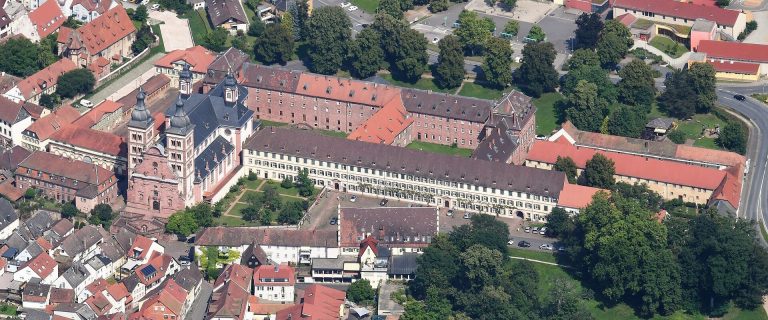
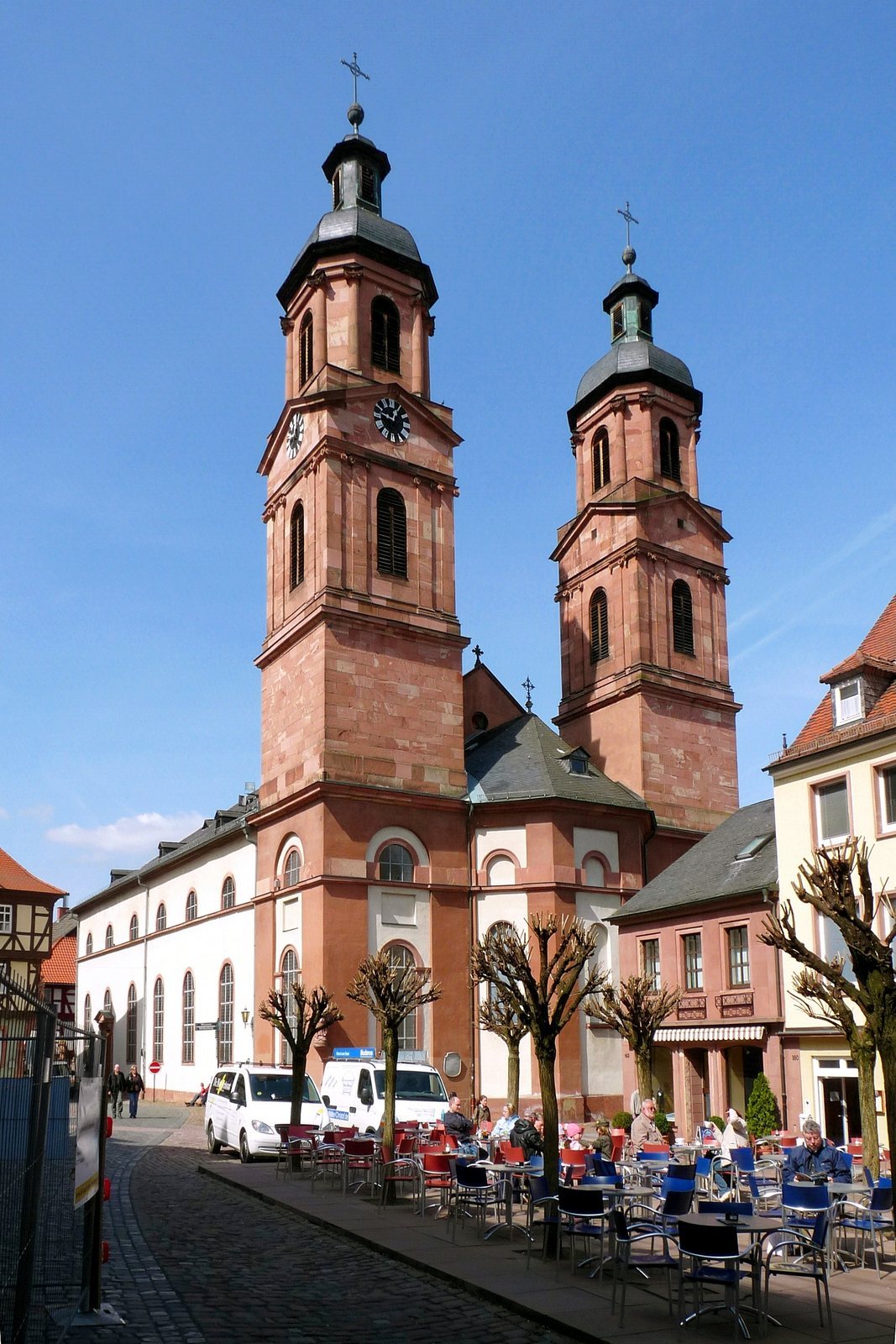
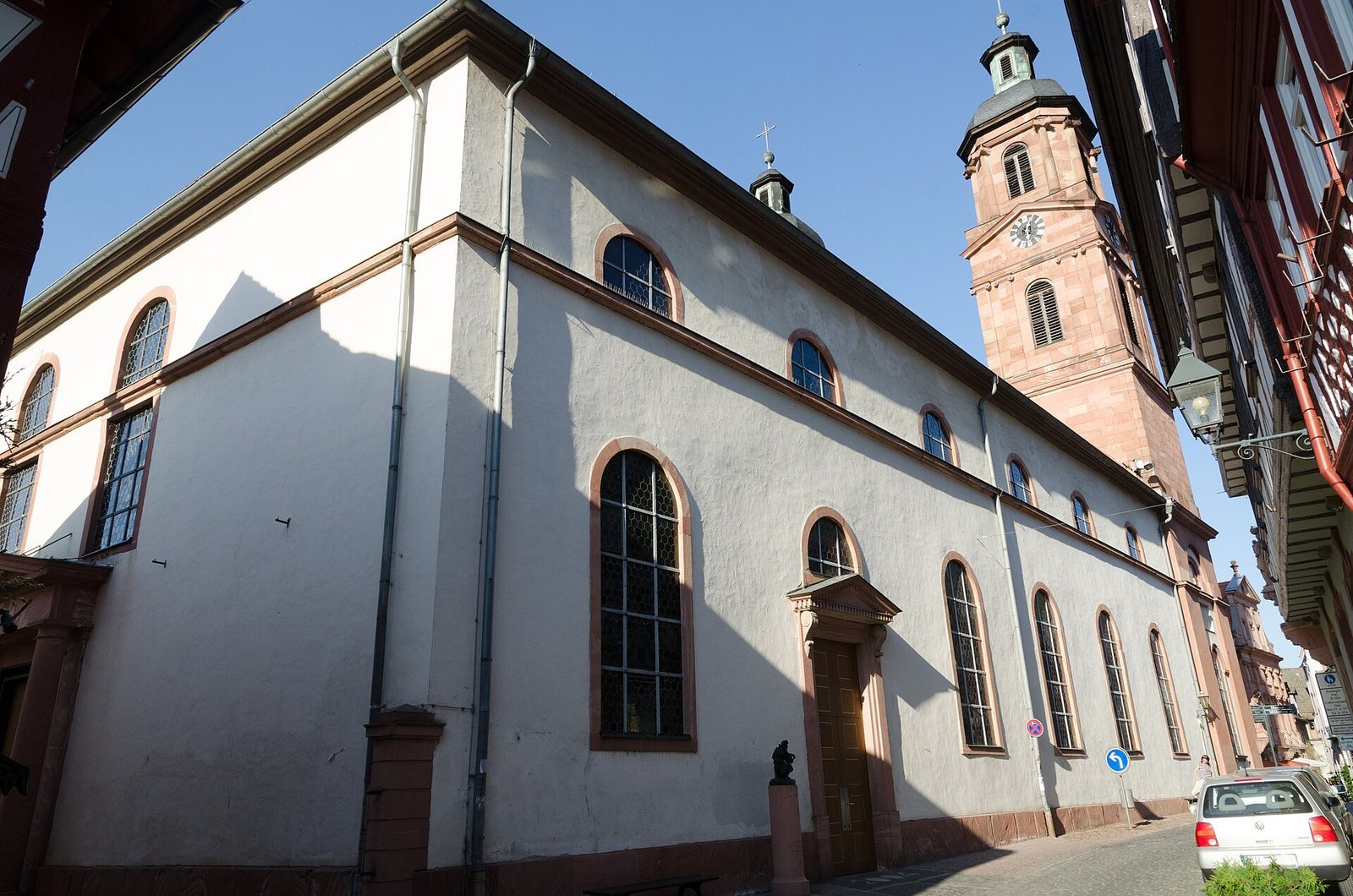
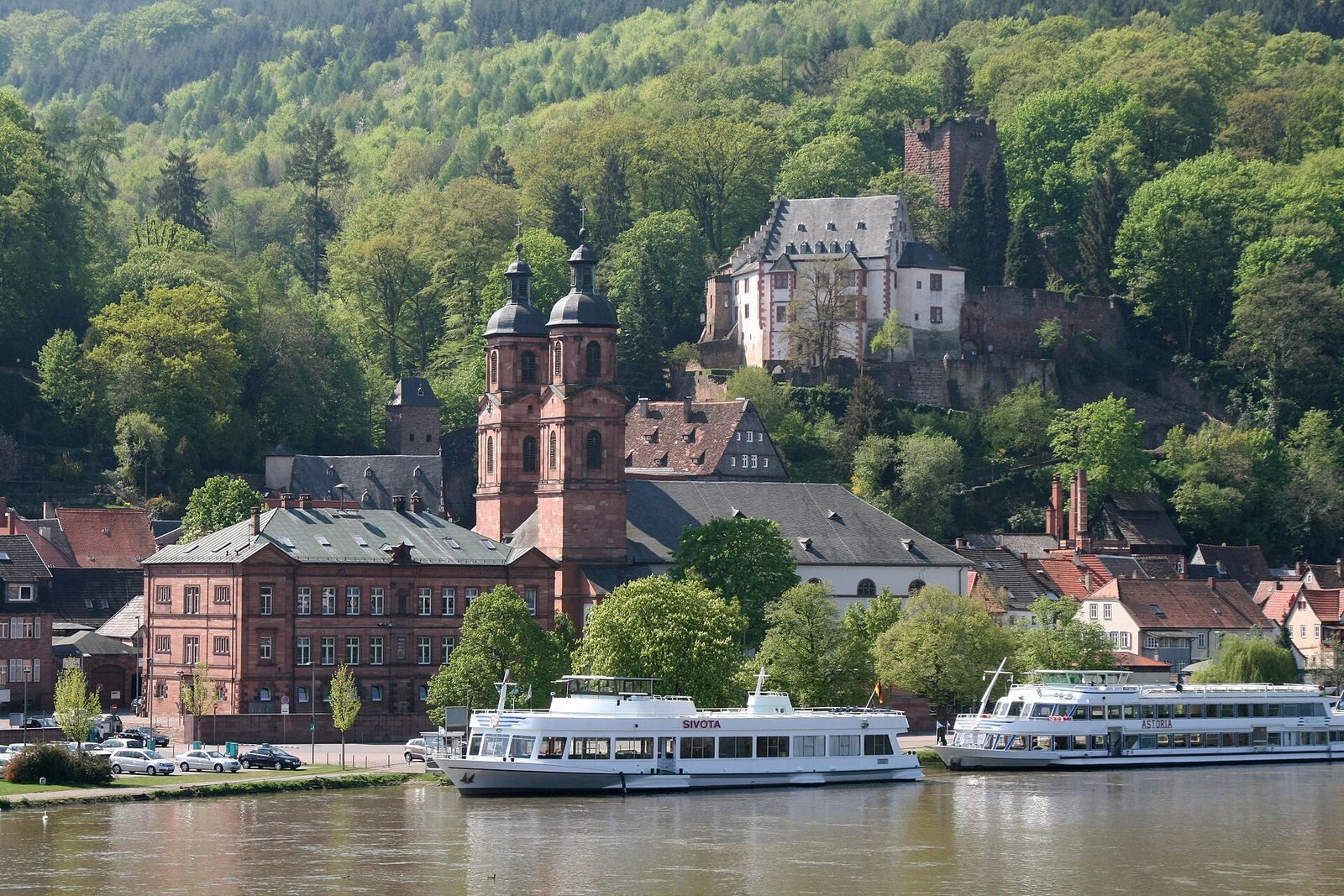
The church retains a Gothic core beneath its Neoclassical appearance. It has three aisles, with a higher central nave and galleries above the side aisles, but no high windows above them. At the choir end, a three-sided apse, a polygonal recess, completes the plan. The building has plastered masonry with restrained details in carefully cut stone, and a slate roof sloping on all sides. Two towers flank the choir; each has a bulbous cupola topped by a lantern.
Interior arrangement
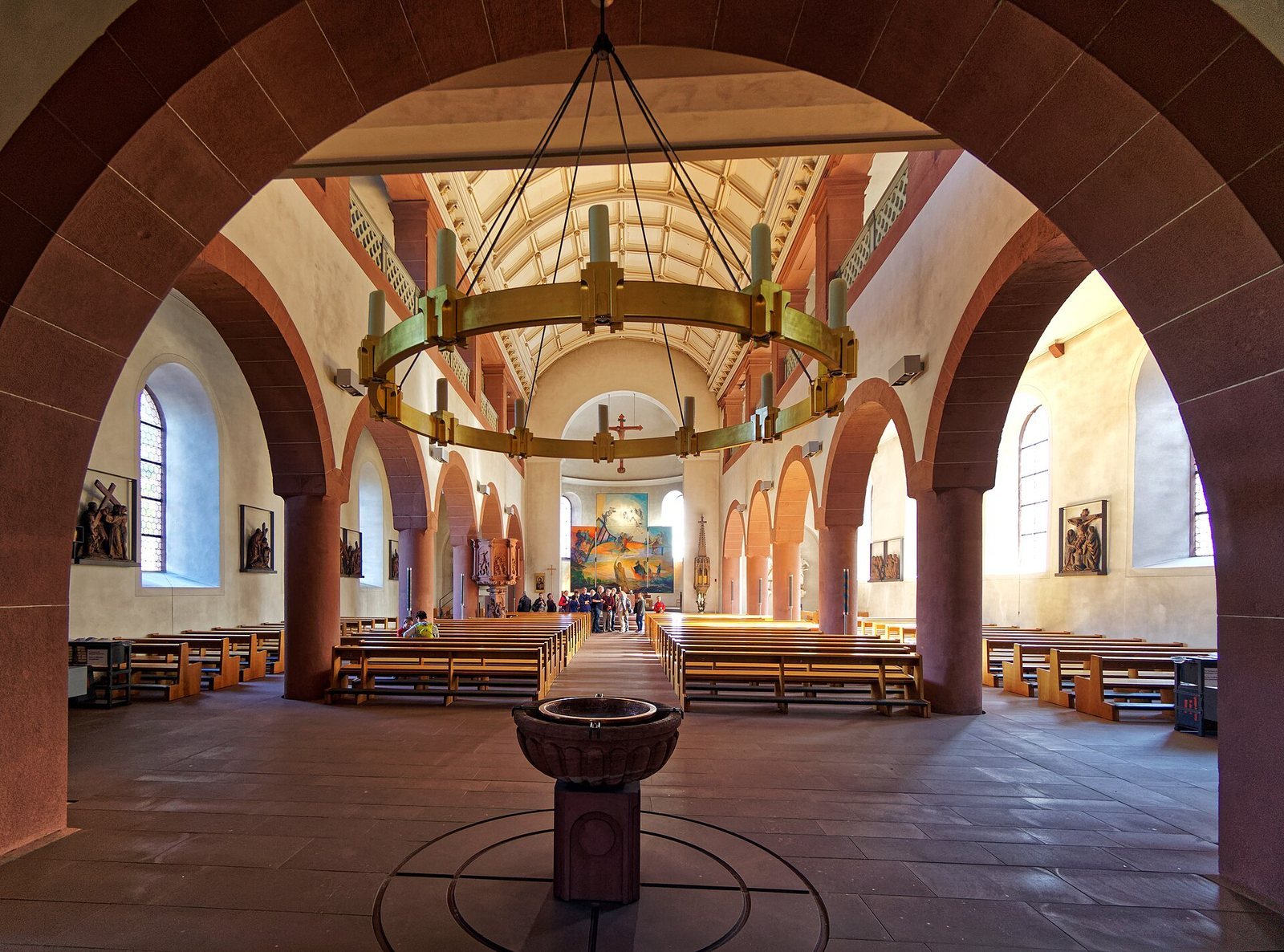
The 2003–04 renovation raised the floor level again and changed the steps in the choir. A new altar platform brought the altar nearer to the pews. The tabernacle, which holds the Eucharistic sacrament, was placed separately at the side in a historic sacrament house, an architectural receptacle for the sacrament. The brightly lit choir contrasts with the darker nave.
Artworks and furnishings
Baptismal font and pulpit
Near the west entrance, the baptismal font stands in the main nave beneath a large wheel chandelier. Its shell-shaped basin was made in 1608 by Michael Juncker. The pulpit, created in 1635 by Zacharias Juncker the Elder, is another prominent furnishing.
Paintings and sculpture
A group of the Three Kings, the Magi in Christian tradition, dates to around 1400 and is attached to the north aisle wall. The north aisle’s devotional chapel contains a Madonna in a radiating aureole from about the same time. An alabaster-marble altarpiece made in 1624 presents seven scenes from the life of Mary. In the south aisle are Baroque figures of Saint John of Nepomuk, a fourteenth-century Bohemian priest venerated as a saint, and James. A life-size late Gothic cross, carved in red sandstone by Hans Backoffen, is also in the south aisle.
Stations of the Cross
Thomas Buscher made the Stations of the Cross in 1927. They run around the outer sides of the aisles. Their colored finishes were lost when the interior was simplified in 1959.
Painting of James and John
A free-standing painting by Clemens Kaletsch, installed in 2004, has a composition recalling a traditional altarpiece with hinged wings. Opening or closing its panels changes its appearance. The scenes show James and John being called while fishing with their father Zebedee; Jesus raising the daughter of Jairus, a synagogue leader; an episode in the Garden of Gethsemane; and Zebedee’s wife asking Jesus to grant her sons a share in his kingdom. The figures occupy a broad, hazy landscape with a quality reminiscent of Romantic art.
Organ
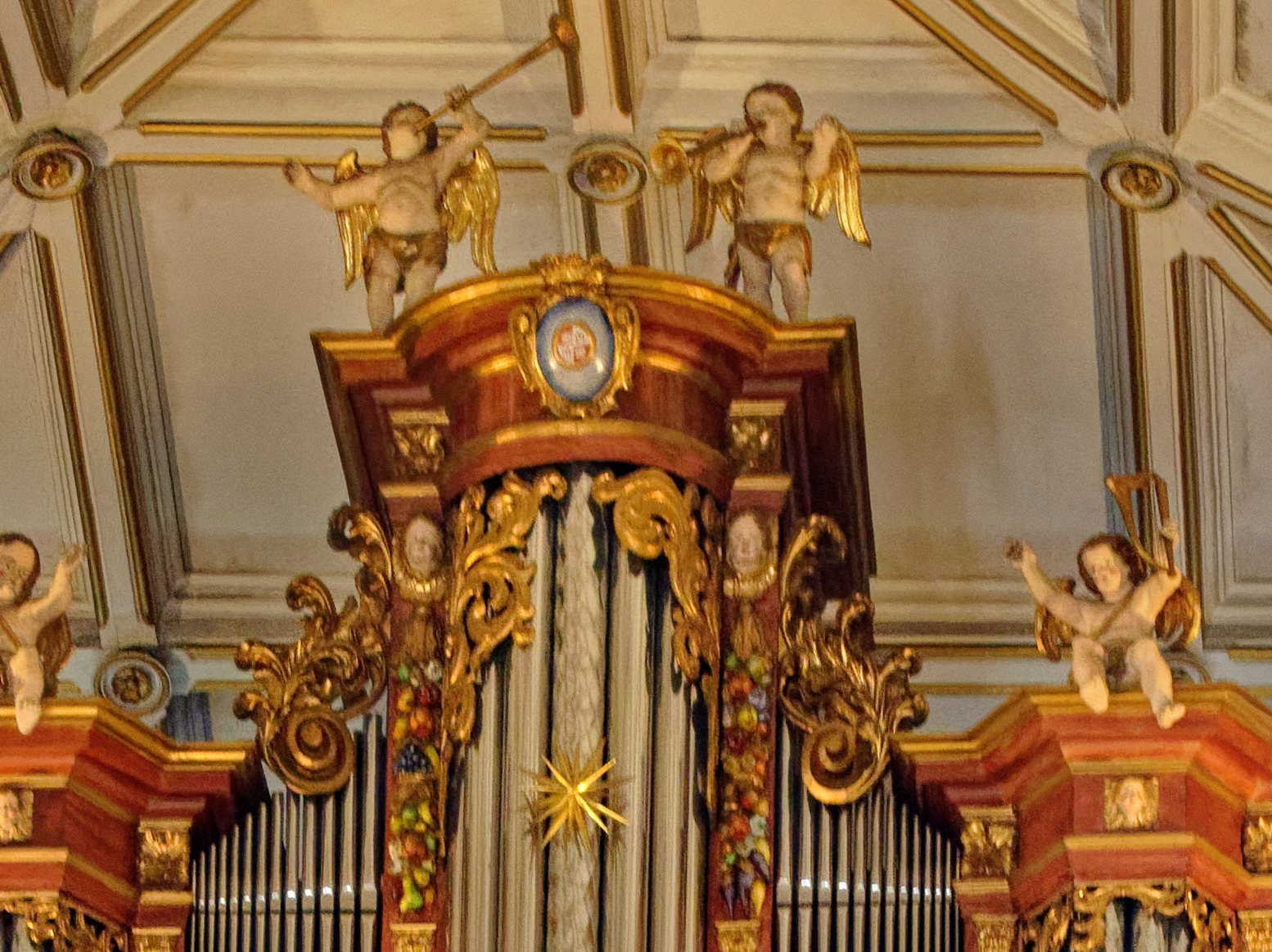
The present organ was built in 2004 by Vleugels of Hardheim. It incorporates the preserved case of an instrument built in 1699 by Schleich and reuses 13 stops from a 1935 organ by J. Bittner. The instrument has 32 stops, which control sets of pipes, and 2,004 pipes, along with four connections that allow pipework to be played from the pedal. It was designed with two manuals, or keyboards, for its Great and Swell divisions, groups of pipes, but can also be played from a third manual and the pedal, a foot keyboard. Swell stops can be played from the Solo and Echo manuals, and the Echo tremulant also affects the Solo. Several Great stops can also be played from the pedal. The organ has mechanical key action and electric stop action. Its couplers, which link keyboards or connect them to the pedal, are II/I, III/I, III/II, I/P, II/P, and III/P, with an additional super-coupler, III/P.
Its effects include a nightingale, a rotating cymbel star that rings small bells, a drum, and a cuckoo. An angel figure holding a trombone sounds a ship’s horn when turned; this effect is nicknamed “Bieber-Boom.” A drawstop fashioned as a pencil holder is labeled “Pinsulum 1/2′.”
Bells
The church has six bells. The two largest hang in the north tower and the other four in the south tower. Together they form the most powerful peal in the Diocese of Würzburg after that of Würzburg Cathedral.