Swynnerton Hall: An 18th-Century Country House in Staffordshire
Site at a Glance
- Popularity
- High
- Country
- United Kingdom
- Primary era
- Early Modern
- Eras represented
- Early Modern, Modern
- Civilizations
- British
- Site type
- Domestic
- Remains
- Manor House
On this page8 sections
History
The Swynnerton and Fitzherbert Families
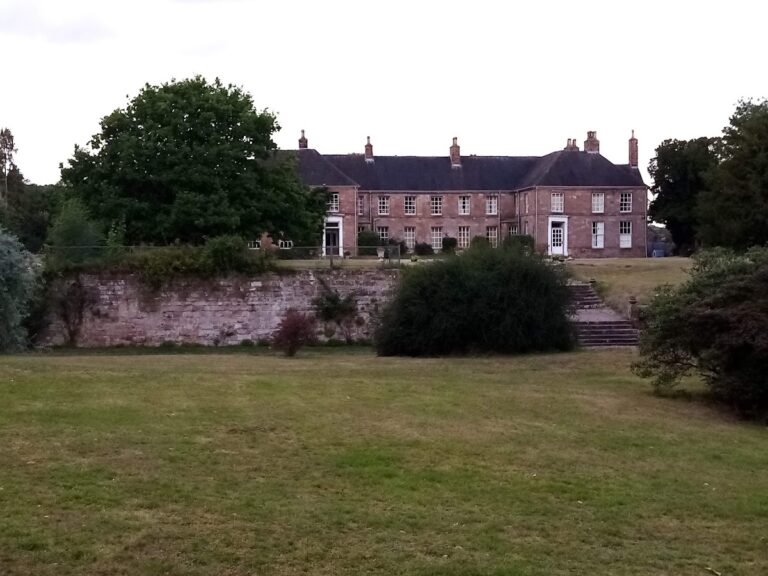
Swynnerton Hall is an eighteenth-century country house at Swynnerton, near Stone in Staffordshire, United Kingdom. Rebuilt around 1729 in Georgian style, associated with the British reigns of George I through George IV (1714–1830), it was the seat of a landed manor, an estate centered on a principal house. The Swynnerton family held the manor for several centuries before it passed to the Fitzherberts.
In 1562, William Fitzherbert, the third son of Sir Anthony Fitzherbert of Norbury Hall, married Elizabeth Swynnerton, daughter and co-heir of Humphrey Swynnerton. In 1649, John Fitzherbert of Norbury left his estate to his cousin William Fitzherbert of Swynnerton, uniting the Norbury and Swynnerton estates.
Civil War Damage and Rebuilding
The Fitzherberts were Catholics and supporters of the Royalist cause during the English Civil War (1642–1651), a conflict between supporters of the monarchy and Parliament. Parliamentarian forces irreparably damaged Swynnerton Hall during the conflict.
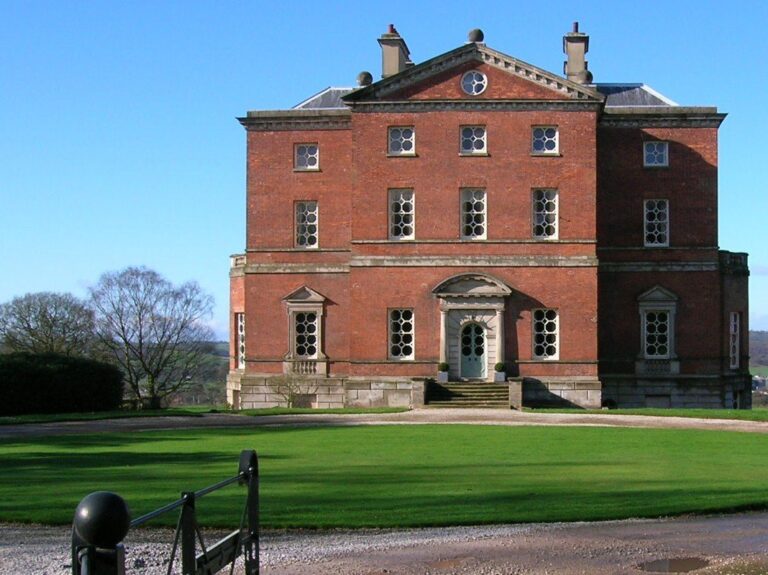
The manor house was rebuilt around 1729 to a design by Francis Smith of Warwick. This rebuilding established the Hall’s Georgian character.
Chapel and the Barony of Stafford
After Catholic emancipation, the removal of legal and civil restrictions on Catholics in Britain, Gilbert Blount built a private family chapel beside the Hall around 1868. It now serves as the parish church for the local Catholic community.
In 1913, Francis Fitzherbert inherited the title of Baron Stafford from his maternal uncle, Fitzherbert Stafford Jerningham of Costessey Hall in Norfolk. The estate became the seat of the Barony of Stafford, a title in the British peerage. Lord Stafford resides at the Hall and farms the 3,000-acre estate. The Hall was listed Grade I on 10 January 1953, a category for buildings of exceptional interest. The chapel is Grade II*, for particularly important buildings of more than special interest. The estate also forms part of a conservation area, designated for its special architectural or historic interest.
Remains
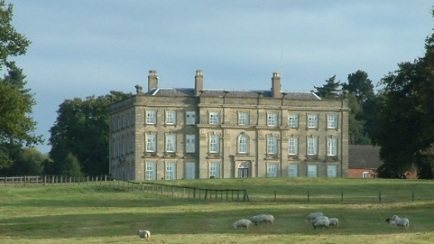
The site brings together the three-storey Hall, a chapel beside it, and the surrounding park. The park almost entirely encompasses Swynnerton village, and its open landscape is used for agriculture.
The Hall
The Hall has a Georgian design and a nine-bay frontage, divided into nine repeated sections. Its three-storey form reflects the rebuilding around 1729.
The Chapel
Standing beside the Hall, the chapel is larger than is usual for a rural English setting.
Swynnerton Park
Known as Swynnerton Park, the grounds around the Hall were laid out by Capability Brown, an English landscape designer known for shaping country-house grounds. The park’s agricultural open landscape includes areas that have been left untouched.