Tsaparang: Capital of the Guge Kingdom and Ruined Fortress City
Site at a Glance
- Popularity
- High
- Country
- China
- Primary era
- Medieval
- Eras represented
- Medieval, Early Modern
- Civilizations
- Unclassified
- Site type
- Military
- Remains
- Citadel
On this page13 sections
History
Tsaparang is a ruined fortress city in Ngari, western Tibet, China, and served as the capital of the ancient kingdom of Guge. Its origins are broadly dated to the ninth or tenth century, after the Tibetan Empire, the early Tibetan state, fragmented amid civil war following King Langdarma’s assassination in 841. Guge became an important regional power by the tenth century. It lay on a caravan route between India and Tibet, and its influence reached Kashmir and Assam. The region had earlier been known as Zhangzhung, an earlier polity in western Tibet, and was heavily fortified in the tenth century.
Guge and the Buddhist revival
In 1076, Guge’s king Sronne Yeses’od convened a Buddhist council that began a revival of Buddhism in western Tibet. The Sanskrit translator Rinchen Zangpo and the Indian Buddhist teacher Atisha helped advance the revival. Temples and monasteries were established at Tsaparang and Tholing.
Jesuit mission and Ladakhi conquest
Portuguese Jesuit missionaries António de Andrade and Manuel Marques reached Tsaparang in 1624 while searching for Prester John, a legendary Christian king believed in medieval Europe to rule a distant eastern kingdom. Guge’s ruler, Tri Tashi Drakpa, allowed them to preach. They returned the following summer and established a mission in the kingdom, while a second church was founded at Rudok, about 209 km away.
Andrade had left Tibet by 1630, and the mission declined. That year, Ladakh’s king Senge Namgyal, who ruled from 1616 to 1642, invaded Guge. His forces, including Muslim mercenaries, captured Tsaparang after a siege, and Senge ordered the royal palace destroyed. Most inhabitants were killed; court women were reportedly thrown from a cliff. Tri Tashi Drakpa and his family were captured. In 1640, Marques led an attempt to restore the mission, but he was arrested and wrote to the Jesuit mission in Agra asking for help.
Abandonment and later history
In 1679–1680, forces of the Fifth Dalai Lama, a Tibetan Buddhist leader and political authority, and the Oirat ruler Gushi Khan conquered the former Guge territory from Ladakh, establishing the Dalai Lama’s authority there. Tsaparang was abandoned in 1680. Monasteries were later founded on the ruins of Tsaparang and Tholing, and Buddhist artworks accumulated at the sites over subsequent centuries.
During China’s Cultural Revolution (1966–1976), a political campaign in which religious sites and objects were widely attacked, temples, statues, and other structures at Tsaparang were damaged or destroyed. Excavations are ongoing, and the site belongs to China’s first group of state-protected major cultural and historical sites. Historian and television presenter Michael Wood has proposed Tsaparang as a historical inspiration for Shangri-La, the legendary hidden Himalayan utopia popularized in modern literature.
Remains
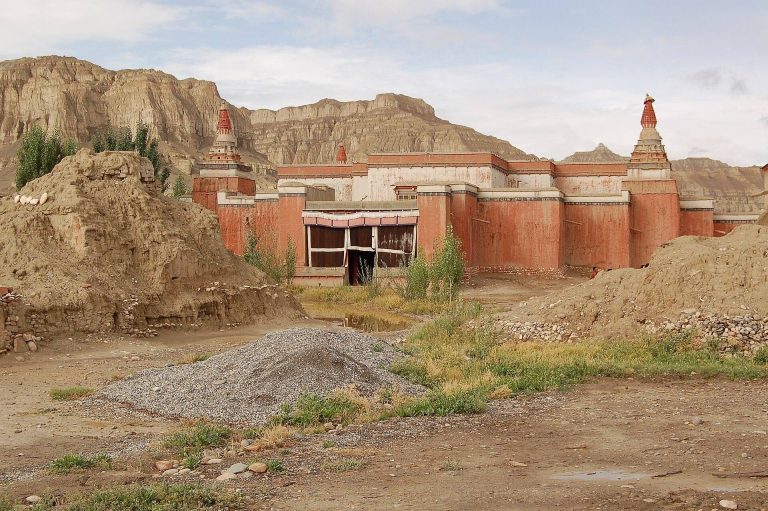
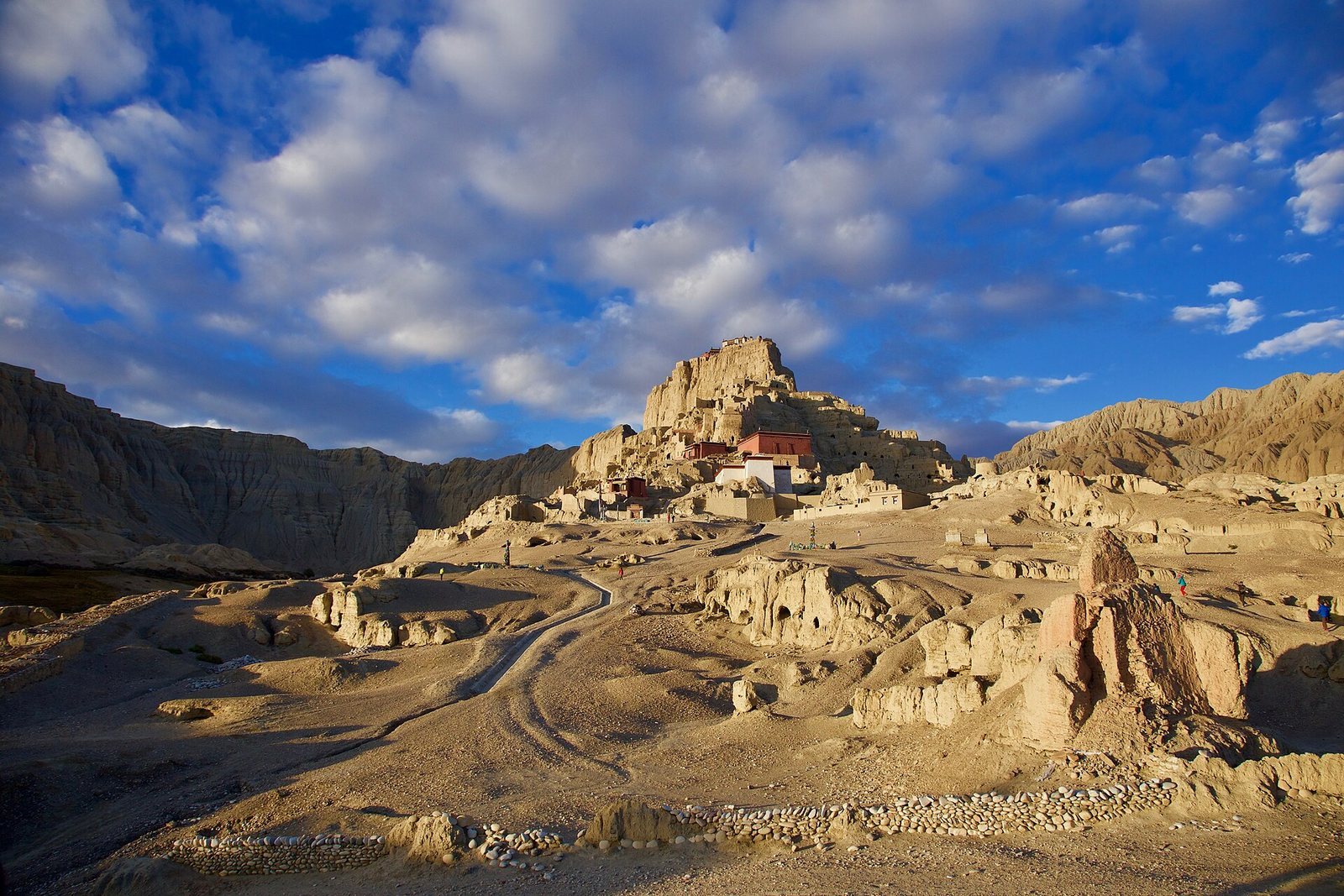
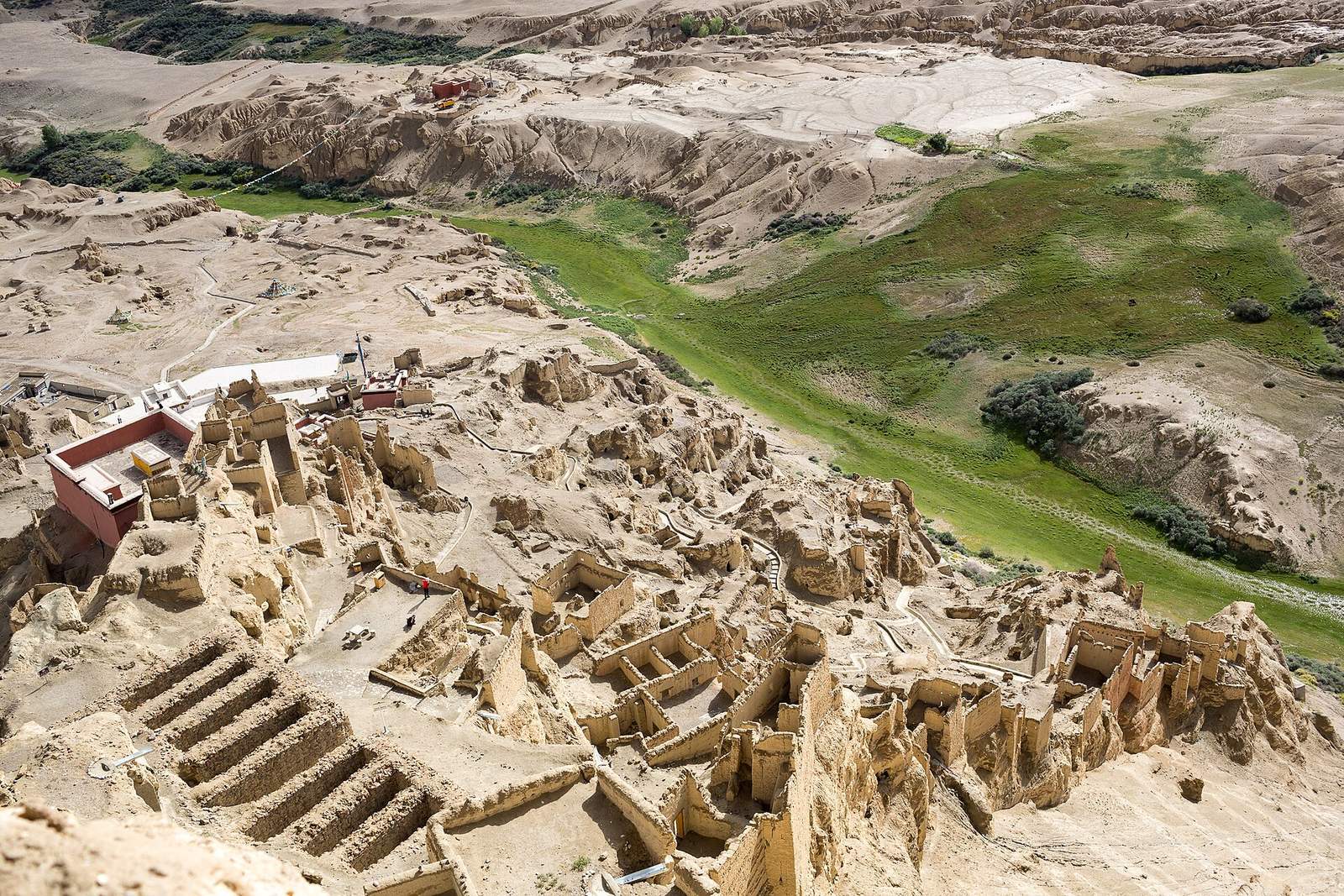
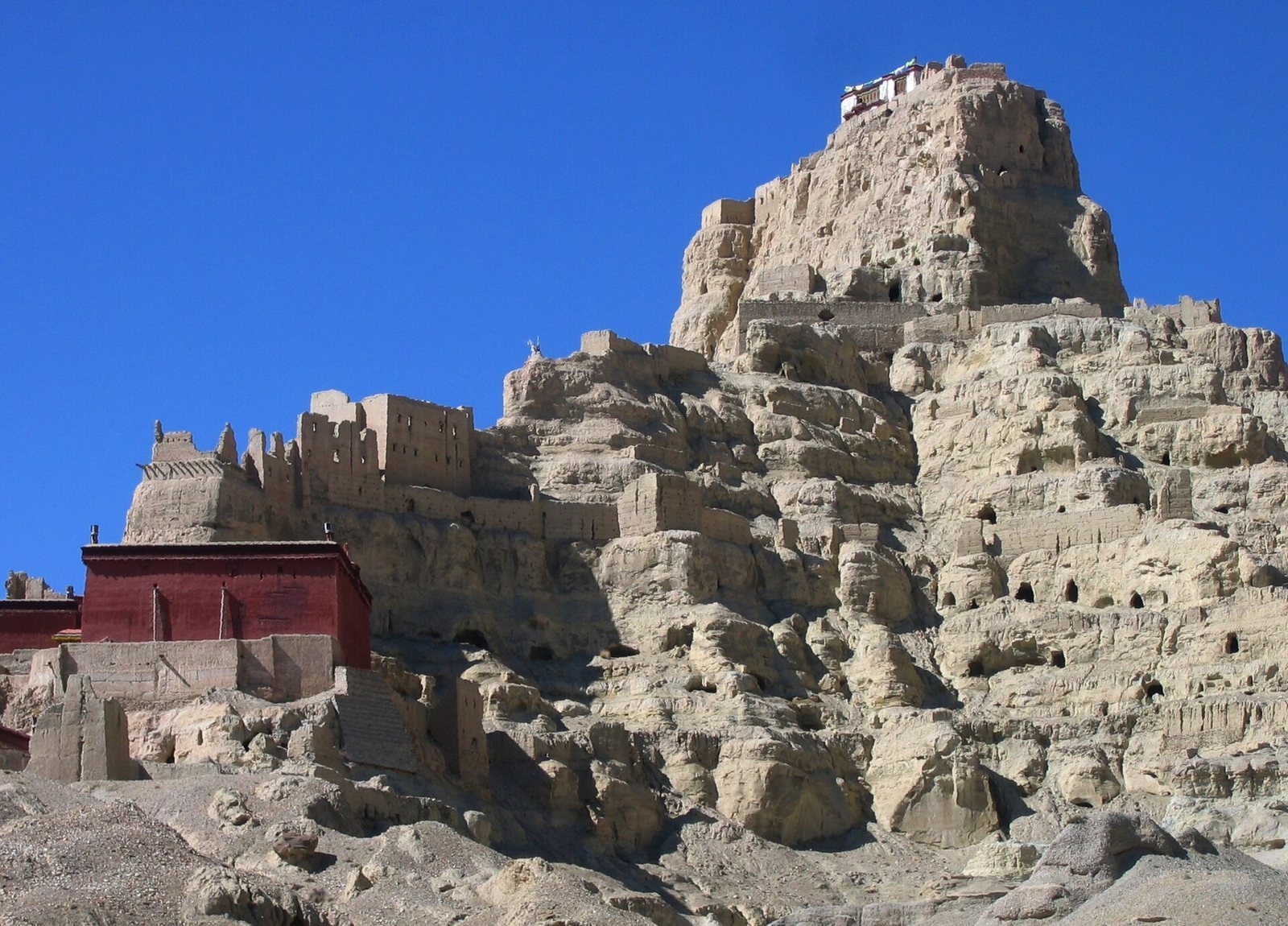
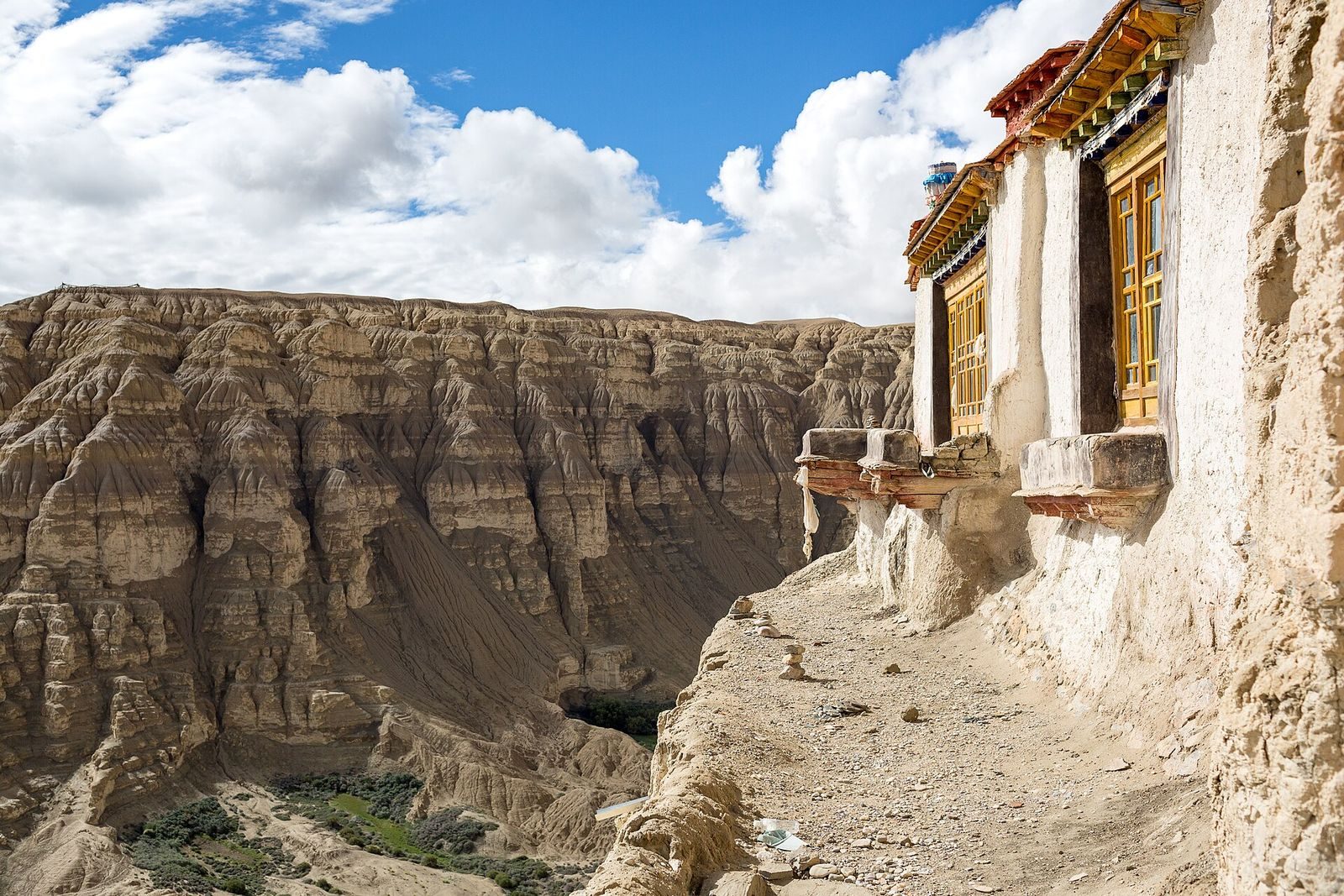
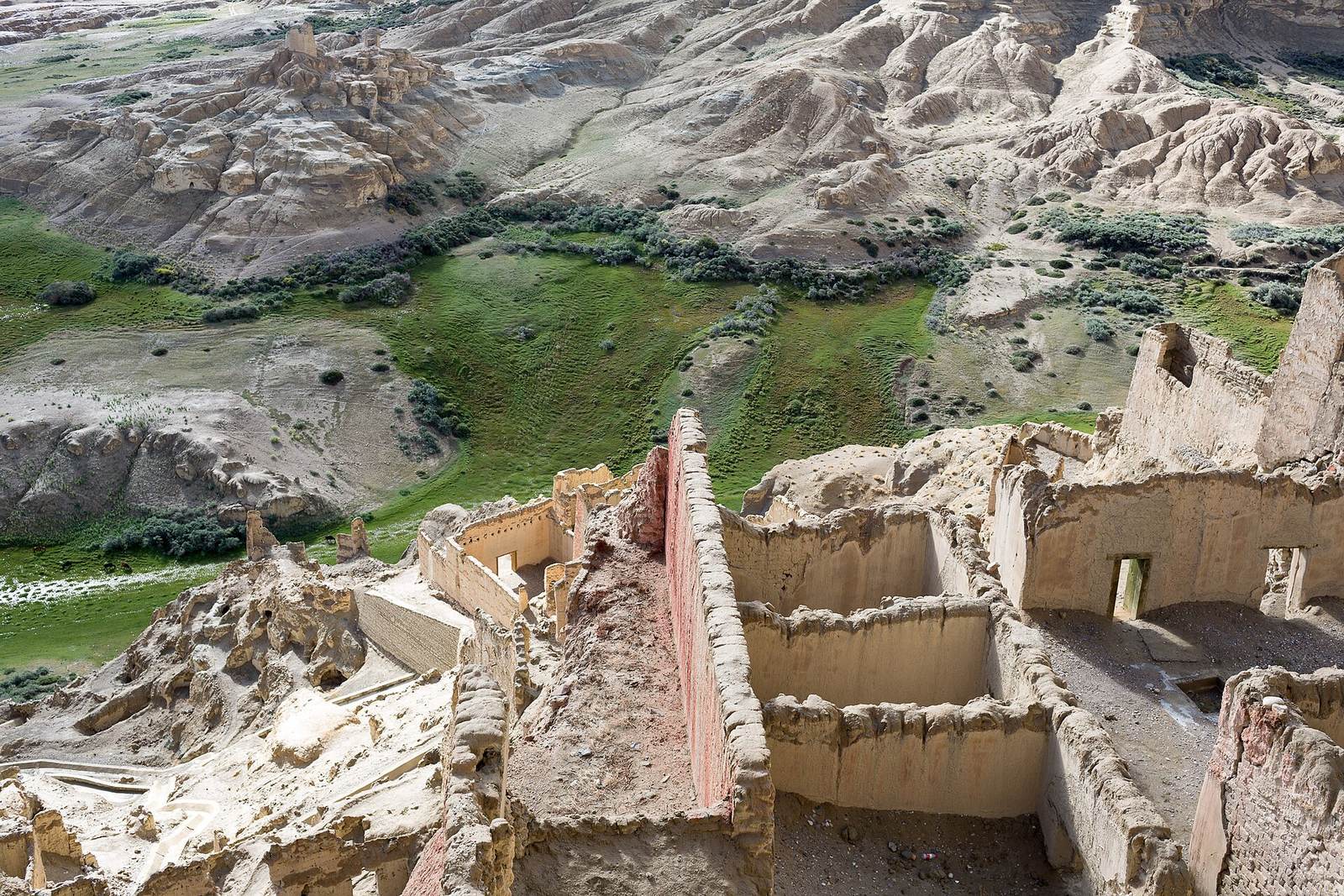
Tsaparang occupies a pyramid-shaped rock at the end of a long, narrow spur beside the upper Sutlej River in the Garuda Valley. The rock rises about 150–183 m above the valley, and the site lies at approximately 3,800 m above sea level. It covers about 720,000 square metres and contains 445 rooms, 879 cave chambers, 58 bastions, meaning projecting defensive positions, four hidden corridors, and 28 Buddhist pagodas, or towers. Tunnels and caves were cut into and beneath the rock. Tholing, an eleventh-century monastery, lies about 26 km to the west, and the nearby Gurugem monastery belongs to Bon, a Tibetan religious tradition distinct from Buddhism.
Buildings and vertical layout
The settlement rose in tiers from a peasant village at the mountain’s base to chapels, monastic quarters, and royal buildings higher on the rock. Stone stairs passed through a tunnel toward the royal quarters and the summer palace at the summit.
Lower settlement and chapels
Above the village stood the Scholars’ Temple, described as the smallest temple at Tsaparang, as well as the White Chapel and Red Chapel and quarters for monks. Queen Dondrubma built the Red Chapel in the fifteenth century.
Royal quarters and summer palace
The royal quarters occupied a higher level of the rock, with a summer palace at the summit. Many palace rooms were caves with curved ceilings.
Jesuit church
A church for the Jesuit mission stood at the foot of the citadel. It was built in 1625.
Art and archaeological finds
Temples, statues, and murals
Three large temples survived the Cultural Revolution, while other temples were destroyed. Statues in surviving temples were defaced, and the White Chapel’s statues were destroyed. Its murals remained in good condition, and many other murals and frescoes also survived. The region’s low rainfall helped preserve this painted decoration. Photographs made in 1948 show temple statues before their destruction.
Objects from the city
Finds from inside and outside Tsaparang include cereal plants, tools, clothing, ornaments, and military armour. The dry climate and thin air apparently helped preserve them.
Human remains
A cave containing the headless remains of many people, including men, women, and children, was discovered by People’s Liberation Army officers in 1957. A separate burial of a girl aged about three or four was found sealed within a wall. Her remains are now held at the Tibet Museum.