Temple of Athena Lindia: A Sanctuary on the Acropolis of Lindos
Site at a Glance
- Popularity
- Medium
- Country
- Greece
- Primary era
- Classical
- Eras represented
- Classical
- Civilizations
- Ancient Greek
- Site type
- Religious
- Remains
- Temple
On this page10 sections
History
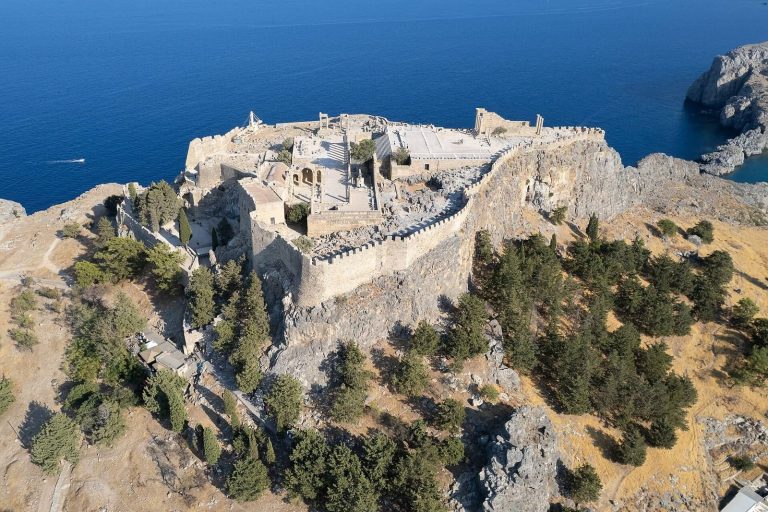
The Temple of Athena Lindia is an ancient Greek sanctuary on the Acropolis of Lindos, on the island of Rhodes in Greece. Its temple was first built around 500 BCE in the Archaic period, using the Doric order, one of ancient Greece’s principal architectural styles. In antiquity, it was regarded as the most important temple on Rhodes.
Early cult and Greek foundation
Worship at the sanctuary may reach back to prehistory, including the Bronze Age Minoan culture of Crete and Mycenaean culture of mainland Greece. The name Lindia comes from a goddess of non-Greek origin who was later associated with Athena, a major goddess worshipped across the Greek world. At Lindos, Athena was also known as Polias, meaning protectress of the city.
Myth offered more than one account of the sanctuary’s beginnings. One story said that after Athena emerged from Zeus’s head, the sun god Helios ordered the Rhodians, whom he called his children, to build her first sanctuary. They supposedly forgot to bring fire, so offerings were made without burning animals, using gifts from the earth instead. If this practice belonged to Lindos, it differed from ordinary Greek custom and may preserve a memory of the cult’s early origins. Another tradition credited the sanctuary’s construction to Danaus or his daughters, the Danaids, after their arrival from Egypt.
By the Geometric period, around 900–700 BCE, the upper acropolis probably held an open-air sanctuary or sacred grove. A temple followed around 500 BCE under Cleobulus, the sole ruler of Lindos in the Archaic period. Lindos remained an important city after Rhodes was founded in 408 BCE as a shared center for the Rhodians.
Fire, rebuilding, and offerings
Fire destroyed the Archaic temple toward the end of the Classical period, around 350–342 BCE. A replacement was erected early in the Hellenistic period, which followed the conquests of Alexander the Great, and was in place by about 300 BCE at the latest. Its ruins survive on the acropolis.
The first-century BCE writer Timachidas composed a chronicle of the temple and recorded gifts dedicated there. Mythic traditions credited Heracles with giving two shields and Menelaus and Paris with presenting a helmet. Alexander the Great also made a substantial donation. A historically recorded gift from Philip V, king of Macedon, in 211 BCE comprised one shield and one helmet for every ten enemies defeated.
Christian worship and medieval fortification
During the Byzantine period, the temple and a cave on the acropolis became places of worship of the Virgin Mary, the mother of Jesus in Christian belief. In the thirteenth century, the Knights of St John, a Catholic religious and military order, incorporated the temple and the rest of the acropolis into their fortifications.
Investigation and restoration
The Carlsberg Foundation investigated the temple from 1900 to 1914, first under Karl Frederik Kinch and Christian Blinkenberg, and later under Ejnar Dyggve. Publication of the resulting studies began in 1931. Italian archaeologists Amedeo Maiuri and Giulio Jacopi studied and restored the building during 1910–1916 and again in 1929–1932.
Remains
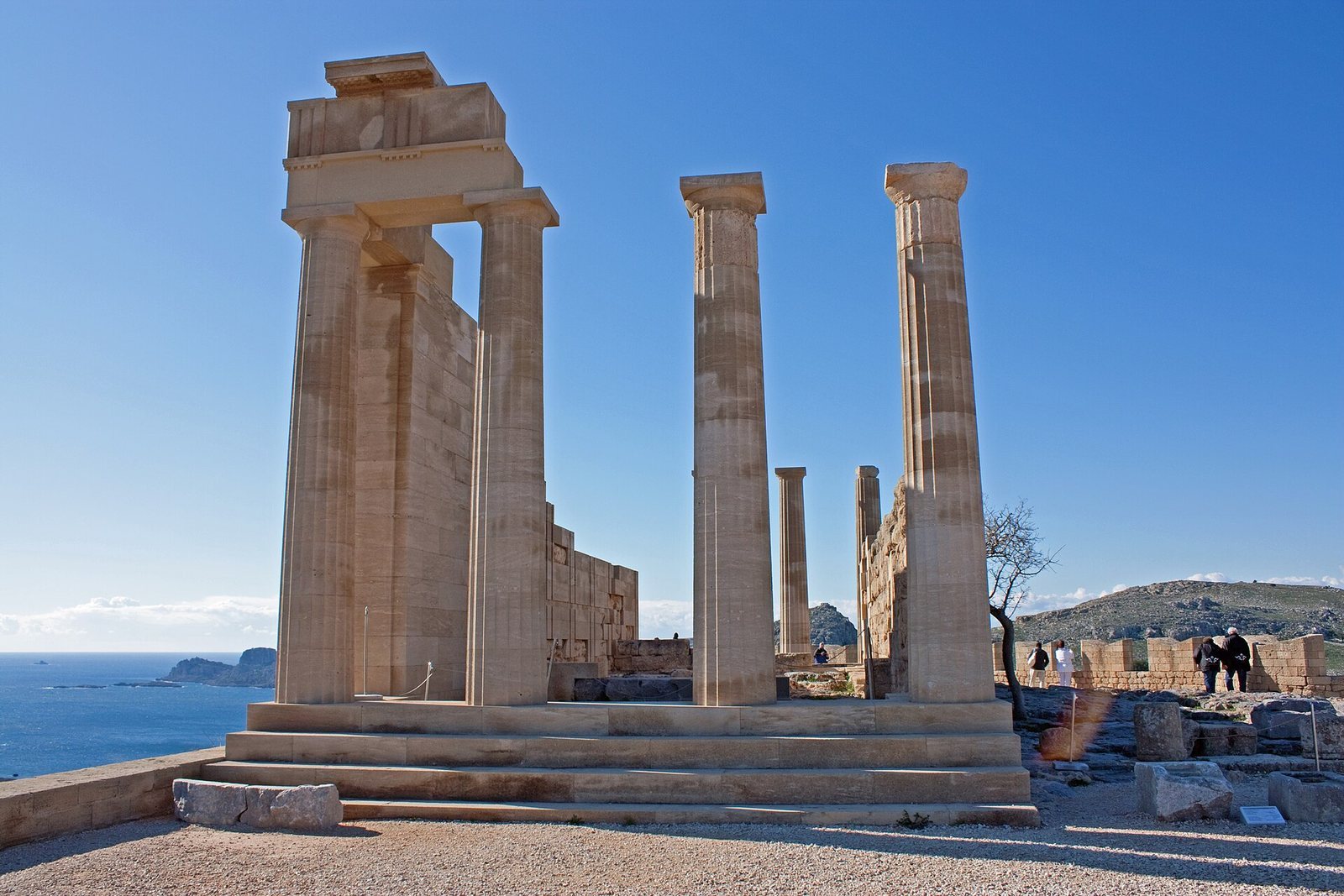
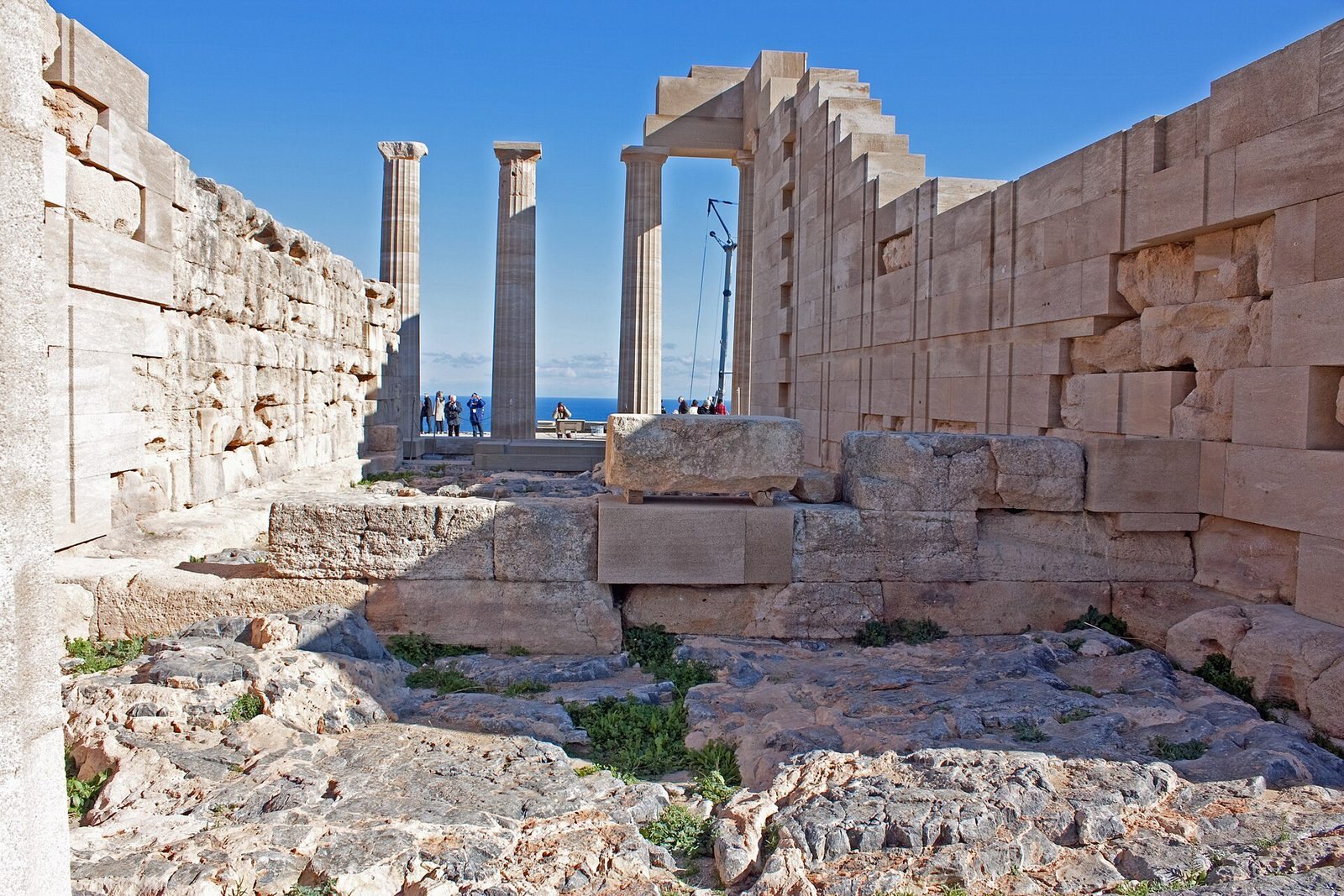
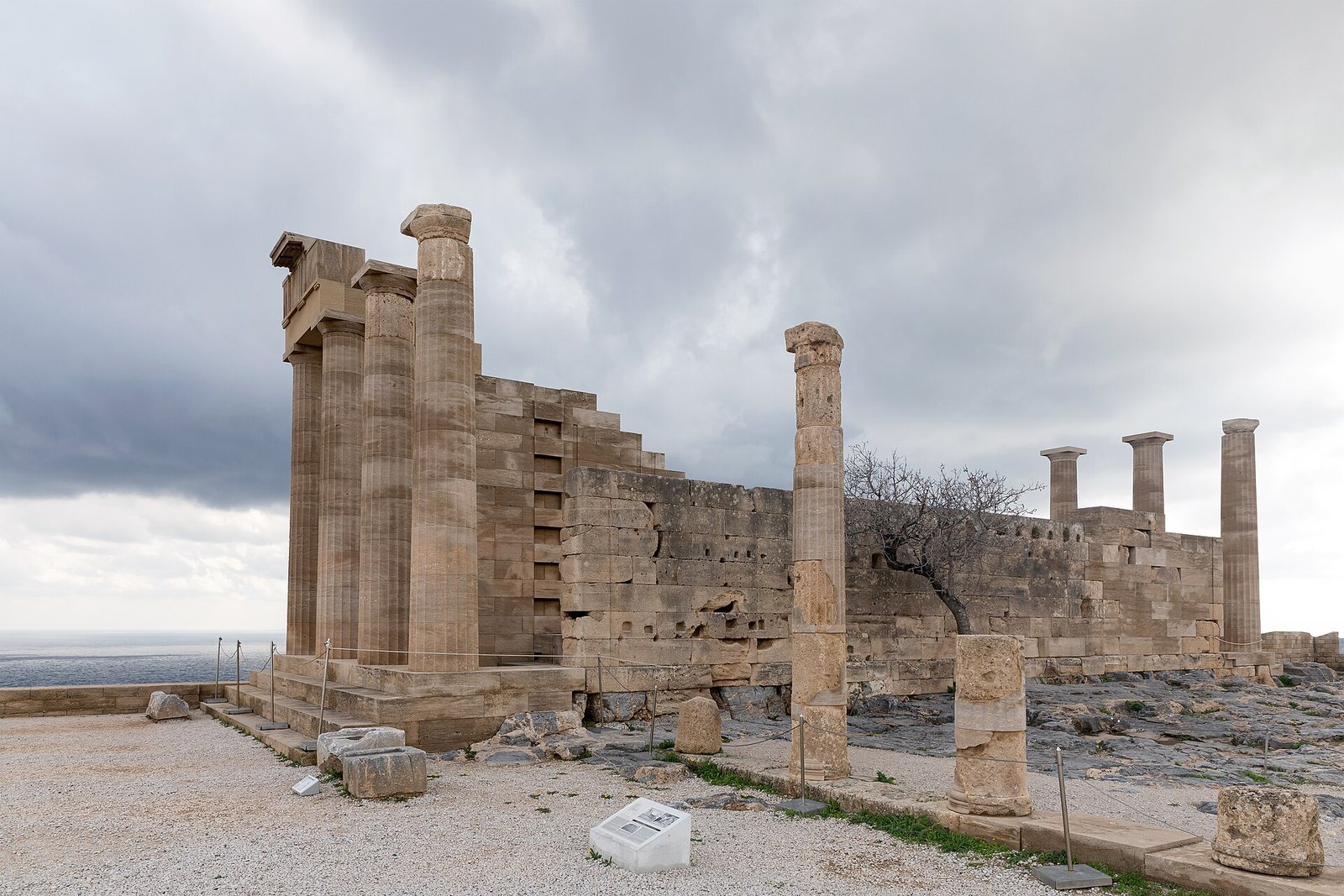
The sanctuary stands on the castle hill of Lindos’s acropolis. Its limestone temple measures about 21.7 m by 7.8 m and is aligned northeast–southwest. A large cave on the acropolis’s eastern slope, approximately below the temple, may have been the sanctuary’s original prehistoric place of worship.
Temple and approach
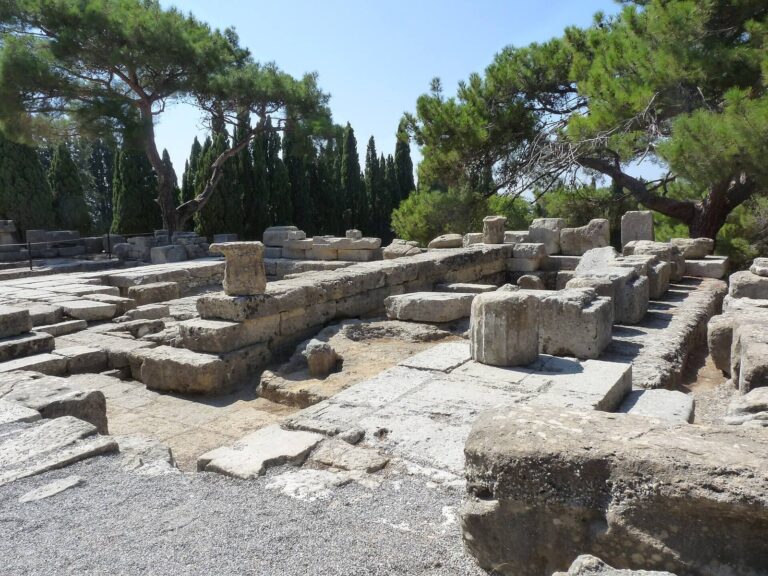
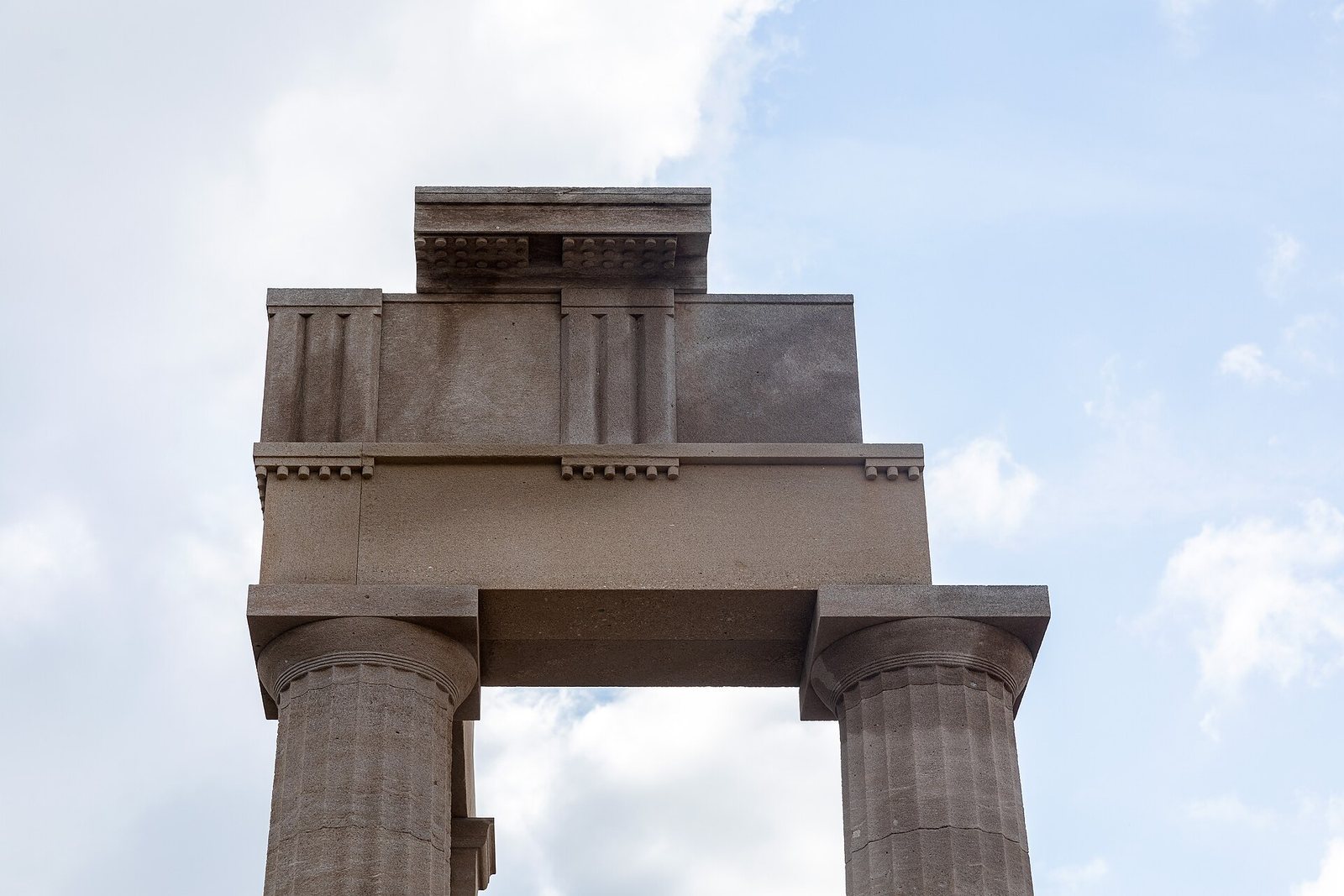
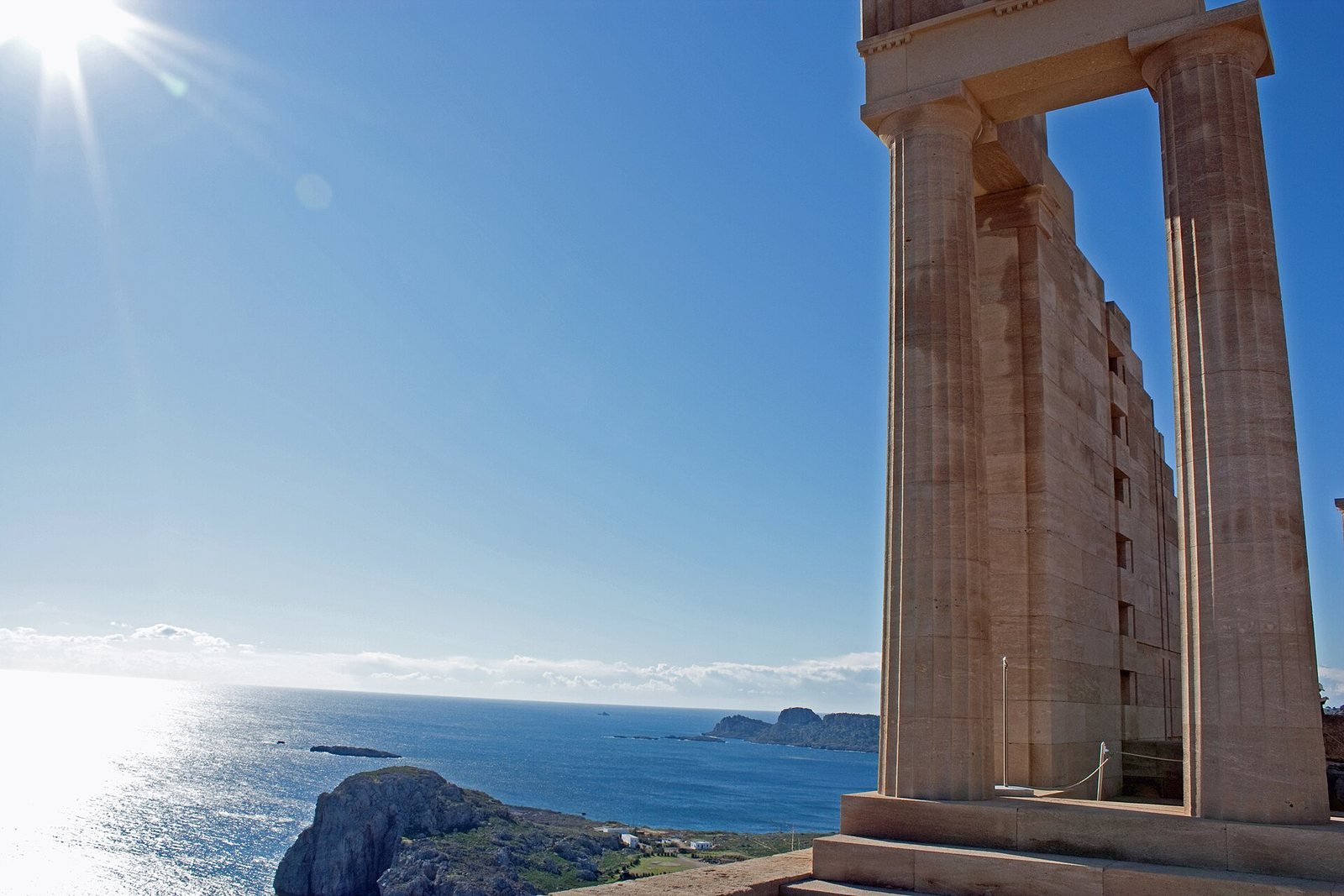
The temple had four columns at each end and an entrance facing northeast, toward the acropolis entrance and a later monumental gateway. A stairway was also added as part of the approach. Italian restoration has left most of the construction now visible in new stone; the original building survives chiefly in its walls and small portions of its columns.
Cult image
An earlier image of Athena may have shown her seated, wearing a jewel-decorated polos, a distinctive headdress. A later image probably represented her standing with a shield. It seems to have recalled Phidias’s Athena Parthenos in several respects, while retaining the polos instead of a helmet. The images may have been made from wood and ivory. Terracotta votive statues have helped shape reconstructions of their appearance.
Altar and offerings
Athena’s altar stood outside the temple near its northwest corner. Animal bones and animal figurines found in the surrounding sacred precinct suggest that sacrifices took place, despite the tradition of bloodless offerings. Many other dedications to Athena have been found in and around the temple, including sculptures, jewelry, and precious stones.
Inscribed ode
The Rhodian historian Gorgon associated the temple with a gold-lettered ode by the poet Pindar honoring the boxer Diagoras of Ialysos. The inscription may instead have stood in Ialysos, Diagoras’s home city.