Assumption of Mary Church in Nova Štifta: A Baroque Pilgrimage Church
Site at a Glance
- Rating
- 4.9
- Popularity
- Medium
- Country
- Slovenia
- Primary era
- Early Modern
- Eras represented
- Early Modern, Modern
- Civilizations
- Austria-Hungary, Habsburg, Habsburg Austria, Holy Roman Empire
- Site type
- Religious
- Remains
- Church
On this page12 sections
History
The Assumption of Mary Church in Nova Štifta is an active Roman Catholic pilgrimage church in Slovenia, dedicated to Mary. Built from 1641 to 1671 in the Baroque style, a European artistic and architectural style that flourished from the late sixteenth through the eighteenth centuries, it belongs to Sodražica parish within the Archdiocese of Ljubljana.
Tradition and the early chapel
Oral tradition calls the site Brinov Hill and tells that Mary appeared to a devout farmer, asking him to persuade local people to build a church. Stories also describe lights or flames rising from the ground there. Similar reports near Gornji Grad were associated with the later development of another Slovenian settlement named Nova Štifta.
Ljubljana historian Janez Gregor Dolničar recorded a chapel dedicated to Mary at the site in 1483; tradition also placed a hermit nearby. Ribnica lord Jakob Khisl, having heard reports of the phenomena, planned to build a church. After his death in 1638, his son Jurij Jernej continued the undertaking.
Construction and patronage
Work began in 1641 and continued until the church was blessed in 1671. Ribnica lord Jurij Khisl commissioned the sanctuary, while Jurij Andrej Trilek was another principal patron. The project paused during the transfer of the Ribnica estate from the Khisl family to the Trilek family. Marko Gradonico, Patriarch of Aquileia, a senior Christian ecclesiastical leader, approved the construction because Ribnica parish then came under his jurisdiction.
In November 1641, Frančišek Vaccano, Ribnica archdeacon and Ljubljana vicar general, blessed the foundation stone. The Ribnica parish priest Schonleben blessed the completed church in 1671.
Pilgrimage and restoration
A Franciscan monastery beside the church began operating in 1914 to care for the pilgrimage site. Each year, a major Mass on 15 August, the Feast of the Assumption, draws pilgrims. The feast commemorates the Christian belief that Mary was taken into heaven at the end of her earthly life.
On 7 April 1925, a fire destroyed the church. It was soon completely restored.
Remains
Plan and exterior
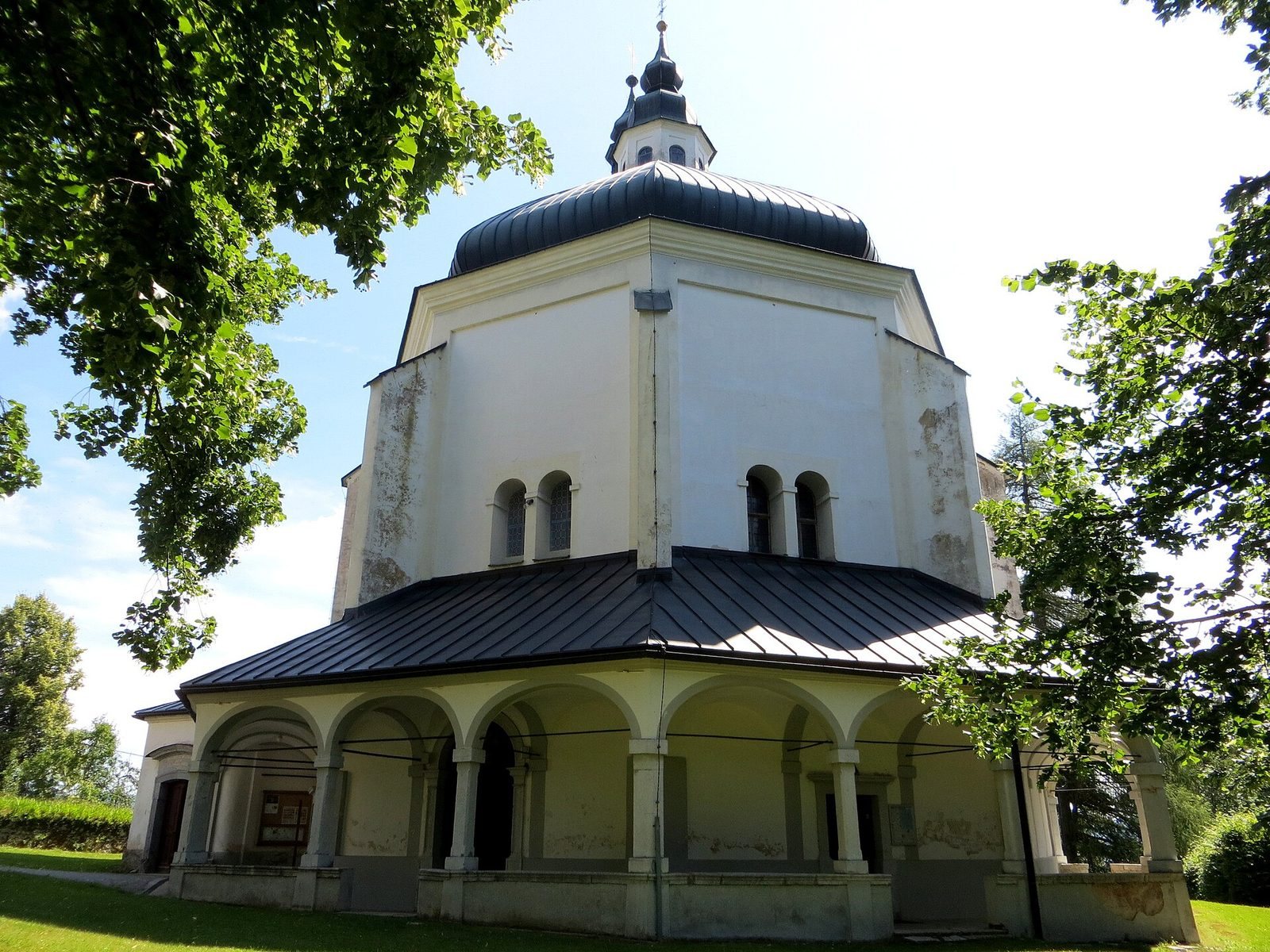
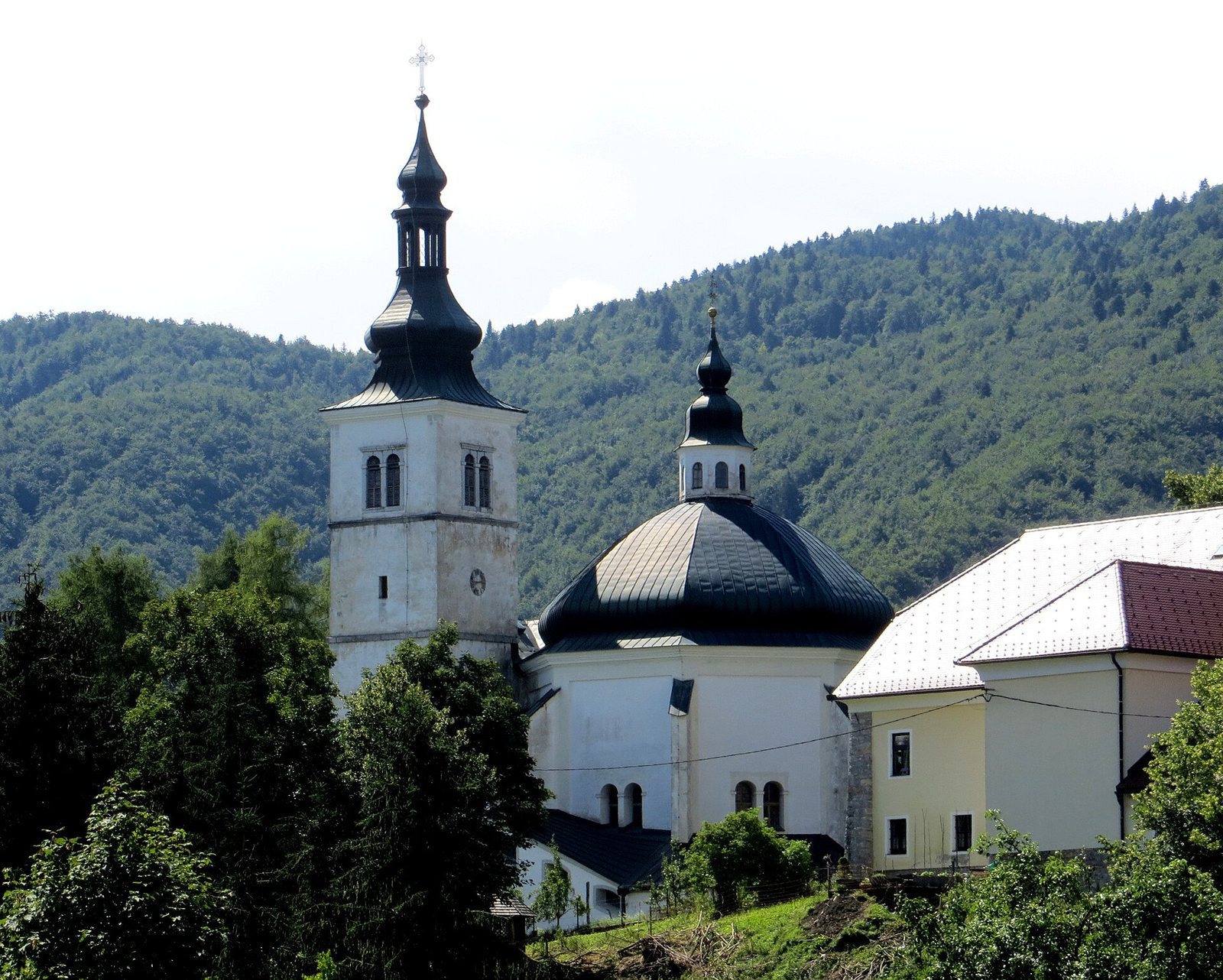
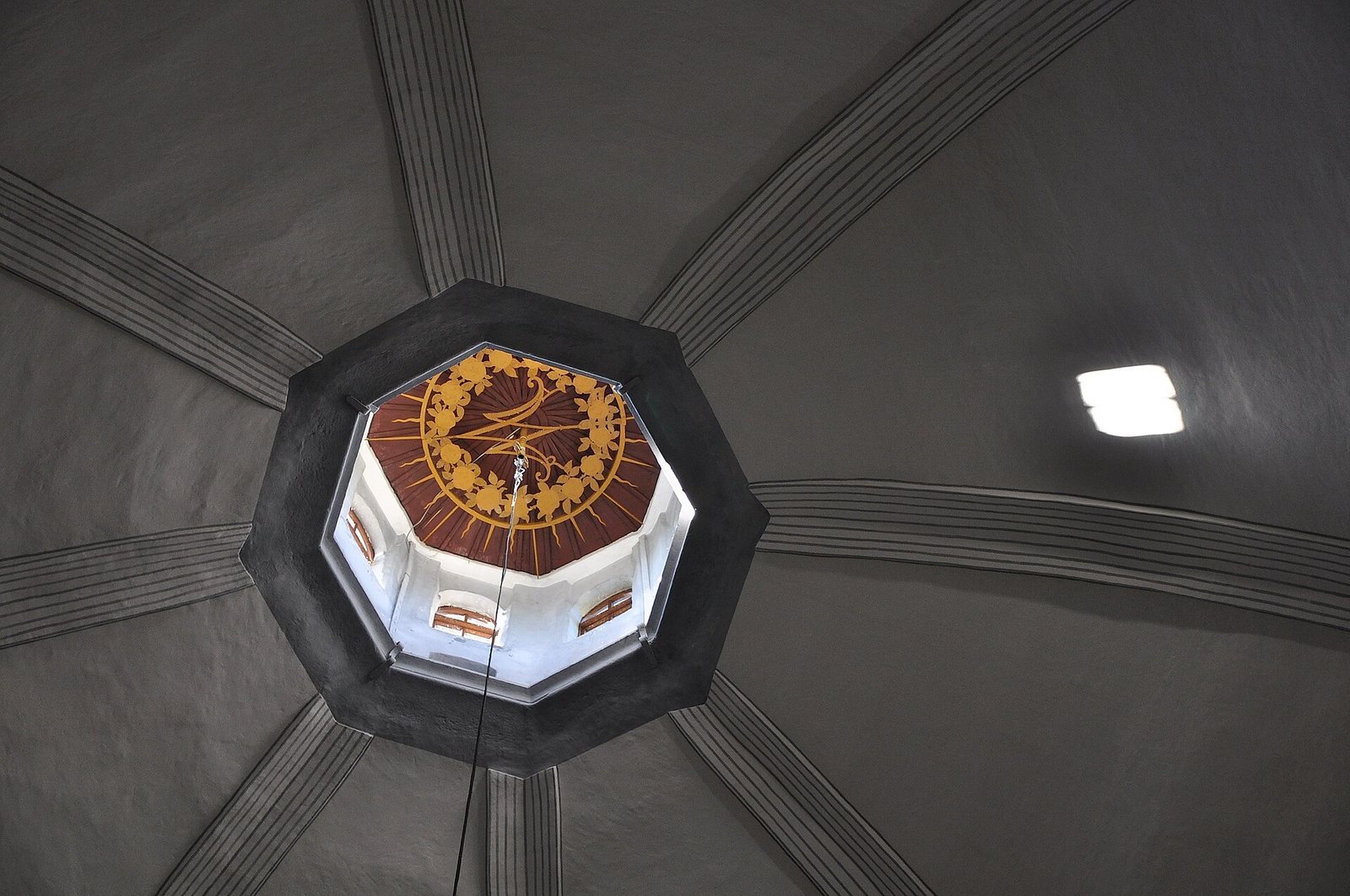
The church stands on Brinov Peak, 622 metres above sea level, above Ribnica Field and beside the eastern foothills of Travna gora. Its Baroque plan combines an octagonal nave, the main body of the church, with a smaller square presbytery, the area around the altar, whose corners are clipped. Projecting supports called buttresses and rows of arches called arcades accent the outside of the nave, while a covered arcade corridor runs around the facade. Inside, a dome rises 27 metres and has a lantern, a raised opening that admits daylight. A bell tower with a Baroque cap rises above it.
Art historians consider the church probably modelled on the Renaissance Church of the Incoronata in Lodi, near Milan. The Renaissance was an earlier European cultural and artistic period. In turn, the Nova Štifta church served as a model for many later sacred buildings in Slovenia.
Holy Stairs and nearby features
The Holy Stairs, a devotional staircase associated with Christ’s Passion, were added in 1780 on the church’s left side, in front of the bell tower. They lead to an altar with a painting of the Crucifixion. Anton Postl and his son Andrej painted six scenes of Christ’s Passion on the walls beside the stairs: Christ meeting his sorrowful mother, Judas’s betrayal, prayer on the Mount of Olives, the scourging, Christ beneath the cross, and the crowning.
A chapel dedicated to St Joseph stands nearby, beside a Calvary path, a devotional route recalling Christ’s journey to his crucifixion. The Franciscan monastery is beside the church. Two linden trees planted during construction stand in front of it. Each is about 25 metres tall and around 370 years old; a wooden shelter sits in the crown of the larger tree.
Altars and interior paintings
Main altar
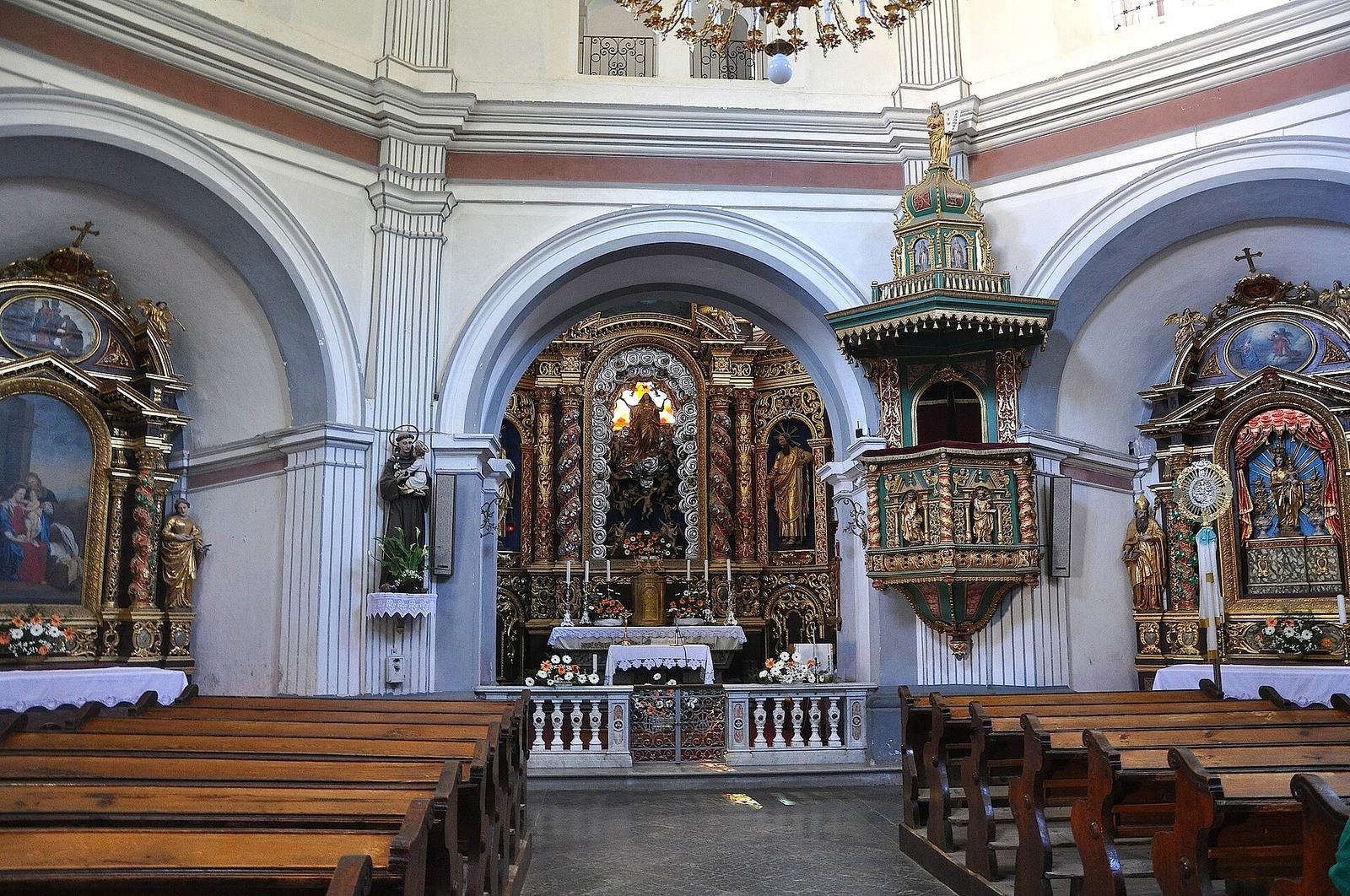
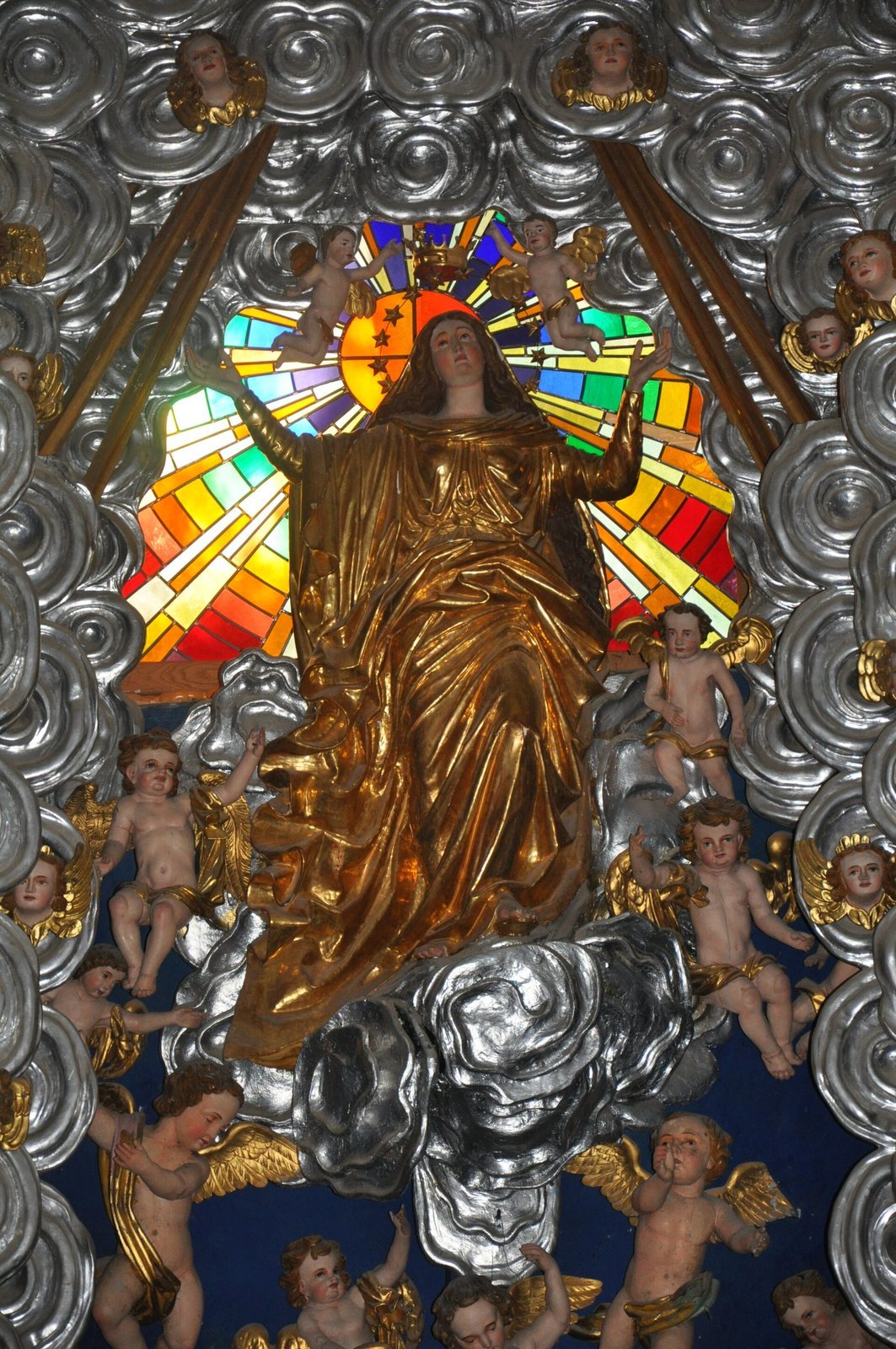
The altars are carved from wood and finished with paint, gilding, or silvering. They are attributed to the Ljubljana workshop of the Italian woodcarver Jurij Scarnos. The main altar is dedicated to the Assumption of Mary, shown borne heavenward by angels above silver clouds. Larger statues of St Peter and St Paul flank the central figure, with St John the Evangelist above Peter and St Andrew above Paul. Niches in the upper section hold St Catherine and St Notburga. Beside an image of the Holy Trinity, statues of St Francis Xavier and St John the Evangelist complete the arrangement.
Side altars
The left altar is dedicated to St Anne. Its central painting shows Mary, holding Jesus, before her parents Anne and Joachim; an image of Mary meeting Elizabeth appears above. St Apollonia and St Lucy stand to either side, associated respectively with dentistry and eyesight. The right altar is dedicated to Our Lady of Mount Carmel and centres on her statue. An image of the Annunciation occupies its upper section, flanked by statues of St Ulrich and St George.
Votive images and other paintings
The presbytery contains votive images, offerings made in response to prayer or in gratitude for an answered prayer. One painting by Hans Georg Gaingerfelder of Novo Mesto shows Mary and Jesus seated on clouds, with St Anthony beside them and a bishop recommending a kneeling noble child to Mary. A 1653 painting donated by Matija Porenta, a vicar from Črnomelj, depicts him kneeling before Mary and Jesus on clouds after his recovery.
A folk image dated 1715 shows a horseman falling from a bridge into water. A painting from 1721 depicts a sick woman and a man offering her a scapular, a devotional object associated with Marian devotion. The smallest image, said to have been donated by vicar Mihael Lamut, shows a man holding a rosary beneath Mary and Jesus on a cloud, beside a barred oval window. Lamut was among the last people accused of witchcraft in Ribnica. A seventeenth-century painting of the Nursing Madonna, Mary nursing the infant Jesus, is a non-votive work.
Around 1970, a painted window depicting members of the Trilek family, patrons of the church’s construction, was found in the presbytery. Two paintings hang above the side entrances. One depicts the Holy Family, with the Holy Spirit as a dove sending rays of light; the other shows St George killing a dragon.
Organ and choir loft
The present organ came to the church in 1904. Made by Josef Mauracher of St Florian, Austria, it has two manuals, or keyboards, 14 stops that control sets of pipes, and 888 pipes. Janez Vurnik of Radovljica decorated it in 1905. The choir loft dates from the nineteenth century.