Haynes Park: A Georgian Country House in Bedfordshire
Site at a Glance
- Rating
- 4.9
- Popularity
- Medium
- Country
- United Kingdom
- Primary era
- Early Modern
- Eras represented
- Early Modern
- Civilizations
- British
- Site type
- Domestic
- Remains
- Manor House
On this page4 sections
History
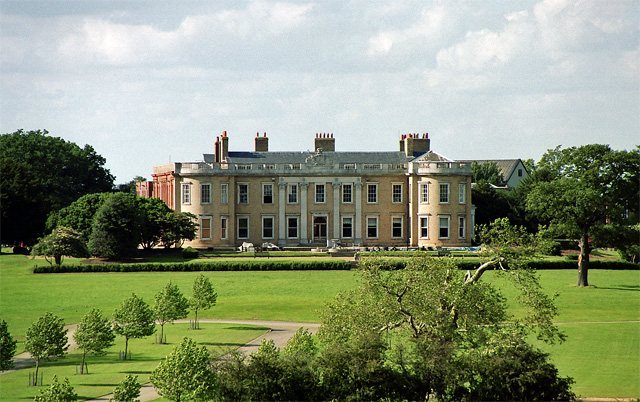
Haynes Park is a country house of the Georgian period, the architectural era associated with British monarchs named George, at Haynes Church End in Bedfordshire, United Kingdom. It was built around 1725 for John Carteret, 2nd Earl Granville, a British statesman.
Carteret and Thynne ownership
The estate was originally known as Hawnes Park. In 1667, Sir George Carteret, 1st Baronet and Governor of Jersey, purchased Haynes. The house was built later for John Carteret, linking it to the family’s political and landed history.
The estate subsequently passed to John Thynne, 3rd Baron Carteret (1772-1849). He died without children and left it to his nephew, the Reverend Lord John Thynne (1798-1881), a clergyman who served as sub-Dean of Westminster. Ownership then passed to John Thynne’s eldest son, Francis John Thynne. Carteret descendants remodelled and enlarged the house several times.
School use and later ownership
In 1929, the house became Hawnes Girls School, a boarding school. It closed in 1975, and Clarendon School for Girls then took over the property after a fire destroyed its former premises in Abergele.
Following Clarendon’s merger with Monkton Combe School in 1992, the property was sold to Radha Soami Satsang Beas British Isles, a registered charity associated with a spiritual movement centered on meditation and ethical living. The house remains occupied by the related organization Science of the Soul. Haynes Park is a Grade I listed building, a designation for buildings of exceptional national importance.
Remains
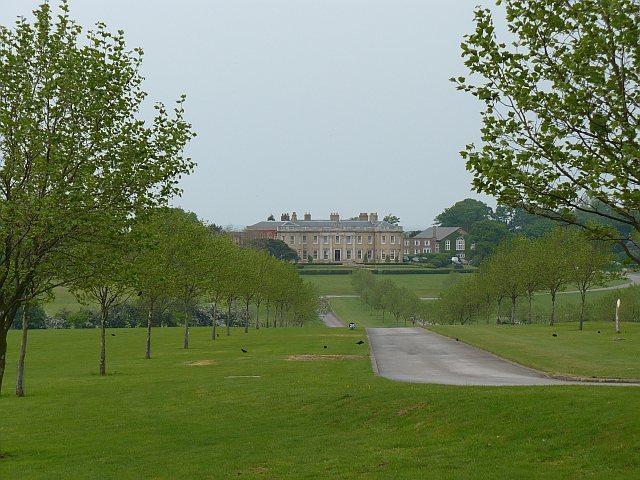
The house stands in parkland at Haynes Church End. The estate today comprises about 800 acres (320 hectares) of parkland and woodland. Built of red and white brick beneath a slate roof, the house has a square plan, two storeys and attics. Later additions formed a courtyard. Its south front has 13 bays, or sections of the facade, arranged in a 3-7-3 pattern. A parapet, a low protective wall, tops the front, while the two outer bays project in curved forms across two storeys.
In 1908, the house contained portraits of members of the Grenville, Carteret and Thynne families. The collection included a 1571 portrait of Sir Richard VIII Grenville, portraits of his son Sir Bernard Grenville and great-grandson Sir Bevil Grenville, and a portrait of John Grenville, 1st Earl of Bath. Sir Bevil was killed at the Battle of Lansdowne. A portrait of Sir George Carteret was also held at the house.