Villa romana del Río Verde: The Residential Quarter of a Roman Coastal Villa
Site at a Glance
- Rating
- 4.5
- Popularity
- Medium
- Country
- Spain
- Primary era
- Classical
- Eras represented
- Classical
- Civilizations
- Roman
- Site type
- Domestic
- Remains
- Villa
On this page13 sections
History
Development and Use
Villa romana del Río Verde was the residential part of an affluent Roman villa at the mouth of the Río Verde in Marbella, Spain. Its earliest phase is tentatively placed in the century before a later refurbishment. The mosaics, dated to the late second and early third centuries AD, are thought to belong to a second remodeling after a fire.
The villa’s productive area was probably used for maritime activities, including fish salting. A salting works may have stood nearby and may also have produced purple dye for trade. The coastal position connected the villa with commercial networks reaching North Africa and eastern markets, and its economic level was higher than that of villas inland. Coins found at the site support the view that the complex ceased operating in the fourth century AD.
Excavation and Recognition
Excavations began in 1960 and revealed only part of the residential complex. Its mosaics are among the few known examples from an affluent coastal residence of this kind on the Andalusian coast, offering evidence for the domestic settings of middle- and upper-income families of the period. The site was declared a Monument on 16 March 1972.
Remains
Residential Core
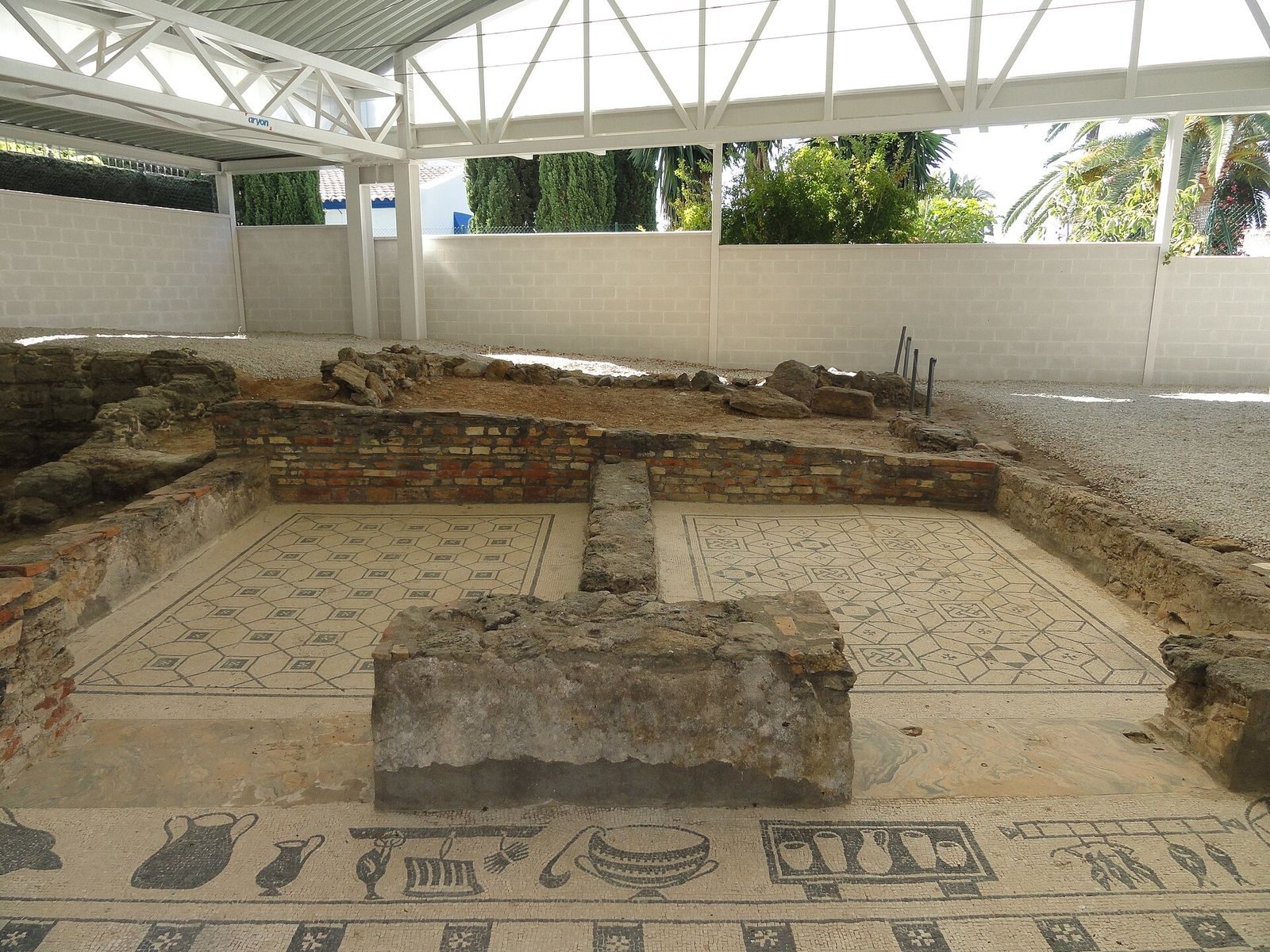
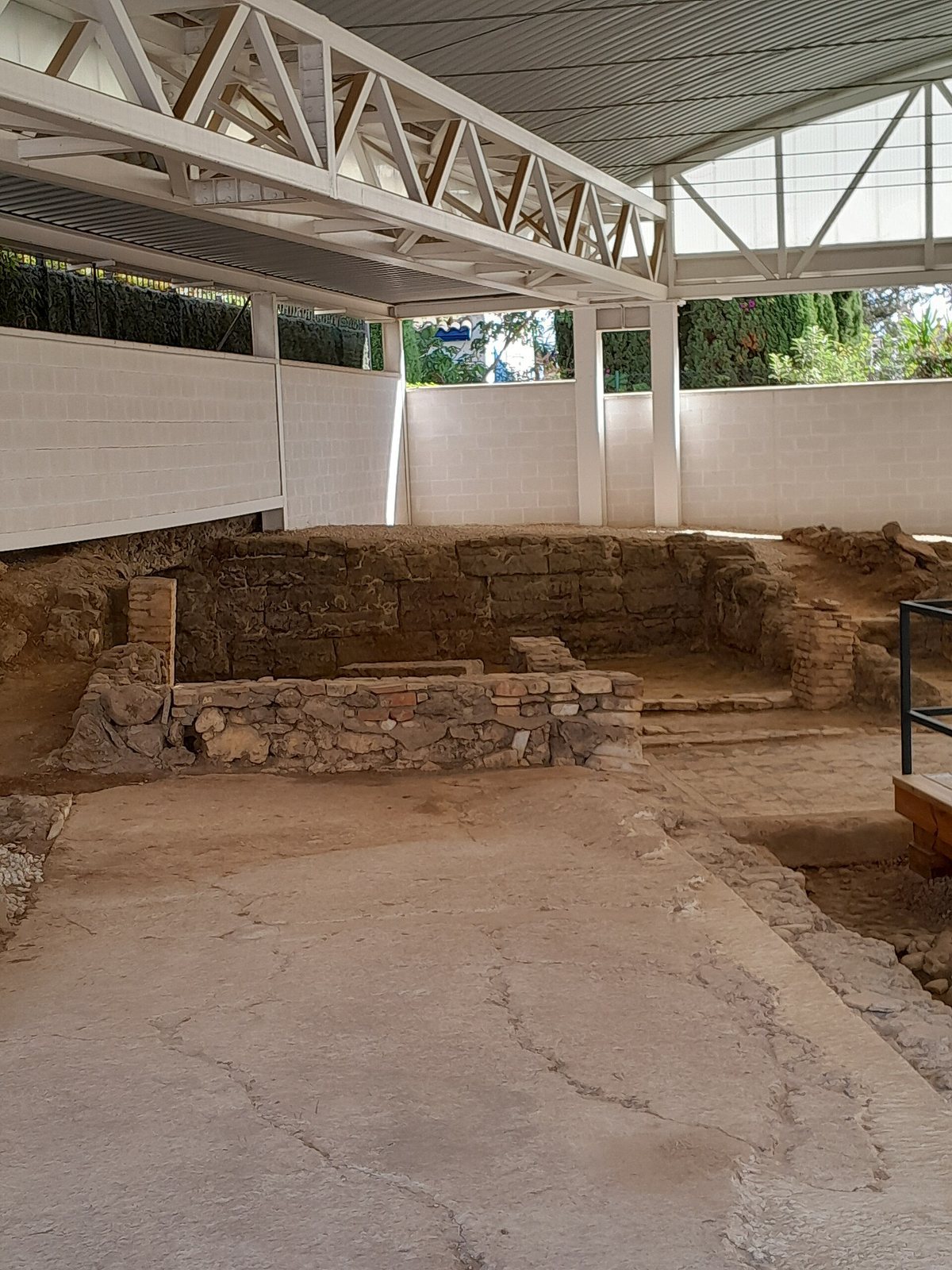
The excavated remains occupy the central part of the villa’s residential area. A pseudo-peristyle, a courtyard suggesting but lacking a full colonnade, forms the core, with rooms arranged around it. Along one short side, the portico gives way to a rectangular fountain with at least two levels and colored-marble decoration. Six rooms with mosaic floors have been identified.
Mosaic Floors
Corridor and Kitchen Mosaics
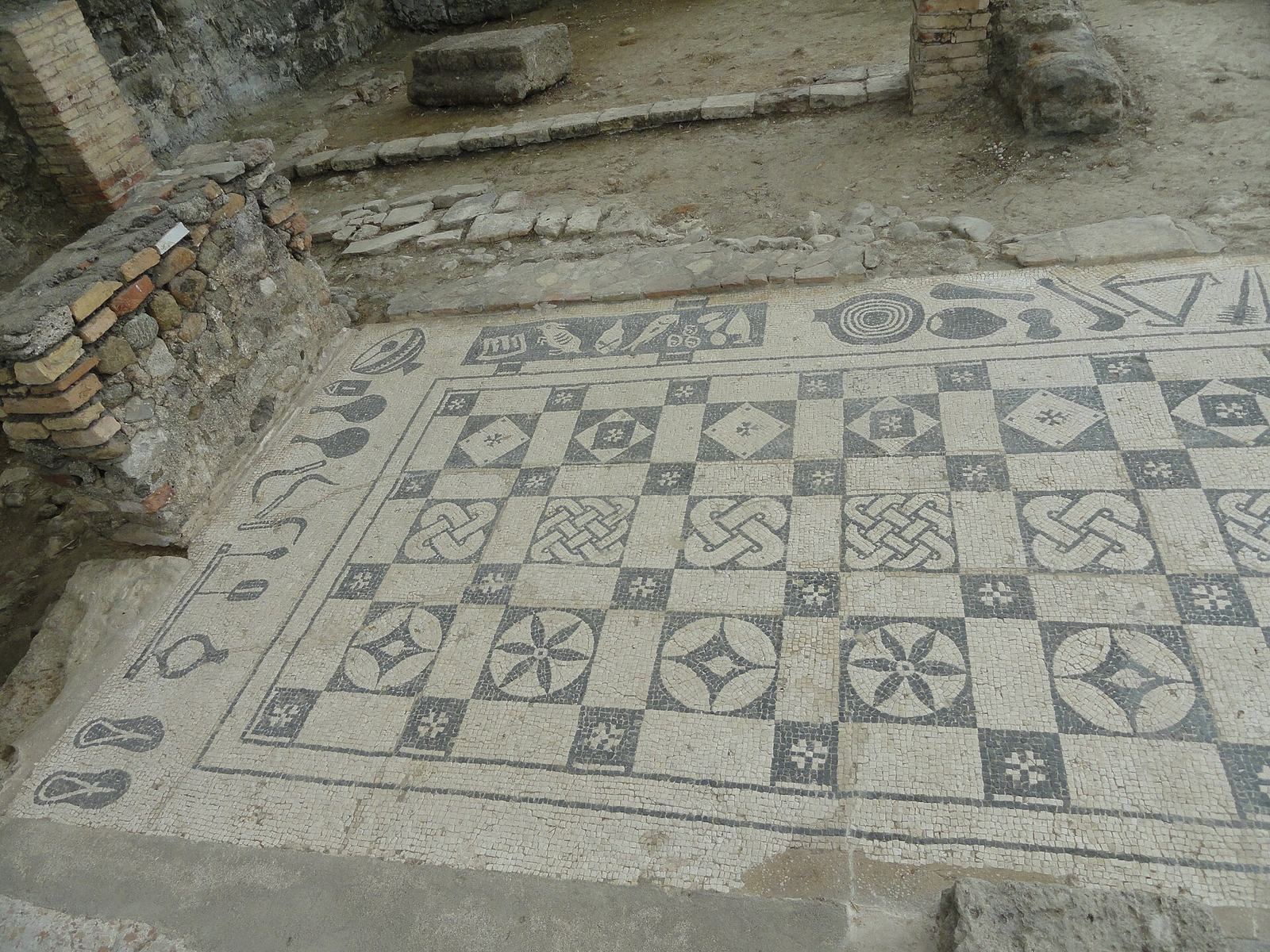
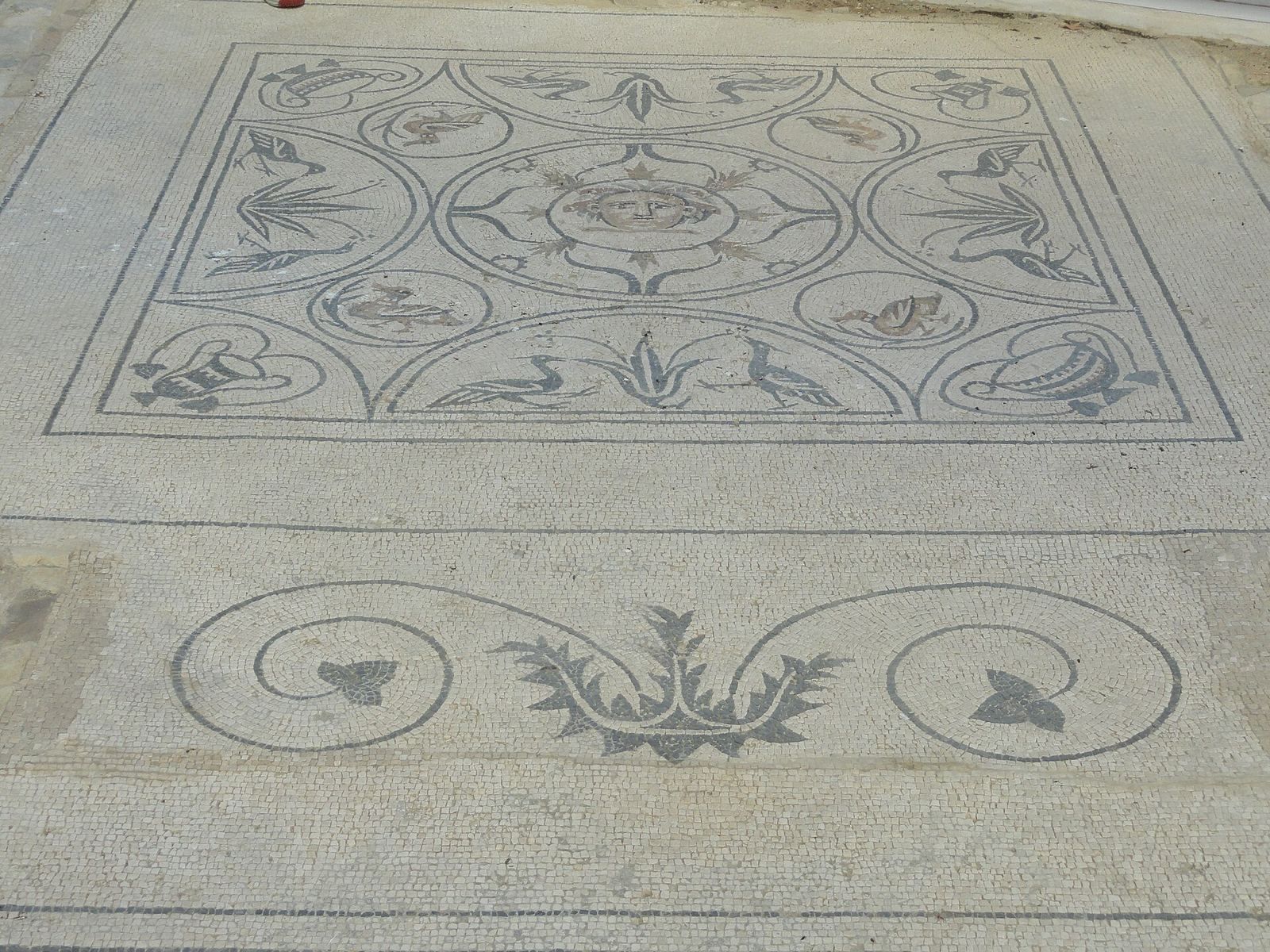
A corridor mosaic uses squares of two sizes, joined at their corners and separated by white rectangles. A two-color floor depicts kitchen utensils and food arranged in a continuous frieze.
Room A
Room A is square and has a multicolored mosaic centered on a Gorgoneion, an image of a Gorgon, the monstrous female figure of Greek mythology. Black-and-white geometric patterns surround the central image.
Room C
Room C is rectangular. Its black-and-white design combines intersecting and adjoining octagons to form elongated hexagons around a square, which contains a small flower at its center.
Room D
Room D is rectangular and has a pattern of stars formed from eight lozenges. The design alternates large upright squares with smaller squares set on a point. A flower fills the center of each small square; the larger ones contain a Solomon’s knot, an interlaced pattern, and concentric squares with opposing vertices.
Sculpture and Finds
Marble Sculpture
A fragment of white-marble sculpture preserves part of a leg and a tree stump. At the front, a nude erote, a figure representing one of the Greek love deities, raises its right arm, possibly to hold a torch. Its other hand may have lifted a garment. The fragment is tentatively dated to the late second century AD.
Pottery and Small Finds
Finds include numerous metal ornaments and green-glazed pottery of eastern origin. Other pottery includes thin-walled Roman ware, terra sigillata (fine Roman pottery with a smooth red surface), and Campanian ware, an ancient pottery type associated with Campania.