Castillo de Suel (Castillo Sohail): A Coastal Fortress in Spain
Site at a Glance
- Rating
- 4.4
- Popularity
- Medium
- Country
- Spain
- Primary era
- Medieval
- External website
- Open
- Eras represented
- Classical, Medieval, Early Modern, Modern
- Civilizations
- Almoravid, Crown of Castile, Roman, Spanish, Umayyad
- Site type
- Military
- Remains
- Castle
On this page9 sections
History
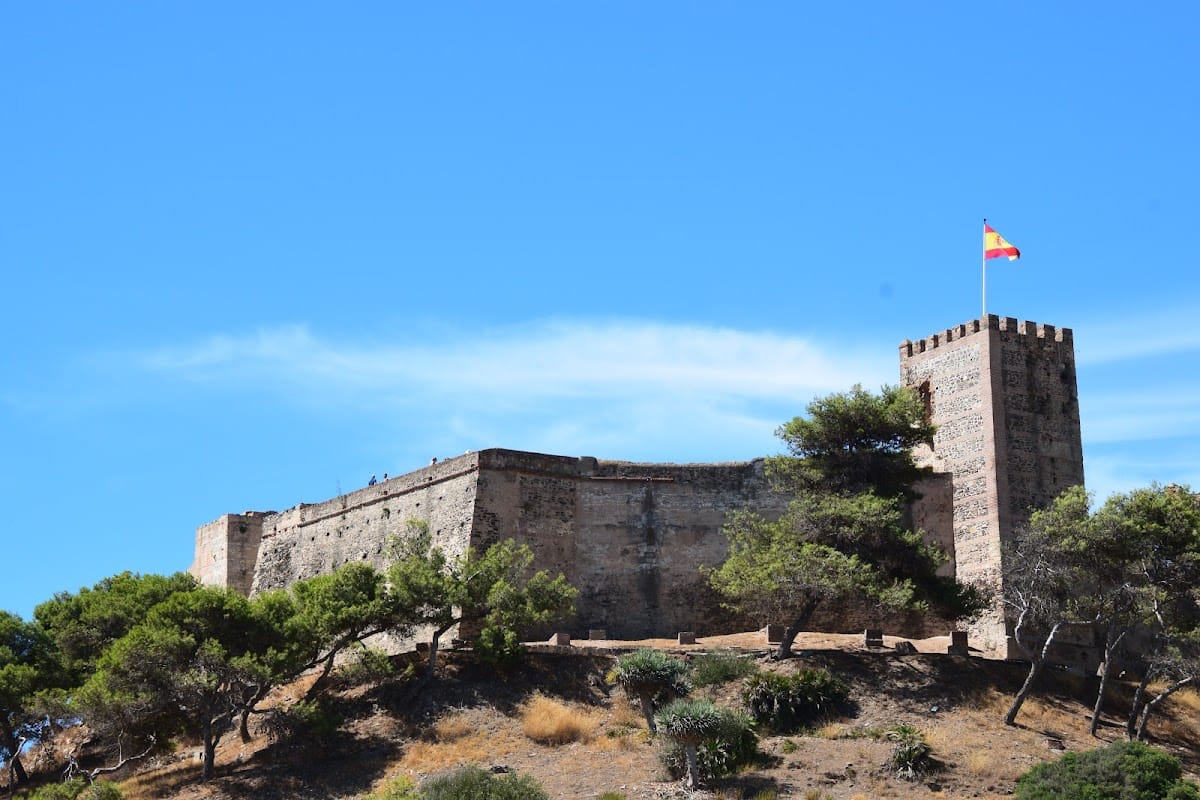
Castillo de Suel, also known as Castillo Sohail, is a medieval Muslim fortress in Fuengirola, Spain, founded in 956 on the site of the ancient settlement of Suel. Abd ar-Rahman III, the eighth emir and first caliph of Córdoba, ordered its construction to strengthen the coast and defend approaches to the territory of Córdoba. The earlier settlement had passed through Phoenician, Punic, and Roman phases, and Suel became a Roman municipality.
From Suel to the Muslim citadel
The fortress occupies a place that had long been connected with movement along the coast and inland waterways. The Fuengirola River was navigable by small vessels as far inland as the area now known as El Chaparral. In 956, a small citadel was established on the ruins of the Roman settlement, probably with dwellings arranged around an earlier watchtower. Its purpose was to guard against attacks approaching Córdoba’s territory from the sea.
Muslims and Christians continued to occupy the site after the earlier Phoenician, Punic, and Roman periods. The fortress later gained strategic value during conflicts among the taifa states, the small Islamic polities that emerged in Iberia as central caliphal authority weakened. From 1285, the surrounding territory belonged to the Emirate of Granada.
Christian conquest and early modern adaptations
During the Reconquista, the long expansion of Christian kingdoms into lands ruled by Muslim states in the Iberian Peninsula, Christian forces captured the fortress on 7 August 1487. Fighting heavily damaged the site, which was then rebuilt and repeatedly altered to meet the needs of its successive occupants.
In the sixteenth century, the original entrance through the principal tower was replaced with a new gateway. The eastern tower was removed to create a coastal artillery battery, which was completed with a machicolation facing the sea. A machicolation is a projecting defensive structure with openings through which missiles or other materials could be dropped.
Coastal defense and the Peninsular War
The fortress was rebuilt in 1730 to hinder trade with Gibraltar, captured by Britain in 1704, and to protect the coast from Muslim pirates. Its position allowed it to control the mouth of the Fuengirola River and the land route between Málaga and Marbella. It also formed part of the coastal-warning network and could provide occasional refuge for travelers.
French forces occupying Spain under Napoleon Bonaparte seized the fortress on 8 February 1810. On 15 October, a combined Spanish-British force of 2,500 soldiers commanded by Sir Andrew Thomas Blayney attacked during the Battle of Fuengirola. Blayney was captured, while 3,000 French troops under General Sebastiani reinforced the defenders.
Francisco Ballesteros recaptured Fuengirola and the fortress on 16 April 1812. During their withdrawal, French troops blew up the southwestern tower and adjoining wall sections. The destroyed structures were not rebuilt. Instead, a new wall containing loopholes, narrow openings for observation or firing, closed the resulting gap in the enclosing fortification.
Later ownership and conservation
The property later passed into private ownership. During different periods of the nineteenth and twentieth centuries, it housed detachments of the Spanish cavalry, the Carabineros, and the Civil Guard. In the postwar period in Spain, the fortress and surrounding area also served as a residence for people suffering from tuberculosis.
Artillery pieces left by successive occupants were discovered in 1914. Leopoldo Werne de Bolin, the last private owner, undertook restoration work in 1969. After the property entered municipal ownership in 1989, a broad consolidation and rehabilitation project followed. The Castillo Sohail Workshop School carried out recovery work from 1990 to 1997.
The interior and access routes were adapted as an auditorium in 1997. The fortress has since hosted the annual Fuengirola City Festival and, from 2000, the Noches del Castillo cultural program. It received formal heritage protection in 1985 and is treated as a nationally important monument and a protected cultural-interest property associated with the Roman archaeological site of Suel.
Remains
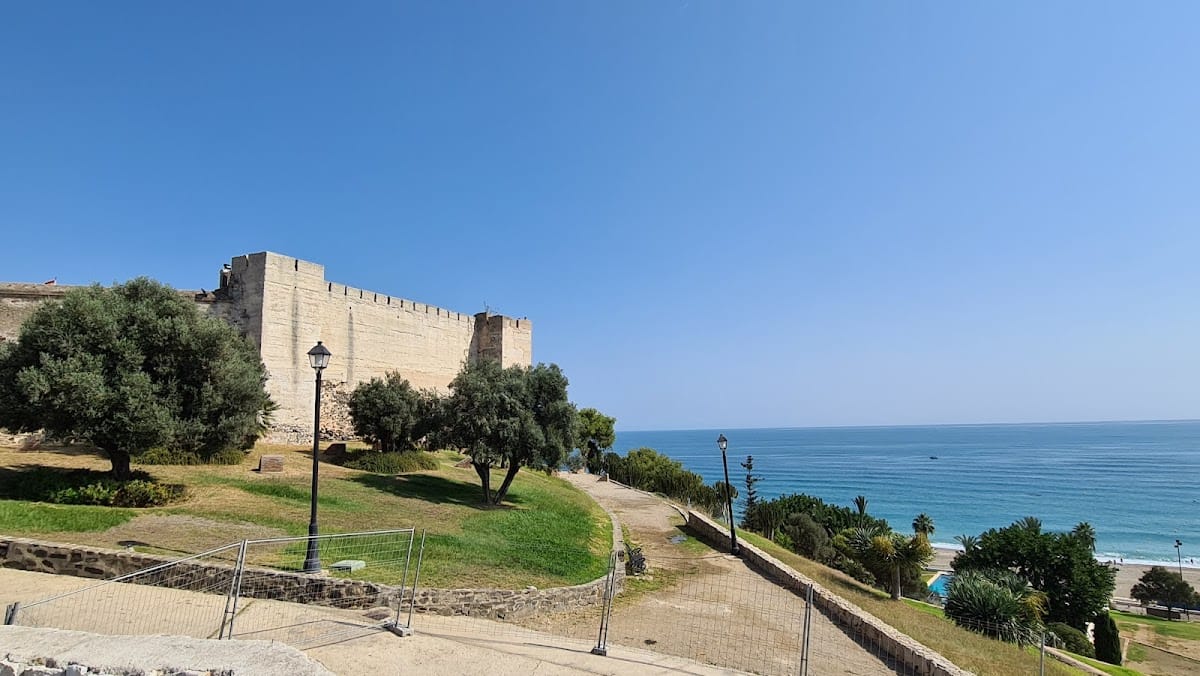
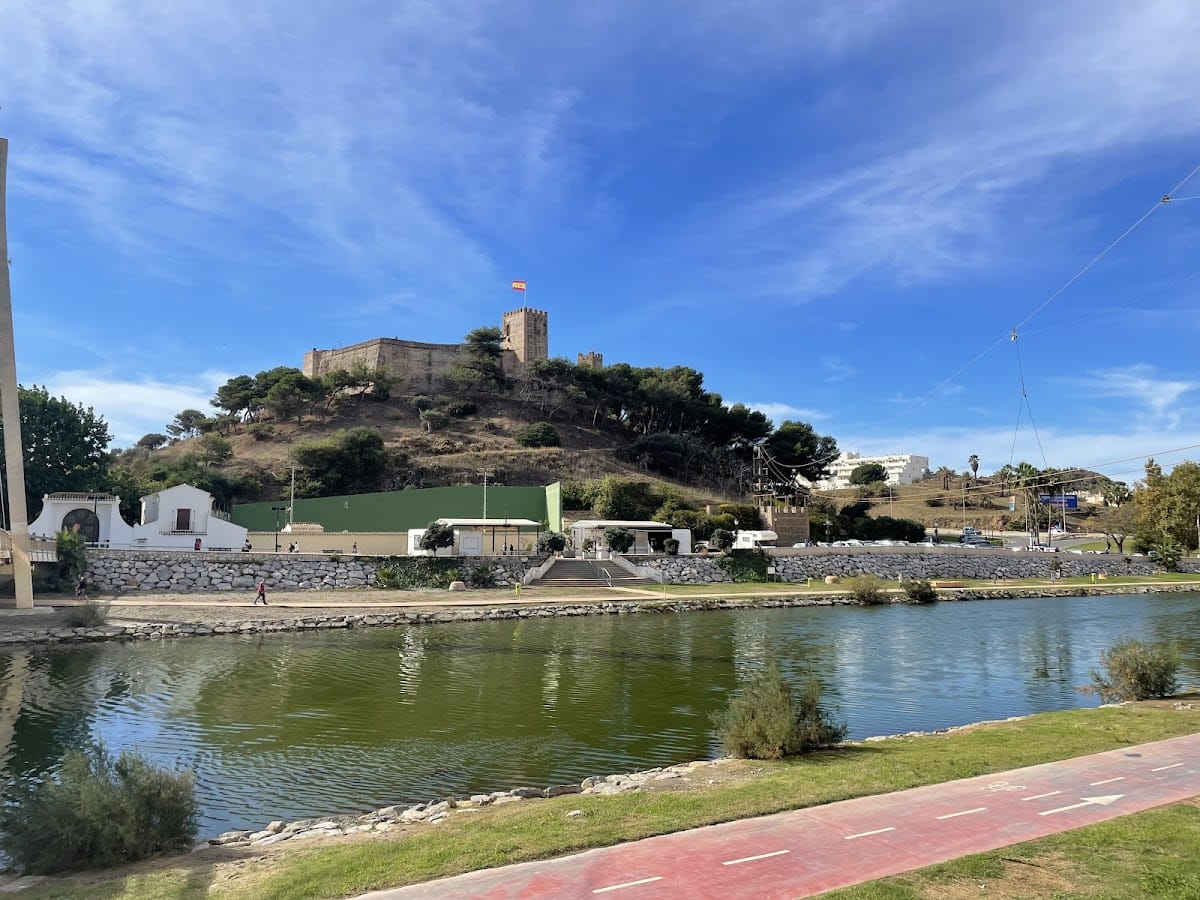
Castillo de Suel stands on a small isolated hill 38 metres above sea level, on the right bank of the Fuengirola River mouth. The position overlooks both the coast and the river entrance. The hill is now separated from the opposite hill by the A-7 motorway. It was formerly linked to the opposite slope by a hollow through which the Marbella road passed. The earlier approach ran parallel to the present motorway, descended from the main gate toward the area of the El Castillo service station, and then joined the former route.
Fortification and entrance
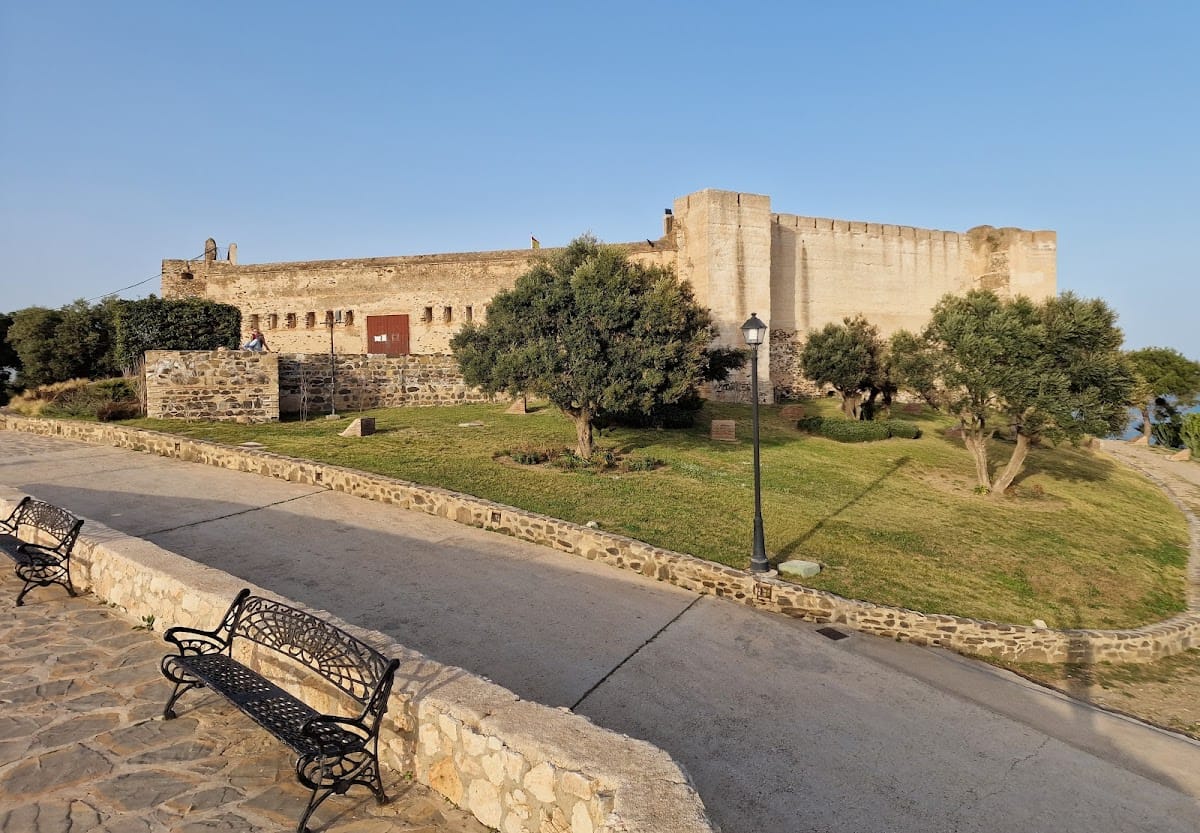
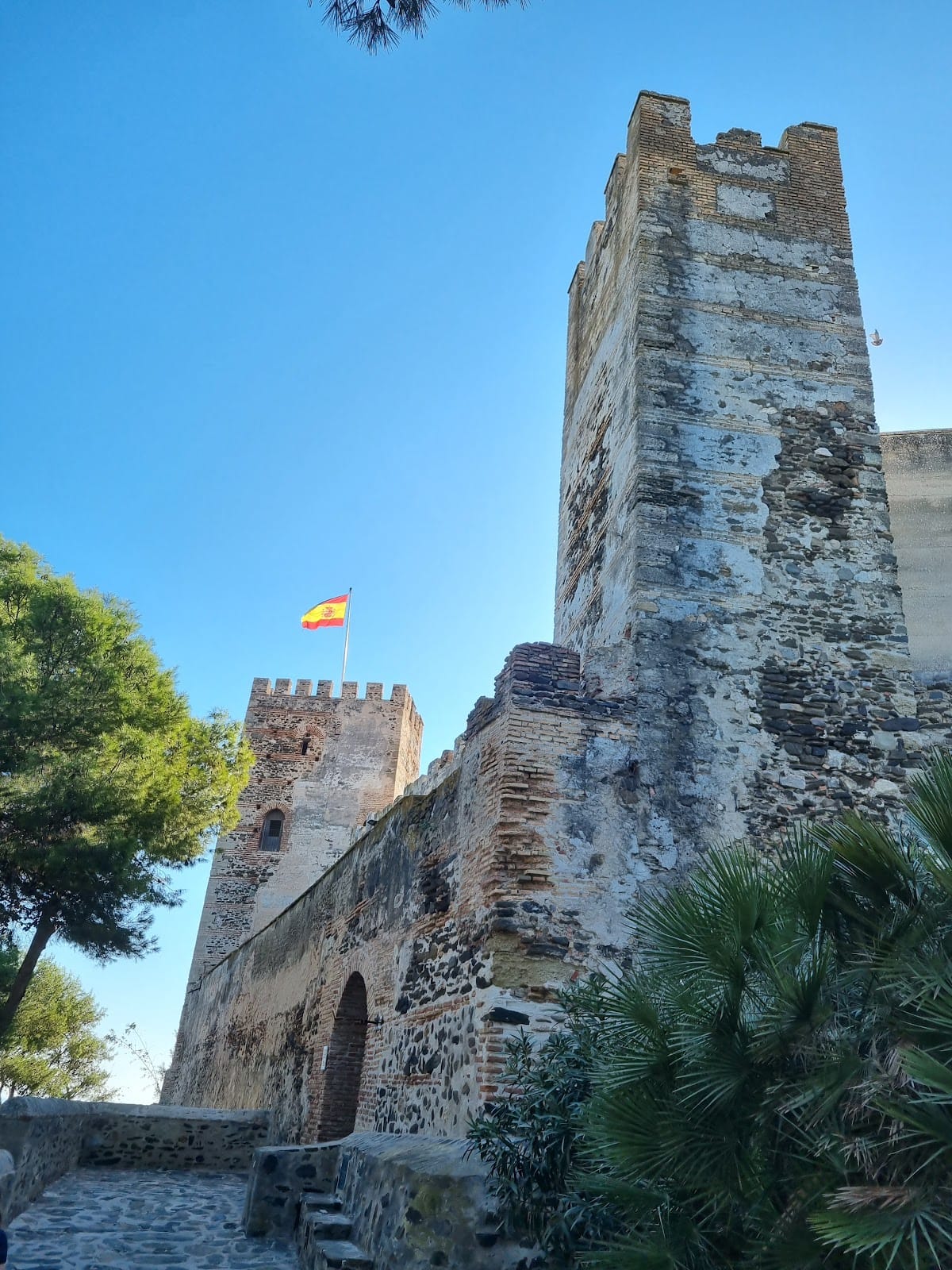
The later Almoravid enclosure, built under the Muslim Berber dynasty that ruled parts of the Maghreb and Al-Andalus during the eleventh and twelfth centuries, has an irregular eight-sided plan. Eight sections of curtain wall were reinforced by towers, although six of the original towers survive. The walls are broad and carry a parapet walkway, with flanking towers at the angles. The fortification was constructed in stone through several methods, including rubble masonry laid in brick courses, rammed earth, and ashlar used to strengthen parts of the structure.
The principal entrance faces northwest. A ramp with an outer defensive work, or barbican, and a wall-walk led toward the gateway. The entrance passed through a gate tower marked by a horseshoe arch and further defensive elements. This is the largest and tallest tower in the enclosure. The northern tower formed the original entrance and remains the highest surviving tower. A western tower is distinguished by its crenellations. Both towers are covered, and narrow spiral staircases lead to their upper levels.
Interior and artillery defenses
The fortress has no tower of homage, the principal fortified tower traditionally associated with authority, residence, and final defense. Repeated destruction removed its interior buildings, leaving fragments of partition walls and a covered courtyard well supplied with water from the nearby river.
The eastern tower was removed in the sixteenth century to make room for the cannon battery. The southwestern tower and adjacent wall sections were destroyed by the explosion of 1812, while the later wall with loopholes closed the opening. The enclosing walls have been restored. Three cannons remain on the northeastern wall facing the sea, and other guns from the fortress are preserved inside the castle. Additional pieces were installed along Fuengirola’s seafront.
Roman industrial remains
At the foot of the hill beside the seafront promenade are preserved Roman vats used to produce garum, a fermented fish sauce widely made in the Roman world. These installations provide physical evidence of the earlier Roman settlement associated with Suel.