Old Church of St Nicholas, Uphill: A Norman Anglican Church
Site at a Glance
- Popularity
- Medium
- Country
- United Kingdom
- Primary era
- Medieval
- Eras represented
- Medieval
- Civilizations
- Anglo-Saxon, Norman
- Site type
- Religious
- Remains
- Church
On this page8 sections
History
Before the Stone Church
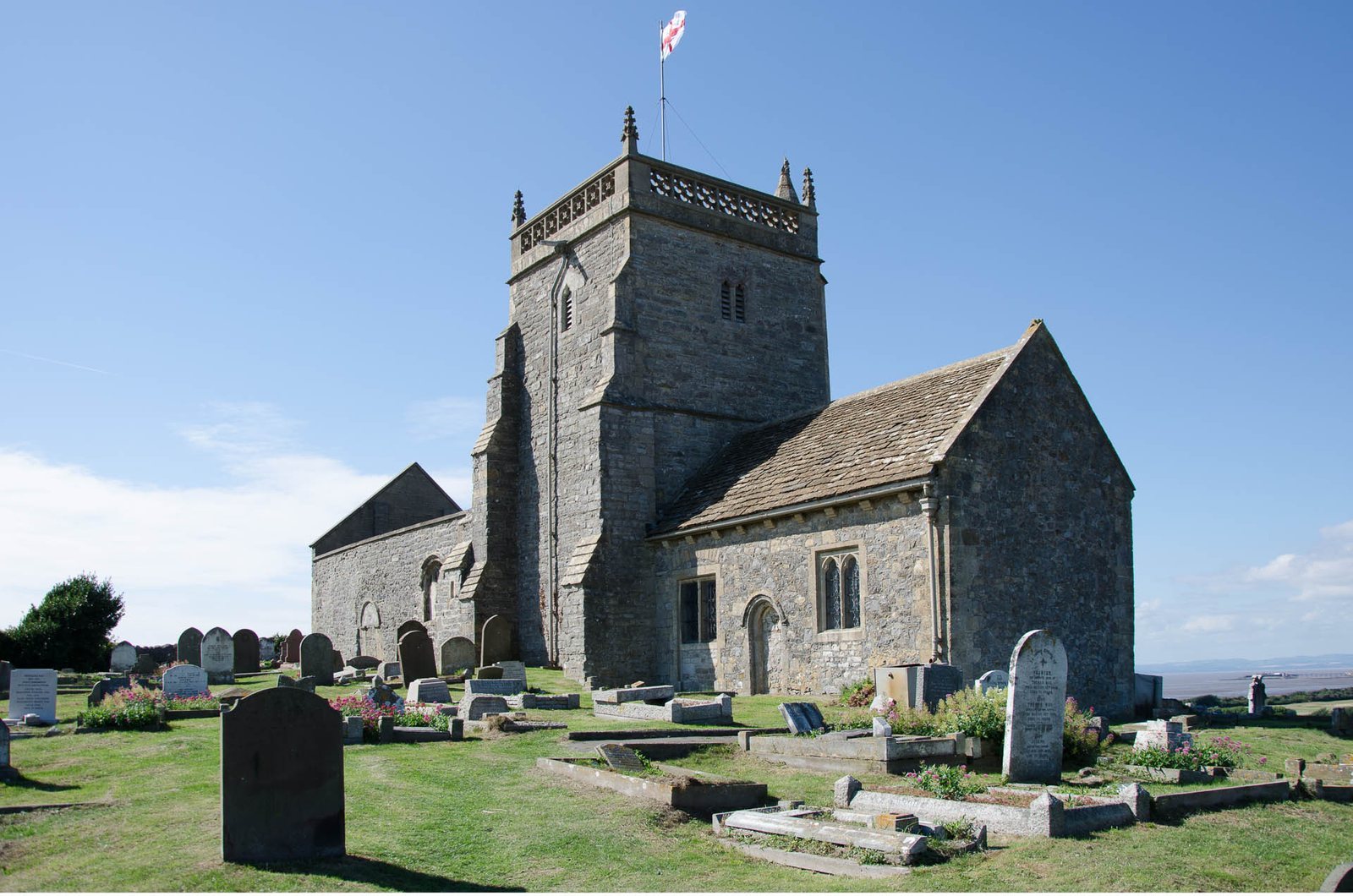
The Old Church of St Nicholas at Uphill is an Anglican church in the United Kingdom, built in stone around 1080 during the Norman period. Dedicated to St Nicholas, a fourth-century Christian bishop venerated as a saint, it stands on a site used for worship before the present church was built. A Romano-British temple, from the period when Britain was under Roman rule, preceded a timber church established here around AD 700, during the Anglo-Saxon period between Roman rule and the Norman Conquest.
In Roman times, the River Axe estuary served as a harbor, probably for shipping lead from the Mendip Hills. Uphill’s harbor may later have served pilgrims travelling to Glastonbury Abbey. The church came under the authority of the abbot of a monastery dedicated to St Michael, the archangel in Christian tradition, on Steep Holm in the Bristol Channel. Local tradition says the church was meant to stand at the foot of the hill, but that its stones and timber were mysteriously carried to the summit each night, so it was built there instead.
Medieval Changes
The church was remodelled in the late Middle Ages. Its site on the hill and its long history of worship link the building to earlier religious use in the area, from the Romano-British temple to the Anglo-Saxon timber church.
Decline and Conservation
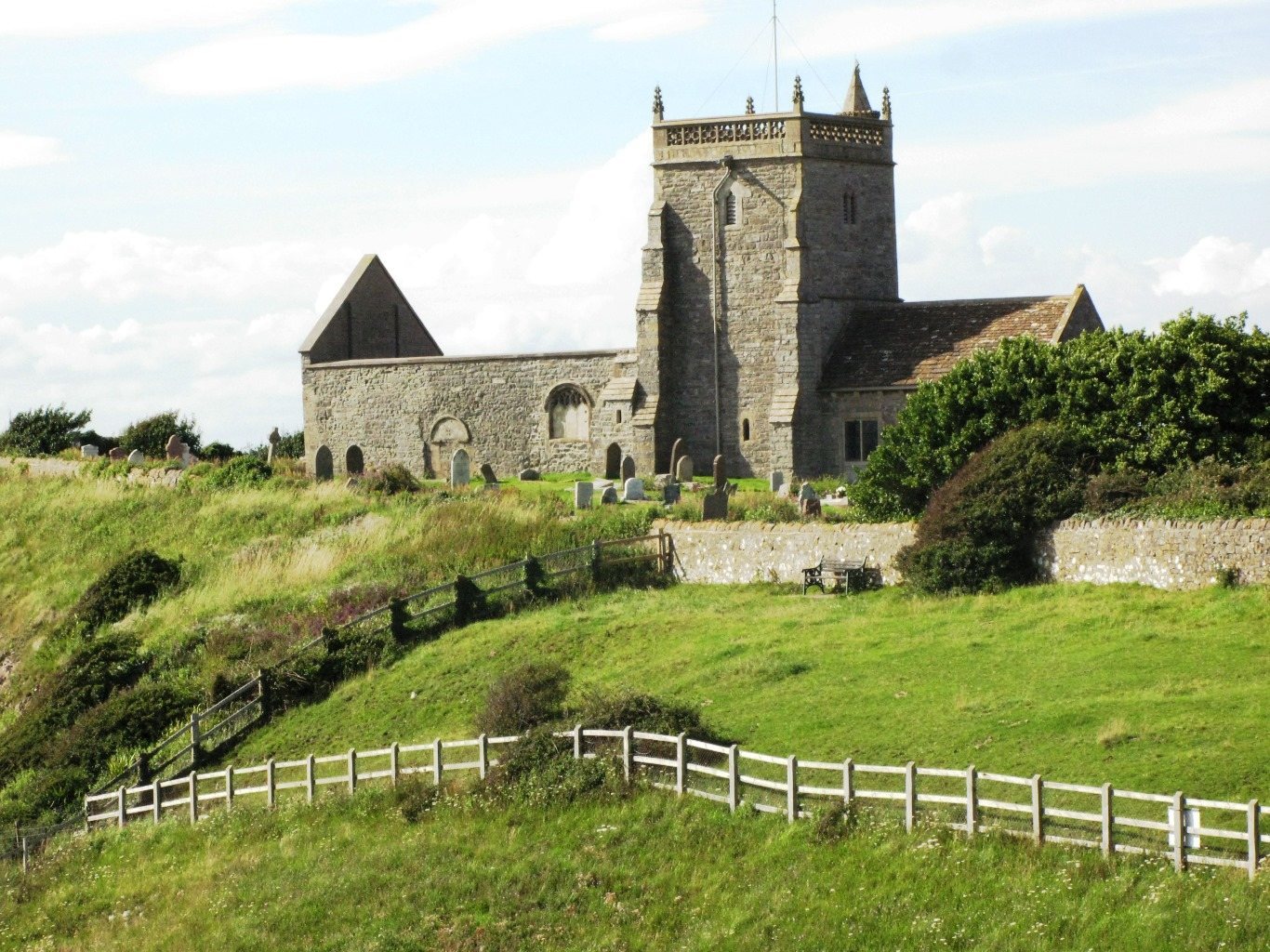
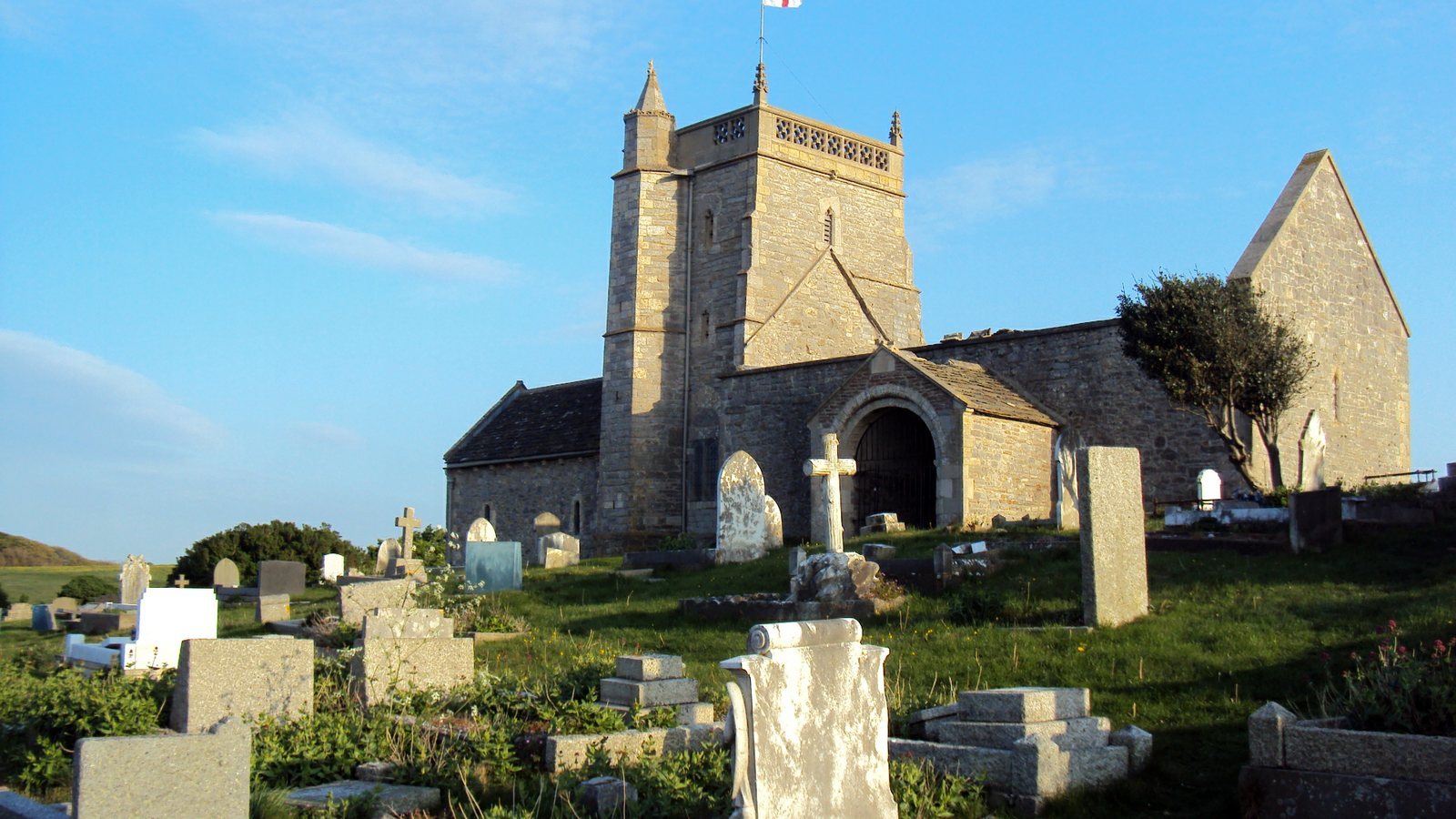
By 1840 the church was in poor repair, and a replacement was built near Uphill Manor in 1844. Both churches held services until 5 April 1846, when worship moved to the new building. Thomas Knytton of Uphill Castle renovated the old church that year, but it later became partly ruinous. Its nave roof was removed in 1879 because it had become dangerous, and the entrance porch was rebuilt in 1904. Occasional services continue in the roofed part. The church was listed Grade II* on 19 May 1983, an English category for buildings of particular importance, and is now cared for by the Churches Conservation Trust, a charity that looks after historic churches no longer in regular use. The nearby cliff and quarry form a Site of Special Scientific Interest, a protected area recognized for its wildlife or geological features.
Remains
Church Structure
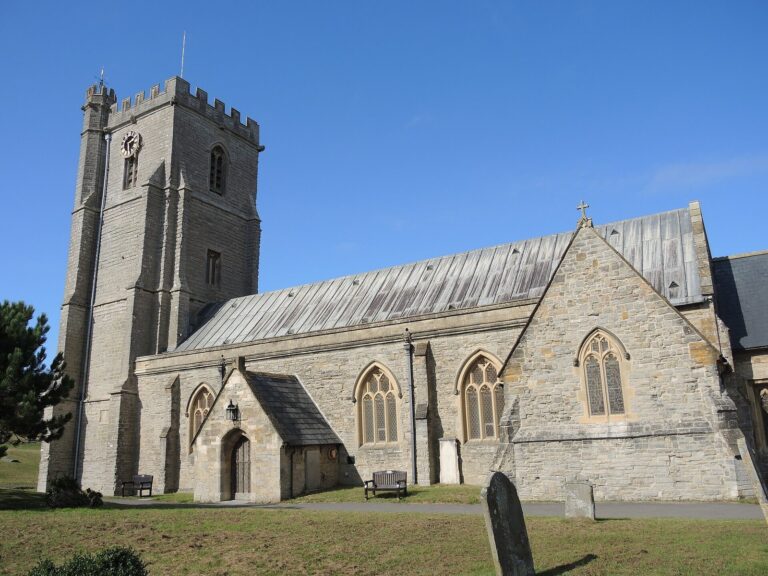
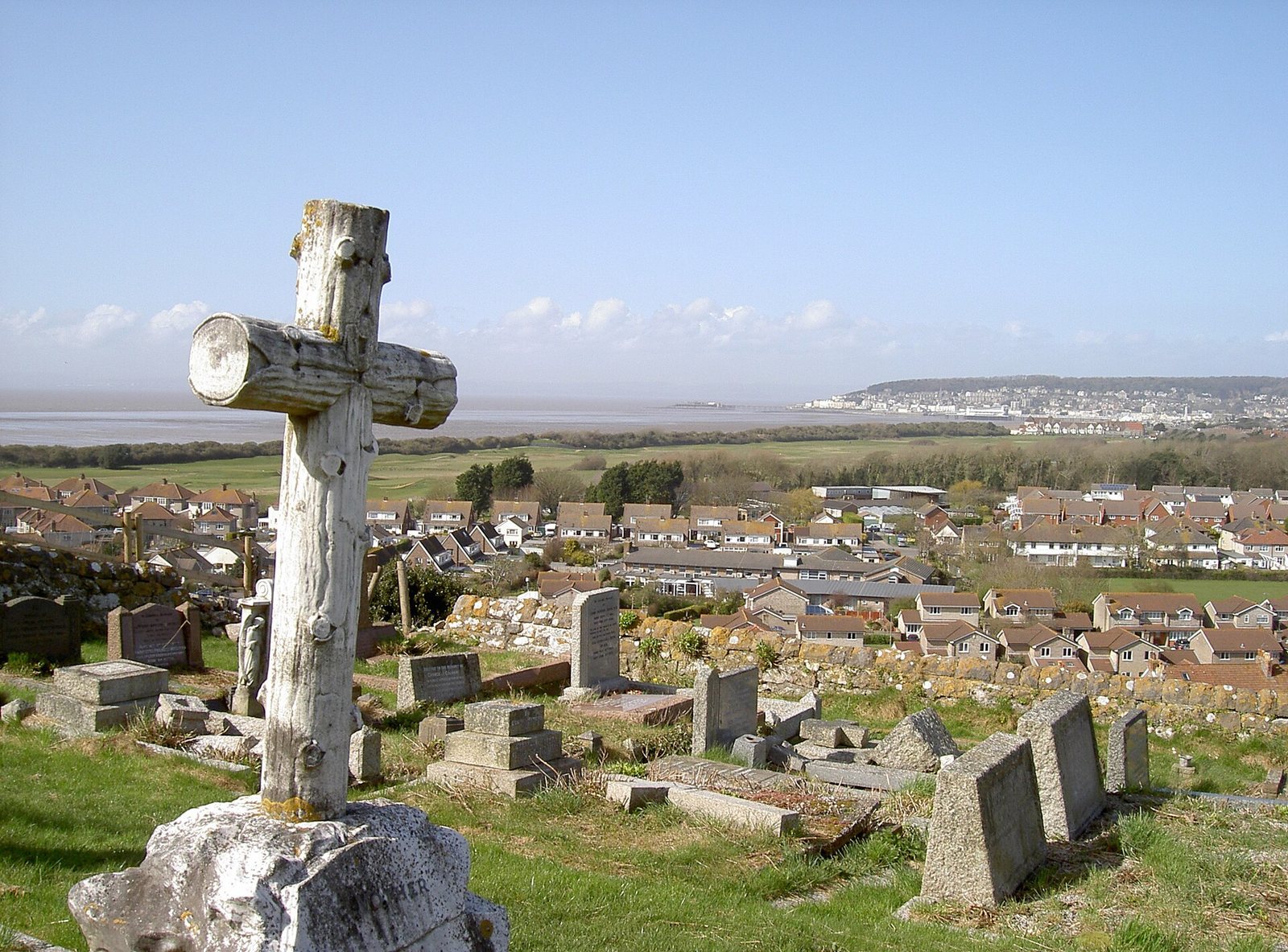
The stone church stands on the southern side of Uphill Cliff, overlooking Weston Bay, Brean Down and the mouth of the River Axe. Its Norman layout includes a central tower with three stages, a nave and a chancel. The nave is roofless, while the chancel remains roofed. Beneath the floor of the open nave, remains of the earlier Romano-British temple were found.
Stone Sundials
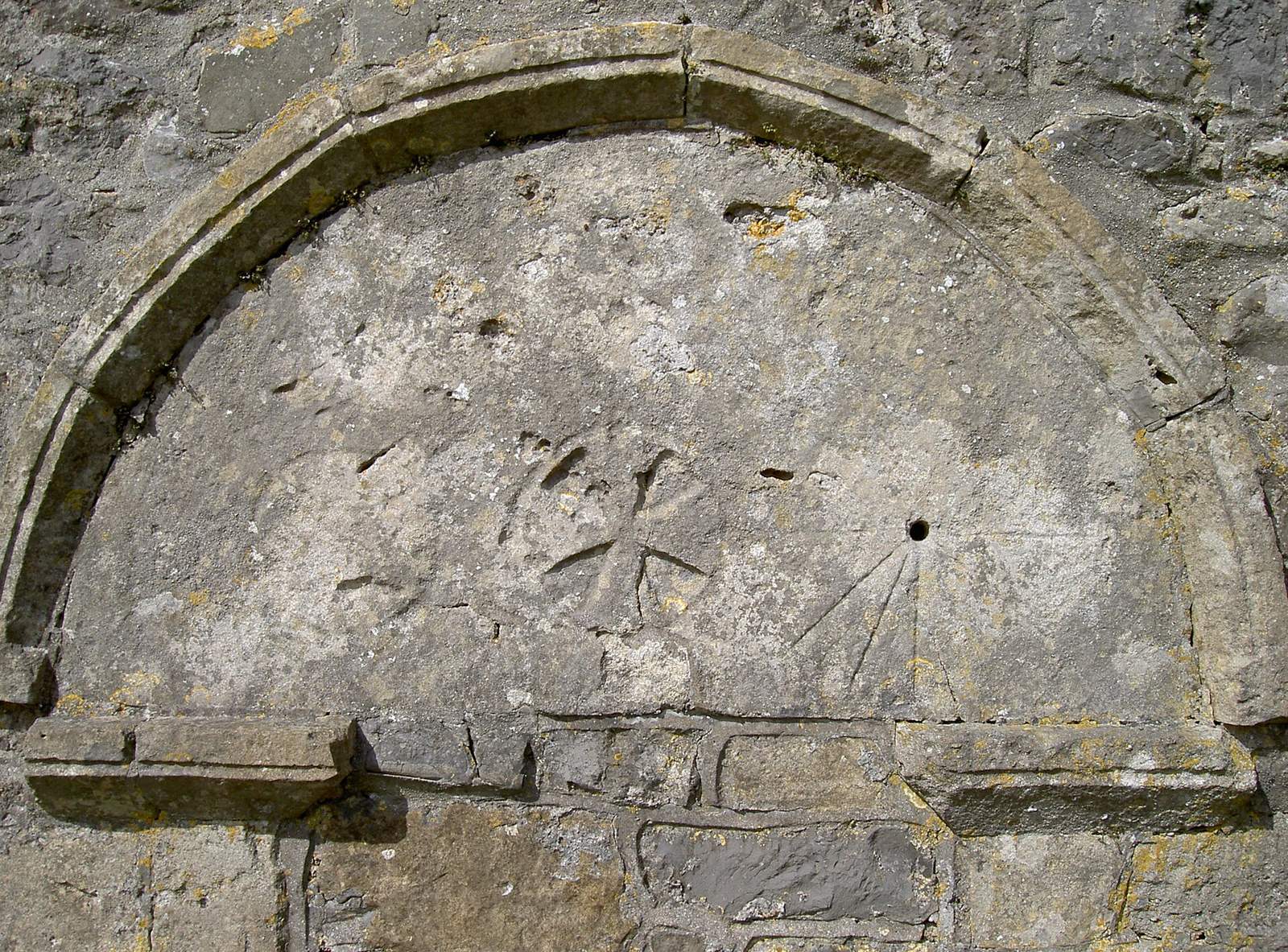
Three stone sundials are carved into the church. Two sit on either side of the plain panel above a blocked doorway in the south wall, one to the east and one to the west. The third is set into the top of a window on the tower’s south face. It predates the Norman Conquest and may be Saxo-Norman, a transitional style combining Anglo-Saxon and Norman features.
Cliff, Caves and Quarry
The quarry lies at the western end of the cliff, whose rock face and grassland are formed on Carboniferous Limestone, a limestone dating to the Carboniferous geological period. Its steep banks and knolls support species-rich calcareous grassland, which grows on lime-rich soils. Plants include orchids, Somerset hair grass, honewort and goldilocks aster; the area also provides habitat for several butterfly and weevil species. Caves in the cliff below the church once contained evidence of Stone Age habitation. They have since collapsed, and their artifacts were taken to a museum.