Skaros Rock: The Fortified Settlement of Santorini
Site at a Glance
- Rating
- 4.8
- Popularity
- Very High
- Country
- Greece
- Primary era
- Medieval
- Eras represented
- Medieval
- Civilizations
- Byzantine
- Site type
- Military
- Remains
- Fortified Town
On this page6 sections
History
Fortification and Venetian rule
Skaros Rock was a fortified settlement on a volcanic promontory on Santorini, Greece, established in the early 13th century under Byzantine initiative. The Byzantine Empire, the eastern continuation of Roman rule centered on Constantinople, began the fortification and employed Venetian architect Jacopo (Giacomo) Barozzi. The older castle, La Roka, was completed in 1207.
After the fortress was completed, Santorini came under the control of the Barozzi family through an arrangement with Marco I Sanudo. Sanudo had compelled the Byzantines to surrender their claim to the Aegean islands and had assumed the title Duke of Naxos. A settlement grew around the promontory, and Skaros became the largest settlement on Santorini and its effective capital under Venetian rule. By the Venetian Republic’s takeover of the island in 1336, Skaros had more than 200 homes and several hundred residents.
The earliest known description of Skaros dates to 1421. Visitors in the 17th century called it an impregnable natural fortress, and it was never captured.
Ottoman rule and decline
During the mid-16th-century wars between Venice and the Ottoman Empire, a major power based in Anatolia and southeastern Europe, Ottoman forces raided Santorini. Skaros’s fortifications and cliff-top location protected the settlement, but the island’s trade-based economy suffered. Santorini’s ruling families broke with Venice and agreed to a non-aggression treaty with the Ottomans. Venice failed to retake the island, while some Ottoman captains continued raiding for enslaved people and supplies in breach of the agreement. Corsairs based in North Africa, including Tunisia, also threatened Santorini.
In 1566, Ottoman admiral Piali Pasha arrived with a large fleet and demanded that Santorini be annexed to the Ottoman Empire. The island’s settlements, including Skaros, accepted Ottoman rule, and a garrison was placed at Skaros. The threat from Muslim pirates then diminished. Skaros subsequently lost ground to Fira, which became the island’s new capital, and to Oia.
Skaros’s decline had begun by the time Santorini’s volcano erupted in 1650. Strong earthquakes and landslides followed, and part of the town collapsed into the sea. Further volcanic activity occurred from 1701 to 1711 and from 1866 to 1870. Eruptions and earthquakes in the 18th century led most residents to move to Fira or nearby Imerovigli. From the 17th century onward, earthquakes and rockslides made life increasingly difficult, while the reduced threat of pirates weakened the need for Skaros’s defensive position. Some people still lived there in 1770. The old fortress fell out of use, and archaeologist Ludwig Ross found the site deserted when he visited in 1836.
Remains
Fortifications and settlement
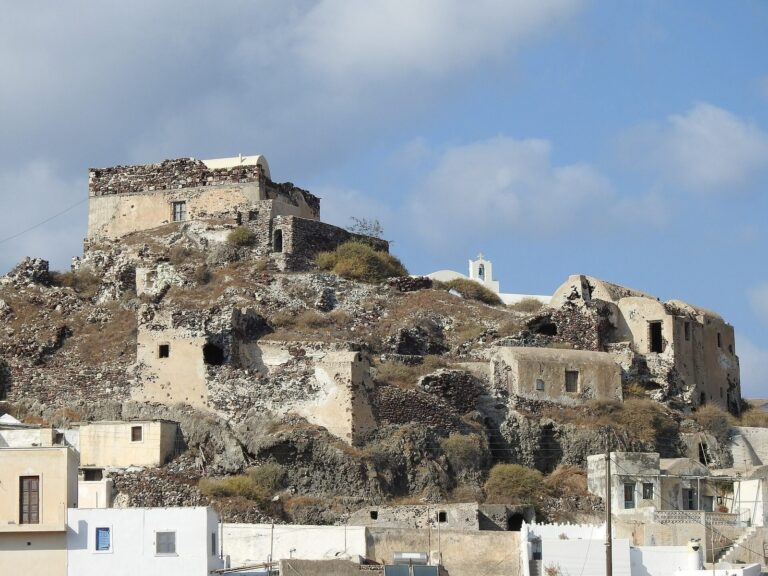
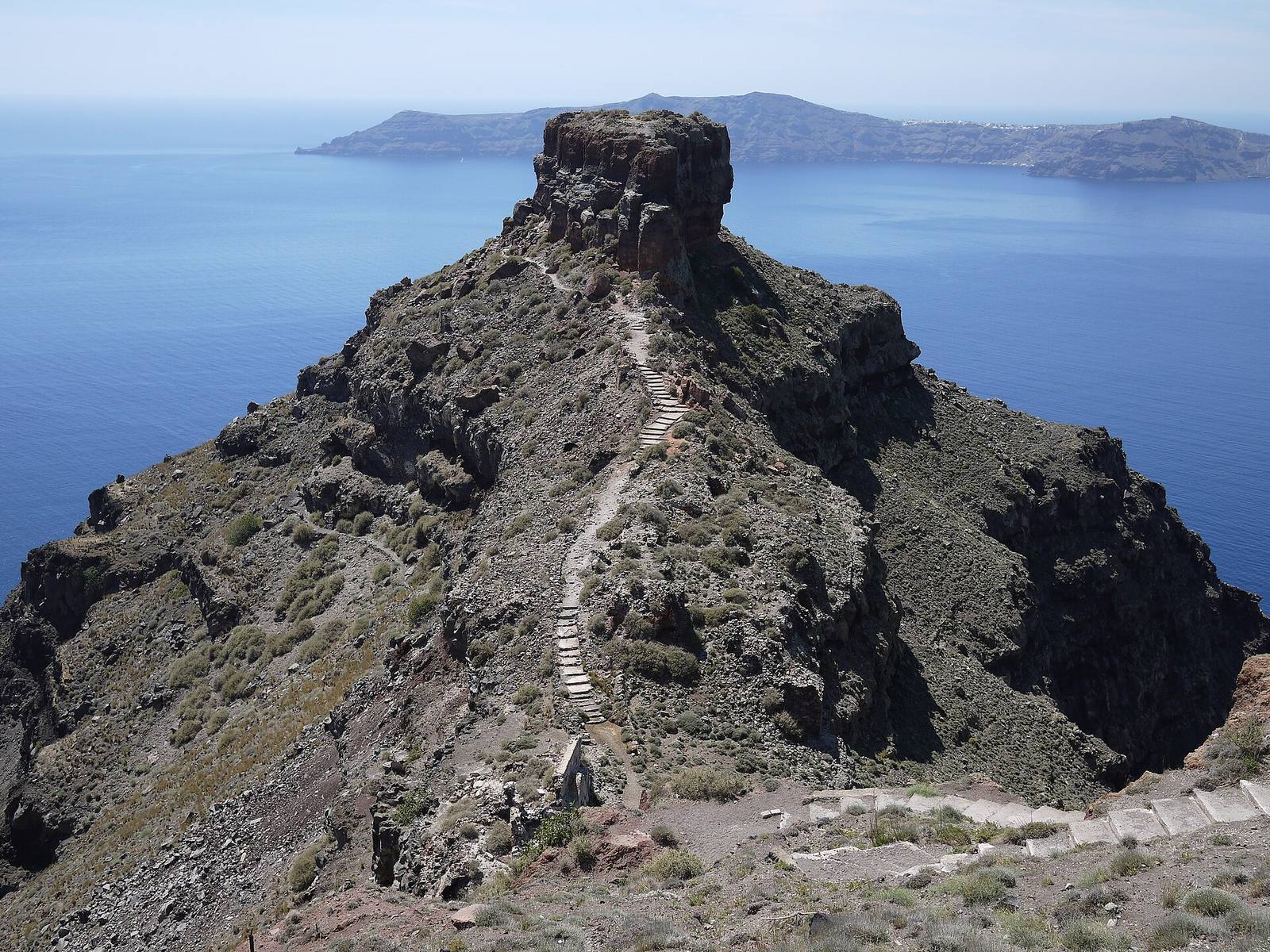
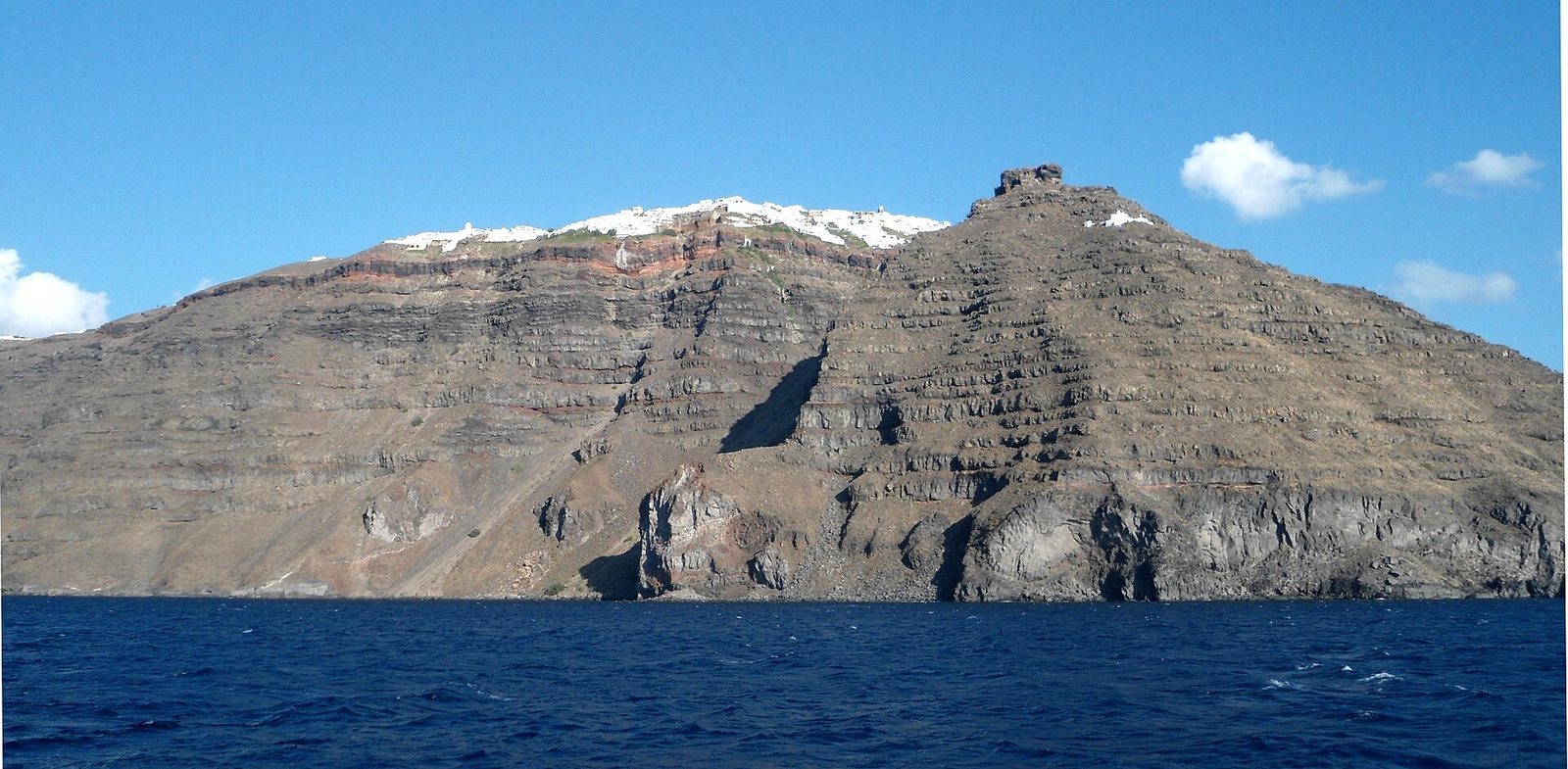
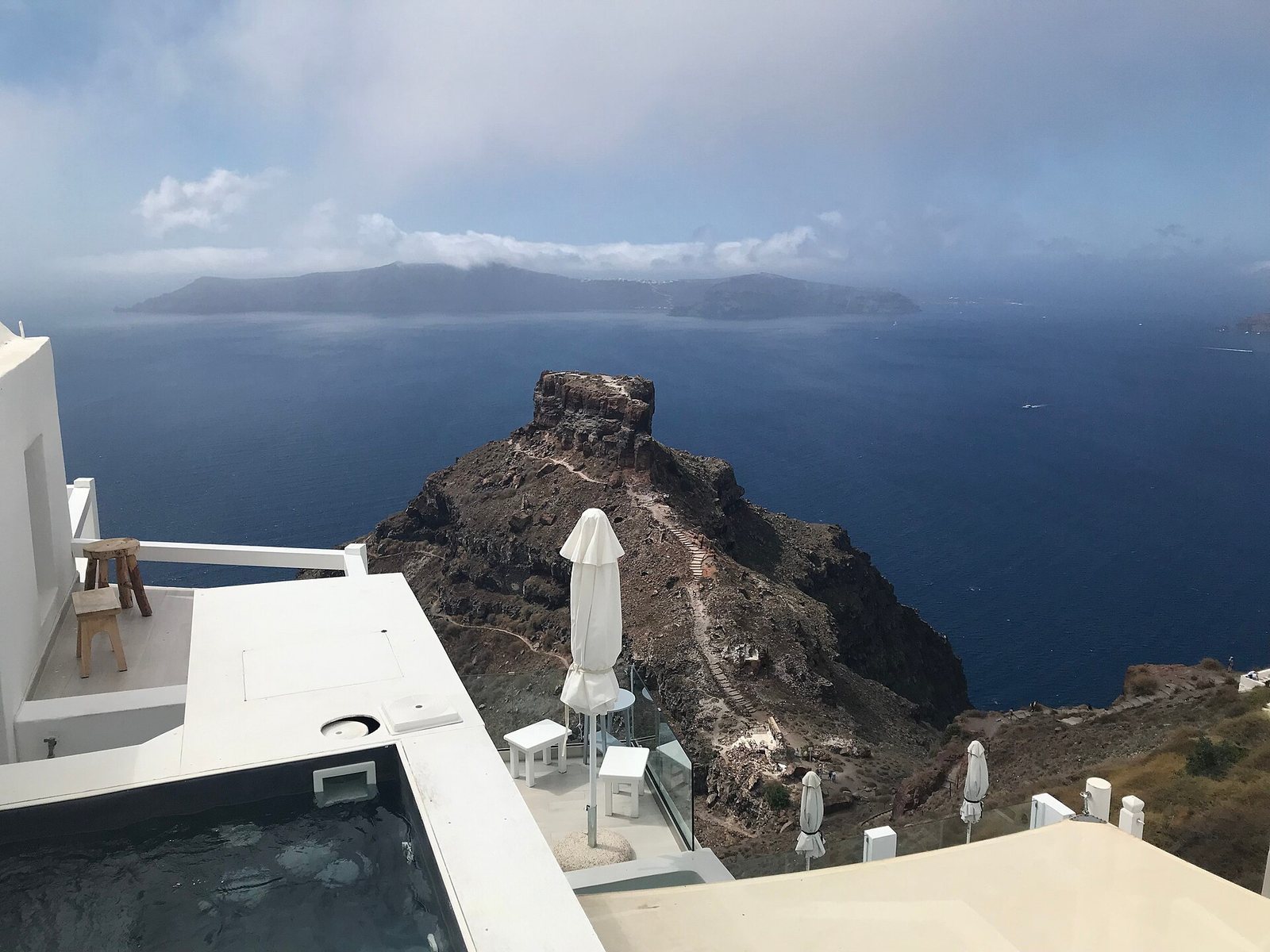
The settlement occupied a large volcanic rock promontory, probably formed in an eruption around 68,000 BC and later reshaped by erosion and earthquakes. In nautical usage, the formation is known as Cape Skaros. Two castles stood on the hill: the Upper Castle, or La Roka, at the summit, and the Lower Castle farther down. Stone-built homes, administrative buildings, a cathedral, other churches and monasteries, and additional fortifications crowded the hill. A movable wooden bridge linked the fortified town to the rest of the island. Few ruins remain; building remains were reused or fell into the sea during earthquakes. The only surviving image showing the settlement’s buildings is a depiction made by British designer Thomas Hope in the 1790s.
Chapel and harbor
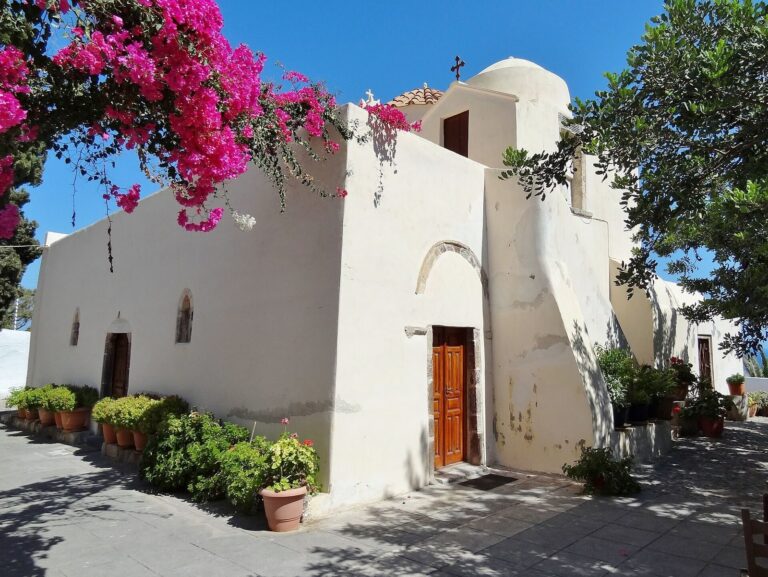
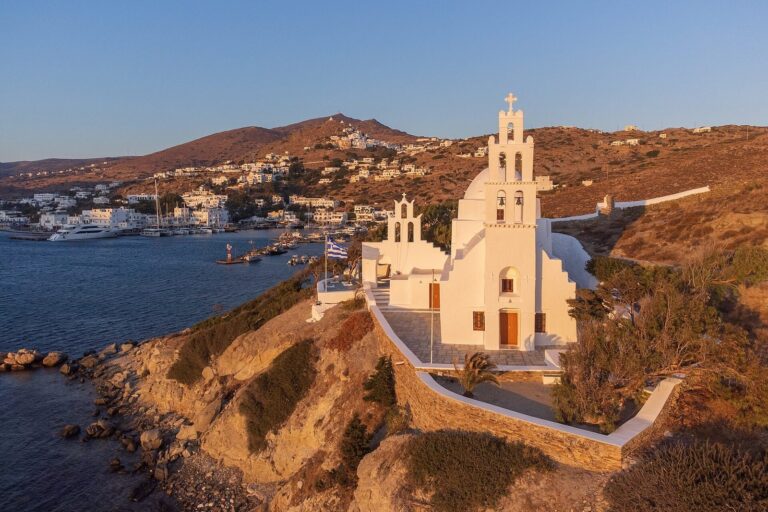
A church complex stood at the base of the rock beside a small harbor. It included the Chapel of Panagia Theoskepasti, a Greek Orthodox dedication meaning “the All-Holy, protected by God.” The chapel remains in use on the cliffs below Skaros Rock.