Oratorio del Rosario di San Domenico: A Baroque Oratory in Palermo
Site at a Glance
- Rating
- 4.6
- Popularity
- Medium
- Country
- Italy
- Primary era
- Early Modern
- Eras represented
- Early Modern
- Civilizations
- Habsburg, Habsburg Spain, Kingdom of Sicily, Spanish
- Site type
- Religious
- Remains
- Chapel
On this page12 sections
History
The Oratorio del Rosario di San Domenico is a Roman Catholic oratory in Palermo, Italy, founded in 1574 by the Compagnia della Madonna del Rosario, a confraternity, or religious association for shared devotion, within the Dominican Order. Construction began that year to a design by Giuseppe Giacalone. The oratory is dedicated to Our Lady of the Rosary, a Catholic devotion involving prayers and meditation on episodes in the lives of Jesus and Mary. It belongs to the Archdiocese of Palermo and is built in the Sicilian Baroque style, a regional form of the ornate Baroque that developed in the seventeenth and eighteenth centuries.
Early commissions
During his stay in Palermo in 1621–1622, the confraternity commissioned a painting of the Madonna of the Rosary from Mario Minniti. It also commissioned two other works from him, Prayer in the Garden and Crowning of Thorns. When the paintings were renewed, these two works passed into the collection of Marco Gezio; their later destinations are uncertain.
Saint Rosalia and Van Dyck’s altarpiece
In 1624, during a plague in Palermo, the remains of Saint Rosalia were discovered. Their discovery, together with events regarded as supernatural, revived her cult and encouraged a new style of religious imagery. The confraternity commissioned an altarpiece from Anthony van Dyck in connection with the discovery and the waning of the plague. Completed in Genoa, the painting arrived around 1627 and was on the main altar by 1628, replacing Minniti’s Madonna of the Rosary.
Serpotta’s decoration
Around 1714–1717, Giacomo Serpotta was commissioned to create stucco decoration that would strengthen the theological meaning of the paintings. Art historian Rudolf Wittkower judged that the oratory’s sculpture came exceptionally close to the Rococo spirit, a decorative style related to Baroque and associated especially with the eighteenth century.
Remains
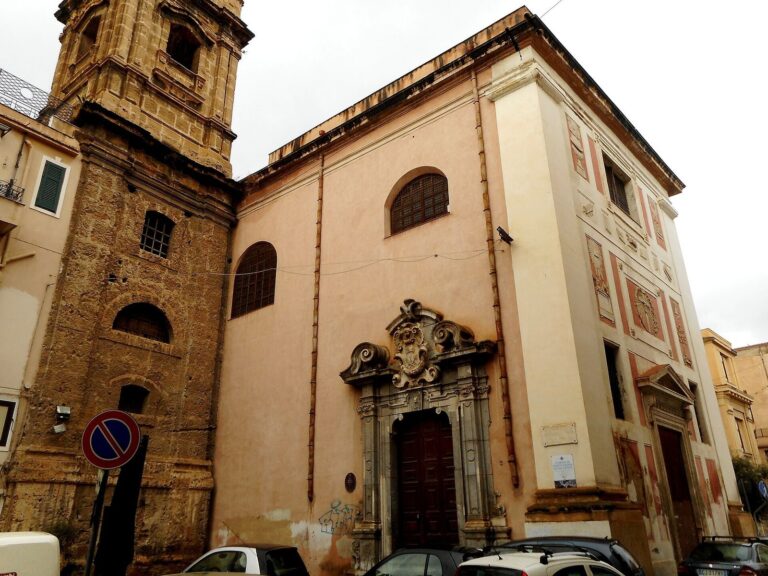
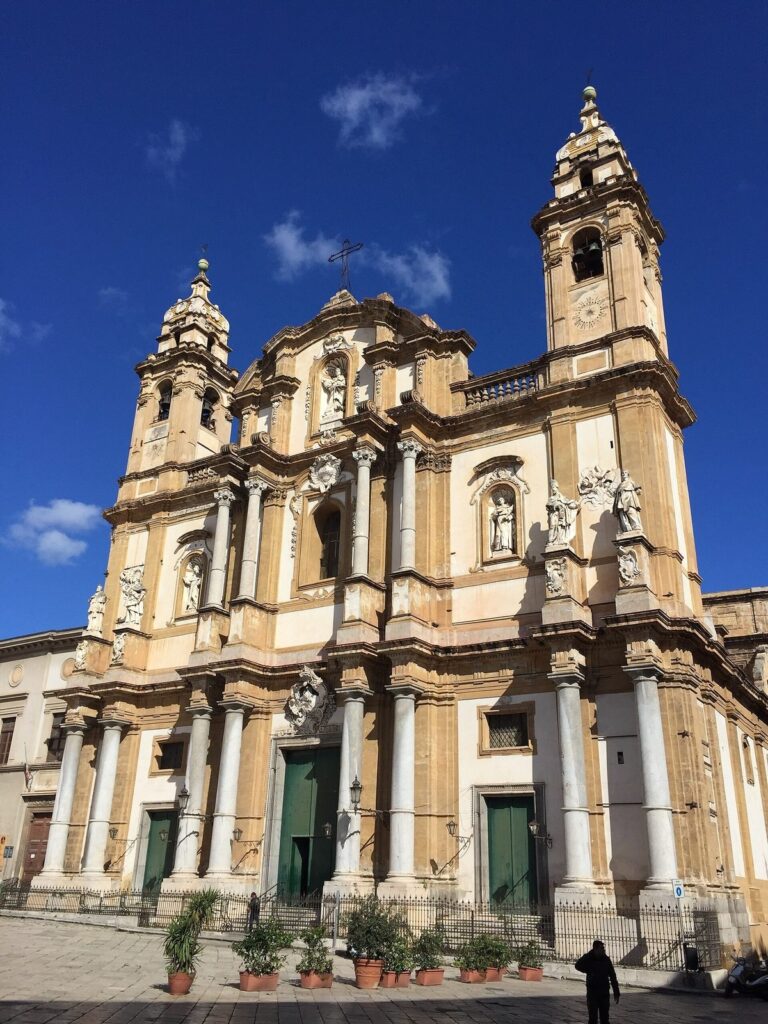
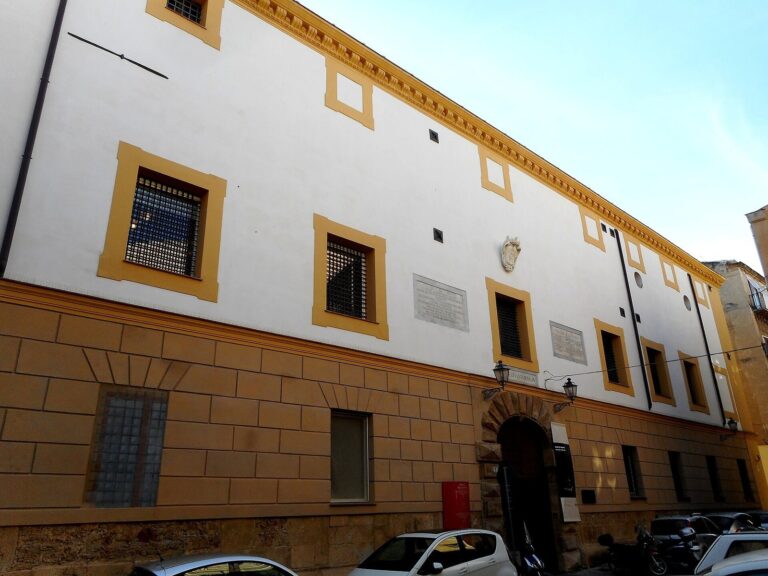
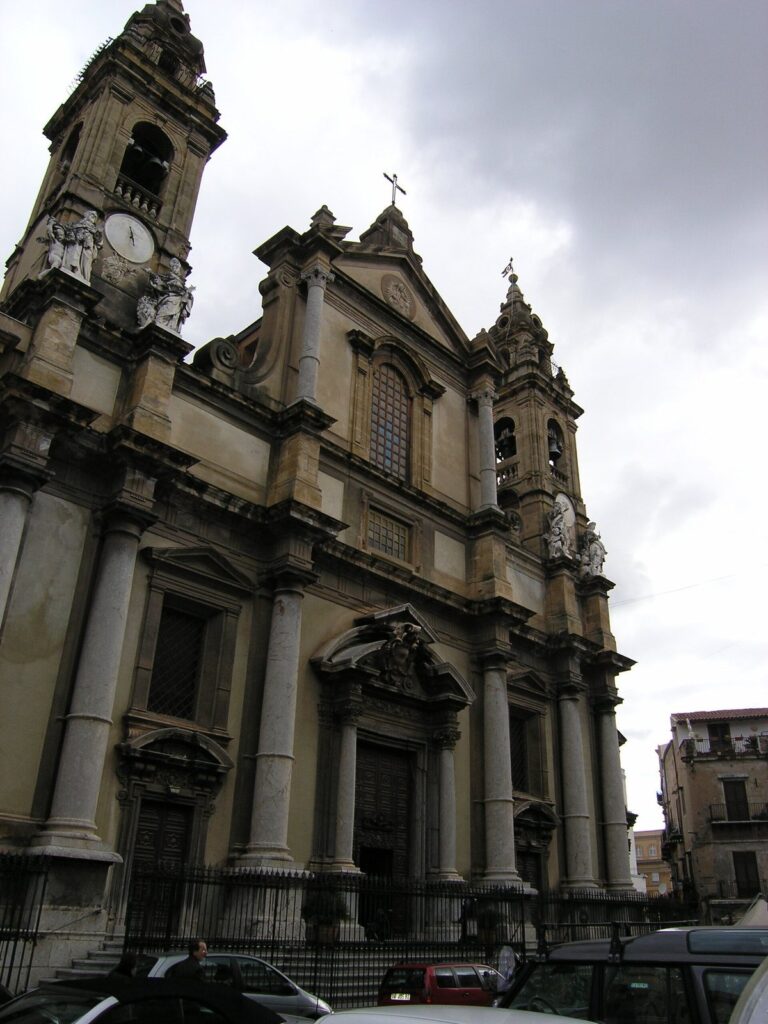
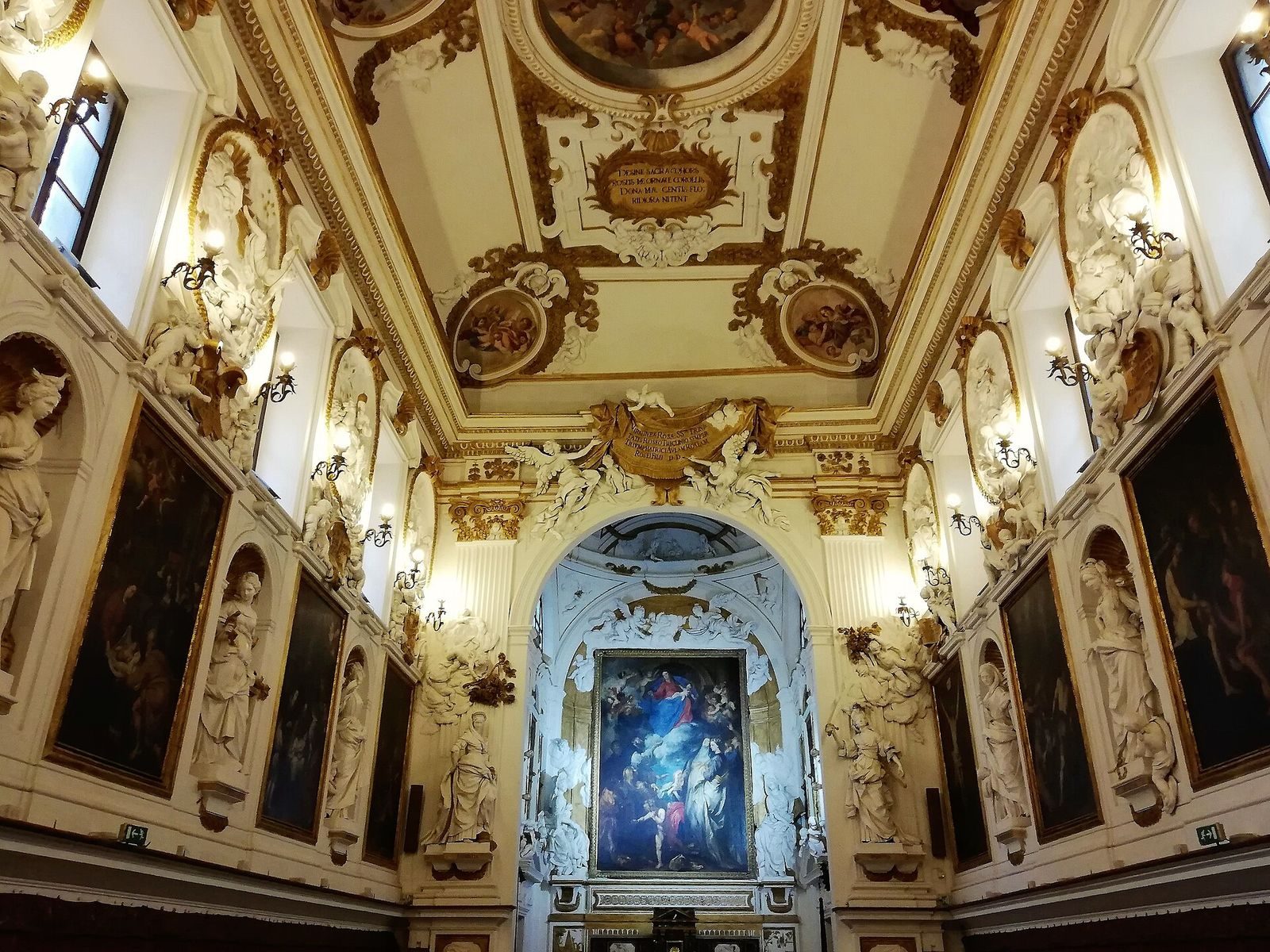
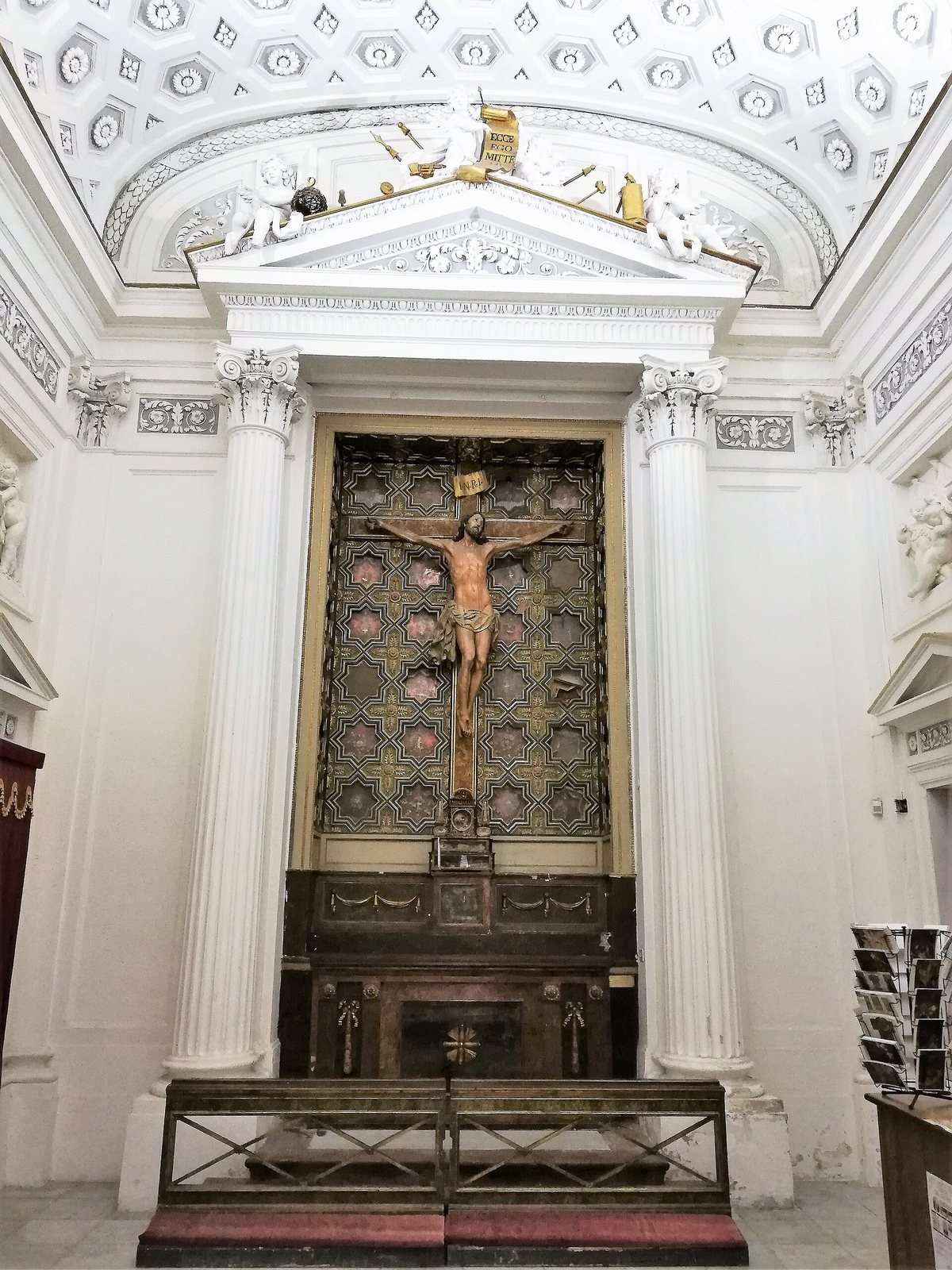
The oratory occupies a narrow passage within the Dominican monastery complex in Palermo’s historic Loggia quarter, beside the Church of San Domenico. Its single nave is decorated in the Sicilian Baroque style, with paintings on the side and entrance-end walls, a frescoed ceiling, and the main altar at the far end.
Paintings and frescoes
Main altar
Van Dyck’s Madonna of the Rosary with Saints stands above the main altar. The painting shows the Virgin with Dominic of Guzmán, Catherine of Siena, Vincent Ferrer, Olivia, Nympha, Agatha, Christina, and Rosalia.
Right wall
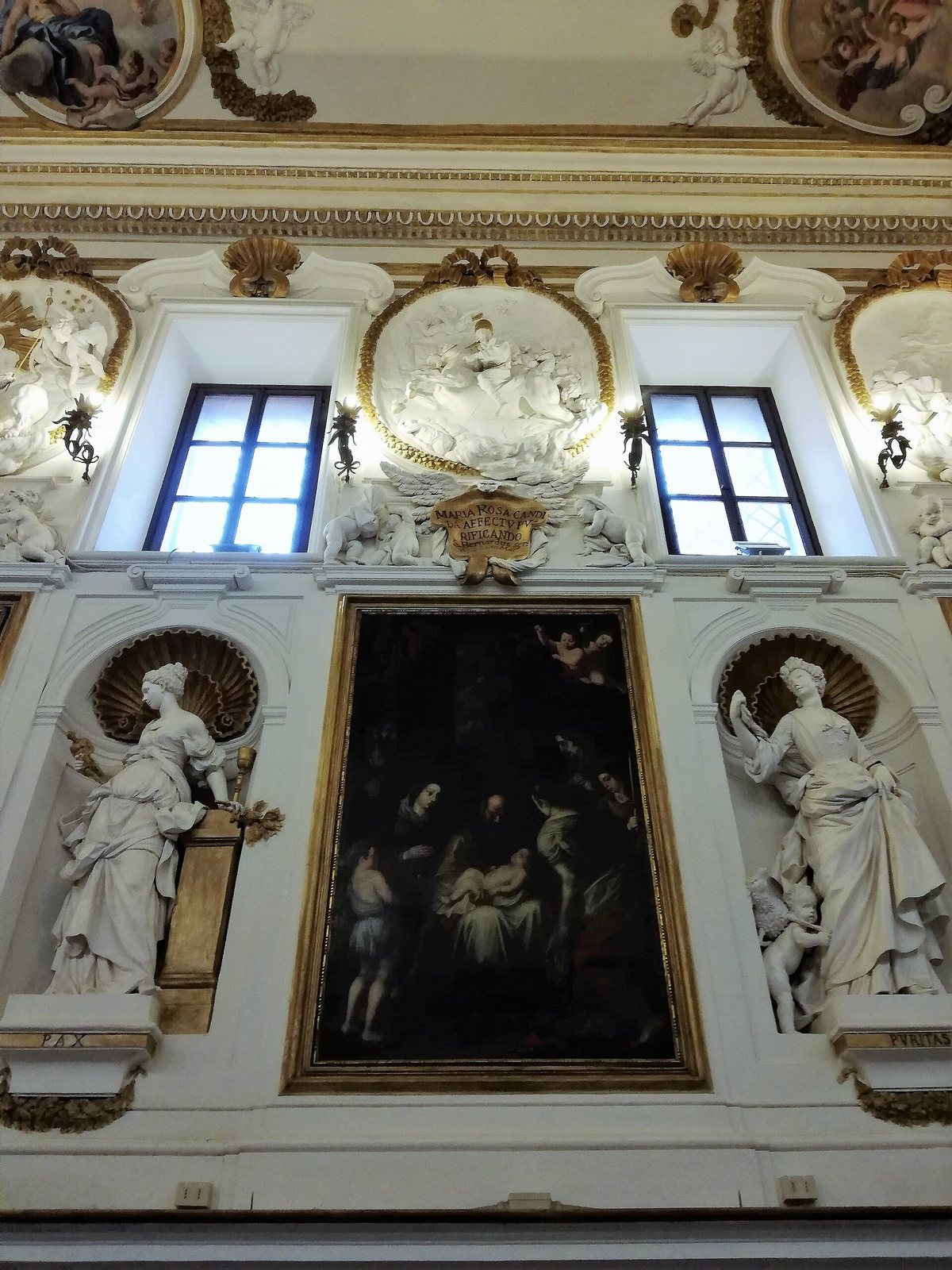
The right wall’s paintings represent the Sorrowful Mysteries, episodes meditated on in the Rosary. They include an anonymous Neapolitan-school Prayer in the Garden by an artist described as a pupil of Francesco Fracanzano, and Matthias Stomer’s Christ at the Column, also known as Flagellation. An unidentified Flemish painter influenced by Caravaggio produced the Crowning of Thorns and Ascent to Calvary; a Crucifixion belongs to the school of Van Dyck.
Left and rear walls
The paintings on the left and rear walls form a cycle of the Joyful Mysteries. It includes Giovan Andrea de Ferrari’s Assumption, Orazio Ferraro’s Resurrection, Guglielmo Borremans’s Visitation (1727), and Giacomo Lo Verde’s Annunciation. An unknown Sicilian painter made the Presentation in the Temple, while the Nativity is attributed to Geronimo Gerardi. Pietro Novelli’s contributions are Disputation among the Doctors and Pentecost.
Entrance-end wall and ceiling
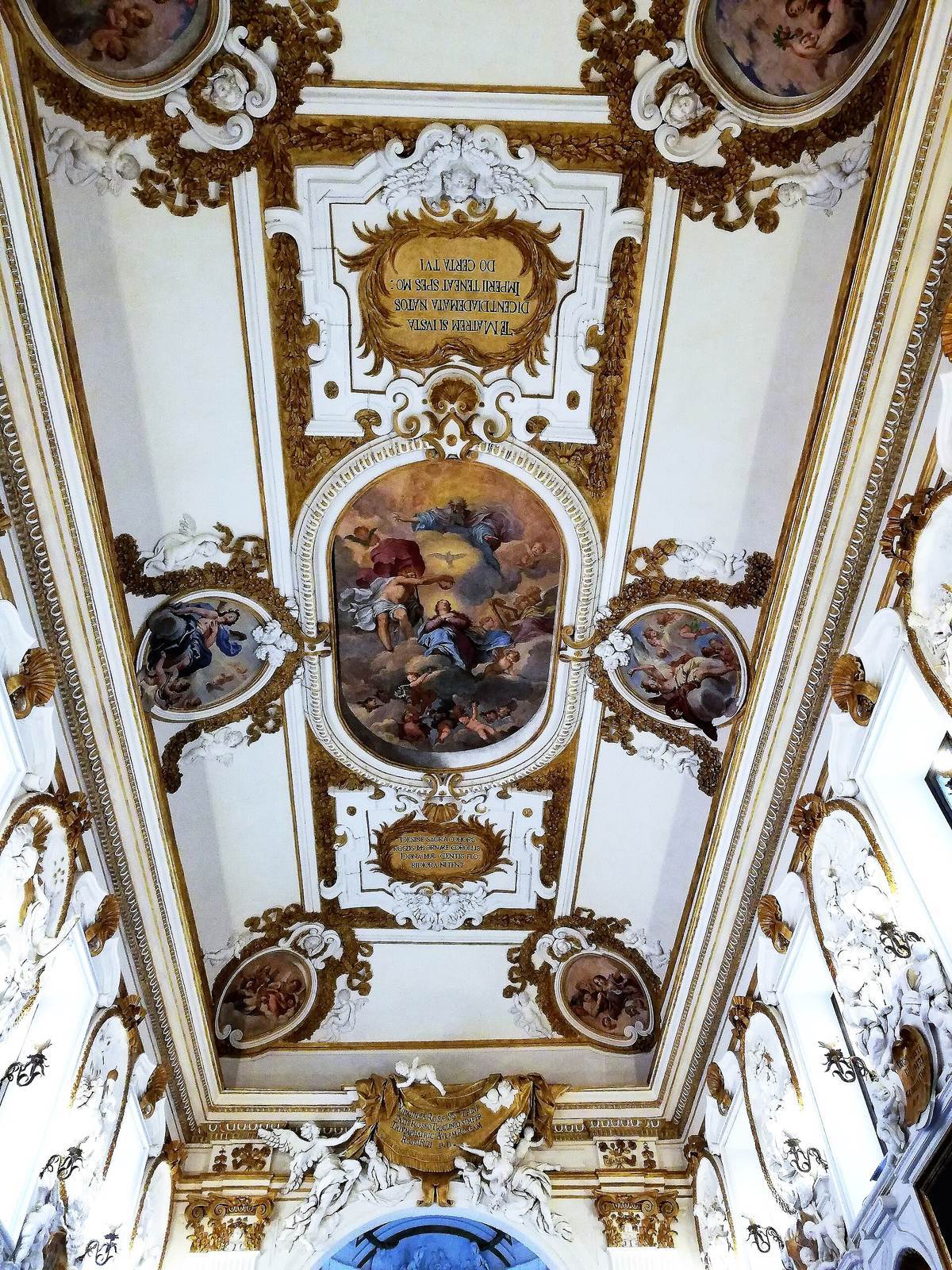
On the entrance-end wall, also called the counterfacade, are a Resurrection attributed to Valerio Castello, an Ascension by an unknown Flemish painter, and Luca Giordano’s Assumption. Novelli’s ceiling fresco, Coronation of the Virgin, dates to around 1630.
Stucco decoration
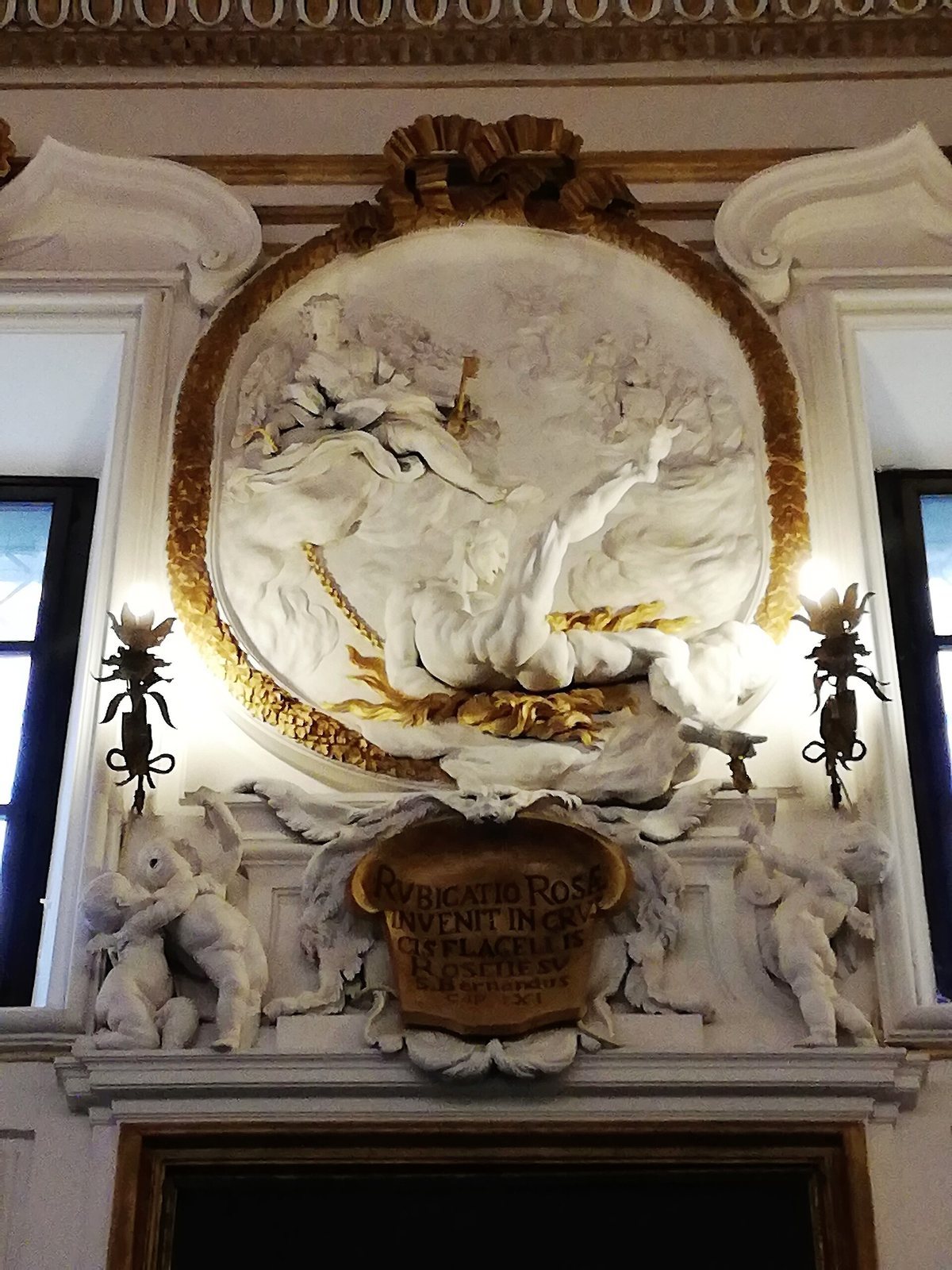
Oval stucco frames above the paintings contain high-relief scenes, sculpted so that their forms project prominently from the background. The subjects include the Devil falling after being cast out of Heaven, two Old Testament episodes understood as precursors to the Rosary’s mysteries, and scenes associated with the legend of Mary and the Rosary. Serpotta’s allegorical figures stand in niches between the paintings, dressed in lace and drapery of French derivation. Divine Providence and Divine Grace occupy the presbytery, the area around the altar reserved for clergy. Along the side walls are Charity, Humility, Peace, Purity, Meekness, Patience, Fortitude, and Obedience. Wisdom and Justice appear on the facade beyond the arch. Above the dome over the altar, winged child figures hold a draped cloth, while groups of ladies and gentlemen appear to lean over a balustrade.
Confraternity seating
Wooden benches for confraternity members run around the oratory’s perimeter. Animal forms are carved into the supporting brackets, which date to the final years of the seventeenth century.