Metchley Fort: A Roman Military Fort in Britain
Site at a Glance
- Rating
- 3.8
- Popularity
- Very Low
- Country
- United Kingdom
- Primary era
- Classical
- Eras represented
- Bronze Age, Classical
- Civilizations
- Roman
- Site type
- Military
- Remains
- Fort
On this page6 sections
History
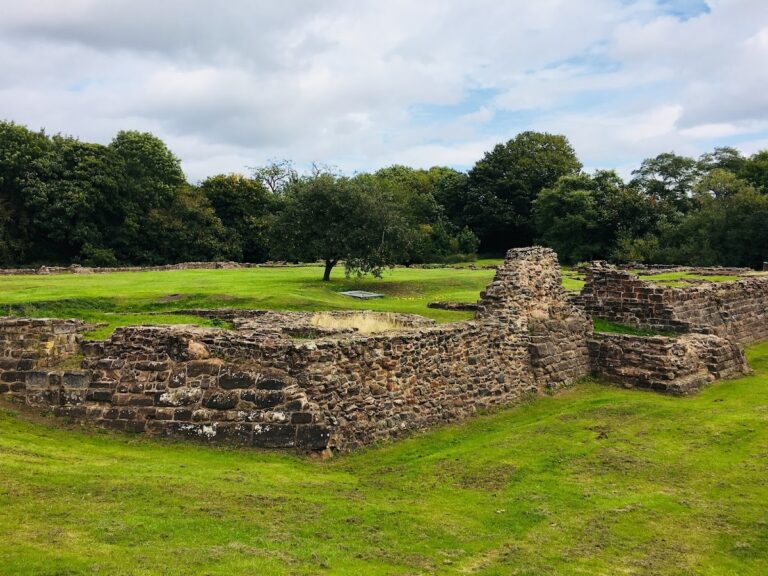
Metchley Fort is a Roman fort in the United Kingdom, built around AD 48 shortly after the Roman invasion of Britain. Its construction is attributed to Emperor Claudius and was ordered by Publius Ostorius Scapula, governor of Roman Britain.
Roman occupation
The fort may have been involved in the Boudican Revolt of AD 60 or 61, an uprising against Roman rule led by Boudica, queen of the Iceni of eastern Britain. It was abandoned in AD 70. Around AD 90, a second fort, about half the size of the first, was built on the site. This was abandoned around AD 120, after which the area was probably used at intervals as a training camp. The site was finally abandoned around AD 200.
A civilian settlement grew beside the fort for only a few years, while the fort was at its largest. Later buildings replaced fort structures, suggesting that the site was used as a stores depot.
Rediscovery and investigation
A hunting lodge occupied the site from at least the sixteenth century, probably near the fort’s rear and central headquarters area. It was demolished around 1781, when the earthworks were first identified; cultivation also brought them close to being lost. Around that time, William Hutton described the remains in An History of Birmingham. Their origins were debated, but the prevailing interpretation held that the fort was Norse, or medieval Scandinavian, in origin.
Excavations began in 1934 during construction of the University of Birmingham Medical School and confirmed the fort’s first- and second-century AD date. Work continued in the 1940s and 1950s, with larger excavations in the 1960s; archaeologist Mick Aston took part in work late in that decade. Further campaigns followed in 1969, 1987, 1995, 1997–98 and the early 2000s. On 28 September 1953, Birmingham’s Lord Mayor, G. H. W. Griffith, opened a restored north-west corner of the fort. Vandals destroyed the reconstruction before 1956. Metchley is one of Birmingham’s thirteen scheduled monuments, a legal category protecting archaeological and historic sites in England.
Remains
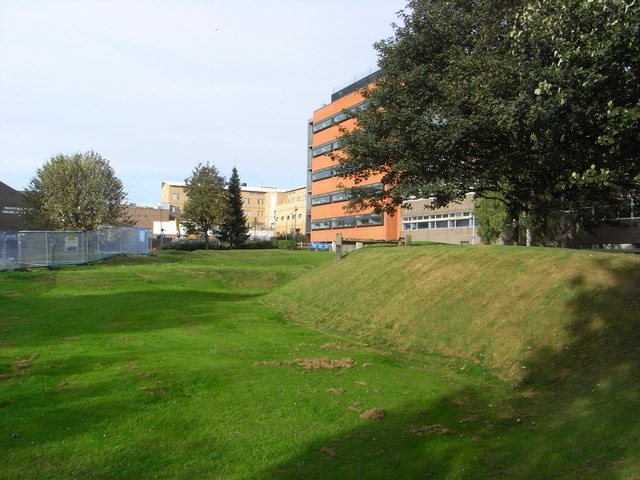
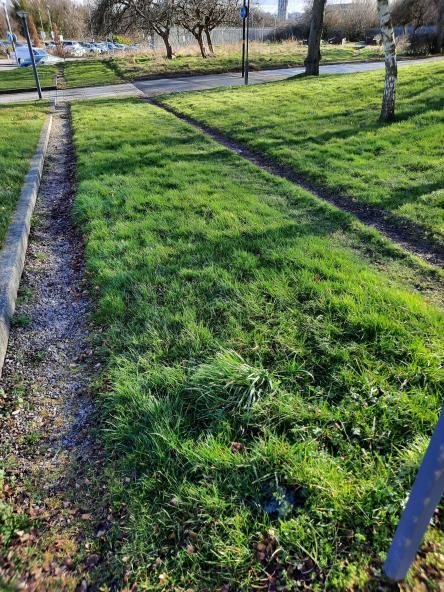
The site’s surviving evidence includes earthworks, ditches, buried ruins and patterns visible in crops. The fort followed a north-to-south plan and was built in four phases across marshland, covering about 200 square metres. It was constructed over three earlier Bronze Age burnt mounds, deposits of heat-cracked stone often associated with heating water.
Defenses and buildings
A bank of turf and earth, a timber wall, towers and a pair of ditches formed the fort’s defenses. A reconstruction depicts the East Gate and its defenses. Timber buildings inside the fort included barracks, a granary, a workshop and a store; excavations also revealed the headquarters building, ovens, hearths and timber gateways.
Annexes and civilian settlement
Defended annexes extended from three sides of the fort. The nearby civilian settlement had timber buildings and yards along a road leading from the fort’s west gate. Excavated roads and finds help describe activity at the site, including vessels from the Severn Valley and the Malvern Hills, as well as tableware from France.