Temple of Aphrodite at Acrocorinth: Corinth’s Principal Sanctuary to Aphrodite
Site at a Glance
- Popularity
- High
- Country
- Greece
- Primary era
- Early Modern
- Eras represented
- Iron Age, Classical, Early Modern
- Civilizations
- Ancient Greek, Ottoman
- Site type
- Religious
- Remains
- Mosque
On this page6 sections
History
Early Greek sanctuary
The Temple of Aphrodite at Acrocorinth, in Greece, was an ancient Greek sanctuary to Aphrodite, goddess of love and desire, whom the Corinthians regarded as their guardian deity. Its first limestone temple may have been built around 600 BCE, and a new building was erected on the same site around 400 BCE in the Doric style, one of ancient Greece’s principal architectural orders. The sanctuary remained in use during the Hellenistic period, which followed Alexander the Great’s conquests and lasted until Rome took Egypt in 30 BCE.
Greek myth said that Helios, the personification of the sun, gave Acrocorinth to Aphrodite. The sanctuary was regarded as Corinth’s principal and best-known temple to the goddess. Other places of Aphrodite worship in Corinth included temples called Aphrodite II and Aphrodite Kraneion, as well as sanctuaries at Lechaion and Cenchreae.
Roman Corinth
When Corinth was destroyed in 146 BCE, the sanctuaries on Acrocorinth may also have been abandoned or destroyed. Julius Caesar, the Roman general and political leader, oversaw the rebuilding of the city and fortress in 44 BCE, but whether the temple was restored is uncertain. Roman coins depict the temple, and brief descriptions by Pausanias, a second-century Greek travel writer, and Strabo, a geographer and historian, are its principal written accounts.
The sanctuary also became associated with claims of ‘sacred prostitution’, meaning alleged sexual services connected with worship. Courtesans were said to have served the sanctuary and drawn visitors to Corinth; other claims described many enslaved women, and perhaps men, as dedicated to the practice. Whether such activity took place at Acrocorinth, how many people were involved, and how closely it was tied to the temple remain disputed. Historian Stephanie Budin has argued that the claims may misinterpret unpaid ritual sex, nonsexual ceremonies, or cultural slander. Her interpretation has also been criticized.
Christian and Ottoman reuse
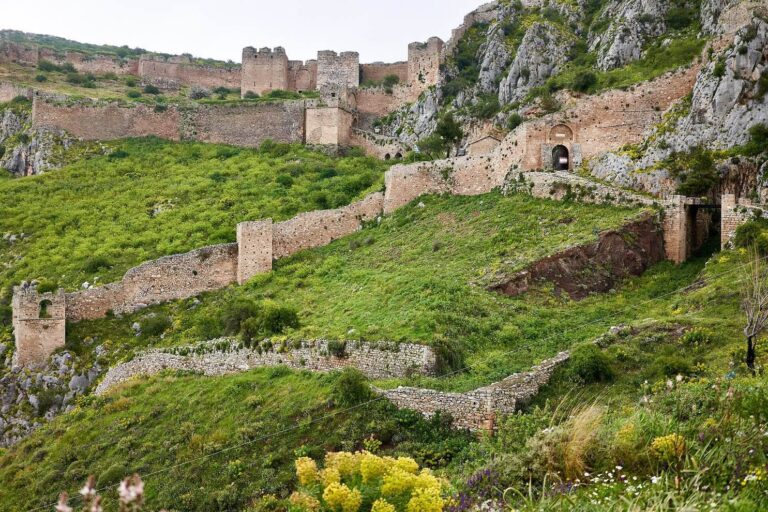
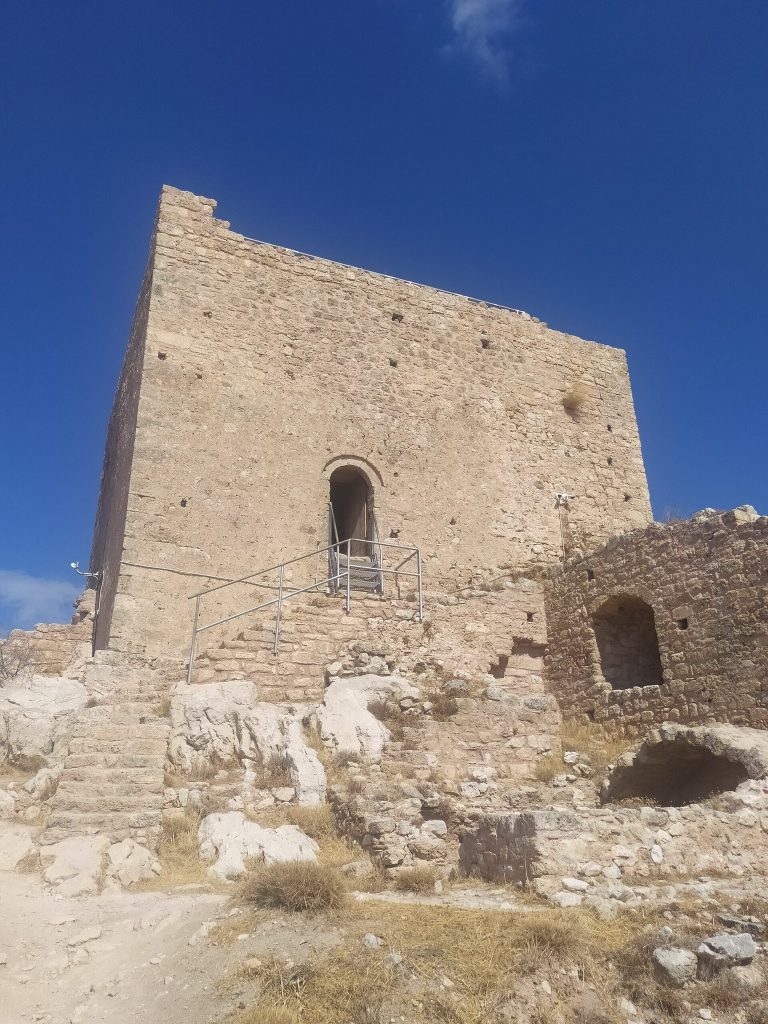
A church was built on the site during early Christianity, and the temple was probably dismantled by that time. By the fifth century AD, temple remains had been incorporated into a church. A mosque was later built there during the Ottoman period, while stones from the temple were reused in fortifications and other buildings.
Remains
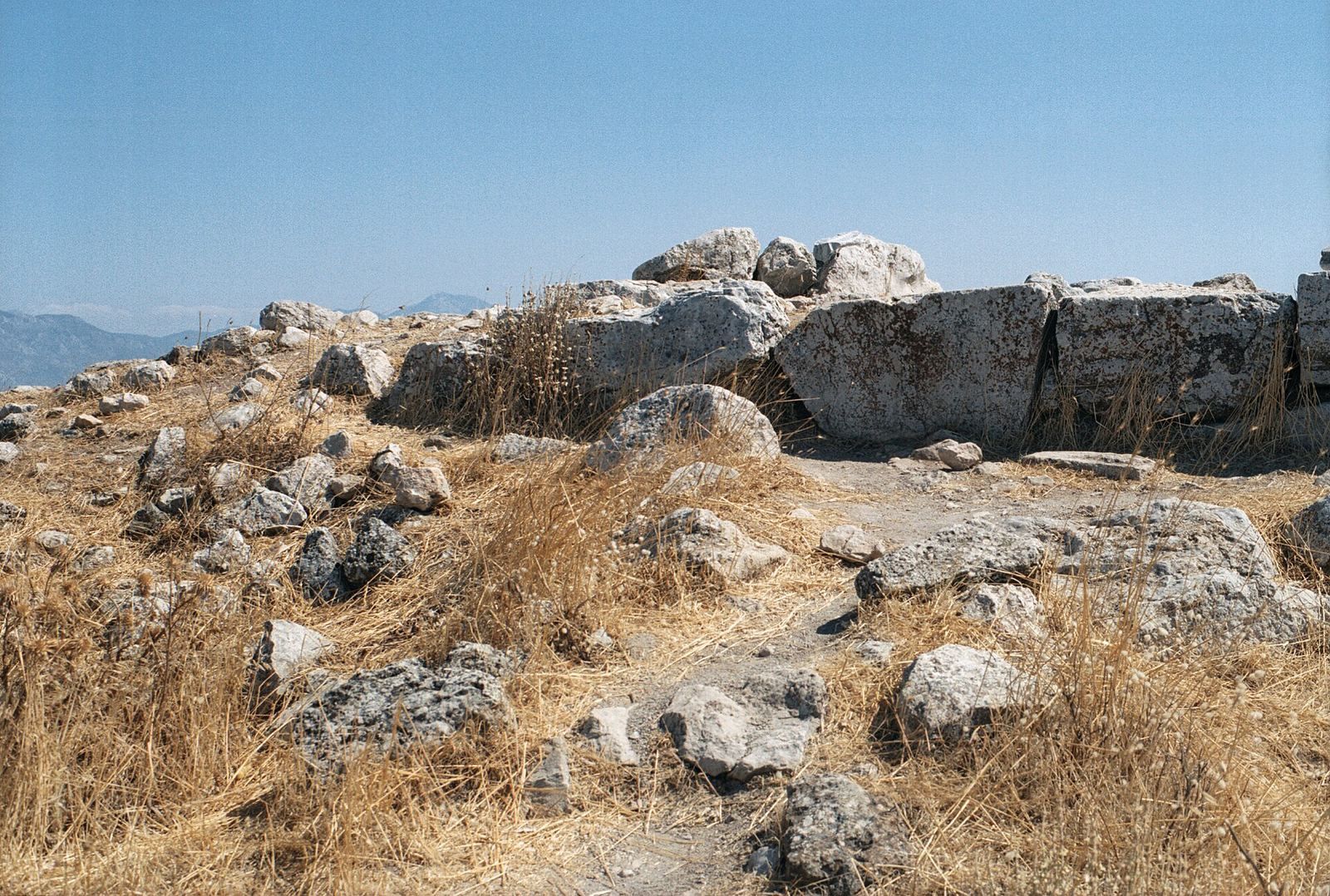
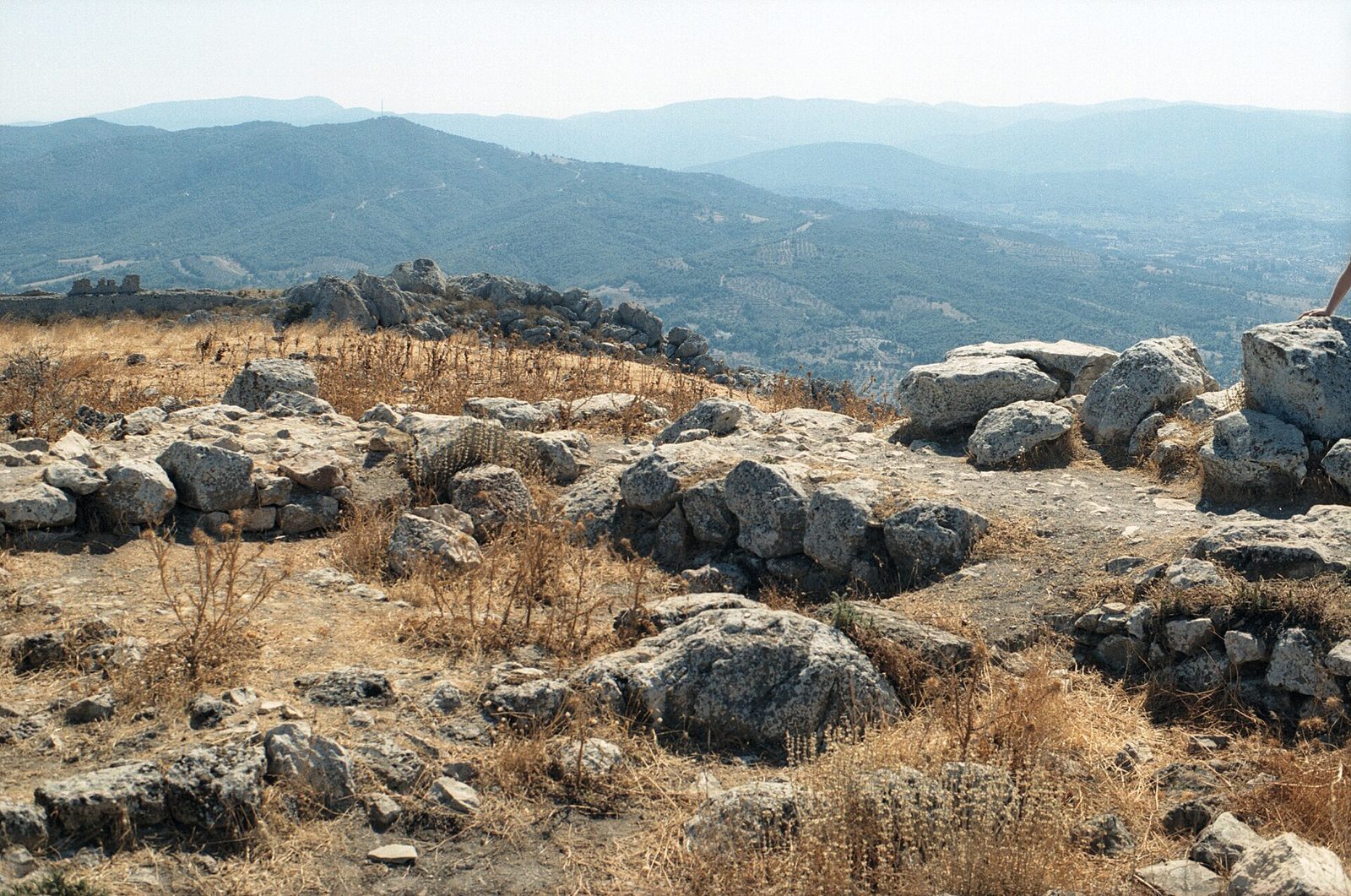
The temple occupied the highest point of Acrocorinth. It was a small limestone building in the Doric style, about 10 metres wide and 13 to 16 metres long. Only some of its foundations survive. The remains of the later mosque and its minaret now chiefly represent the site, and temple stones were also reused in fortifications and other buildings.
The cult image
The temple’s cult image, a representation of a deity used as a focus for worship, showed Aphrodite armed and wearing armour. Ancient coins depict her holding the shield of Ares, the god of war, before her as a mirror, with Eros, associated with desire, accompanying her.