St John the Evangelist’s Church, Leeds: A Seventeenth-Century Anglican Church
Site at a Glance
- Rating
- 4.5
- Popularity
- Medium
- Country
- United Kingdom
- Primary era
- Early Modern
- Eras represented
- Early Modern, Modern
- Civilizations
- British, English
- Site type
- Religious
- Remains
- Church
On this page10 sections
History
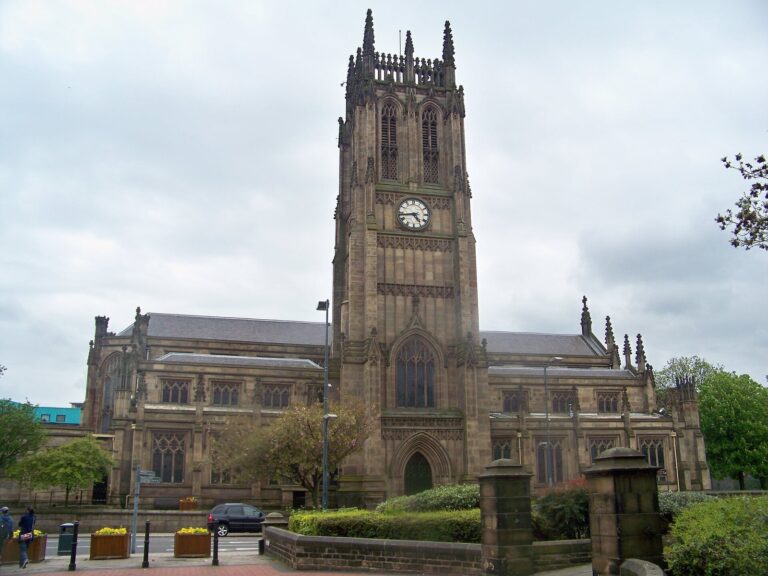
St John the Evangelist’s Church stands on New Briggate in Leeds, United Kingdom. It is the oldest church in the city’s central area and an Anglican church in the tradition associated with the Church of England. Construction began in the early 1630s, and the church was consecrated in 1634. John Harrison, a wealthy wool merchant, royalist and benefactor, paid for its construction. Few churches were built in England during the reign of Charles I, who ruled from 1625 to 1649.
Nineteenth-century changes and preservation
Between 1830 and 1838, the church was altered, including the remodelling of its tower by architect John Clark. By the middle of the century, the parish was considering demolishing the building and replacing it with a newer church. Architects Norman Shaw and Sir George Gilbert Scott joined efforts to save it. Scott argued that no other English town had a comparable church, helping persuade the bishop to approve restoration instead.
Shaw led restoration work from 1866 to 1868. The porch and vestry, a clergy room for vestments, were replaced; the roof and stonework were repaired; and the window tracery was altered. The churchyard was levelled and relandscaped. The work also brought a new baptismal font, a basin used for baptism, replacement benches, renewed floors and changes to the interior arrangement. The church returned to use on 2 February 1868.
From 1890, Temple Moore undertook further restoration, including reinstating some seventeenth-century woodwork removed during Shaw’s work. Moore also installed a second altar and communion rails, which mark the area around the altar, brought from a church in Kettlewell.
Protection and later use
The church received Grade I listing in September 1963, England’s highest category of statutory protection for historic buildings. It was declared redundant on 1 November 1975 and transferred to the Churches Conservation Trust on 17 January 1977, a charity that cares for historic churches no longer in regular use. Architectural historian Nikolaus Pevsner described it as the only church in Leeds with more than local interest.
Remains
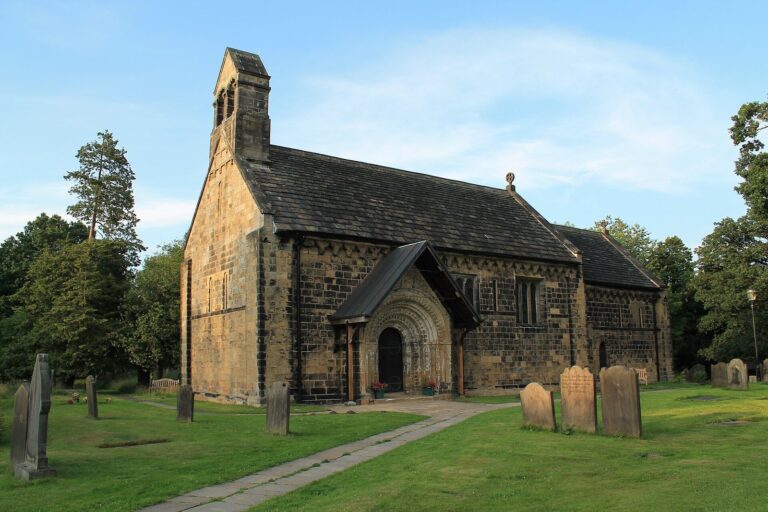
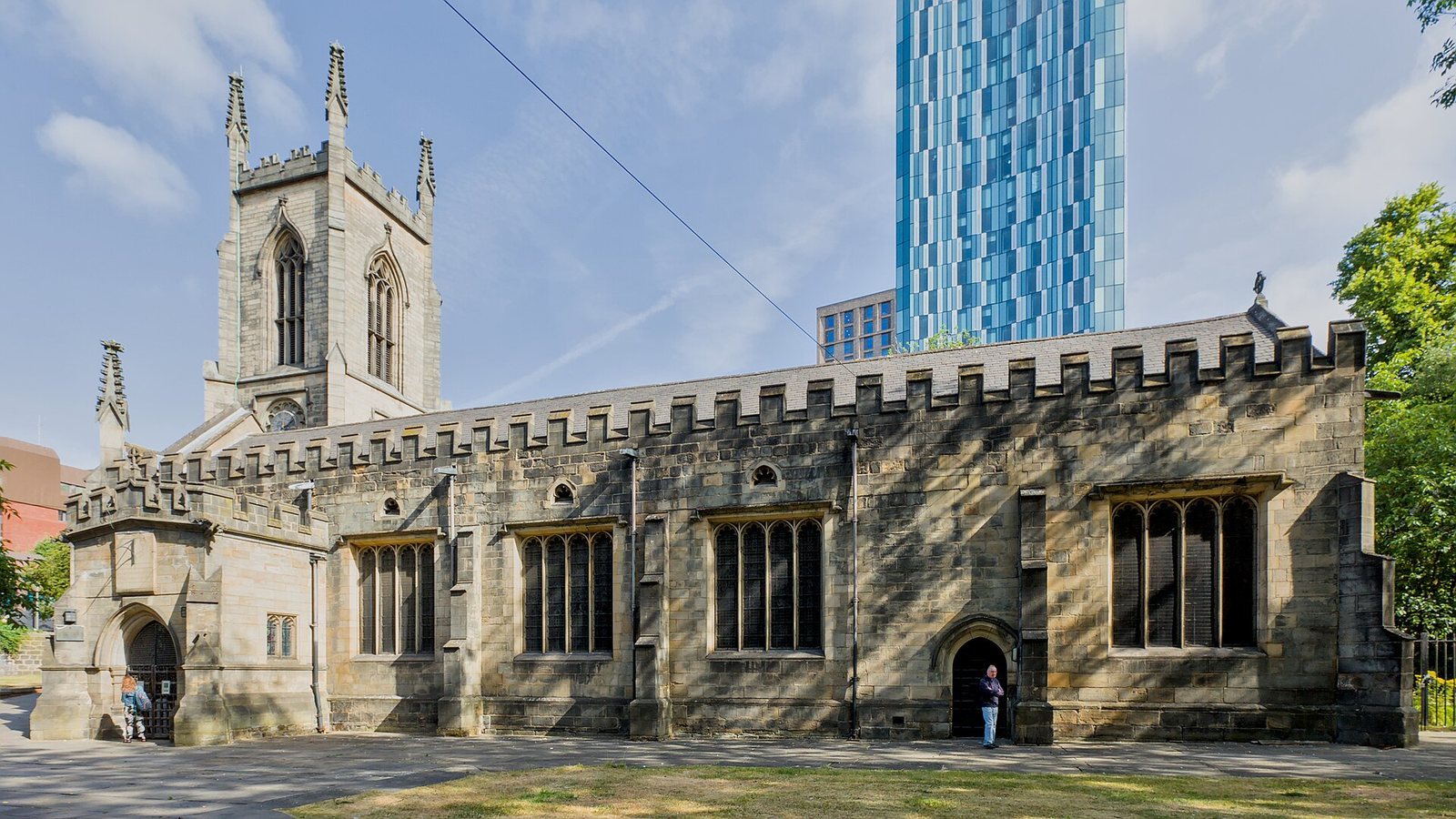
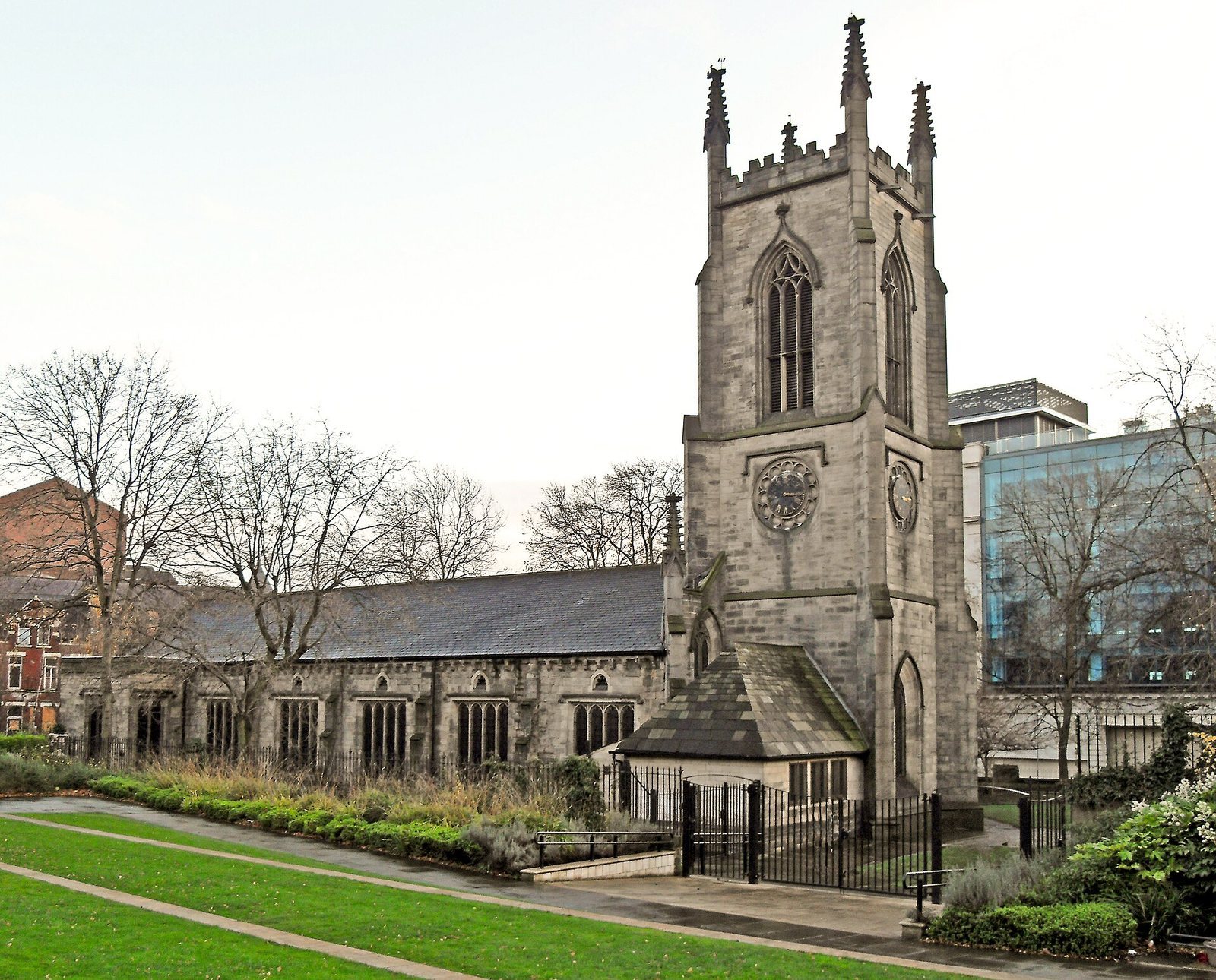
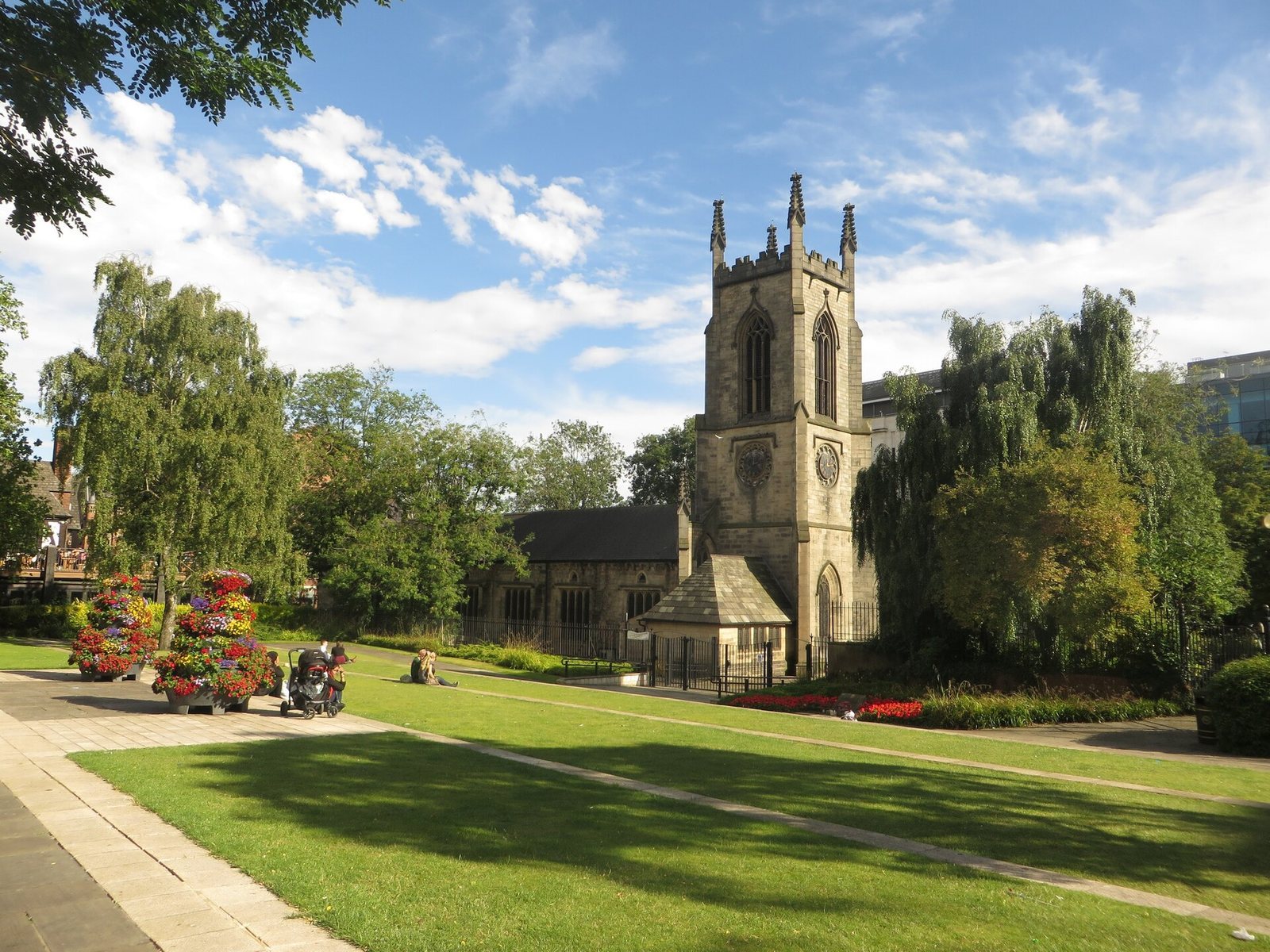
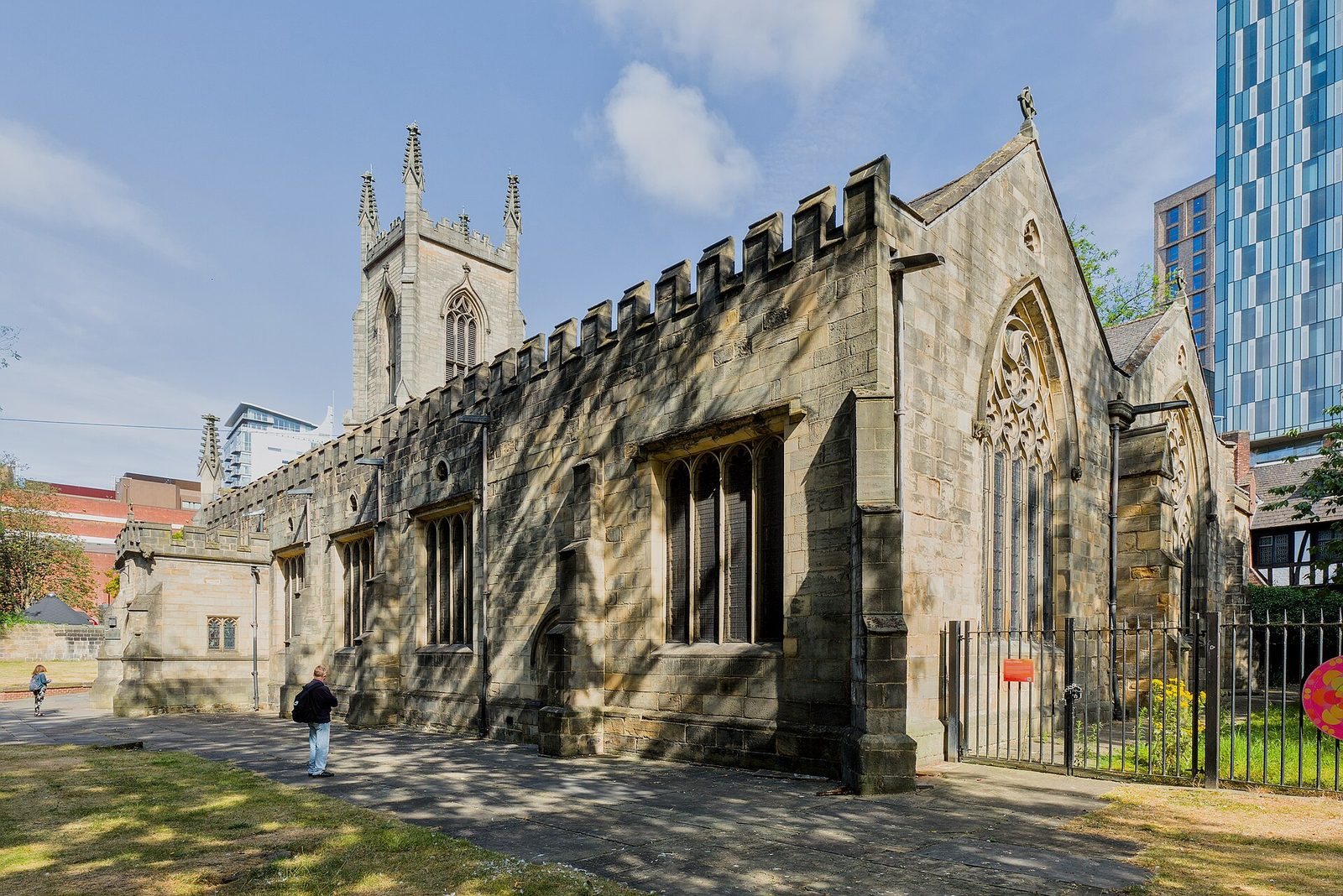
The church is built of ashlar, finely dressed stone laid in regular courses, beneath a grey slate roof. Its plan comprises a nave, the main space for the congregation, a south aisle, a side section, a chancel around the altar, a south porch and a west tower. The exterior is in the Perpendicular style, a late phase of English Gothic marked by strong vertical lines and elaborate window stonework. Its appearance recalls churches of the late fifteenth century.
Exterior
West tower and porch
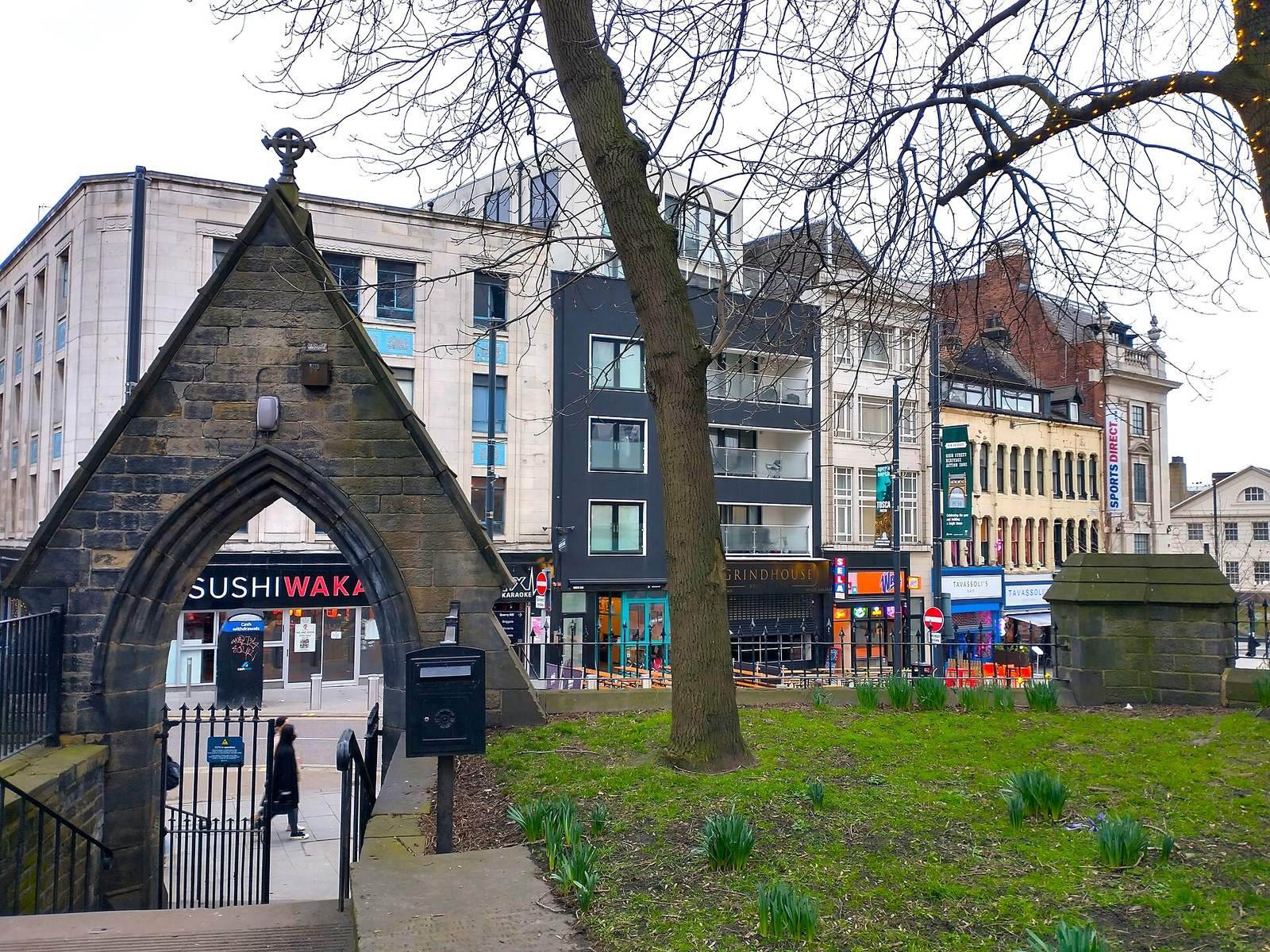
The west tower rises in three stages and has diagonal buttresses, projecting supports against its walls. A two-light window occupies the lowest stage. The middle stage has clock faces on its north, west and south sides, while the upper stage contains openings for the bells, each divided into three lights. The south porch has angled buttresses and an arched entrance, with a sundial above the doorway.
Windows and parapet
Four-light Perpendicular windows line the sides of the church. Five-light windows are set at the eastern ends of the nave and aisle and at the western end of the aisle. The exterior parapet has a battlement-like outline, with small pointed ornaments at its corners.
Interior
Roof and carved screen
Arches between the nave and aisle rest on octagonal supports with capitals, or carved tops, decorated with acanthus leaves and ball shapes. The ornamented roof includes horizontal tie beams, projecting carved supports bearing angels and musicians, gold-covered hanging ornaments and panels with roses and other plant designs. Carved details and plasterwork draw on late-sixteenth-century styles from the Low Countries. Much of the church’s fitting-out is Jacobean, a term for styles associated with the reign of James I, Charles I’s predecessor. An elaborately carved screen spans the nave and aisle. Its decoration combines flowers, tulips, hearts and winding vines with fantastical human and animal heads.
Furniture and memorials
Carving also decorates the wall panels, pews and pulpit, including brightly painted angels playing musical instruments. The church contains a royal coat of arms and three brass chandeliers. Its stained glass dates from the nineteenth century. One memorial window depicts Harrison carrying out charitable deeds and overseeing the church’s construction. Another part of the glass illustrates an apocryphal story that he brought the imprisoned Charles I a tankard that seemed to contain beer but concealed gold coins. Harrison is buried near the altar, and memorials commemorate other Leeds citizens.