Palace of Beaulieu: Henry VIII’s Royal Palace at New Hall
Site at a Glance
- Popularity
- Very High
- Country
- United Kingdom
- Primary era
- Early Modern
- Eras represented
- Early Modern
- Civilizations
- English
- Site type
- Domestic
- Remains
- Palace
On this page13 sections
History
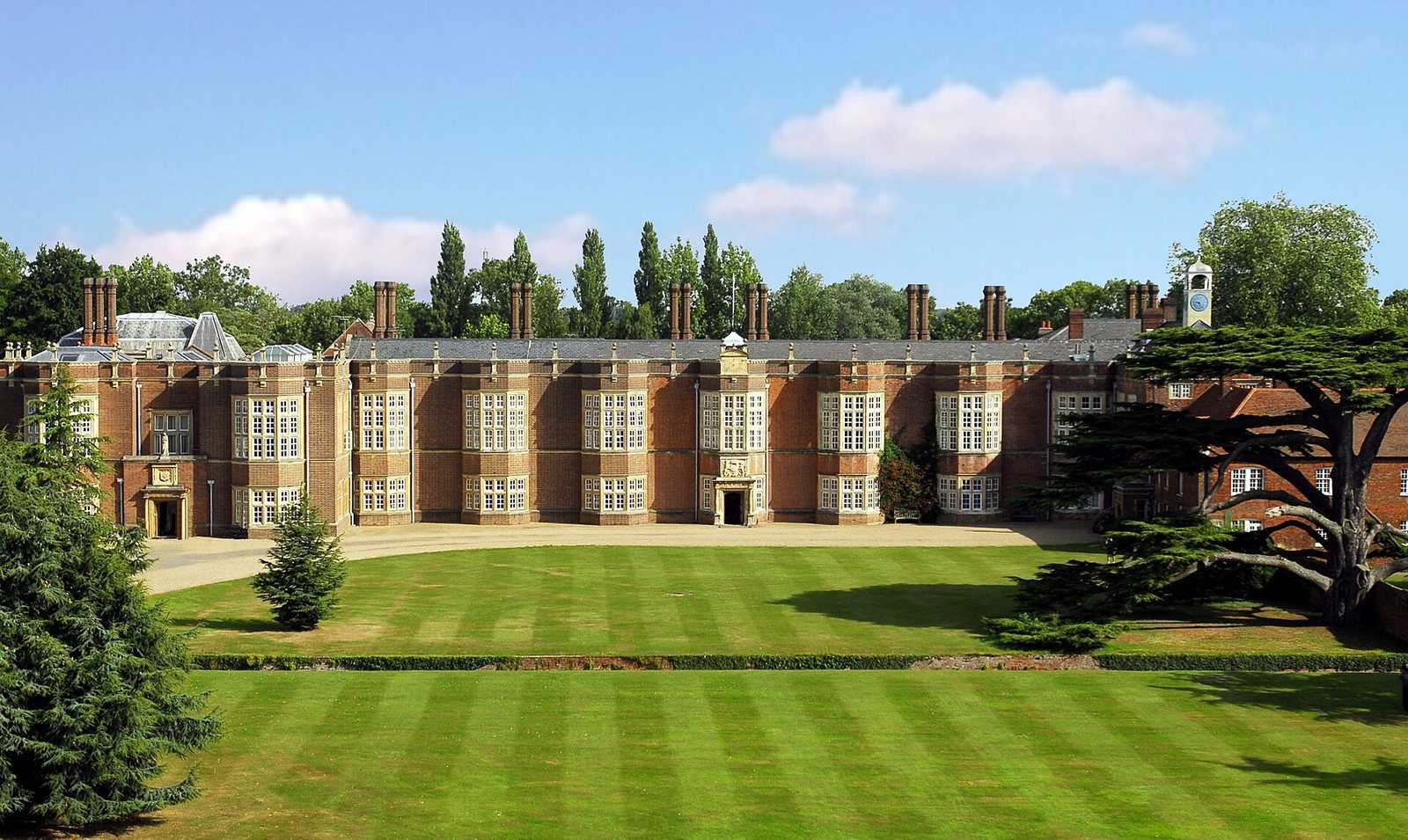
The Palace of Beaulieu, also known as New Hall, is a former royal palace at Boreham in Essex, United Kingdom. Henry VIII acquired and rebuilt the house in the sixteenth century, and it later became a royal residence and a Catholic school.
From manor to royal palace
The manor of Walhfare, where the palace later stood, was granted to the canons of Waltham Abbey in 1062. After passing through several owners, the property was granted by the Crown to Thomas Butler, 7th Earl of Ormond, in 1491. A house already called New Hall occupied the site by then.
In 1516, Thomas Boleyn sold New Hall to Henry VIII for £1,000. Henry rebuilt it as a palace at a cost of £17,000 and named it Beaulieu, meaning “beautiful place.” The Beaulieu name fell out of use by the end of the sixteenth century.
Henry VIII and the Tudor court
A banquet and masque, a court entertainment combining costume, dance and performance, took place at New Hall in 1519. After the feast, eight disguised courtiers danced with the ladies. Catherine of Aragon unmasked them, revealing that they were men over fifty. Six younger men then appeared in costume, including four hostages associated with the French treaty.
Henry’s court arrived on 23 July 1527 and stayed for more than a month, accompanied by many nobles and their wives. The visitors included Thomas Boleyn, then Viscount Rochford, and the Dukes of Norfolk and Suffolk. At Beaulieu, Henry planned to seek a papal decree declaring his marriage to Catherine invalid so that he could marry Anne Boleyn. Cardinal Wolsey discovered the plan, which was abandoned. In December, Pope Clement VII issued a decree to the same effect.
In October 1533, Henry granted the palace to George Boleyn, Anne’s brother, and Mary, Henry’s daughter by Catherine, was evicted with her companion Margaret Douglas. George had previously served as keeper of the palace while it belonged to the king. After Anne’s execution and Henry’s marriage to Jane Seymour, Jane persuaded him to bring his daughters back to court. When Jane died in 1537 after giving birth to Edward, Mary became the infant prince’s godmother and chief mourner at Jane’s funeral.
Henry provided Mary with a household and allowed her to live in royal palaces, including New Hall, one of her principal residences. Some furnishings were taken from New Hall for Edward’s lodgings and wardrobe. Henry bequeathed the house to Mary, who lived there during the reign of her half-brother Edward VI.
Elizabethan and Stuart owners
Elizabeth I granted the estate to Thomas Radclyffe, 3rd Earl of Sussex, in 1573. He probably rebuilt much of the north wing, although the extent of his work elsewhere is uncertain. A fire during Henry VIII’s reign may already have prompted substantial rebuilding. Elizabeth visited New Hall in September 1579. An entertainment featuring Jupiter, the chief god of Roman religion, and a staged thunderstorm was followed the next day by jousting and a performance in which a maiden brought a sleeping knight in a chariot and the queen appeared to revive him.
In July 1622, Robert Radclyffe, 5th Earl of Sussex, sold the house to George Villiers, 1st Duke of Buckingham, for £30,000. James VI and I and Prince Charles visited that September. Improvements to the estate were associated with architect and designer Inigo Jones. Balthazar Gerbier and a carpenter prepared an architectural model, while gardener John Tradescant worked on the gardens.
During the English Civil War, Oliver Cromwell took possession of the estate for five shillings. After the Restoration of the monarchy, it returned to George Villiers, 2nd Duke of Buckingham, and later passed by sale to George Monck, 1st Duke of Albemarle. Charles II’s court was often entertained at New Hall. Cosimo III, Grand Duke of Tuscany, visited in 1669.
From country house to school
Benjamin Hoare acquired the property in 1713. John Olmius bought it in 1737, when it was in poor condition, and demolished and rebuilt much of the palace. Olmius became Baron Waltham in 1762, the year his son Drigue succeeded him. Drigue died without children in 1787, aged forty, and the estate passed to his sister Elizabeth, who also died that year. Her husband, John Luttrell, later Earl of Carhampton, took the Olmius name and sold New Hall in 1798.
English nuns of the Order of the Holy Sepulchre bought New Hall in 1798 and opened a Catholic school there the following year. New Hall School continues to occupy the property. The surviving building received Grade I listing in 1952, while the park and garden were listed Grade II in 1987. Beaulieu is also the name of a nearby housing estate.
Remains
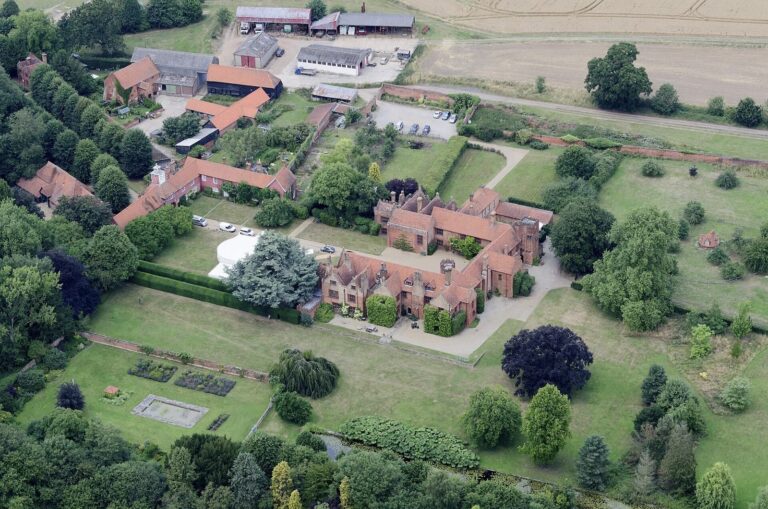
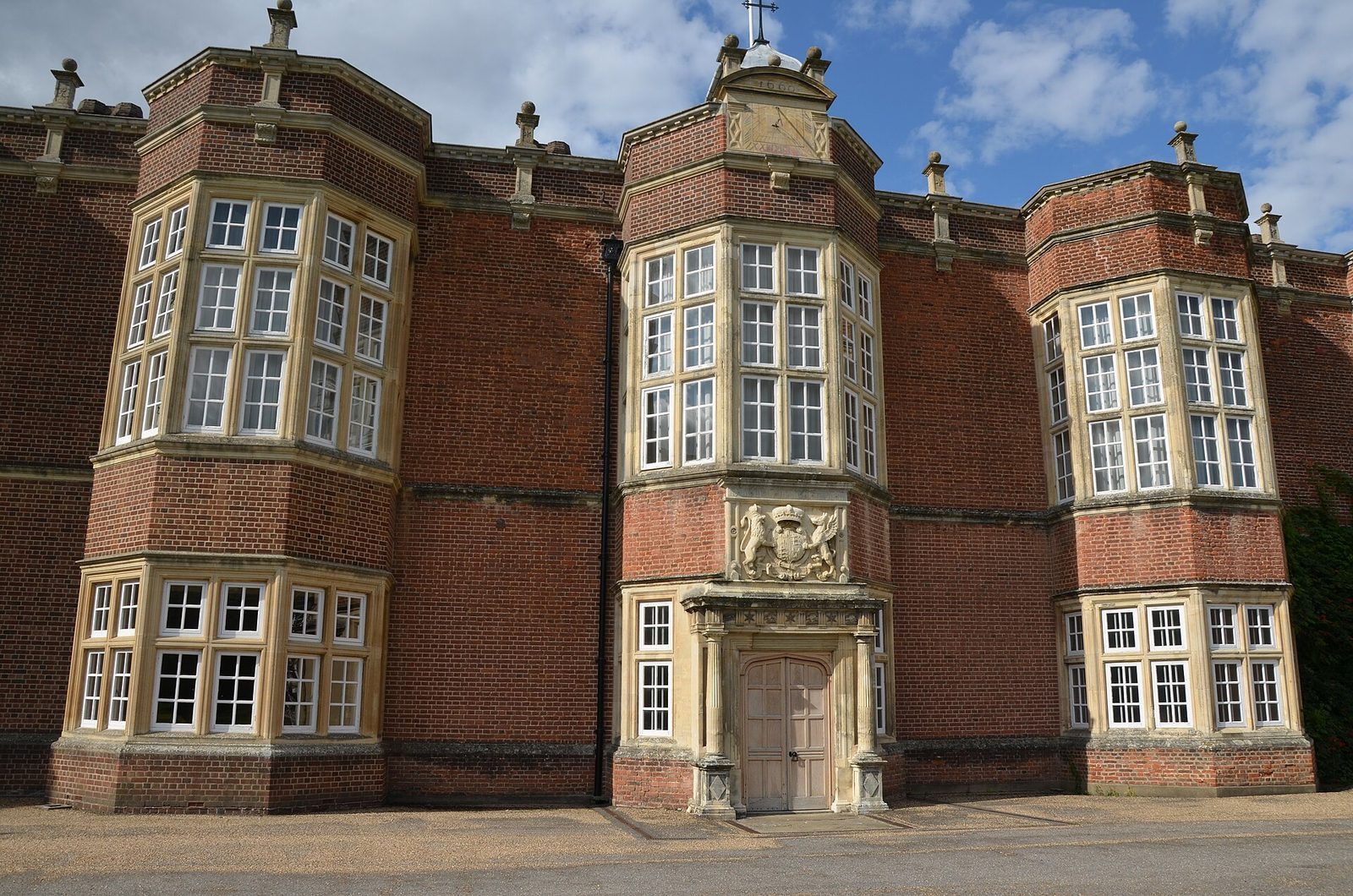
The present house occupies the palace’s surviving north wing. Its architectural character is described as Tudor, Elizabethan and Neoclassical, reflecting the site’s successive building periods. Excavations have also revealed parts of the palace that no longer stand above ground.
Palace buildings
North wing and entrance
The north wing forms the present house and was largely left untouched when John Olmius rebuilt much of the former palace in the eighteenth century. Henry VIII’s rebuilding used brick. Above the main entrance, Thomas Radclyffe installed Elizabeth I’s coat of arms soon after the north range was completed; it remains visible. A view of the house made in 1669 by a member of Cosimo III’s retinue survives in a copy published in 1821.
Excavated chapel, west wing and gatehouse
An archaeological excavation in 2009 revealed the palace chapel and the foundations of the west wing and gatehouse, providing evidence of parts of the complex beyond the surviving north wing.
Interior evidence and grounds
Royal rooms and furnishings
A royal inventory from 1547 describes the palace’s household: it lists 29 great beds, four bathing rooms with wooden floors and beds set into the walls, and a library containing 37 titles. Royal wardrobe official James Chapell measured the new apartments and travelled to Flanders to buy tapestries. Eleven different qualities of material were intended to cover 3,238 Flemish ells, a traditional textile measure, or 1,818 square yards. Thomas Radclyffe’s will describes a royal presence chamber, a formal reception room, hung with a tapestry of the Dance of Death, an artistic theme showing death claiming people of every rank. Its furnishings included a crimson velvet canopy embroidered with hands, dragons and porcupines. Other tapestries depicted Alexander the Great, the biblical Esther and the planets. An inventory from 1583 notes that some tapestries then at New Hall had been left by Mary I.
School chapel
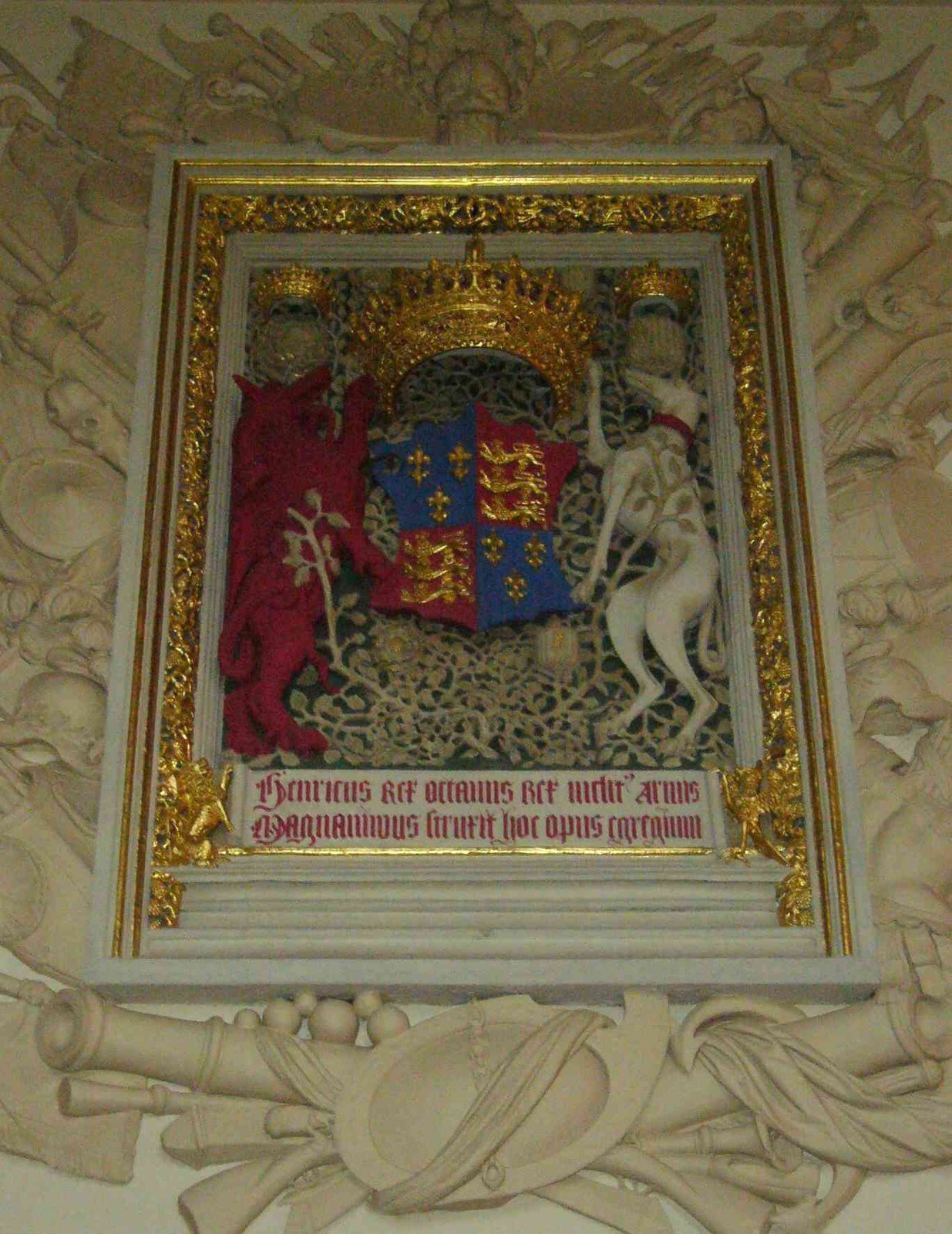
The school chapel contains the Royal Arms of Henry VIII.
Park and garden
The palace grounds include a park and garden, which form part of the historic site.