Church of the Holy Apostles Peter and Paul: Prince Miloš’s Court Church
Site at a Glance
- Rating
- 4.9
- Popularity
- Medium
- Country
- Serbia
- Primary era
- Modern
- Eras represented
- Modern
- Civilizations
- Ottoman, Serbian
- Site type
- Religious
- Remains
- Church
On this page10 sections
History
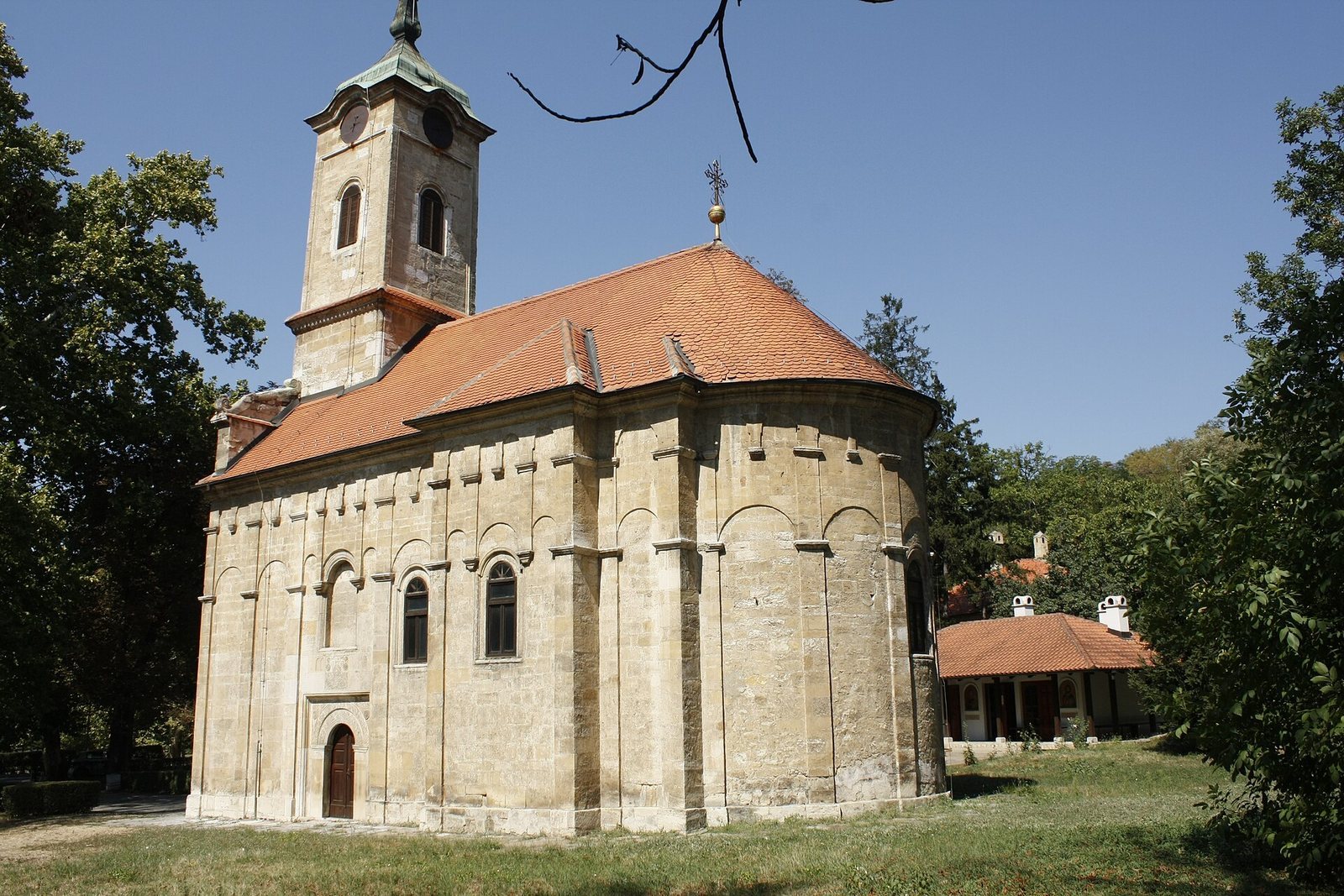
The Church of the Holy Apostles Peter and Paul is a Serbian Orthodox church in Belgrade, Serbia, commissioned by Prince Miloš Obrenović as the court church for his Topčider residence. Built between 1832 and 1834, it belongs to the Archdiocese of Belgrade-Karlovci within the Serbian Orthodox Church.
Topčider and the commission
When Belgrade became the capital, Miloš chose Topčider for his residence because it lay beyond the range of the city’s guns. The area was then heavily wooded and included a small, little-known hamlet where the Ottomans kept an artillery garrison. The name Topčider means “artillerymen’s streams.”
The church’s origins are associated with an episode during the First Serbian Uprising, a revolt against Ottoman rule. Miloš had been ordered to keep the road to Valjevo and Kragujevac closed, but reached an agreement that let Ottoman forces pass. Karađorđe, leader of the uprising, captured him and took him to an abandoned cemetery in Topčider, intending to kill him. Mladen Milovanović pleaded for Miloš’s life, and Karađorđe spared him. Tradition connects Miloš’s decision to build the church with gratitude for that mercy. Another interpretation is that remorse may also have influenced him: Miloš later arranged the killings of Karađorđe in 1817 and Milovanović in 1823.
Construction and early use
Work began in 1832 and continued with short interruptions. Poor and delayed wages slowed the builders, and the project was completed in summer 1834. The church was consecrated that year, while its first service took place in spring 1835. Construction cost more than 70,000 groschen, a historical currency unit, a very large amount at the time.
Miloš supplied stone and lime from his own quarries and lime kilns, closely monitored technical matters, and appointed Toma Vučić Perišić to supervise the work. The need to economize also shaped the choice of materials. Those associated with the construction include Janja Mihajlović, Nikola Đorđević, Nikola Živković, Živko Mihailović, and Marko Bogdanović.
War and preservation
During the Austro-Hungarian occupation in the First World War, two of the church’s three bells were taken to Vienna and melted down for weapons. Reconstruction work began in 2013 and was completed in 2016. The church is designated a Cultural Monument of Exceptional Importance, and the church and its adjoining residence building have state-protected status.
Remains
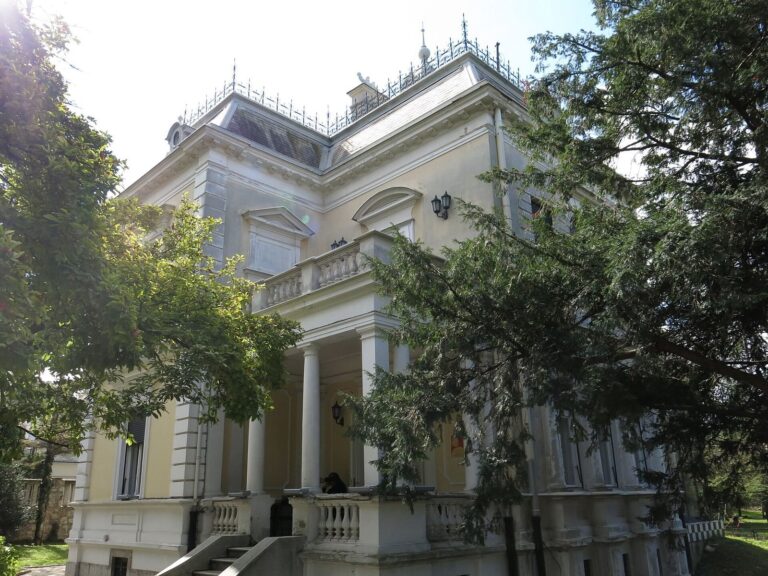
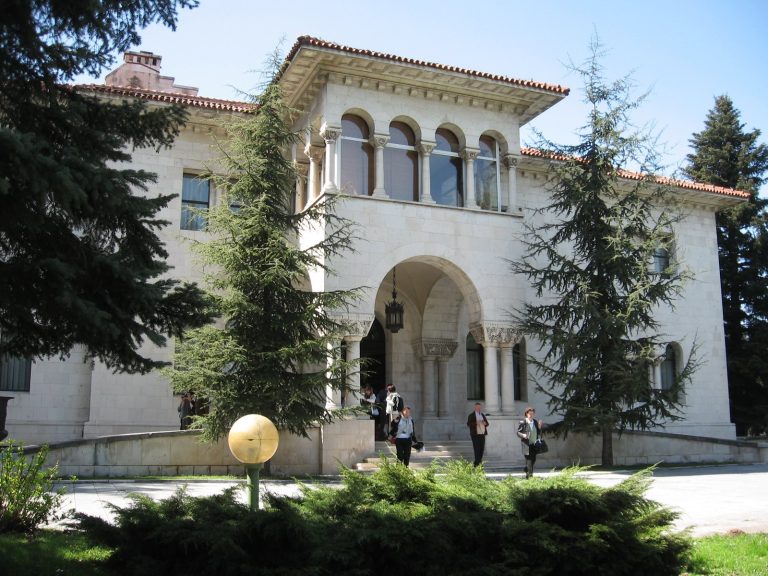
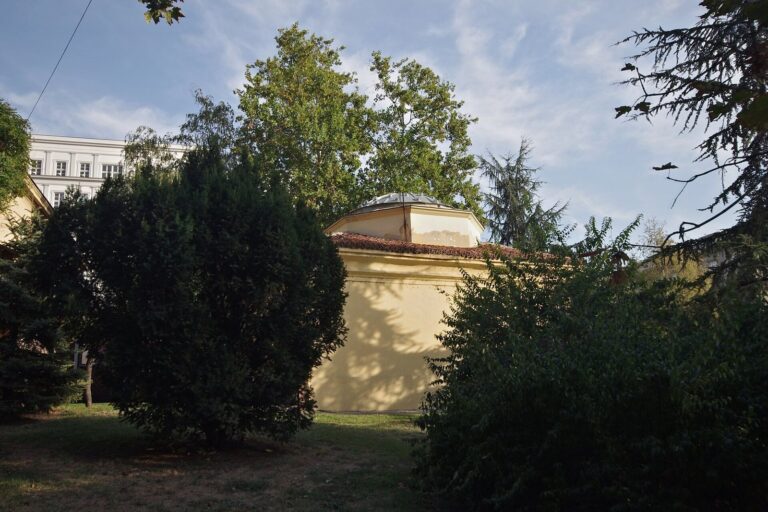
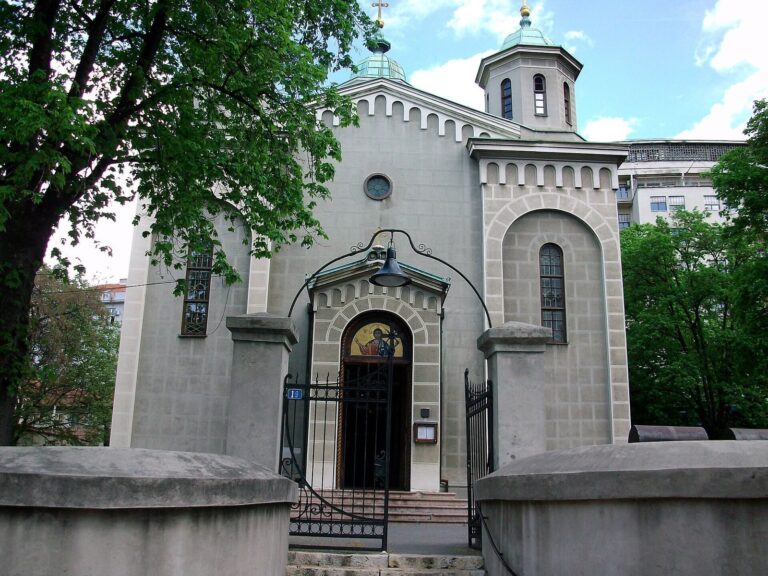
The stone church stands in Topčider Park near the Residence of Prince Miloš and the Church Konak, a residence building. Its layout brings together a central worship space, a western entrance vestibule, and a semicircular sanctuary projection. The building’s dressed-stone façades combine local traditions with Classical forms drawn from ancient Greek and Roman architecture, as well as Baroque influences.
Church building and interior
Main structure
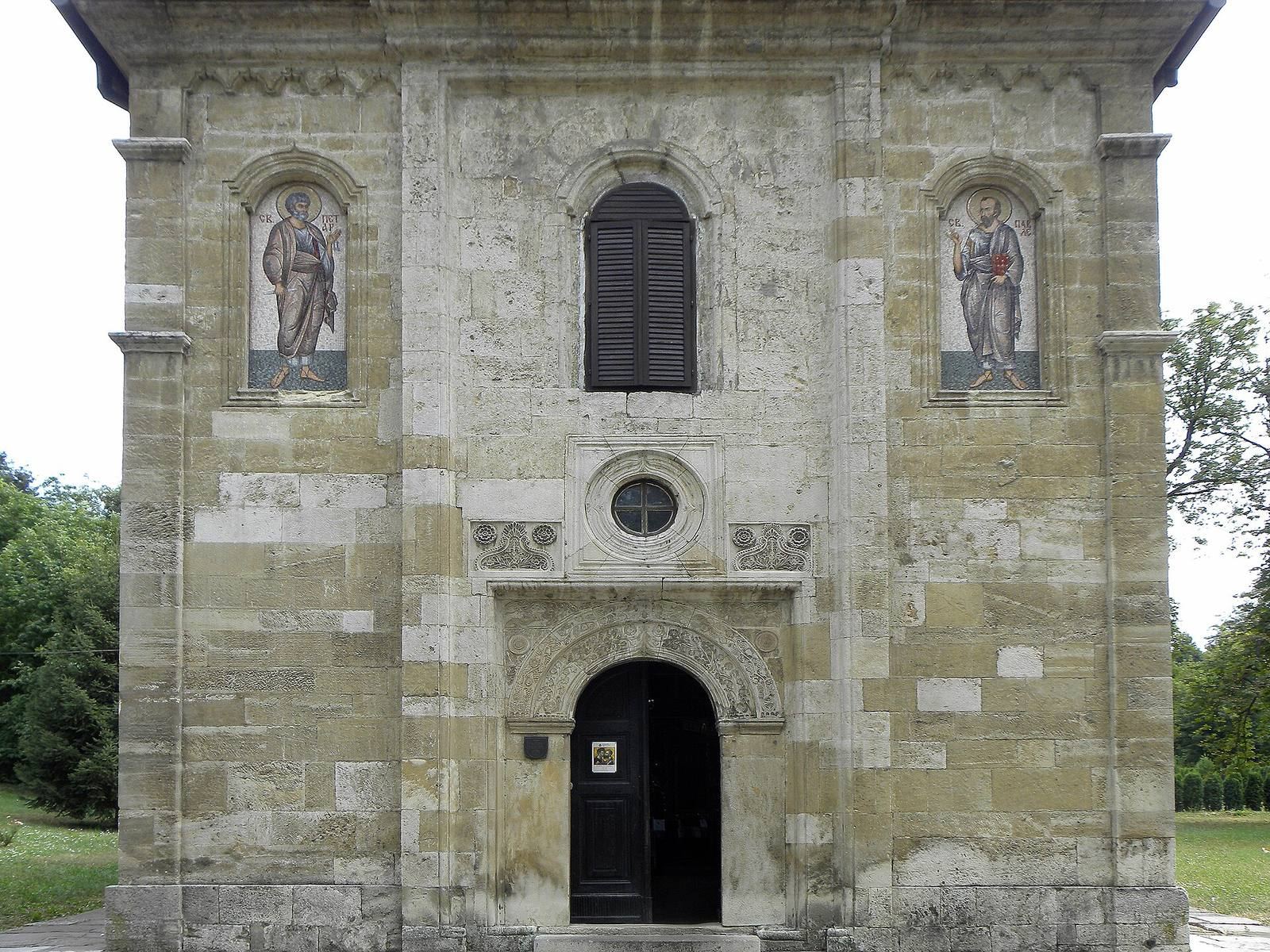
The church has a barrel vault, a continuous arched ceiling, and a semicircular apse, the projecting sanctuary space. Two rectangular choir areas, set aside for clergy or singers, flank the main worship space. A two-storey entrance vestibule at the west end is in Baroque style, a European style associated with elaborate ornament and dramatic effects. Shallow vertical wall projections, called pilasters, divide the main space into three sections.
Tower and bells
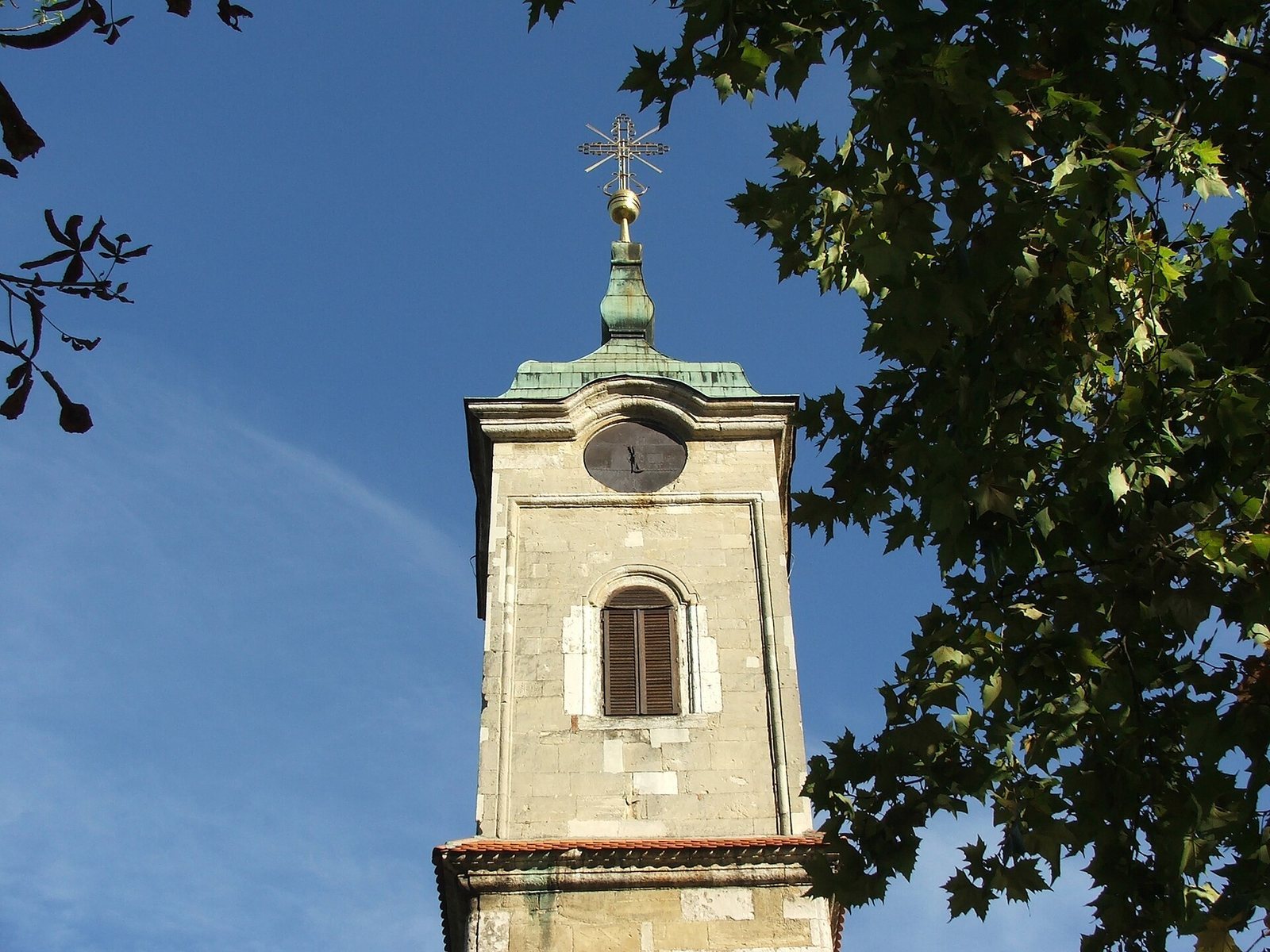
The bell tower and the Church Konak were partly built with old gravestones. On the rear of the tower, one stone bears a carving of farrier’s pincers, indicating the profession of the person commemorated. The smallest of the three bells donated by Miloš survives.
Icon screens
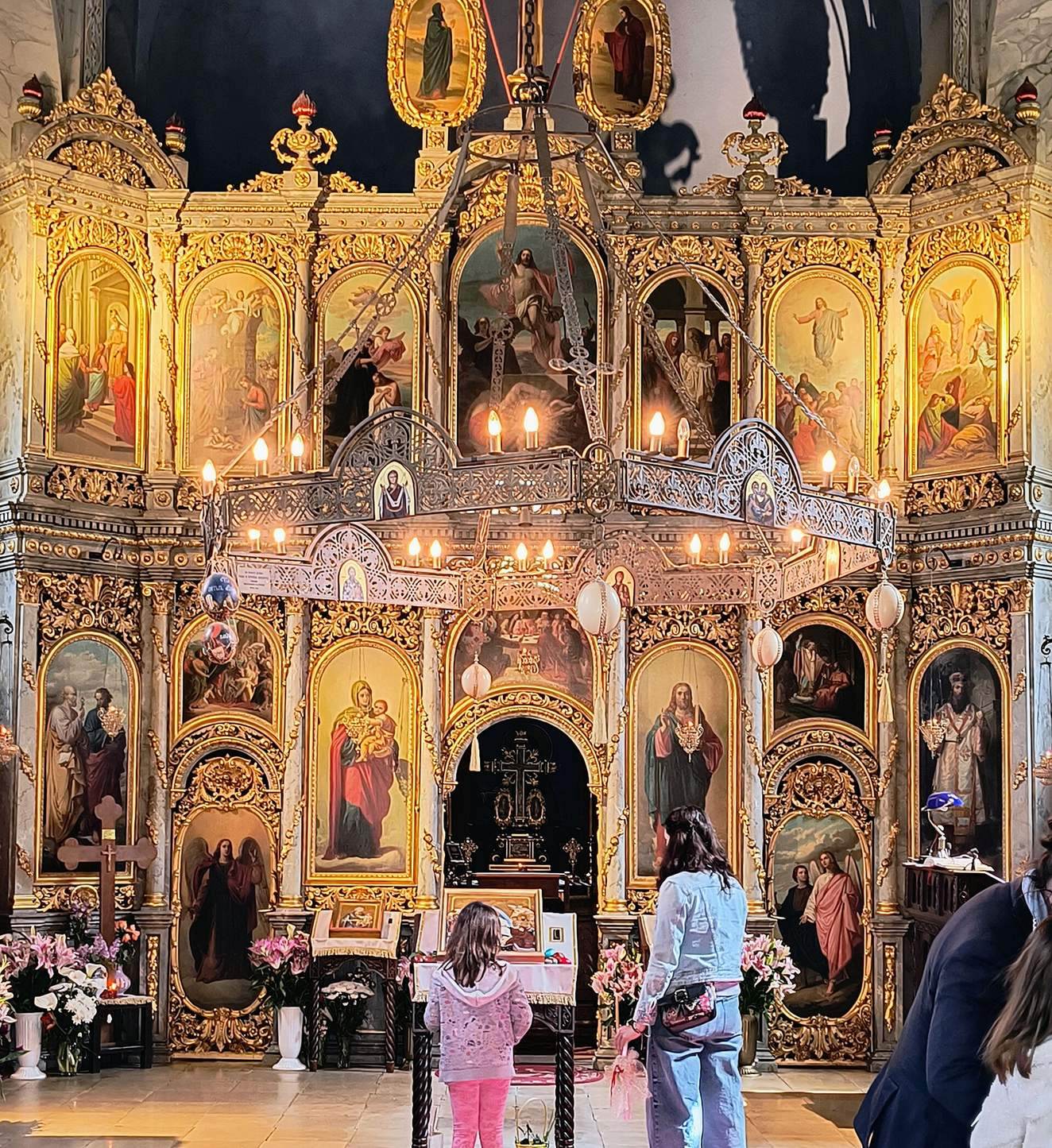
The first icon-bearing screen was made between 1834 and 1837 by Dimitrije Jakšić, Jovan Stergević, known as painter Janja, and Konstantin Lekić. It was moved in 1874, first to the church in Obrenovac and later to the church in Barič, and was restored in 2013. The screen now in the church was made in 1874 by Stevan Todorović and Nikola Marković, with carvings by Dimitrije Petrović.
Todorović chose unusual subjects and arrangements. On the southern altar doors, Tobias, a biblical figure, accompanied by angels takes the place of Saint Stephen the Archdeacon, an early Christian martyr; the scene represents burdened humanity. Above it is Saint Stefan Dečanski, a medieval Serbian king venerated as a saint. Saint Sava, a medieval Serbian archbishop and saint, replaces John the Baptist, the biblical prophet, and is portrayed differently from the familiar image at Mileševa, a Serbian Orthodox monastery. The saints on the screen are shown without halos.
Other works of art
The church also contains works of art from the eighteenth and nineteenth centuries.