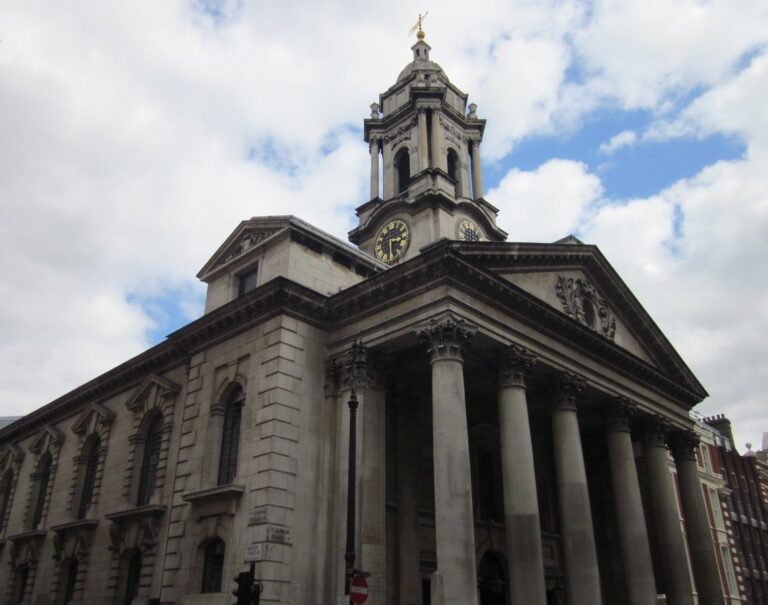
St Mark’s, Mayfair: A Former Anglican Church in London
Site at a Glance
- Rating
- 4.7
- Popularity
- High
- Country
- United Kingdom
- Primary era
- Modern
- Eras represented
- Modern
- Civilizations
- British
- Site type
- Religious
- Remains
- Church
On this page9 sections
History
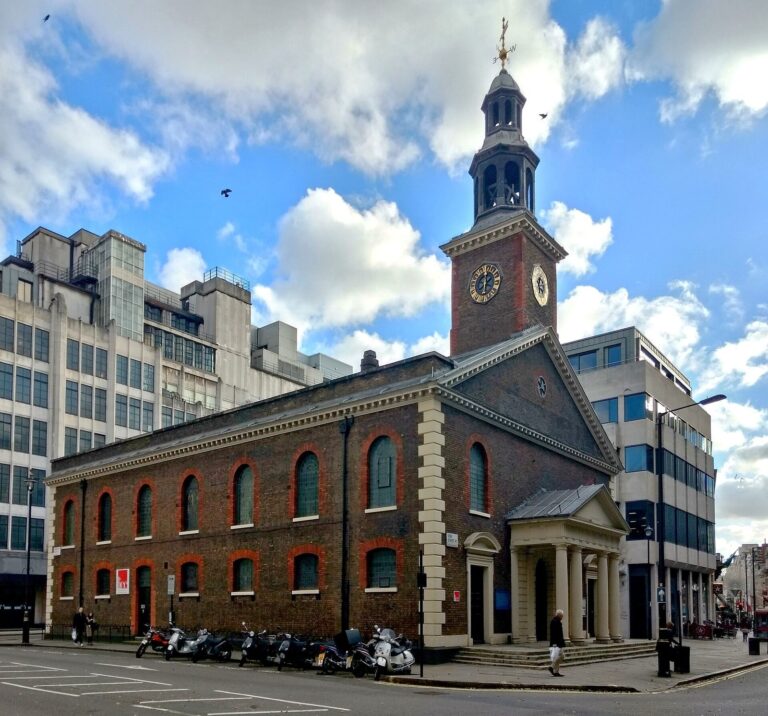
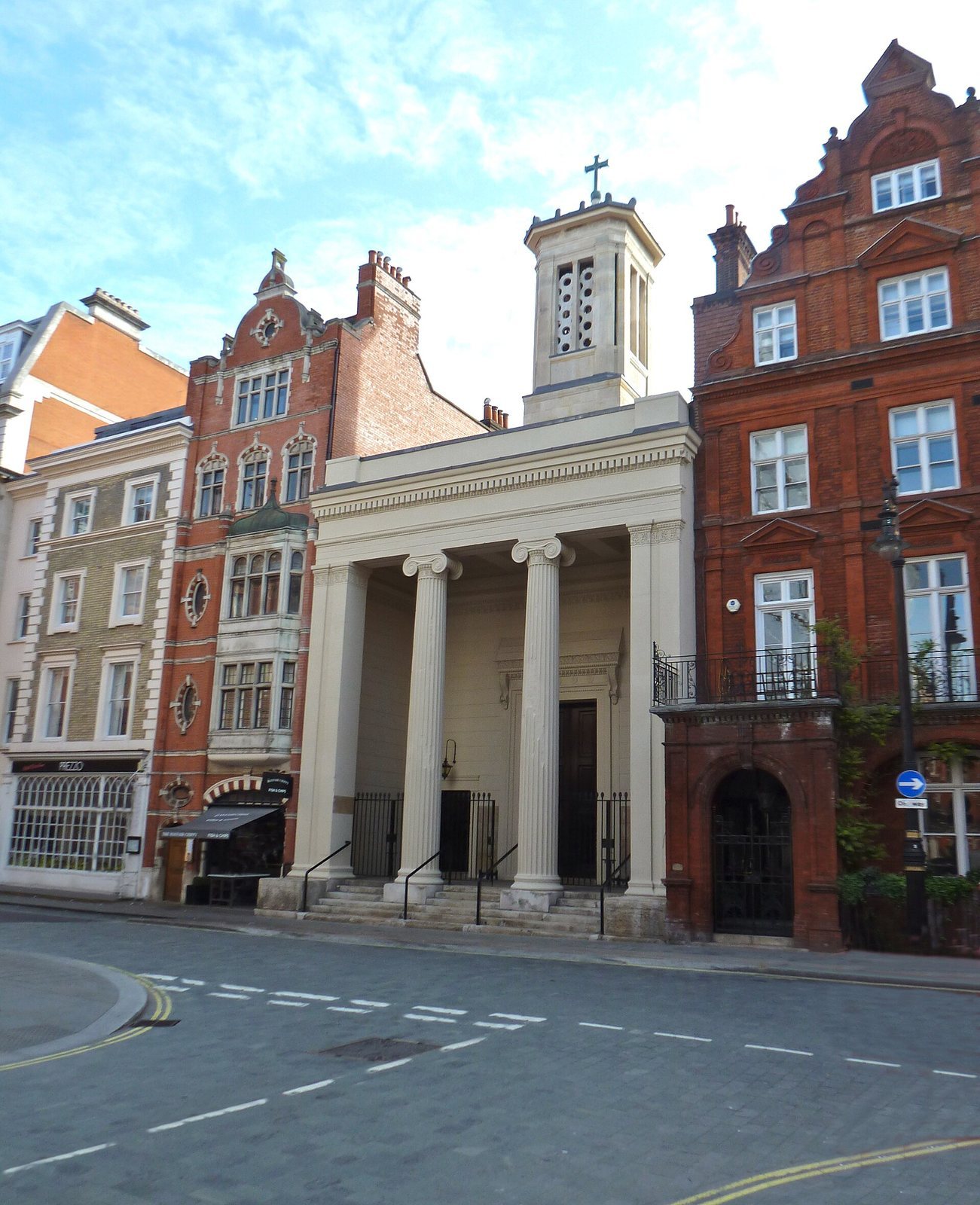
St Mark’s, Mayfair, is a former Anglican church on North Audley Street in London, United Kingdom, built between 1825 and 1828 in the Greek Revival style, which draws on the forms and design principles of ancient Greek buildings. Designed by John Peter Gandy, it met demand for worship as Mayfair’s population grew and aristocratic and wealthy residents moved from the countryside into town houses.
Early ministry and musical life
In 1834, artist Edward Thomas Daniell was appointed to the church’s curacy, a clergy post in which a curate assists a parish priest. St Mark’s also had musical associations with Victorian opera and oratorio singer Sir Charles Santley and composer Sir Arthur Sullivan.
J. W. Elliott, a former organist at the church, composed the tune Day of Rest for the hymn O Jesus I Have Promised. Other organists included John Williams, the Tower of London’s first Master of Music, a senior musical leadership post, and Margaret Cobb, the first woman to play the organ at the BBC Proms, a major British concert series held at the Royal Albert Hall.
Wartime and royal occasions
During the Second World War, the church became informally known as “The American Church in London.” Its proximity to the United States embassy and its role as a place of worship for Americans shaped that association. Visitors included Dwight Eisenhower, the military commander who later became U.S. president, and Eleanor Roosevelt, then First Lady of the United States.
On 29 September 1949, George Lascelles, 7th Earl of Harewood, married pianist Marion Stein at St Mark’s. King George VI and other members of the royal family attended. Benjamin Britten composed and conducted an anthem for the wedding service.
Decline and changing use
The church received Grade I listing in 1958, England’s highest category of listed-building protection for structures of exceptional architectural or historic interest. Its congregation dwindled during the 1950s and 1960s, and in 1974 St Mark’s was declared redundant, meaning it was no longer required for regular worship, and deconsecrated, formally ending its consecrated status. The building stood empty from 1975 to 1994 and remained on English Heritage’s Buildings at Risk register for more than two decades.
In 1994, the Diocese of London allowed the Commonwealth Christian Fellowship, led by Rod and Julie Anderson, to use the church. Its congregation numbered about 120 and offered anti-knife-crime training for teenagers, home visits for older people, and assistance to homeless people. The fellowship’s community use continued until 2008; its congregation is also associated with Christian worship at the church from April 1994 to June 2014. The church hosted This Present House from February to May 2015.
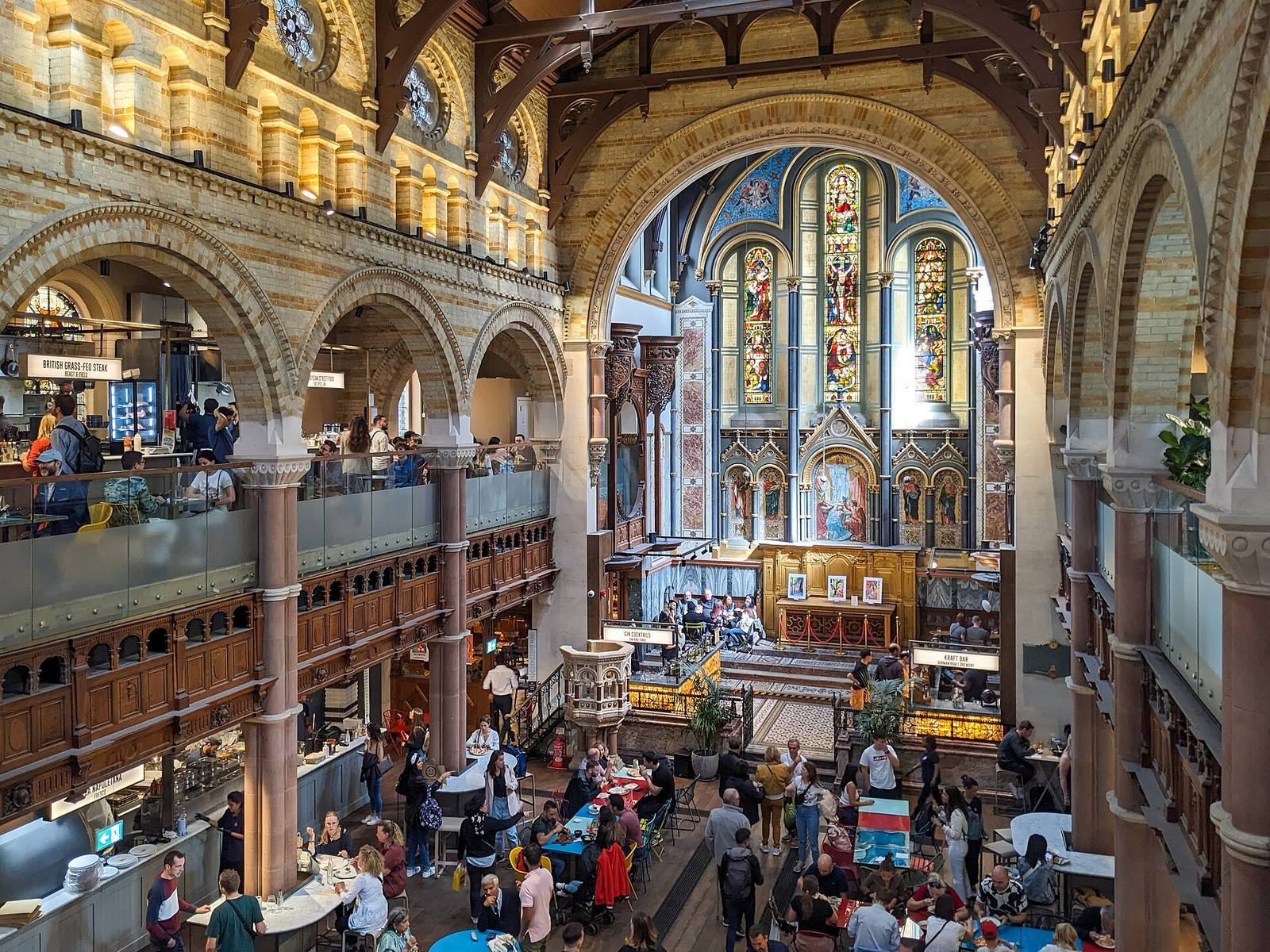
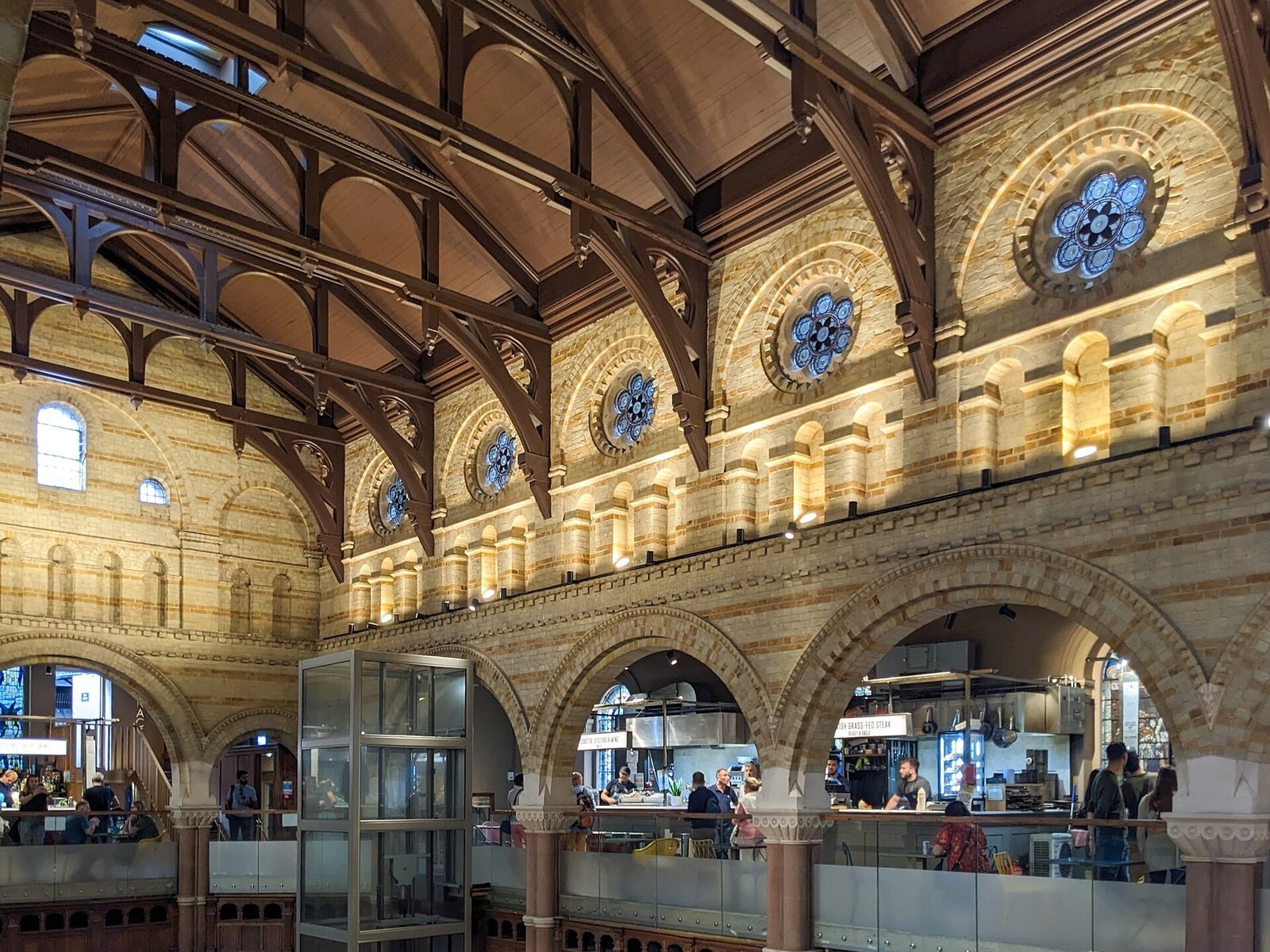
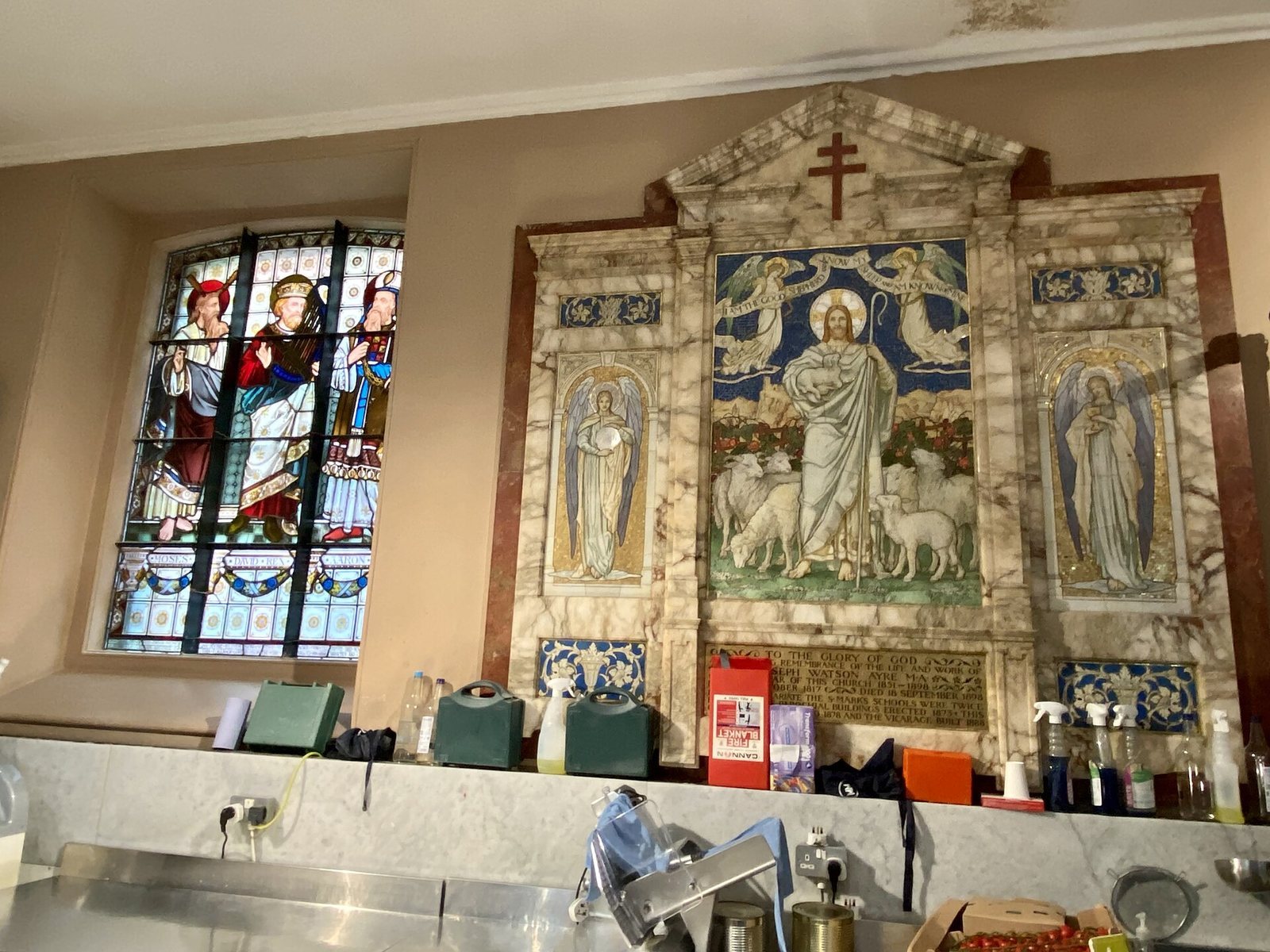
A 2006 plan to convert the building into a wellness centre received planning permission, but a campaign led by Lady Sainsbury prevented the proposal from proceeding. One Events acquired the building for use as One Mayfair, a mixed-use venue that opened in 2009. Grosvenor Estates acquired it in July 2014. Since 2019, the building has operated as Mercato Mayfair, a food hall run by Mercato Metropolitano.
Remains
The church’s street façade and porch define its exterior, while an open roof structure and wall decoration form part of the interior. Its physical features reflect both its original Greek Revival design and later alterations.
Exterior
The façade measures 34 feet (10 m) and is paired with an elegant porch. Together, they are described as among the finest in London.
Interior features
Roof and wall decoration
In 1878, architect Arthur Blomfield substantially altered the interior, adding an open roof structure in the Romanesque style, a medieval architectural tradition associated with rounded arches and substantial masonry. His work also brought wall decoration and further architectural detail.
Organs
The church has a recommissioned organ made by J. W. Walker & Sons Ltd, with three keyboards. The original Rushworth and Dreaper organ was relocated to Holy Trinity Brompton.