The Exchange in Bristol: A Georgian Trading Building
Site at a Glance
- Popularity
- Medium
- Country
- United Kingdom
- Primary era
- Early Modern
- Eras represented
- Early Modern, Modern
- Civilizations
- British
- Site type
- Economic
- Remains
- Market
On this page13 sections
History
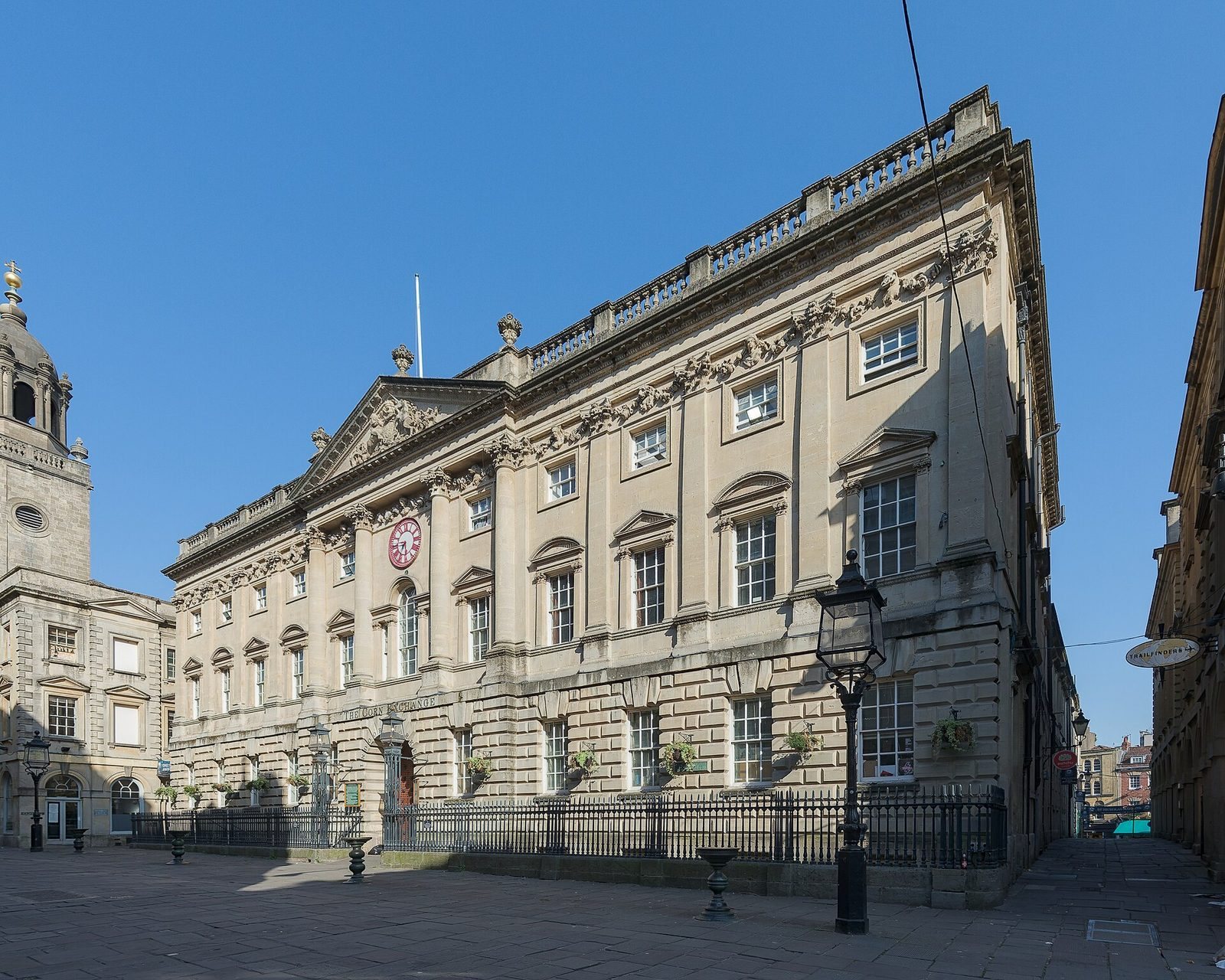
The Exchange is a Georgian Palladian trading building on Corn Street in Bristol, United Kingdom, erected by John Wood the Elder between 1741 and 1743. Its design drew on classical principles associated with Renaissance architect Andrea Palladio, and Thomas Paty carved its ornament. It is the only surviving eighteenth-century exchange building in England.
Trade and the Exchange
Although commonly used as a corn exchange, the building was intended for merchants dealing in many kinds of goods. Some of its users were directly involved in the Guinea and West Indian slave trades, which forcibly transported and sold enslaved people from West Africa and the Caribbean.
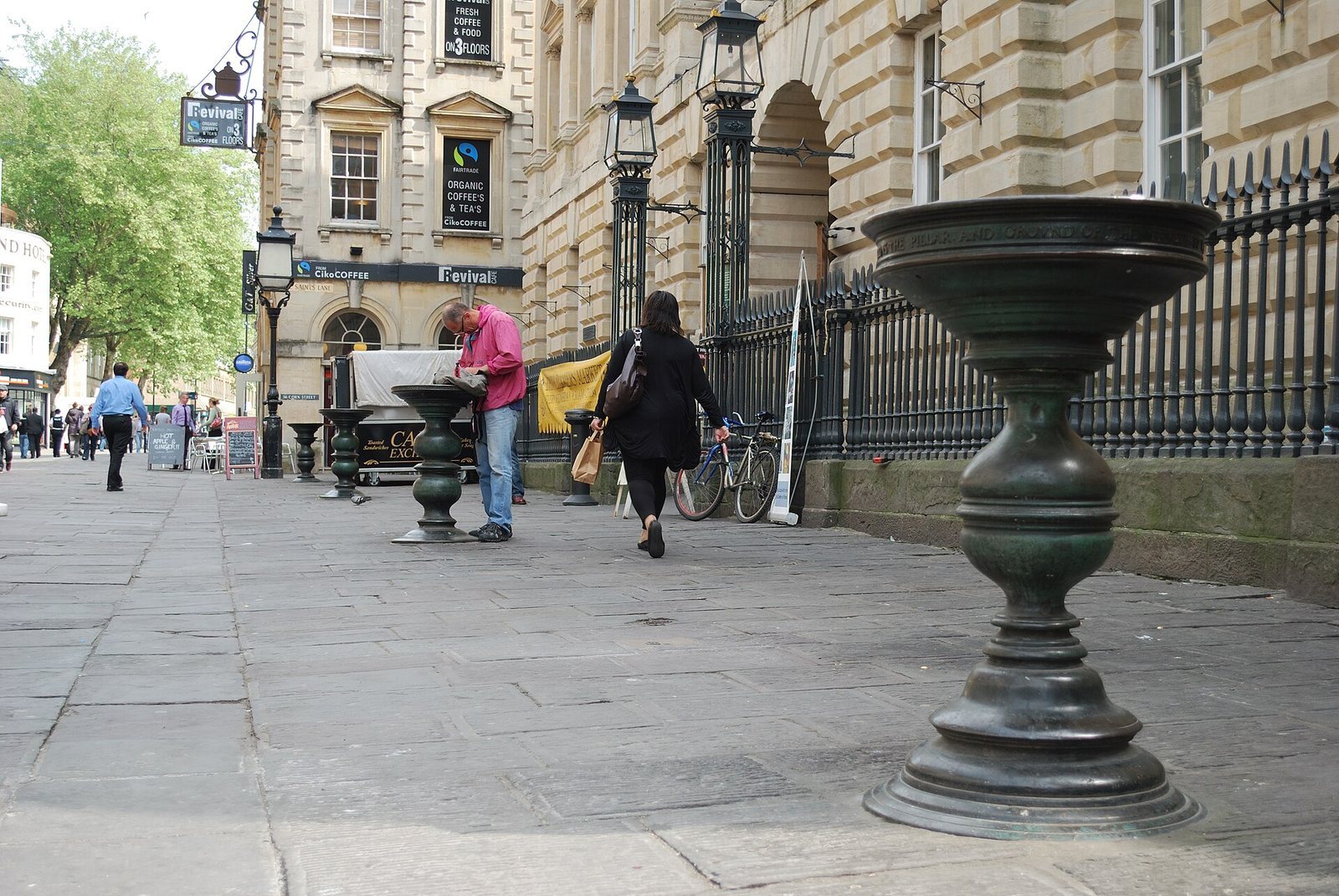
Before the Exchange was built, merchants conducted business at four trading tables in Tolzey Walk. Deals could be settled by making payment on a table. This custom is popularly linked to the expression “pay on the nail” or “cash on the nail,” although that proposed origin is disputed.
Other English exchanges of the period have not survived intact. The Liverpool Exchange, also designed by Wood, was completed in 1754 and gutted by fire in 1795. The London Exchange that stood during Wood’s time was destroyed by fire in 1838.
Timekeeping
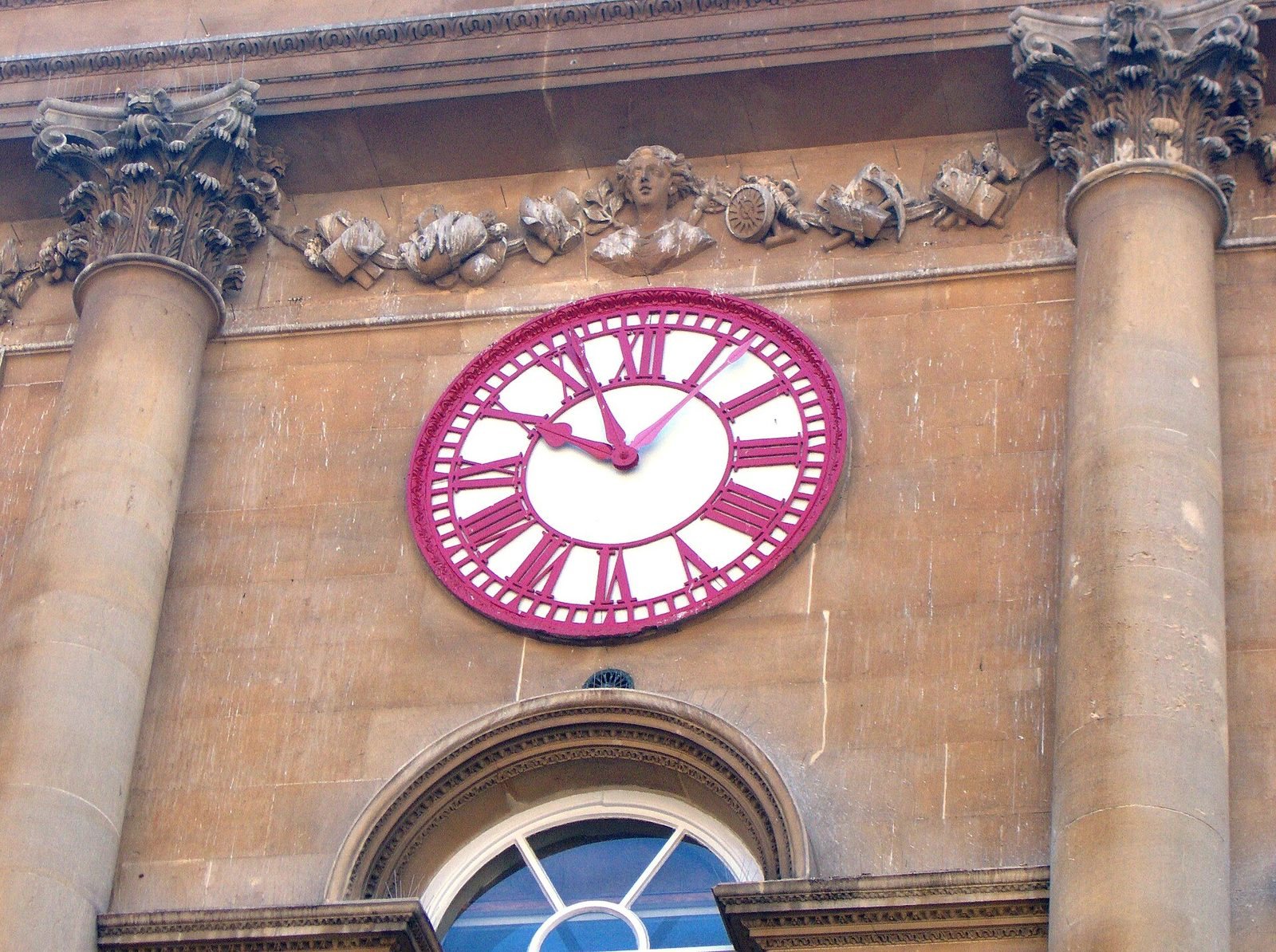
A clock was installed on the Exchange in 1822. A second minute hand was later added so the clock could display both Bristol local time and Greenwich Mean Time. Railways needed a common time for coordinating national timetables, and Bristol officially adopted railway time on 14 September 1852. Railway time was a standardized system that replaced differing local times.
Changing uses and alterations
Use of the building for agricultural exchange declined substantially during the late-nineteenth-century downturn in British farming, known as the Great Depression of British Agriculture. Edward Middleton Barry designed major works in 1872. Some further internal changes may also have been made late in the century, but their connection to Barry’s plans is uncertain.
The City of Bristol has retained ownership of the building. Extensive alterations accompanied the City Valuer’s Department’s move there in 1907. After 1945, further work changed parts of the building’s fabric. The Exchange received Grade I listed status on 8 January 1959, the highest category of listed-building protection in England, for buildings of exceptional architectural or historic interest. Today it accommodates offices, market traders, the Joint Trade Unions Safety Office and St Nicholas Market.
Remains
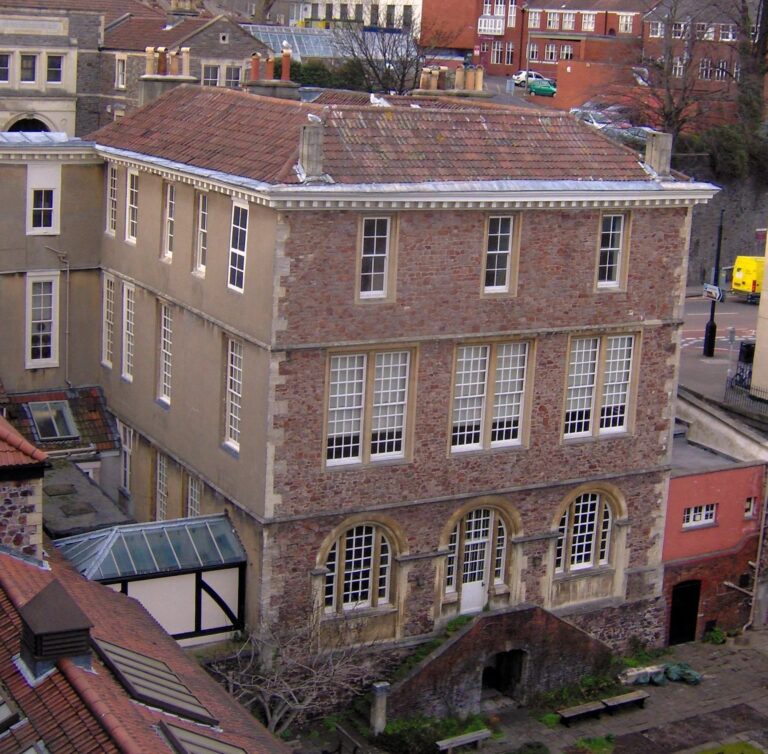
The Exchange occupies a site near the junction of Corn Street and Broad Street. Its Georgian Palladian exterior was designed to read as one large building, while the original plan brought together a central open court, commercial rooms, houses and cellars. The street frontage remains largely as built, although later alterations changed parts of the interior.
Building plan and architectural fabric
Front and rear elevations
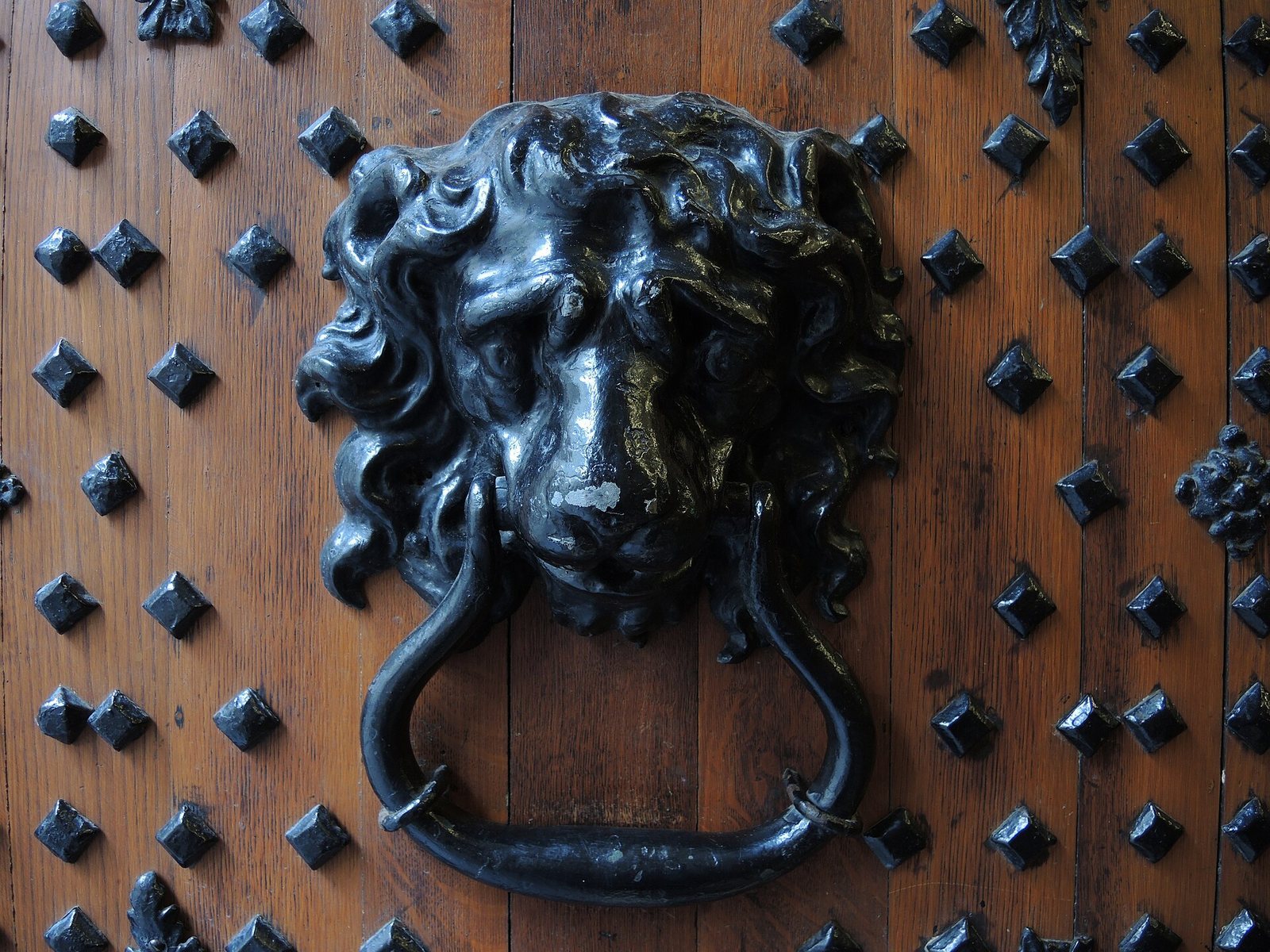
The Corn Street frontage has Corinthian columns, with ornate capitals, at its centre and pilasters, or shallow columns attached to a wall, to either side. A central doorway beneath a semicircular arch has cast-iron knockers shaped as lion heads. Above it, the Royal Coat of Arms appears in the central panel of a pediment. At the rear, the balanced elevation includes windows topped by triangular gables and semicircular arches at ground level.
Trade imagery
A carved band on the exterior shows human and animal heads associated with trade. Other carvings represent Africa, the Americas, Asia and Europe, linking the building’s decoration to Bristol’s overseas commerce, including the slave trade. Inside, plaster figures in the main hall represent the four corners of the world. The figure for America wears a headdress made of tobacco leaves.
Interior ranges and court
The original interior included a four-storey coffeehouse and a four-storey tavern on either side of the Corn Street entrance. Secure rooms for valuables occupied spaces above and below the main entrance. An open court, surrounded by rows of columns, formed the centre of the building. At the rear stood a two-storey range with an arched ground-floor passage and a long room on the first floor.
In 1872, the central court was roofed and a first-floor suite of offices was added above the rows of columns. After 1945, the court received a temporary roof at a lower level, and the rear clock tower was removed. The coffeehouse’s four floors and the corresponding floors above the main entrance were rebuilt internally.
Side houses and cellars
Two four-storey houses facing All Saints Lane and three more fronting Exchange Avenue formed part of the complex. The cellars beneath these five houses were separate from one another, while most of the other cellars were linked. During the 1907 alterations, a lift was installed between the basement and cellars and the first floor, and the cellars beneath the central part of the Exchange were extensively changed.
Features on Corn Street
Bronze trading tables
Four bronze tables, known as “nails,” stand outside the Exchange. Their flat tops have raised edges to keep coins from falling onto the pavement, and they may have been modelled on portable tables used at fairs and markets. The oldest is undated and attributed to the late Elizabethan period, the reign of Elizabeth I from 1558 to 1603. Robert Kitchin, a Bristol merchant who died in 1594, gave the second-oldest. The remaining two bear the dates 1625 and 1631, and each table has a different design.
One nail bears the name John Barker. A wealthy merchant with houses and storehouses on the Quay, Wine Street and Small Street, Barker served as mayor during the reign of Charles I and represented Bristol in Parliament in 1623. The tables were formerly in Tolzey Walk, a covered passage along the south wall of All Saints Church. That route remains as a narrow lane giving access to commercial premises.
Clock
The clock is set into the Exchange’s frontage. Its additional minute hand allows it to show Bristol local time alongside Greenwich Mean Time. Bristol lies 2°35′ west of Greenwich, so noon by the old local time corresponds to just after 12:10 p.m. in London by standard time.