St Bartholomew’s Chapel, Oxford: A Medieval Hospital Chapel
Site at a Glance
- Rating
- 4.8
- Popularity
- Very Low
- Country
- United Kingdom
- Primary era
- Medieval
- Eras represented
- Medieval, Early Modern
- Civilizations
- English
- Site type
- Religious
- Remains
- Chapel
On this page10 sections
History
St Bartholomew’s Chapel is an early-14th-century hospital chapel in Oxford, United Kingdom, built as part of a hospital for people with leprosy. King Henry I founded the hospital in the early 12th century for twelve sick people and a chaplain. It became a charitable and religious institution that later came under Oriel College’s control.
Foundation and medieval endowment
Henry I provided an annual endowment of £23 and five pence, an additional five shillings a year for clothing, and two loads of hay each year from the king’s meadow near Osney. The hospital first appears in the royal treasury’s Pipe Roll, an annual account, in 1129. An entry for 1162 records 60 shillings spent on building work at the hospital. Kings Stephen and Henry II confirmed its thirteen prebends, endowed clerical posts.
In 1194 Pope Celestine III confirmed the hospital’s existing liberties and rents. Pope Gregory IX exempted it from tithes in 1238, meaning church levies on garden produce, wood from its copse, and the increase of its animals. Small gifts reached the hospital during the 13th century. By about 1330, its land brought in £7, apart from the brethren’s farm of a few acres around the hospital.
Wardenship and reform
Management came under strain in the 1310s. Adam de Weston, a clerk in Edward II’s service, became warden in April 1312 and faced accusations by July. An inquest that August heard claims that he had sold farm produce without the brethren’s consent and kept the proceeds. He was also accused of dismissing the chaplain, leaving the Mass, a Christian communion service, rarely celebrated, and removing the servants who worked the hospital lands. Other accusations concerned his keeping a mistress and forcing Brother William de Westbury, a former warden of 43 years’ service, from the house William had built for his retirement. De Weston was removed.
Peter de Luffenham took over as warden in 1315. The brethren later complained that he took too much of the income, neglected the sick, and favoured his own interests. In 1316 Edward II reduced the number of brethren from twelve to eight and limited admissions to infirm applicants until two healthy brethren remained to work the farm. The brethren and the chaplain’s clerk were to receive nine pence a week; the master, who also served as chaplain, was assigned £4 a year.
Edward II permitted John, son of Lawrence Serche, to join in 1321 despite his being healthy. John promised ten marks, a medieval unit of account, toward repairs to the chapel roof. In 1325 the brethren complained that Robert de Sutton, appointed master in 1317, had allowed the hospital to deteriorate, and a survey was ordered. The following year, Adam de Brome, head of Oriel College, received the wardenship for life.
Oriel College and later history
In 1328 Edward III granted the hospital to Oriel College, one of the University of Oxford’s colleges. The brethren’s payments were to continue, and the hospital was to retain a chaplain and a warden. Any income left after their costs went to the college. The hospital was also to provide a place for sick college members to recuperate.
Further rules followed in 1367 after the college complained that the brethren were disobedient. Married, indebted, and legally unfree applicants were barred. Those admitted had to surrender their movable goods to the hospital, which kept them even if a brother was expelled; the brethren could not make wills. They were also required to live chastely, leave the hospital only in their religious habit, and seek the Provost’s permission before inviting friends. In 1390, William Coterell, warden of the hospital of St Lawrence outside Bristol, received a grant of St Bartholomew’s. Oriel challenged it as contrary to the 1328 arrangement, and an inquiry upheld the college’s claim.
Repairs to the hospital are recorded in 1600 and 1635. During the English Civil War, the conflict between supporters of the monarchy and Parliament, the chapel and the hospital’s main range were damaged. Repairs to the range took place in 1649.
The chapel is dedicated to Bartholomew the Apostle and belongs to the Church of England. Oriel College is named as its rector. In 1954 the building received Grade I designation, the highest category of listed-building status in England. Scholars and choristers of New College, another Oxford college, traditionally came to the chapel on May Day and Ascension Day, the Christian feast commemorating Jesus’ ascension, for prayers and hymns before continuing customary observances and merrymaking. On 21 May 2009, New College choristers revived the practice after a 400-year break, holding a ceremony at the chapel and singing madrigals, a form of polyphonic vocal music, at an ancient spring in Oriel College’s playing field.
Remains
Chapel and hospital layout
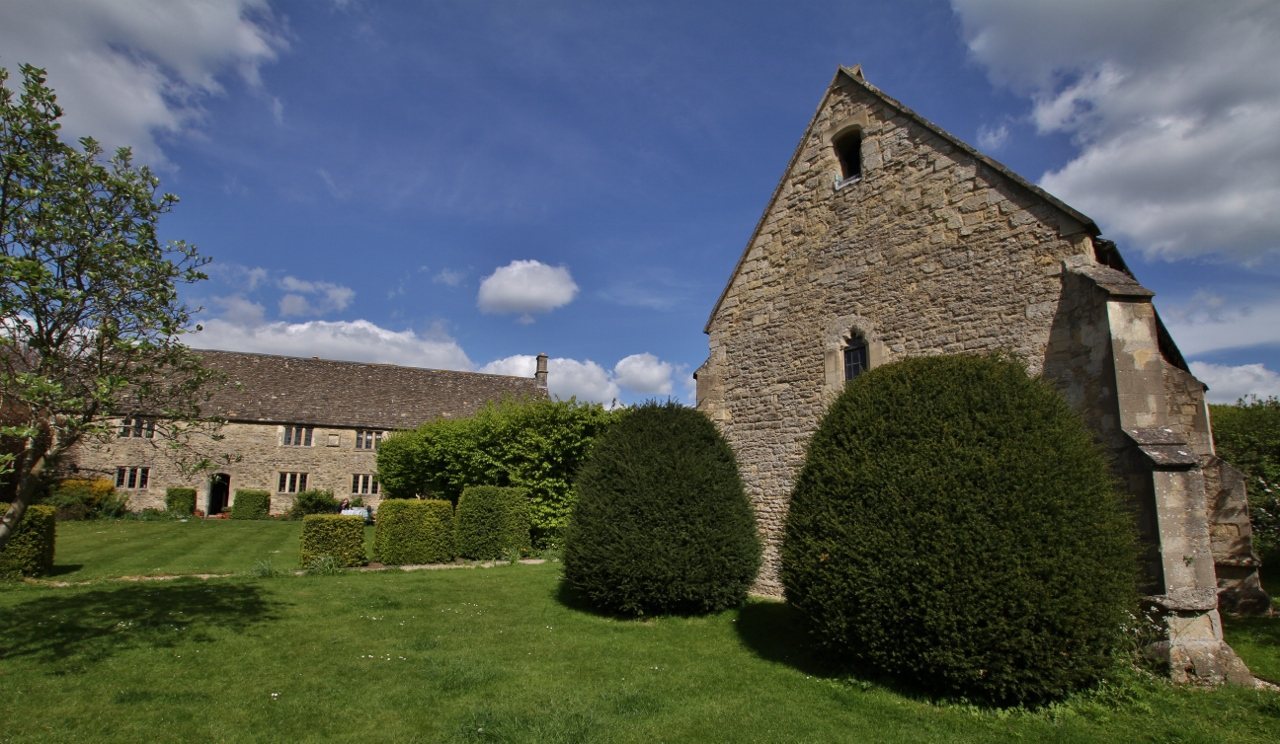
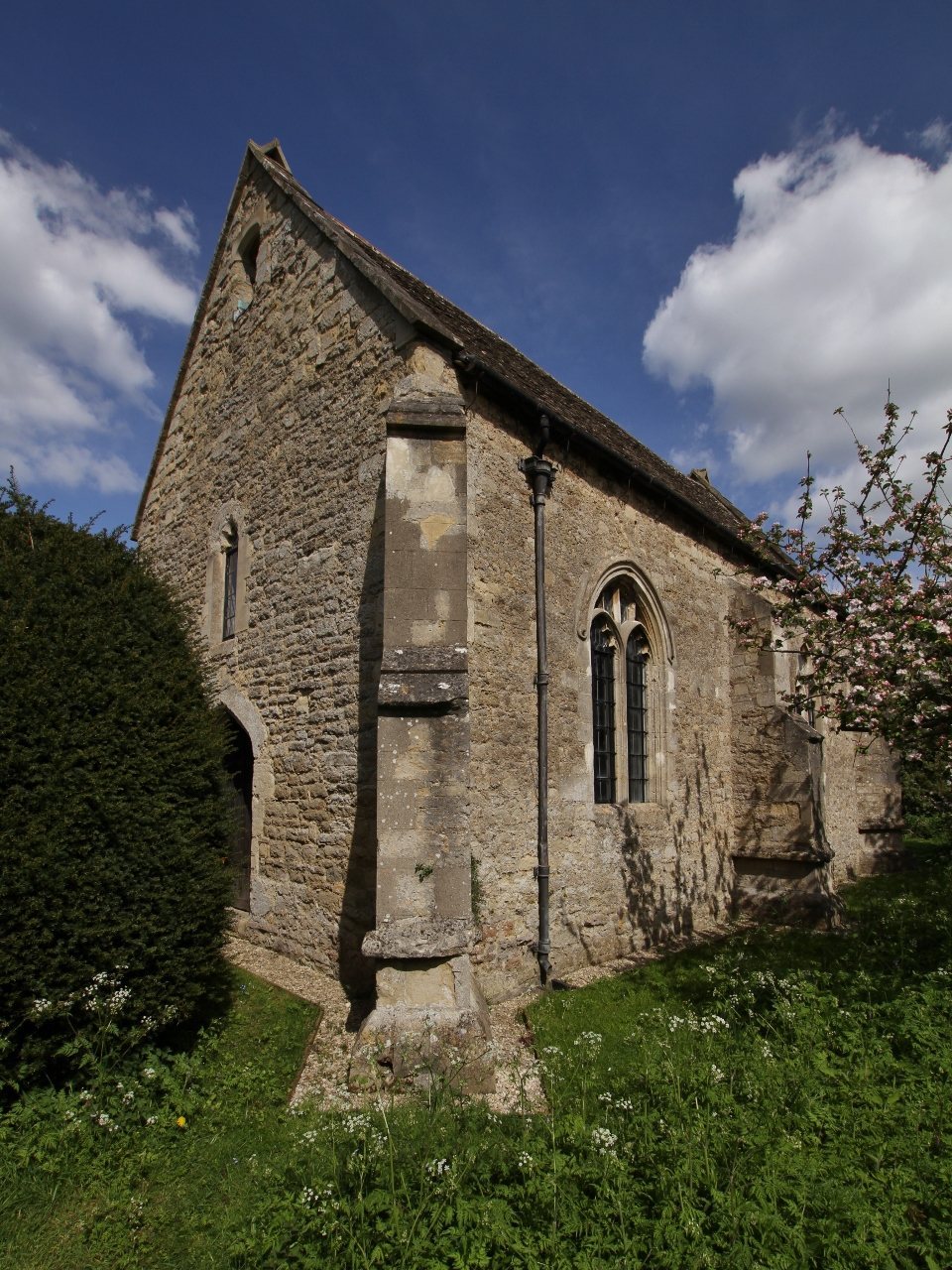
The small chapel formed part of the hospital complex, whose main range stood to its north. Inside the chapel, the nave and chancel make up a single space. Its early-14th-century fabric includes features altered in later centuries, notably the west entrance and roof.
Plan and windows
The original north doorway has an arch with edges cut back at an angle. Large windows divided into two sections have unusual patterned framework in their upper parts. This tracery is associated with the 14th century, though it may have been added in the 17th century. One west window dates to the 17th century.
West entrance and roof
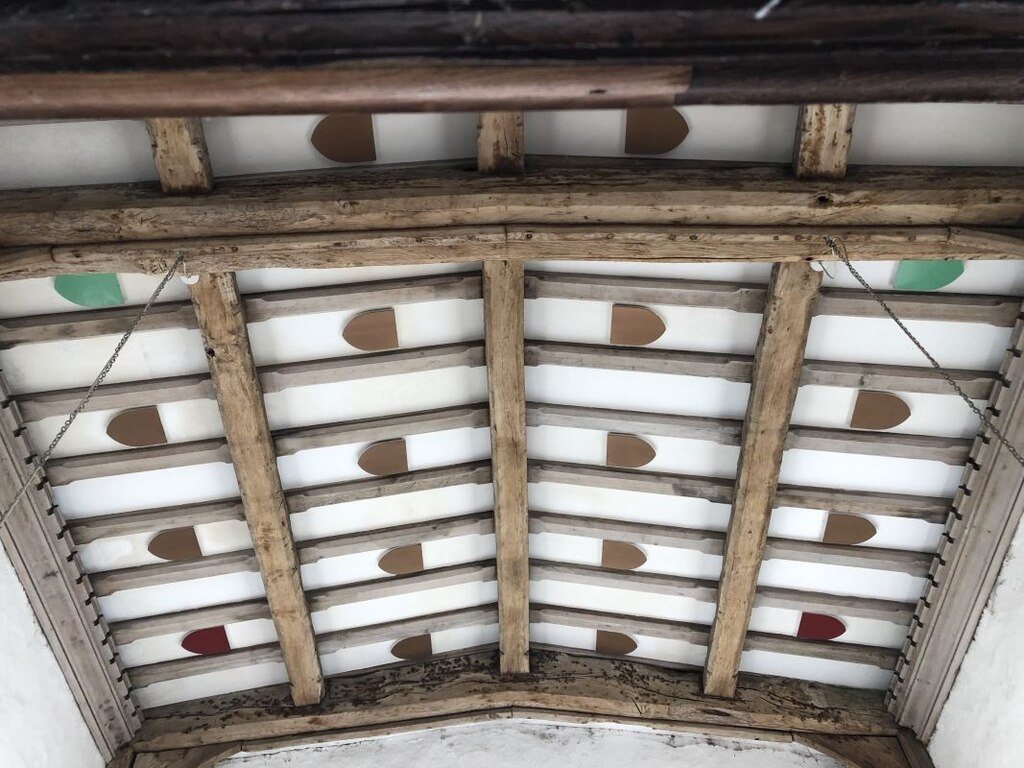
The west doorway and roof were altered in the 15th century in the Perpendicular Gothic style, a later English Gothic style marked by strong vertical lines. The roof has a wall plate with a notched outline and undecorated shields.
Fittings and attributed relics
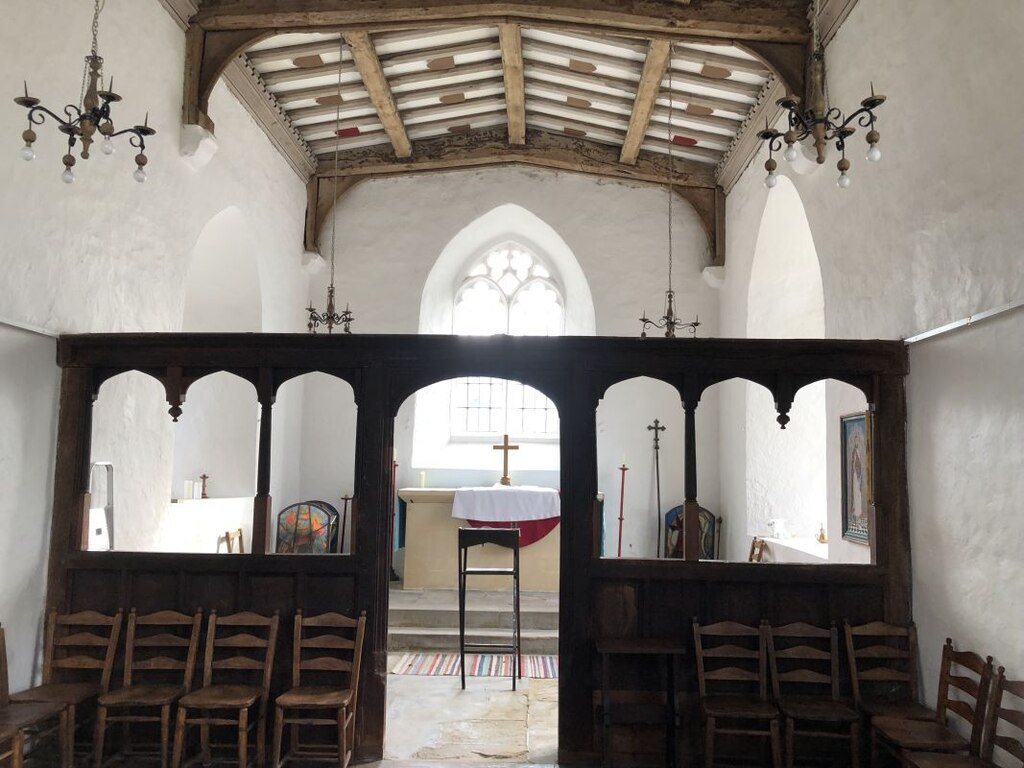
Traces of two painted crosses remain on the west wall. A simple screen dated 1651 has openings divided by two columns and two hanging ornaments; Oriel College gave it to the chapel. The plain wooden fittings were designed by British architect and designer Ninian Comper. Relics, objects revered for their associations with holy figures, were attributed to the chapel: a comb said to have belonged to Edward the Confessor and to cure headaches, a piece of skin associated with St Bartholomew, and bones attributed to St Andrew and St Philip.
Hospital and water features
A well near the chapel formed part of the traditional observances. The ancient spring in Oriel College’s playing field is a separate water feature.