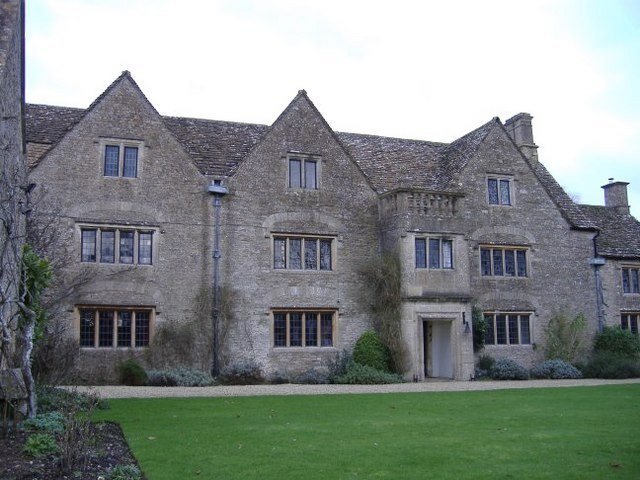
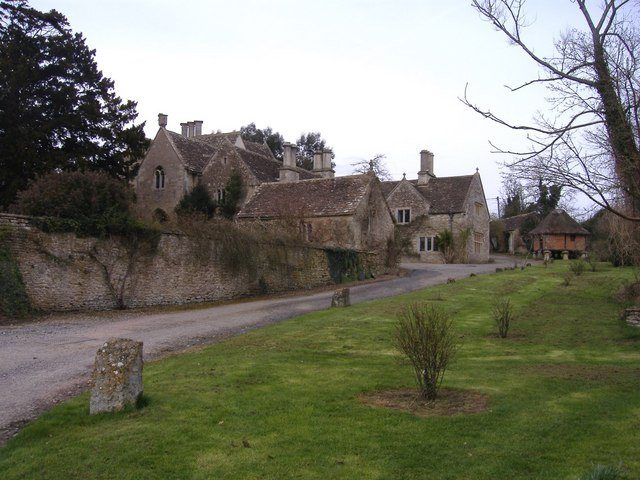
St Michael and All Angels Church, Badminton: Somerset Family Church and Burial Place
Site at a Glance
- Rating
- 5
- Popularity
- Very Low
- Country
- United Kingdom
- Primary era
- Early Modern
- Eras represented
- Early Modern, Modern
- Civilizations
- British
- Site type
- Religious
- Remains
- Church
On this page10 sections
History
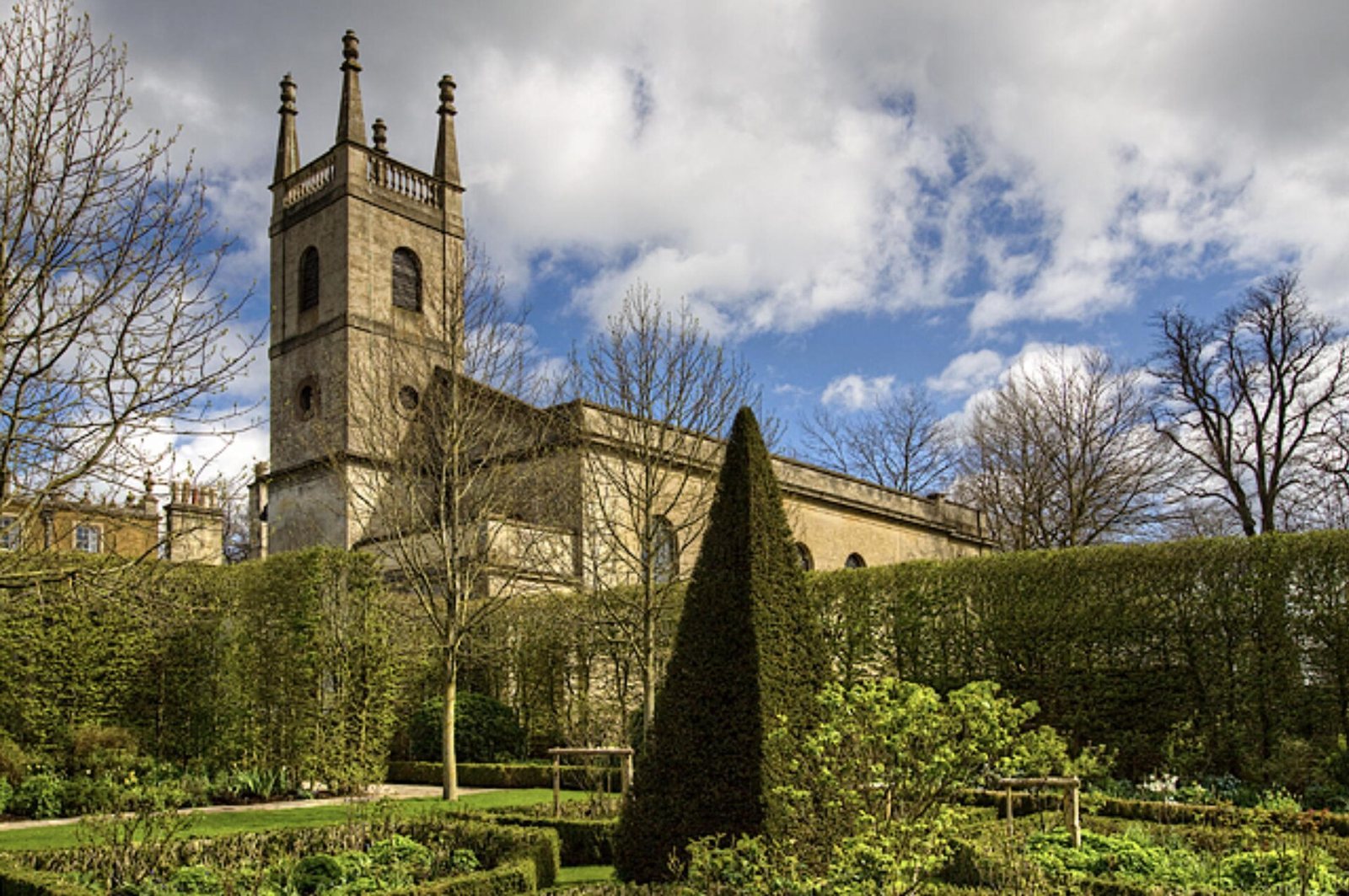
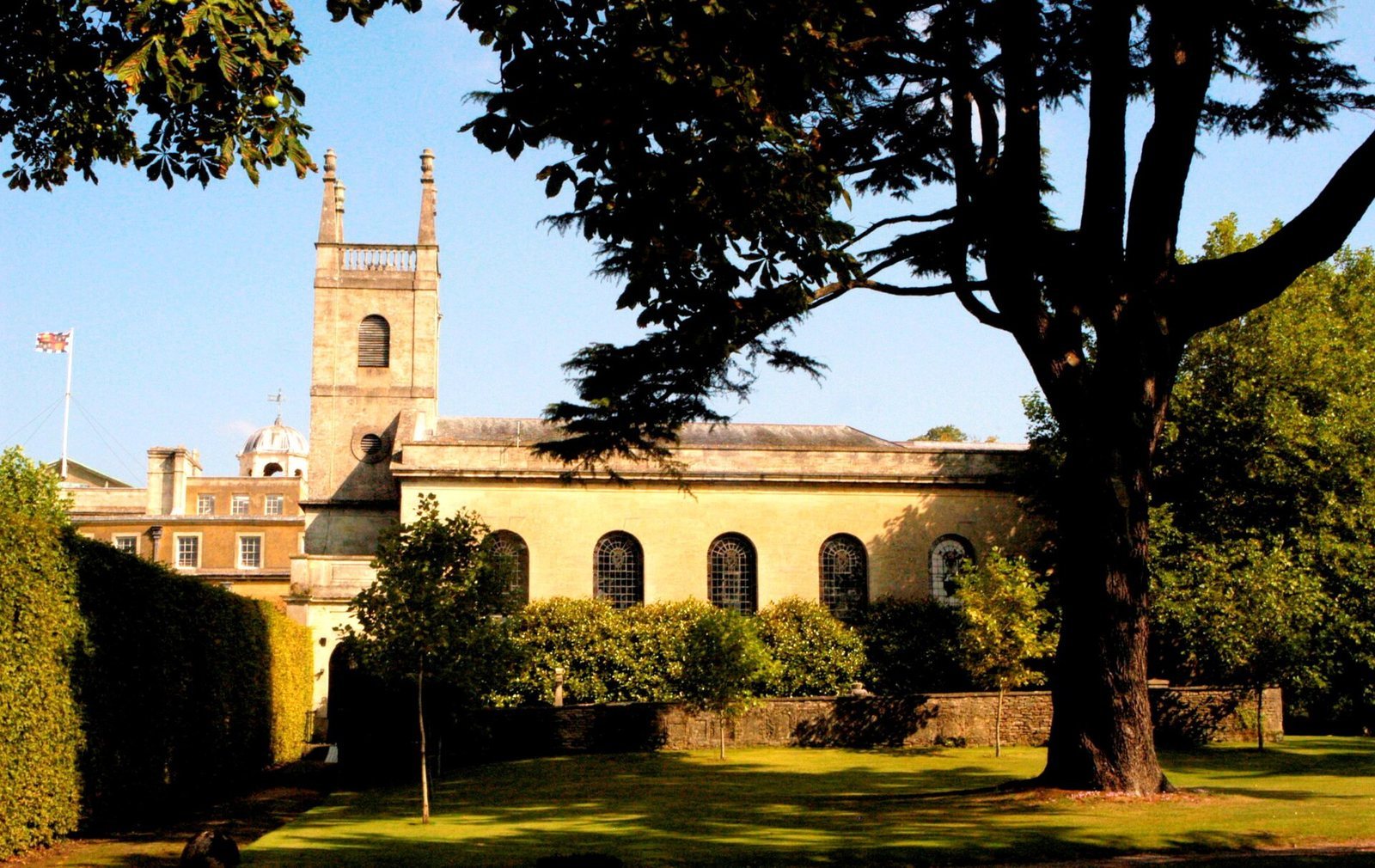
St Michael and All Angels Church, Badminton, stands at Great Badminton in Gloucestershire, United Kingdom. Built in 1785 by architect Charles Evans, it is a reduced-scale classical interpretation of London’s St Martin-in-the-Fields and became the principal burial place of the Somerset family of Badminton House.
Medieval predecessor and 1785 rebuilding
A medieval church once stood a short distance west of the present building. It was demolished when Evans built the current church in 1785.
The Somerset burial place
Until about 1910, dukes and duchesses of Beaufort and other distinguished members of the family were buried in a vault beneath the church. Later dukes and duchesses were laid to rest in the churchyard. Among those buried in or near the church are Lady Mary Sackville (1688–1705) and Lady Rachel Noel (died 1709), successive wives of the 2nd Duke; Henry Somerset, 2nd Duke (1684–1714); Mary Capell (1630–1715), wife of the 1st Duke; Henry Somerset-Scudamore, 3rd Duke (1707–1745); Charles Somerset, 4th Duke (1709–1756); and Lady Anne Somerset (1673–1763), daughter of the 1st Duke.
The family burials also include Henry Somerset, 5th Duke (1744–1803), 6th Duke (1766–1835) and 7th Duke (1792–1853); FitzRoy Somerset, 1st Baron Raglan (1788–1855), the 5th Duke’s youngest son and a field marshal; and Emily Frances Smith (1800–1889), the 7th Duke’s second wife. Later family members buried there include Henry Somerset, 8th Duke (1824–1899), his wife Lady Georgiana Curzon (1825–1906), Henry Somerset, 9th Duke (1847–1924), Henry Somerset, 10th Duke (1900–1984), and his wife Lady Mary Cambridge (1897–1987).
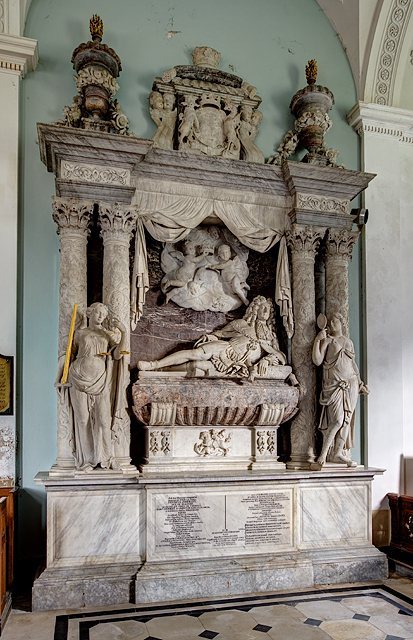
The chancel and apse were added in 1875 to make space for a monument to Henry Somerset, 1st Duke of Beaufort (1629–1700). The Duke himself was buried at St George’s Chapel, Windsor, with his ancestors; his monument was transferred to Badminton in 1878. The church remains an active Anglican parish church in the Diocese of Gloucester. Although attached to Badminton House and situated within the estate, it is owned and maintained by the Badminton Parochial Church Council, not the ducal estate. It is listed at Grade I, England’s highest category for buildings of special architectural or historic interest.
Remains
Building and interior
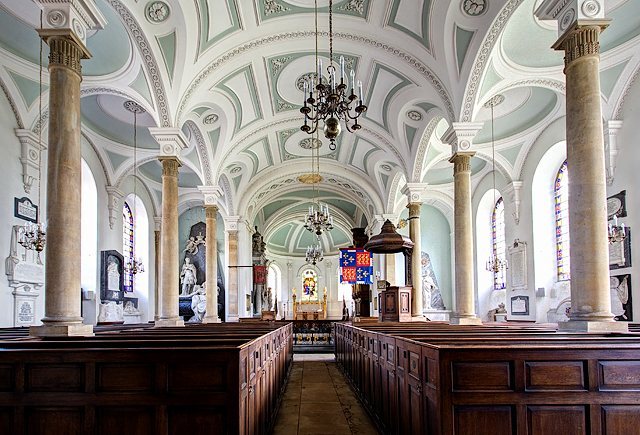
Attached to Badminton House, the church has a plain tower and a classical design based on St Martin-in-the-Fields. Its main body, the nave, has a tunnel vault, a continuous arched ceiling, with ornamental panelled plasterwork. Rows of arches separate it from the aisles, each of which has four shallow domes. The later chancel, the altar area, ends in an apse, a recessed section. An underground burial chamber lies beneath the church, and a small churchyard surrounds it.
Glazing, furnishings and monuments
Stained-glass windows
Eight aisle windows, four on each side, contain stained glass made by Thomas Willement in 1846–1847. Heraldic designs sit within blue borders, alongside badges in the yellow associated with the Beaufort family.
Pulpit, pews and later fittings
The pulpit and box pews date from 1785. The organ case, choir stalls, reredos, an ornamental structure behind the altar, and communion rail were made by architect Temple Moore in 1908.
Monument to the 1st Duke of Beaufort
On the north side of the chancel, a monument by English sculptor Grinling Gibbons shows the Duke reclining on a stone tomb in ceremonial robes associated with the Order of the Garter. A relief of St George and the Dragon decorates the base. Paired columns with embossed shafts frame the monument, beneath a decorative leafy band and a cornice topped with flaming urns. The Duke’s arms and supporters also appear on the work. At a height of 25 feet, a tasseled cushion supports a coronet. Full-length figures representing Justice and Truth stand on the base, while parted curtains above the Duke reveal heavenly figures bearing palms and crowns. A Latin inscription gives the names of his family and the offices he held.
Monument to the 2nd and 3rd Dukes
At the east end of the north aisle, a monument by John Michael Rysbrack is signed and dated 1754. It portrays the 2nd and 3rd Dukes in Roman dress, one standing and the other seated on a stone tomb holding a medallion. Decorative, asymmetrical drapery hangs across the tomb.